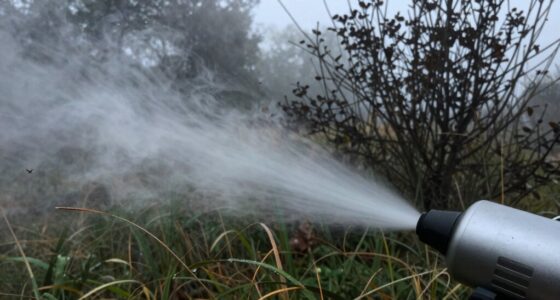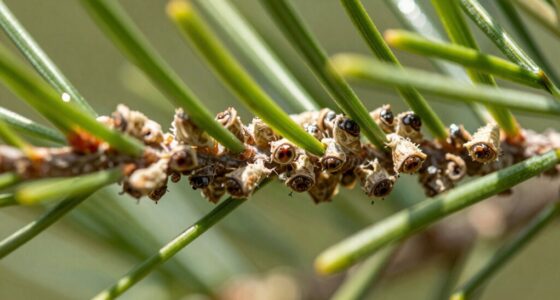
If you’re noticing skeletonized leaves, brown patches, or leaves dropping early, your rose bushes might have rose sawfly damage. The tiny larvae feed on the underside of leaves, leaving only the veins behind, which weakens the plant. To control them early, inspect your roses regularly and handpick any larvae you find. Using natural remedies like neem oil or introducing beneficial insects can help. Keep going to discover more effective tips for managing this pest quickly and effectively.

Get garden gear delivered free — and shop member deals
- Fast, free delivery on millions of items
- Access to Prime Big Deal Days deals on October 6–7
- Prime Video, Amazon Music and more included
Key Takeaways
- Rose sawfly larvae feed on the underside of leaves, causing skeletonization and premature leaf drop.
- Damage appears as brown, skeletonized leaves, often with visible larvae hanging or crawling on foliage.
- Early signs include small, greenish, slug-like larvae that can be handpicked or detected during inspections.
- Natural control methods, such as beneficial insects and organic sprays like neem oil, are effective when applied promptly.
- Timely intervention prevents severe defoliation, plant weakening, and maintains healthy, thriving rose bushes.
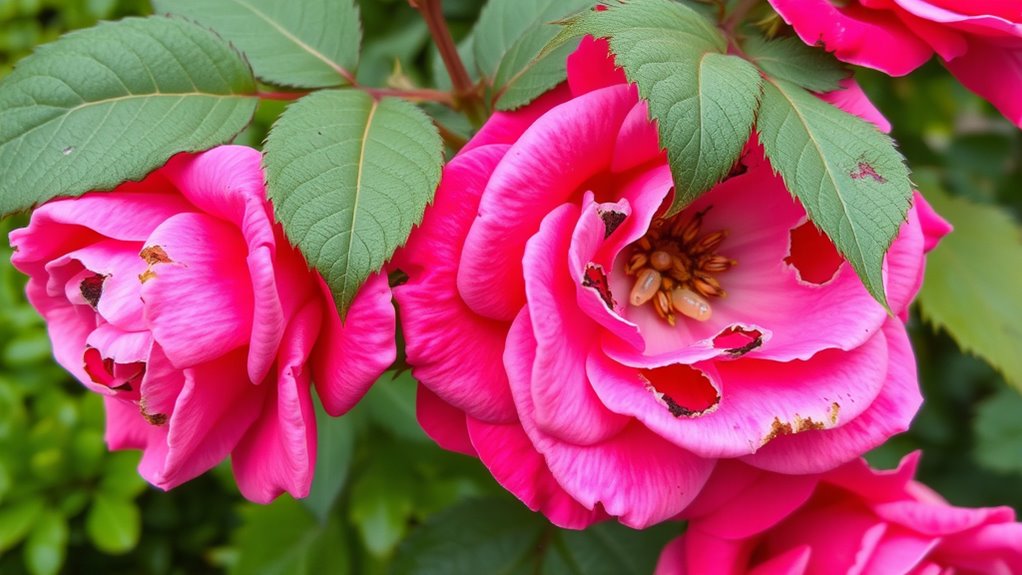
Rose sawfly damage can quickly become a problem for your garden if left unchecked. These pests are notorious for their voracious appetite, especially during the spring and early summer months when they emerge in large numbers. To prevent serious harm to your rose bushes, you need to understand how to identify them early. Pest identification is key; the adult sawflies resemble tiny wasps, but it’s their larvae that cause the most damage. The larvae are greenish, slug-like creatures that cling to the leaves, often feeding on the underside and leaving behind a skeletonized appearance. As they devour the foliage, the leaves may turn brown and drop prematurely, weakening the plant and reducing flowering potential.
Detecting rose sawfly damage early helps you take swift action, and natural control methods are both effective and environmentally friendly. You might notice the larvae first—small, soft, and greenish—crawling on the leaves or hanging from the stems. Sometimes, they’re hidden beneath the foliage, so you should routinely inspect your plants, especially in the bud and leafing stages. Once you confirm pest presence, natural control options come into play. Handpicking is the simplest approach if you spot a few larvae; simply remove them and drop them into a bucket of soapy water to prevent re-infestation. Introducing beneficial insects, like parasitic wasps or predatory beetles, can also help keep sawfly populations in check naturally. These beneficial insects feed on sawfly larvae and help maintain a balanced ecosystem without the need for chemical pesticides.
Another natural method involves applying neem oil or insecticidal soap directly to affected leaves. These treatments disrupt the larvae’s feeding and development, reducing their numbers without harming other beneficial insects. Regular, thorough inspections and timely interventions are *essential* in managing rose sawfly damage. It’s important to act early because if these pests are allowed to proliferate, they can defoliate entire sections of your rose bushes, weakening the plants and making them more susceptible to disease. Additionally, understanding the air quality benefits of natural pest control methods can contribute to a healthier garden environment overall.
rose sawfly larvae natural pest control
As an affiliate, we earn on qualifying purchases.
As an affiliate, we earn on qualifying purchases.
Frequently Asked Questions
How Can I Prevent Rose Sawfly Infestations Naturally?
To prevent rose sawfly infestations naturally, you should encourage natural predators like birds and predatory insects by planting a diverse garden with companion plants. Avoid chemical pesticides, as they harm beneficial insects. Regularly inspect your roses and remove any eggs or larvae you find. You can also introduce beneficial nematodes to the soil, which target sawfly larvae. This combined approach keeps your roses healthy and pest-free naturally.
Are Rose Sawflies Harmful to Other Garden Plants?
Rose sawflies mainly target roses, but they can sometimes harm other garden plants, especially those in the same family. To protect your garden, try garden companion planting with plants like garlic or chives that repel pests. Additionally, explore alternative pest control methods like handpicking or using insecticidal soap. These natural strategies help keep your entire garden healthy without relying on harsh chemicals.
What Are the Signs of Severe Rose Sawfly Infestation?
You’ll notice severe defoliation, making your roses look like skeletons in a ghost story. Larva clusters cling to stems and leaves, turning lush foliage into a shredded mess. Stems may weaken and break, and the plant’s overall health declines rapidly. If you see these signs, it’s a strong warning of a severe infestation, demanding immediate action before your roses become nothing more than a haunting memory.
Can Rose Sawflies Damage Rose Bushes in Winter?
Rose sawflies are unlikely to cause winter damage because they are generally inactive during this season. Their winter activity is minimal, and seasonal damage from these pests typically occurs in spring and summer when they feed on lush rose foliage. If you notice any damage in winter, it’s probably from other pests or environmental factors. To protect your roses, focus on pest control during the active growing seasons.
How Do I Distinguish Rose Sawfly Damage From Other Pests?
Imagine your rose bush as a delicate painting, and pests as smudges. To distinguish rose sawfly damage, look for irregular, skeletonized leaves caused by larvae feeding between veins. Unlike other pests, the larvae are tiny, green, and resemble caterpillars. Leaf damage patterns are a telltale sign—specifically, the lace-like skeletonization. Spotting these clues helps you identify larvae correctly and act before more harm occurs.
As an affiliate, we earn on qualifying purchases.
Conclusion
If you spot holes and skeletonized leaves on your roses, the rose sawfly might be the culprit. These tiny pests can cause significant damage—sometimes stripping a plant of up to 50% of its foliage in just a few weeks. Keep a close eye on your plants, and act quickly to protect your garden. With prompt intervention, you can prevent this voracious pest from turning your beautiful roses into a leafless wonderland.
beneficial insects for rose pest control
As an affiliate, we earn on qualifying purchases.
As an affiliate, we earn on qualifying purchases.
organic insecticidal soap for roses
As an affiliate, we earn on qualifying purchases.
As an affiliate, we earn on qualifying purchases.
Fall yard work Picks
leaf blowers
As an affiliate, we earn on qualifying purchases.