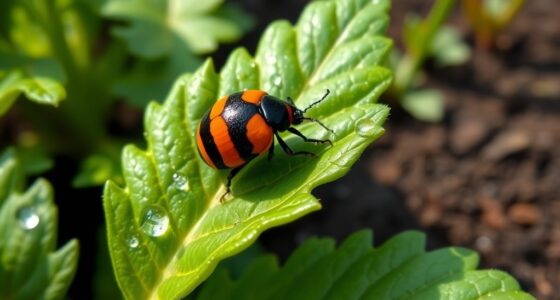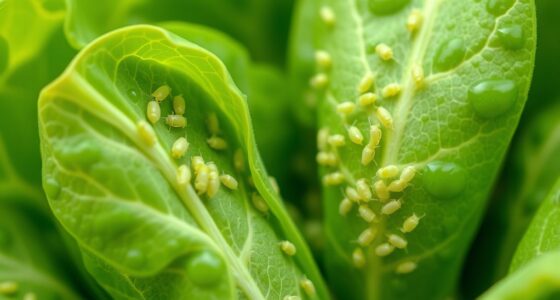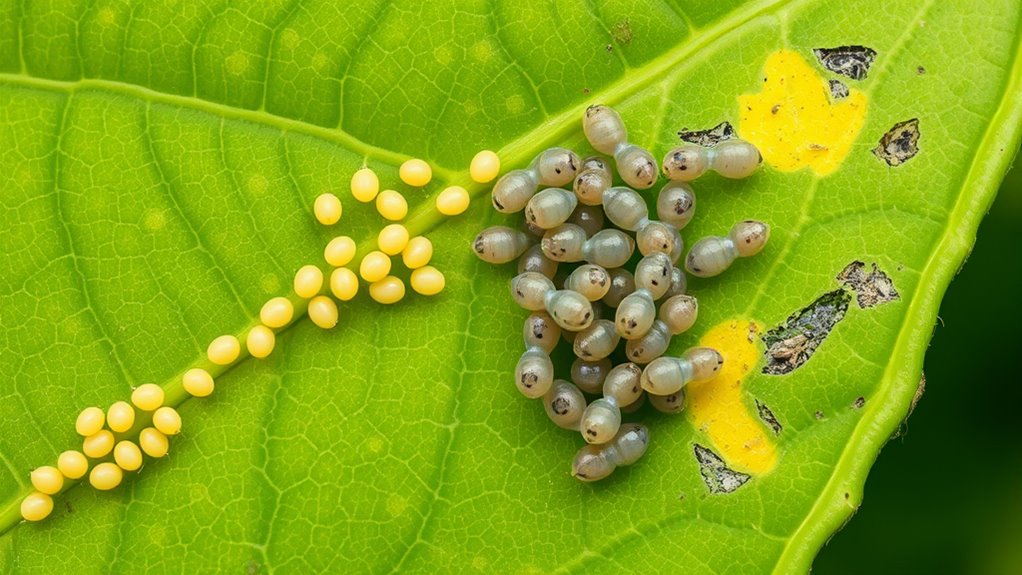
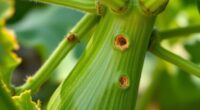
You’ll notice squash bug eggs as small, flat, oval clusters on the undersides of leaves, which hatch into orange or red nymphs that are wingless and feed on your plants, causing wilting and yellowing. Adults are larger, winged, and sap-sucking pests. To manage them, inspect leaves regularly, remove eggs by crushing or handpicking, and use organic solutions like neem oil. Understanding their life cycle and control methods helps you keep your squash healthy—learn more to protect your plants effectively.
Key Takeaways
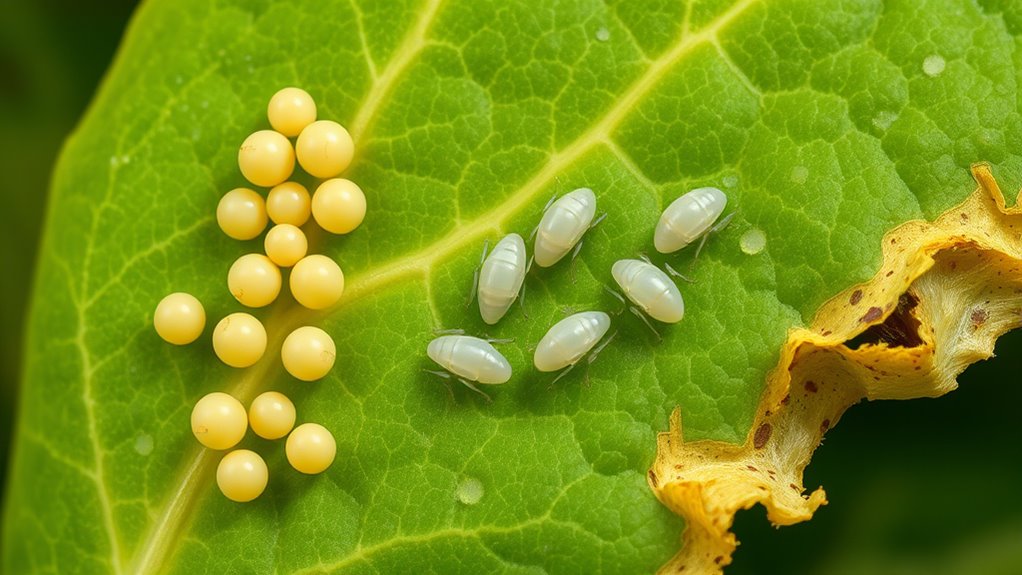
- Eggs are small, flat, oval-shaped, and laid in clusters on the undersides of squash leaves.
- Nymphs are orange or red with black markings, wingless, and resemble miniature adults.
- Damage from squash bugs causes wilting, yellowing, and decline of squash plants.
- The full life cycle, from egg to adult, takes about 4-6 weeks, enabling rapid population growth.
- Regular inspection and physical removal of eggs and nymphs help control infestations effectively.
Have you ever noticed small, brown bugs hiding among your squash plants? If so, you’re likely dealing with squash bugs, which can quickly become a serious problem if not managed promptly. To effectively control them, it helps to understand their life cycle, which includes eggs, nymphs, and adults. Knowing how they develop and reproduce allows you to target each stage with specific control methods, reducing their numbers and protecting your crops.
The life cycle of a squash bug begins with eggs laid on the underside of squash leaves. These eggs are small, flat, and oval-shaped, often clustered together. They hatch into nymphs within a week or two, depending on temperature and environmental conditions. The nymphs are smaller versions of the adults but lack wings and are typically orange or red with black markings. As they grow, they molt several times, gradually turning darker and developing wings. Adults emerge from the nymph stage and can live for several weeks, feeding on the plant’s sap and laying hundreds of eggs during their lifetime. The entire life cycle can be completed in about four to six weeks, allowing populations to multiply rapidly if unchecked.
Controlling squash bugs involves interrupting this cycle at various stages. One effective control method is physically removing eggs and nymphs from your plants. Regularly inspect the undersides of leaves and squash bugs’ hiding spots, and crush the eggs or pick off the bugs by hand. This simple step can considerably reduce their numbers early in the season. Using row covers can also be helpful, especially during peak egg-laying periods, as it prevents adult bugs from accessing your plants to lay eggs. Additionally, applying organic insecticides like neem oil or insecticidal soap can target nymphs and adults. These treatments are most effective when applied thoroughly and repeatedly, especially during the nymph stage when bugs are more vulnerable.
Regularly inspect and remove squash bug eggs and nymphs to keep infestations under control.
Beyond direct controls, maintaining healthy plants can make your squash less appealing to pests. Avoid over-fertilizing with nitrogen, which can encourage lush, tender growth that squash bugs prefer. Keeping your garden free of weeds and plant debris also reduces hiding spots for bugs. Introducing natural predators like parasitic wasps can help keep squash bug populations in check over time, creating a more balanced ecosystem.
Frequently Asked Questions
How Can I Prevent Squash Bugs From Laying Eggs?
To prevent squash bugs from laying eggs, regularly inspect your plants and remove eggs promptly using egg removal techniques like scraping them off with a toothbrush or gloved hand. You can also use row covers to block bugs from reaching your plants, and apply neem oil or insecticidal soap as a deterrent. Consistent egg elimination helps reduce future infestations and keeps your squash healthy and pest-free.
Are Squash Bugs Harmful to Other Plants?
Squash bugs mainly target squash and related plants, but they can indirectly harm other crops by spreading pests or diseases. To protect your garden, use interplanting strategies that diversify your plants, making it less attractive to bugs. Implement crop rotation techniques each season to break their life cycle. These methods help reduce squash bug populations and shield your other plants from potential damage.
What Natural Predators Control Squash Bug Populations?
You can control squash bug populations using beneficial insects like lady beetles, lacewing larvae, and predatory stink bugs. These natural predators help keep pest numbers in check, reducing the need for chemical treatments. Incorporate pest management strategies by encouraging biodiversity in your garden, planting trap crops, and manually removing bugs. By supporting beneficial insects, you create an eco-friendly way to manage squash bugs effectively and protect your plants.
How Long Do Squash Bug Eggs Take to Hatch?
Did you know a single female squash bug can lay up to 200 eggs in her lifetime? Typically, egg incubation lasts about 6 to 10 days, depending on temperature. The hatch timing is quite consistent, so you can often expect nymphs to emerge within this window. Keeping an eye on the eggs during this period helps you catch early infestations and take timely action to protect your squash plants.
Can Squash Bugs Damage Mature Squash Plants Significantly?
Yes, squash bugs can cause significant damage to mature squash plants. They suck sap, weaken plants, and can lead to wilting or even death if infestations are severe. To manage this, you should use chemical control carefully and consider crop rotation to disrupt their life cycle. Regularly inspect your plants and remove bugs by hand to prevent extensive damage and protect your harvest.
Conclusion
Now that you know how to spot eggs, nymphs, and damage, you’re better equipped to tackle squash bugs head-on. Stay vigilant, remove eggs promptly, and keep your garden healthy. Remember, even in this digital age, a little old-fashioned diligence beats a plague of bugs. Think of it as your own medieval crusade—minus the armor—fighting off pests to protect your prized squash. With patience and action, you’ll soon enjoy a bountiful harvest!