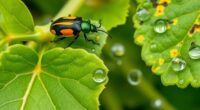
Sap beetles are often attracted to overripe tomatoes and corn, feeding on decaying plant material and helping with decomposition. They can sometimes damage your crops or spread bacteria, but they also play a role in pollination. Spotting beetles on rotting produce is a sign to act. Using traps, removing affected plants, and installing physical barriers can control their numbers. If you want tips on balancing pest management and pollination, keep exploring further.
Key Takeaways
- Sap beetles are attracted to overripe, rotting tomatoes and corn, indicating a need for management.
- Regularly inspect plants for beetles and signs of damage or decaying produce.
- Remove overripe or rotting fruits and vegetables to reduce beetle attraction.
- Use physical barriers like row covers or traps to limit beetle access.
- Employ integrated pest management, combining cultural, biological, and targeted controls to balance pest management and pollination benefits.
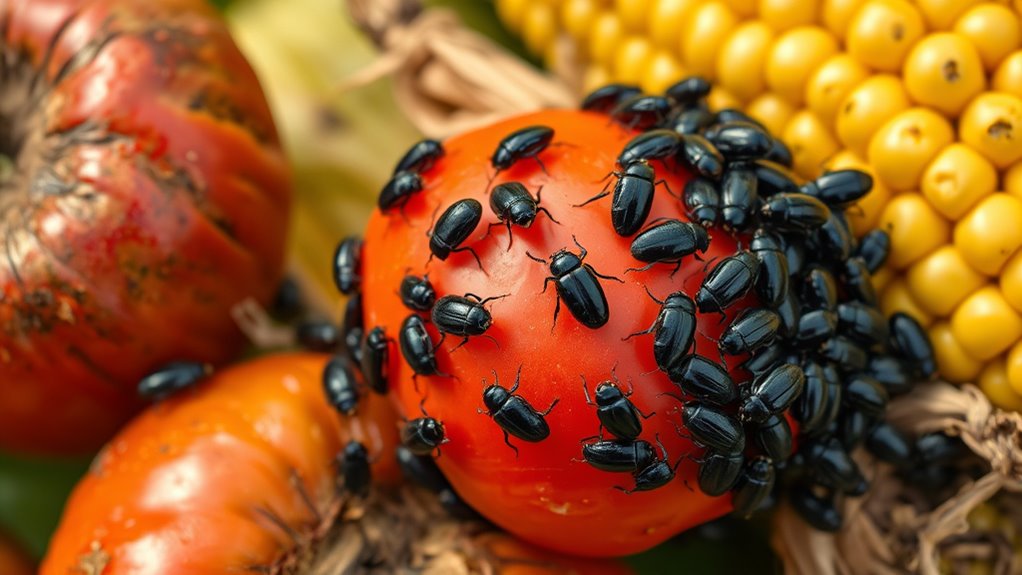
If you notice sap beetles on your overripe tomatoes and corn, it’s a sign that these pests are drawn to decaying plant material. While their presence can be frustrating, it also offers an opportunity to better understand their role and how to manage them effectively. Sap beetles are not only attracted to rotting produce but can also impact your garden’s ecosystem, including pollination benefits. Although they’re often seen as pests, some varieties can help with pollination by transferring pollen between plants, especially in areas where natural pollinators are scarce. Recognizing this dual role is essential for developing a balanced approach to pest management.
You might be tempted to reach for chemical pesticides to control sap beetle populations, but pesticide management should be approached carefully. Overusing pesticides can harm beneficial insects and disrupt your garden’s natural pollination process. Instead, focus on integrated pest management strategies that combine cultural, physical, and biological controls. For instance, removing overripe or rotting fruit and vegetables regularly minimizes the attractant for sap beetles, reducing their numbers naturally. Installing physical barriers like row covers can prevent these beetles from reaching your plants, especially during peak beetle activity.
Use cultural and physical controls to manage sap beetles naturally.
Monitoring your garden consistently is indispensable. When you see sap beetles, inspect your plants closely for signs of damage or infestation. Traps with attractants can also help catch adult beetles before they lay eggs on your produce, giving you better control over their population without resorting to pesticides. If you decide that pesticide use is necessary, choose targeted products and apply them carefully, following all label instructions to minimize environmental impact and avoid harming pollinators that support your garden’s health. Additionally, understanding the role of beneficial insects in natural pest control can help you maintain a balanced ecosystem in your garden.
Understanding the balance between pest control and pollination benefits helps you make smarter decisions for your garden. Sap beetles, when managed properly, can coexist with healthy plant growth, especially if their role in pollination is considered. Maintaining good garden hygiene, selecting resistant plant varieties, and implementing non-chemical controls can keep sap beetles in check without sacrificing the benefits they might contribute to pollination. Remember, the goal is to keep your garden productive and healthy, which involves managing pests while nurturing beneficial insects that support crop development.
Frequently Asked Questions
How Do Sap Beetles Detect Overripe Produce From a Distance?
You can bet sap beetles detect overripe produce from a distance through a combination of chemical cues and visual signals. They smell the ripe fruit’s volatile compounds, which act as chemical cues guiding them toward potential food sources. At the same time, they recognize visual signals like color and shape, helping them identify overripe tomatoes or corn from afar. This dual sensing system guarantees they efficiently locate decaying, nutritious produce.
Are Sap Beetles Harmful to Human Health or Crops Other Than Tomatoes and Corn?
Did you know that sap beetles can cause up to 20% crop damage in affected fields? They’re not harmful to human health, but they can harm other crops like berries and melons. Using pesticides raises concerns about safety and environmental impact. While they mainly target overripe produce, their activity can lead to economic losses, emphasizing the importance of effective pest management to protect various crops from damage.
What Natural Predators Help Control Sap Beetle Populations?
You can control sap beetle populations naturally by encouraging natural pest predators like lady beetles, lacewing larvae, and predatory beetles. These biological control agents hunt and eat sap beetles, reducing their numbers without chemicals. To attract them, plant diverse flowers, provide shelter, and avoid broad-spectrum pesticides. By fostering a healthy ecosystem, you help keep sap beetle populations in check and protect your crops effectively.
Can Sap Beetles Infest Stored or Canned Tomatoes and Corn?
Sap beetles typically don’t infest stored or canned tomatoes and corn because their behavior is focused on fresh, overripe, or damaged produce. They are attracted to crop damage patterns on the outside, not inside sealed containers. However, if you store overripe or damaged produce improperly, it may attract sap beetles, increasing the risk of infestation. Proper storage and timely disposal of overripe produce help prevent these pests.
Do Sap Beetles Transmit Any Plant Diseases to Tomatoes or Corn?
No, sap beetles don’t typically transmit plant diseases to tomatoes or corn. Their main role is as scavengers, feeding on overripe or decaying fruit, rather than spreading pathogens. You might worry about disease transmission or pathogen spread, but these beetles aren’t known to carry harmful microbes that affect healthy plants. Focus on removing infested or rotting produce to prevent attraction, rather than concern over disease transmission by sap beetles.
Conclusion
To keep your tomatoes and corn safe from sap beetles, stay vigilant as if you’re guarding a treasure. Regularly check for overripe produce and remove it promptly, because these pests thrive on rotting material like moths to a flame. By staying proactive, you’ll create a barrier that keeps your garden healthy and thriving. Remember, a little action now saves a lot of trouble later—think of it as giving your garden a gentle hug to keep pests at bay.