
Insect frass reveals valuable clues about your colony’s health and the overall environment. If you notice clean, well-formed droppings, it indicates happy, healthy insects and balanced conditions. Discolored, moldy, or foul-smelling frass suggests contamination, pest issues, or stress factors like overcrowding or high humidity. Unusual amounts of droppings may signal pest activity. By observing these signs, you can adjust your system for better pest control and healthier compost. Keep exploring to learn more about interpreting insect droppings.
Key Takeaways
- Frass appearance and consistency reveal insect health, environmental conditions, and possible pest infestations.
- Discolored, moldy, or foul-smelling droppings indicate contamination or stress in the insect colony.
- Regular inspection of droppings helps in early pest detection and prevents pest spread.
- Frass rich in nutrients accelerates composting and enhances soil fertility.
- The quality of insect droppings reflects environmental balance, guiding optimal rearing and composting practices.

Insect frass, the waste produced by insects such as crickets, mealworms, and black soldier flies, is gaining recognition as a valuable natural fertilizer. But beyond its role in enriching soil, frass can also serve as an insightful tool for pest detection and improving composting benefits. When you observe insect droppings, you gain clues about the health of your insect colonies and the overall conditions of your composting system. Recognizing these signs helps you catch potential issues early, whether it’s a pest problem or a sign that your compost isn’t thriving.
Insect frass reveals insect health and compost conditions, helping you detect pests and optimize your composting system.
If you notice an unusual amount of frass, or if it appears discolored or moldy, it may signal pest activity or contamination. For instance, pests like mites or mold can invade your compost or insect rearing setups, and their presence often correlates with changes in frass composition. By regularly inspecting the droppings, you can detect early signs of pest infestation before it spreads, saving you time and effort in managing larger problems later. This proactive approach enhances pest detection strategies, allowing you to take targeted actions such as adjusting moisture levels, adding natural deterrents, or improving airflow to discourage pests.
Moreover, insect frass is a boon for composting benefits. It accelerates the breakdown process when incorporated into compost piles, thanks to its rich nutrient profile. Using frass as a fertilizer boosts plant growth by providing essential nutrients like nitrogen, phosphorus, and potassium. When you add it to your compost, you’re not only recycling waste efficiently but also creating a nutrient-dense amendment that improves soil health and plant productivity. The presence of frass also indicates a balanced compost environment, as healthy insect activity typically correlates with ideal microbial processes and decomposition rates.
You should also consider that the quality of frass reflects the conditions within your insect-rearing or composting system. Healthy insects produce clean, well-formed droppings, whereas signs of distress—such as irregular shapes or foul odors—may point to environmental stressors like improper humidity or overcrowding. These signals help you fine-tune your system for better pest management and composting efficiency. Additionally, understanding the nutritional profile of insect frass can help you optimize its use as a fertilizer, ensuring your plants receive the right balance of nutrients. In summary, insect frass is more than just waste; it’s a diagnostic tool that guides you toward healthier insects, better compost, and more sustainable practices. By paying close attention to what the droppings tell you, you maximize both pest detection and composting benefits, making your composting process more productive and environmentally friendly.
As an affiliate, we earn on qualifying purchases.
Frequently Asked Questions
How Can I Distinguish Insect Frass From Other Debris?
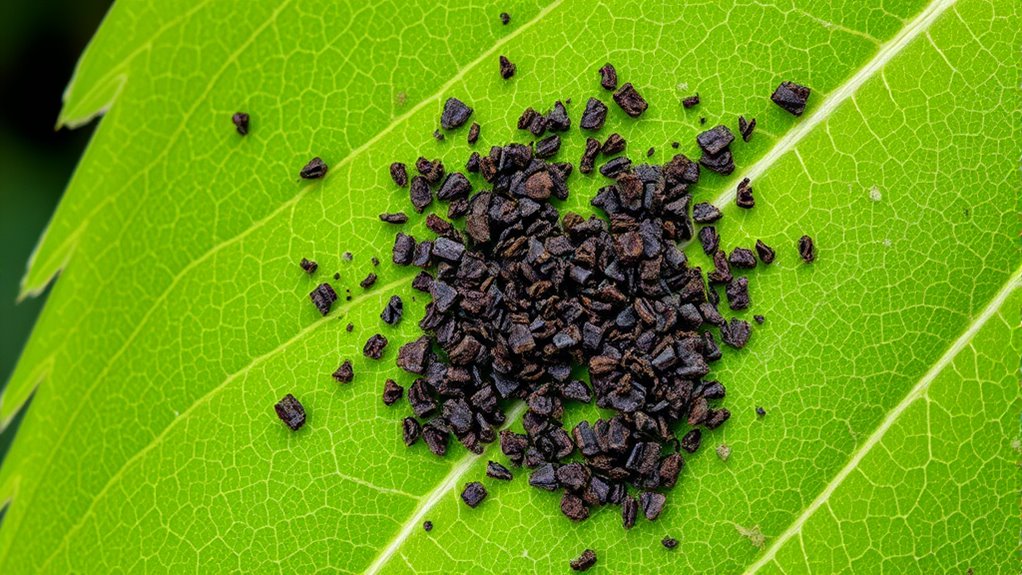
To distinguish insect frass from other debris, use identification techniques like examining its size, shape, and consistency. Insect frass is often granular or pellet-like, sometimes resembling small sawdust or coffee grounds, but usually darker and more uniform than common debris like dirt or plant matter. Look for signs of insect activity nearby, such as webbing or tunnels, to confirm it’s frass. Comparing it to other debris helps you identify true insect droppings accurately.
What Insects Produce the Most Noticeable Frass?
You’ll notice caterpillar droppings are small, pellet-shaped, and often found beneath their feeding sites, while termite feces look like tiny, pellet-like grains, sometimes forming mounds. Caterpillars produce noticeable frass because they’re active feeders, leaving behind a trail of droppings. Termites, on the other hand, deposit their feces in specific areas, which can help you identify their presence. Recognizing these signs helps you determine which insect is responsible.
Is Insect Frass Safe for Plants and Humans?
Insect frass is generally safe for plants and humans when used as an organic fertilizer, providing essential nutrients. It can also aid in pest identification, helping you spot specific insect activity early. Just make certain you handle it with care, wash your hands afterward, and avoid inhaling dust. Incorporating insect frass into your gardening routine boosts plant health naturally, making it a valuable, eco-friendly addition to your pest management and fertilization practices.
How Often Should I Check for Insect Frass in My Home?
Think of your home as a fortress, and insect frass as tiny clues to invaders. You should inspect for frass weekly, especially in hidden corners like behind furniture or within pantry crevices. Regular inspection keeps pests at bay. When you find frass, clean thoroughly with vacuuming and wiping, then seal cracks. Staying vigilant with routine checks and cleaning tips guarantees your home remains pest-free and safe for everyone.
Can Insect Frass Indicate a Pest Infestation Early?
Yes, insect frass can indicate a pest infestation early. By regularly inspecting for droppings, you improve pest detection and catch problems before they become severe. Frass is often one of the first signs pests are present, acting as an early warning system. Keep an eye on common hiding spots and note any new droppings, so you can address the issue promptly and prevent further damage.
As an affiliate, we earn on qualifying purchases.
Conclusion
So, next time you spot insect frass, remember it’s more than just droppings—it’s a tiny, accidental messenger. Sometimes, it’s the only clue you have about what’s happening beneath the surface. Coincidentally, the same frass that signals pests or health issues can also lead you to better plant care or pest management. Pay attention; these small signs often reveal big stories, helping you stay one step ahead without even realizing it.
insect droppings pest detection kit
As an affiliate, we earn on qualifying purchases.
As an affiliate, we earn on qualifying purchases.
natural compost fertilizer insect frass
As an affiliate, we earn on qualifying purchases.
As an affiliate, we earn on qualifying purchases.