Bark splits in trees can result from cold injury caused by freezing temperatures and rapid temperature changes, which cause the outer layers to crack and expand. Pests can also cause damage, but their activity usually shows signs like holes or sawdust. To tell the difference, consider the timing and appearance of the damage. If you want to understand how to protect your trees from these issues, there’s more to explore.
Key Takeaways
- Cold injury often causes bark splits due to temperature fluctuations and winter stress.
- Pests typically create holes or gnaw marks, not large cracks, in the bark.
- Bark splits from cold damage usually occur during or after severe cold snaps.
- Pest damage may be accompanied by other signs like frass, holes, or insect presence.
- Proper pruning and tree care can reduce vulnerability to cold injury and pest entry.
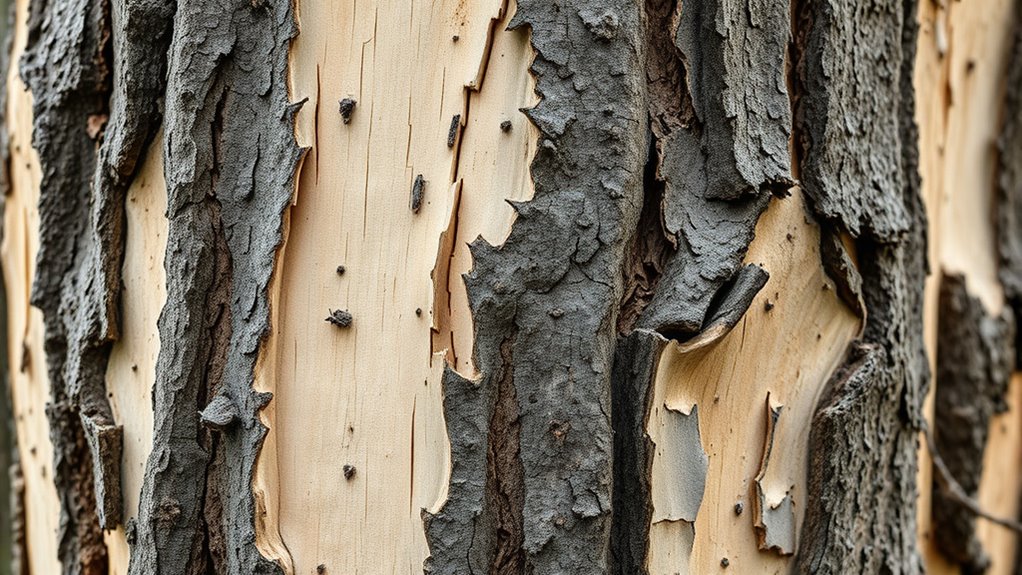
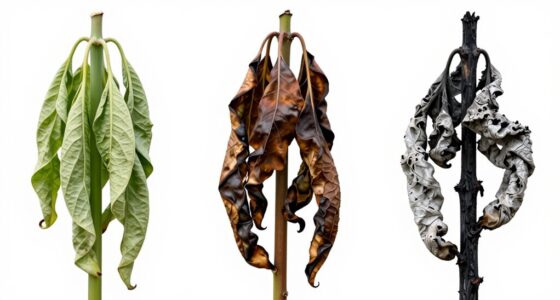
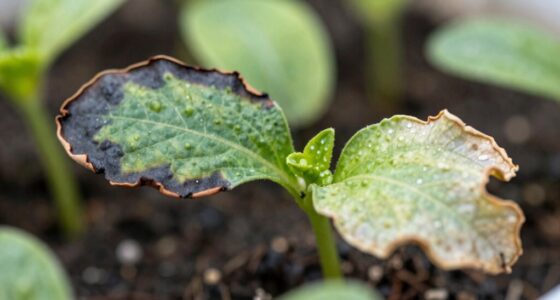
Have you ever noticed bark splitting on trees and wondered what causes it? It’s a common concern among gardeners and tree enthusiasts, especially when the weather turns cold. Bark splits can result from various factors, but understanding the role of winter damage and proper tree pruning can help you prevent or address these issues effectively. When cold temperatures strike, trees undergo stress, and their bark can crack or split as a response to the sudden temperature fluctuations. This type of winter damage often occurs when rapid temperature changes cause the outer layers of the tree to expand and contract at different rates, leading to cracks. These splits are particularly noticeable on young or thin-barked trees, which lack the insulation needed to withstand severe cold snaps.
Tree pruning plays a significant role in both the health of your trees and how they respond to winter conditions. If you prune your trees properly in the right season, you can reduce the risk of bark splitting caused by winter damage. Pruning removes dead or weak branches, improving overall tree vigor and reducing vulnerability to cold stress. However, improper pruning—such as cutting during the wrong time of year or making incorrect cuts—can create entry points for pests or pathogens, further complicating the issue. It’s best to prune in late winter or early spring, just before new growth begins, to minimize stress and allow the tree to recover before the coldest months arrive. Proper pruning also promotes a strong, healthy structure that’s better equipped to handle winter’s challenges. Additionally, understanding tree physiology can help you better anticipate how your trees will respond to environmental stresses and prevent damage.
tree wound dressing for bark repair
As an affiliate, we earn on qualifying purchases.
As an affiliate, we earn on qualifying purchases.
Frequently Asked Questions
Can Bark Splits Be Reversed or Repaired?
Bark splits can often be repaired through proper tree repair techniques, but full bark healing depends on the injury’s extent. You should gently clean the wound, remove any loose bark, and apply a tree wound dressing if needed. Keep the tree healthy with proper watering and fertilization to promote bark healing. While minor splits may heal naturally, larger injuries might require professional intervention to guarantee the tree’s long-term health.
Are Certain Tree Species More Prone to Bark Splitting?
Certain tree species are more prone to bark splitting due to their species vulnerability and bark characteristics. You’ll notice species like maples, oaks, and young trees often develop splits because their bark is thinner or more fragile. These trees are more sensitive to temperature fluctuations, sunscald, and mechanical damage. To protect your trees, understand their specific vulnerabilities and consider proper pruning and mulching to reduce stress and minimize bark splitting risks.
How Does Tree Age Affect Bark Splitting Susceptibility?
As a tree ages, its bark vulnerability often increases, making older trees more susceptible to bark splitting. You’ll notice that mature trees develop more cracks and splits due to ongoing growth stresses and environmental factors. Tree aging weakens bark’s elasticity, so you should monitor older trees closely for signs of damage. Proper maintenance, like watering and mulching, can help reduce the risk of bark splitting caused by aging.
What Long-Term Effects Do Bark Splits Have on Tree Health?
Bark splits can weaken your tree’s resilience over time, making it more vulnerable to pests and diseases. If you don’t address them, they may hinder bark regeneration, affecting nutrient flow and overall health. Long-term, these splits can lead to structural issues and reduce your tree’s lifespan. Regular inspections and timely repairs help maintain bark integrity, ensuring your tree stays healthy and resilient for years to come.
Are There Preventative Measures to Avoid Bark Splitting?
To prevent bark splitting, you should use tree wrapping in harsh winter conditions to protect the bark from extreme temperature fluctuations. Additionally, employ proper pruning techniques to avoid unnecessary stress and weak points in the tree’s structure. Regularly inspecting your trees and addressing issues early can also reduce the risk of splits. These proactive steps help maintain healthy bark and overall tree health during seasonal changes.
As an affiliate, we earn on qualifying purchases.
Conclusion
So, next time you spot bark splits, don’t jump to conclusions. Whether it’s cold injury or pests, your keen eye and a bit of detective work will help you figure it out. Remember, even the great Sherlock Holmes would agree that careful observation beats jumping to assumptions. Think of it like a jolly good mystery—solving it keeps your trees healthy and happy. Stay vigilant, and your garden will thank you for it!
As an affiliate, we earn on qualifying purchases.
As an affiliate, we earn on qualifying purchases.