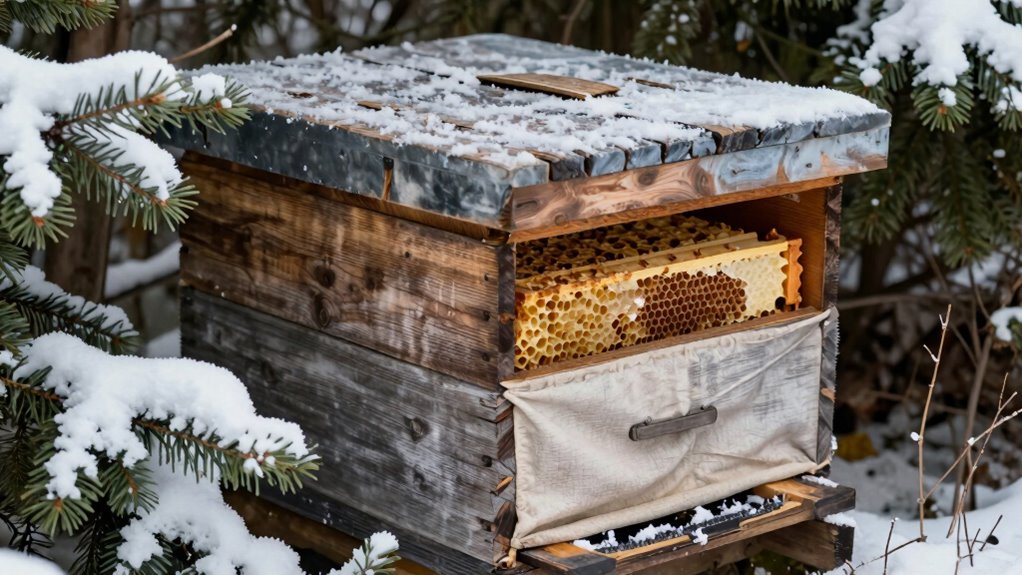

To balance insulation and ventilation in your hive during winter, insulate to keep warmth inside and prevent cold stress, but allow enough airflow to reduce moisture buildup and mold. Use adjustable vents placed near the top and bottom to promote airflow without creating drafts. Properly sealing gaps around entrances and cracks helps retain heat while letting excess moisture escape. For tips on optimizing your hive’s winter setup, keep exploring to guarantee your bees stay healthy and safe all season.
Key Takeaways
- Balance insulation and ventilation to maintain warmth while allowing moisture escape and preventing dampness.
- Place adjustable vents strategically to promote airflow without creating cold drafts.
- Use snug but breathable insulation materials to keep heat in and moisture out.
- Regularly monitor hive temperature and humidity to adjust insulation and ventilation as needed.
- Avoid over-insulating, which can trap moisture, or excessive ventilation, which can cause heat loss.
As an affiliate, we earn on qualifying purchases.
Common Challenges Bees Face in Winter
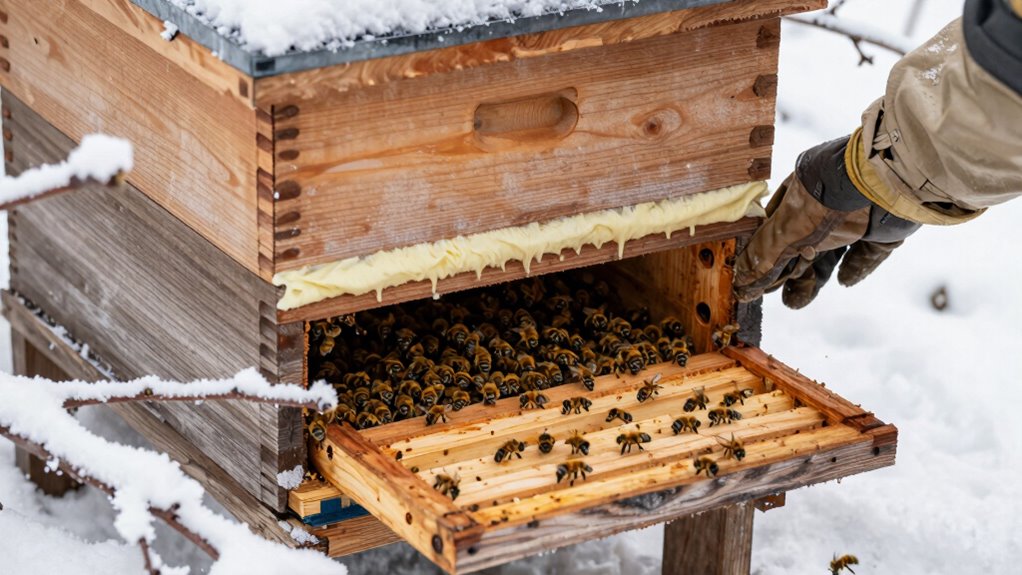
Winter presents several challenges for bees, and understanding these is key to helping your hive survive the cold months. Cold temperatures can cause bees to cluster tightly and conserve energy, but if your hive isn’t properly prepared, they risk exposure or starvation. Poor ventilation can lead to excess moisture buildup, which can freeze or promote mold growth, harming the colony. Using the right beekeeping equipment, like insulated hive covers or entrance reducers, helps maintain ideal conditions. Additionally, hive relocation might be necessary if your current site exposes bees to harsh winds or poor insulation. Ensuring your hive is protected from the elements and properly situated minimizes these winter risks, giving your bees the best chance to endure until spring. Proper ventilation is essential to prevent moisture problems and keep your bees healthy during winter months. To further support your hive’s winter resilience, consider implementing moisture control techniques that help regulate humidity levels inside the hive. Incorporating climate regulation strategies can also enhance the hive’s ability to withstand fluctuating temperatures and humidity, and understanding insulation options can further improve winter survival rates. Additionally, ensuring good airflow within the hive can prevent dangerous condensation from forming on the bees and combs, promoting a healthier environment during the cold season.
As an affiliate, we earn on qualifying purchases.
Why Insulation Is Key for Winter Hive Success
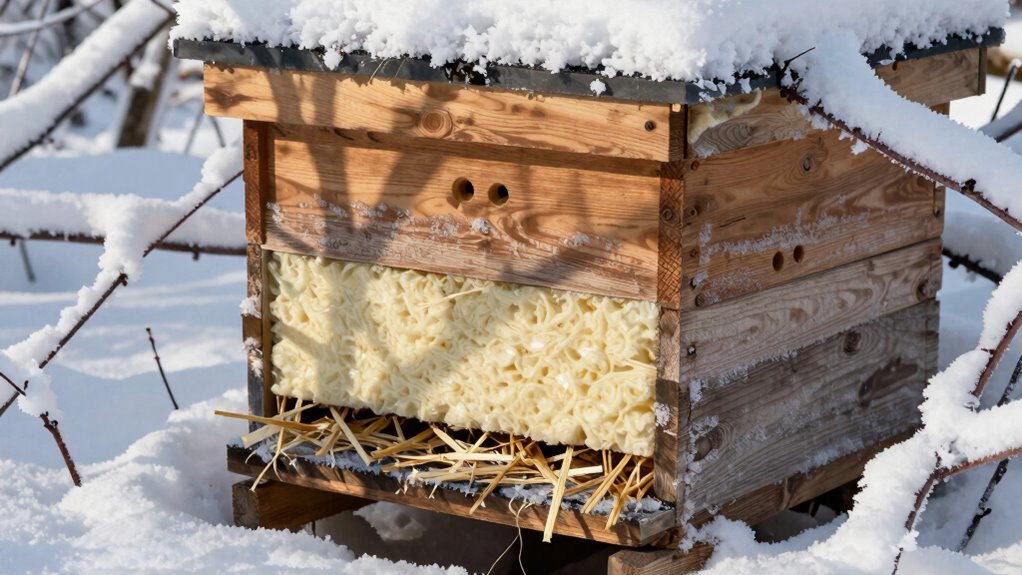
Insulating your hive helps keep the temperature steady, so your bees don’t have to work as hard to stay warm. It also prevents moisture from building up inside, which can cause problems like mold or chilled bees. Proper insulation is essential for giving your hive the best chance to survive and thrive through winter.
Maintaining Temperature Stability
Maintaining a stable temperature inside your beehive is essential for the health and productivity of your colony during colder months. Proper insulation helps regulate the bees’ metabolic rate, ensuring they don’t overexert themselves trying to stay warm. Using effective hive insulation materials, like foam boards or straw, creates a barrier against the cold. Visualize a cozy hive where:
- The bees cluster tightly, conserving heat
- Warm air stays trapped inside, reducing drafts
- The hive remains consistent despite outside temperature swings
This balance prevents stress and energy depletion, supporting the colony’s survival. Choosing the right hive insulation materials and ensuring they are well-secured help maintain that critical temperature stability, giving your bees the best chance to thrive through winter.
Preventing Moisture Build-Up
Since moisture can quickly become a serious problem inside your hive during colder months, proper insulation plays a crucial role in preventing it from building up. When your hive isn’t well-insulated, hive moisture can increase due to condensation, raising humidity levels inside the hive. High humidity can lead to mold, disease, and stressed bees struggling to stay healthy. To control humidity, ensure your hive is insulated enough to keep the internal temperature stable, reducing the chance of condensation forming on the walls. Adequate insulation helps maintain a balanced environment where moisture doesn’t accumulate excessively. Remember, controlling humidity isn’t just about insulation; it’s about creating a sealed, stable space that prevents excess hive moisture, ensuring your bees stay warm, dry, and healthy through winter. Proper ventilation considerations are also essential to prevent moisture buildup and promote airflow within the hive, helping to manage humidity levels effectively. Incorporating proper insulation techniques can further assist in maintaining optimal moisture balance inside your hive, especially when combined with good airflow management. Additionally, understanding the natural hive environment can guide you in selecting the best insulation and ventilation strategies to suit your local climate.
beekeeping moisture control equipment
As an affiliate, we earn on qualifying purchases.
As an affiliate, we earn on qualifying purchases.
How Good Ventilation Prevents Moisture and Mold
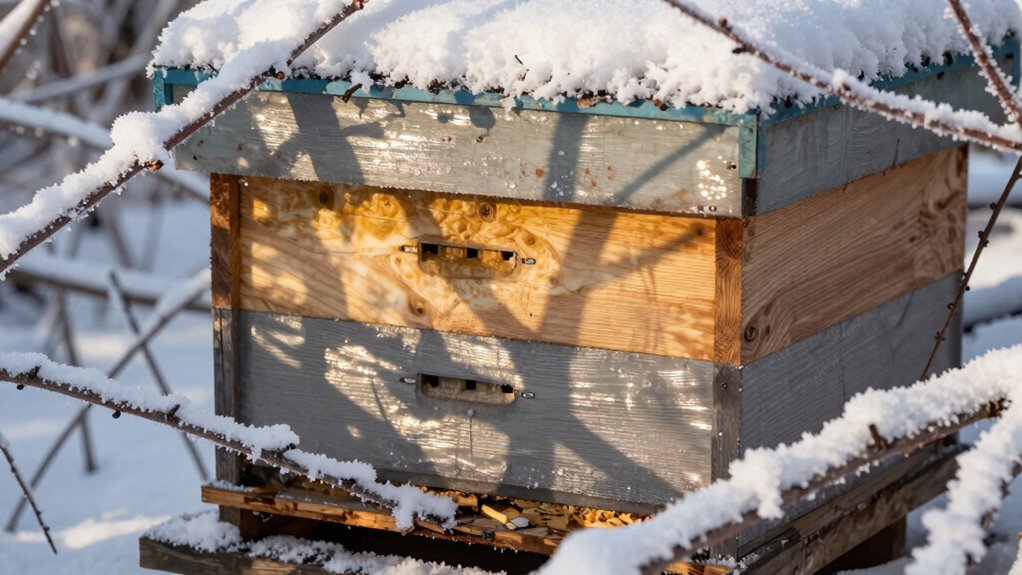
Good ventilation is key to preventing moisture buildup inside your beehive during winter. Proper airflow reduces humidity, stopping mold from forming and keeping your bees healthy. When ventilation works well, you’ll notice:
- Fresh air circulating, pulling moisture out
- Reduced condensation on hive walls
- Lower risk of mold, which can harm bees and complicate hive maintenance
Maintaining good airflow also supports beekeeper safety by minimizing the risk of mold-related issues that can weaken hives. It’s essential to strike the right balance, ensuring the hive is ventilated without causing drafts that chill your bees. Proper ventilation helps keep conditions stable, making hive maintenance easier and safer. Additionally, understanding the role of AI in agriculture can provide insights into modern beekeeping practices and innovations. Focusing on airflow management is crucial for maintaining optimal conditions inside the hive, and understanding time zone management can help coordinate apiary activities across different locations. Recognizing the importance of climate control techniques can further enhance hive health during winter months.
As an affiliate, we earn on qualifying purchases.
How to Balance Insulation and Ventilation in Your Hive
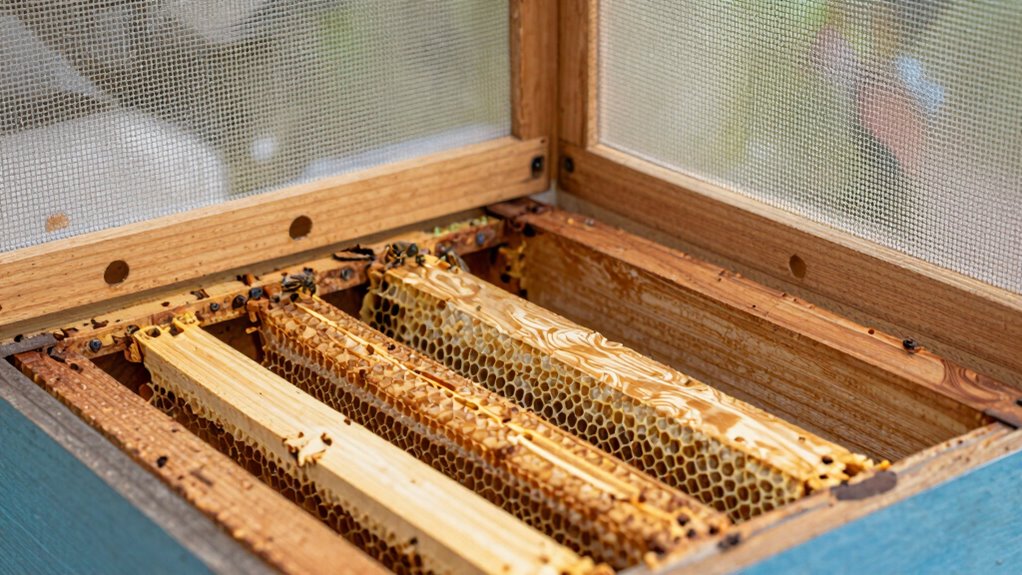
Balancing insulation and ventilation is essential for keeping your hive warm without trapping excess moisture. Proper hive insulation helps retain heat, especially during cold months, while adequate ventilation strategies prevent moisture buildup that can lead to mold or chilling. To achieve this balance, make certain your hive is well-insulated but also allows for airflow. Use insulating materials that don’t block ventilation pathways, such as insulating wraps with vents or screened openings. Keep internal airflow enough to manage humidity but not so strong that it drafts directly on the bees. Regularly monitor your hive for signs of moisture or drafts, adjusting insulation or ventilation as needed. Incorporating knowledge about moisture management can further optimize hive conditions during winter. Understanding airflow patterns can help prevent issues related to inadequate ventilation, ensuring a healthier environment for your bees. Additionally, considering thermal bridging in your insulation design can prevent heat loss and cold spots within the hive, promoting better overall warmth. Paying attention to insulation quality ensures that your hive maintains a stable temperature while allowing excess moisture to escape, creating a healthy environment that promotes bee activity and prevents winter-related issues. Properly balancing humidity control is also crucial in maintaining optimal conditions inside the hive during colder months.
Practical Tips for Insulating Your Hive Effectively

To insulate your hive effectively, start by choosing the right materials that provide warmth without obstructing ventilation. Focus on creating proper thermal layering to keep heat in while allowing moisture to escape. Use natural insulators like foam boards or straw, ensuring they fit snugly without gaps. To prevent drafts, seal any cracks around entrance reducers and hive edges. Consider adding a breathable inner cover to help regulate humidity and support draft prevention. Here are some practical tips:
Proper hive insulation with natural materials and sealed gaps maintains warmth and ventilation.
- Use foam or wool insulation inside hive walls for efficient thermal layering.
- Seal all gaps and cracks to prevent cold drafts from entering.
- Add a ventilated cover or lid to protect insulation while maintaining airflow.
- Proper ventilation is essential to prevent moisture buildup and maintain hive health during winter.
Ventilating Your Hive Without Losing Warmth
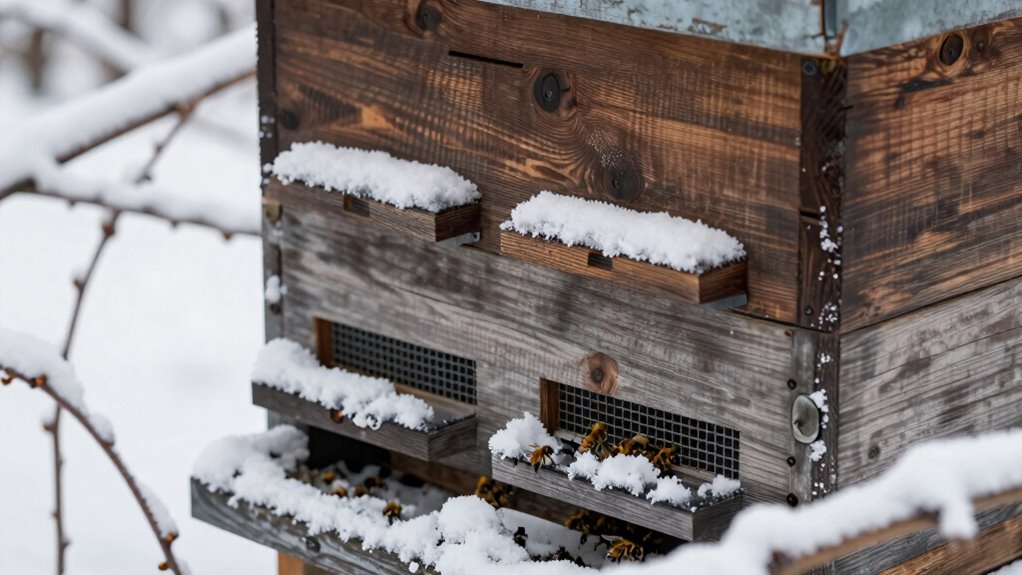
Proper ventilation is key to keeping your hive healthy during winter, but it can be tricky to balance airflow and warmth. You should focus on strategic vent placement to prevent drafts while maintaining good air quality. Remember, insulation and ventilation work together—too much of one can undermine the benefits of the other. Incorporating smart ventilation solutions can help automate and optimize this balance for your hive. Additionally, understanding the hive microclimate can assist in making more precise adjustments to ventilation and insulation for optimal winter health.
Strategic Vent Placement
Effective vent placement is essential for maintaining the right airflow without letting heat escape during winter. Proper positioning ensures your beehive design promotes airflow optimization while retaining warmth. To achieve this, consider placing vents strategically:
- Near the top of the hive to allow moist, stale air to escape.
- On the opposite side at the bottom to draw in fresh, dry air.
- Using adjustable vents to control airflow based on weather conditions.
This setup encourages consistent air exchange without creating drafts that chill the colony. Balancing ventilation** helps maintain optimal hive conditions by preventing excess moisture buildup and reducing the risk of mold or disease. Focus on creating a balance where ventilation supports hive health but doesn’t compromise insulation. Well-placed vents help prevent moisture buildup and promote airflow optimization, ensuring your bees stay warm and healthy through the cold months. Proper vent placement is a key element in successful winter hive management. Additionally, selecting the right lifestyle products** can help improve your overall beekeeping experience and ensure your hive remains well-maintained throughout the year.
Insulation Versus Ventilation
Balancing insulation and ventilation is essential for keeping your hive warm without risking moisture buildup or drafts. Proper hive insulation helps retain heat, but too much can trap moisture, leading to mold or rot. Ventilation control allows stale air and excess moisture to escape while maintaining warmth. To achieve this, make certain your hive has adequate insulating materials like foam or quilt boxes, but also incorporate adjustable vents that you can open slightly during winter. This way, you prevent condensation without cooling the hive excessively. Remember, insulation keeps the warmth in, while ventilation manages moisture and air quality. Finding the right balance ensures your bees stay cozy and healthy throughout winter, reducing stress and increasing their chances for spring survival.
Common Winter Hive Prep Mistakes to Avoid
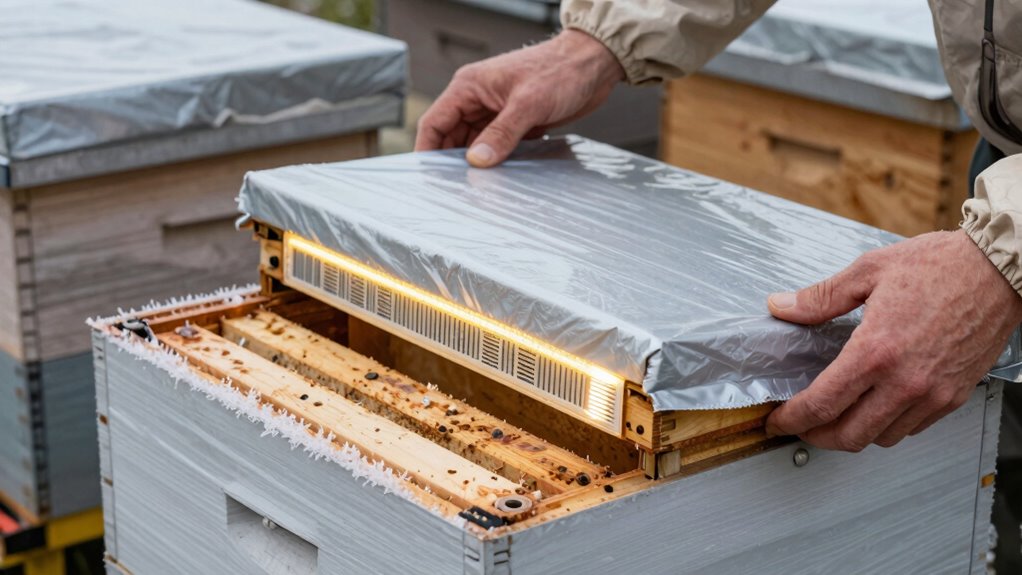
One of the most common mistakes beekeepers make when preparing their hives for winter is closing them up too tightly, which can trap moisture and cause mold or rot. This often happens when you don’t consider proper ventilation or over-insulate the hive. To avoid this, pay attention to your beekeeping equipment and hive location. Poor ventilation can lead to excess humidity, while improper insulation might create cold spots. Make sure your hive has enough airflow without losing heat. Be cautious of these pitfalls:
- Sealing all ventilation openings, blocking natural airflow
- Over-insulating the hive, reducing necessary moisture escape
- Placing the hive in a poorly chosen location with excessive shade or wind exposure
Balancing insulation and ventilation is key to winter success.
Monitoring Your Hive During Winter: Signs of Stress and How to Respond
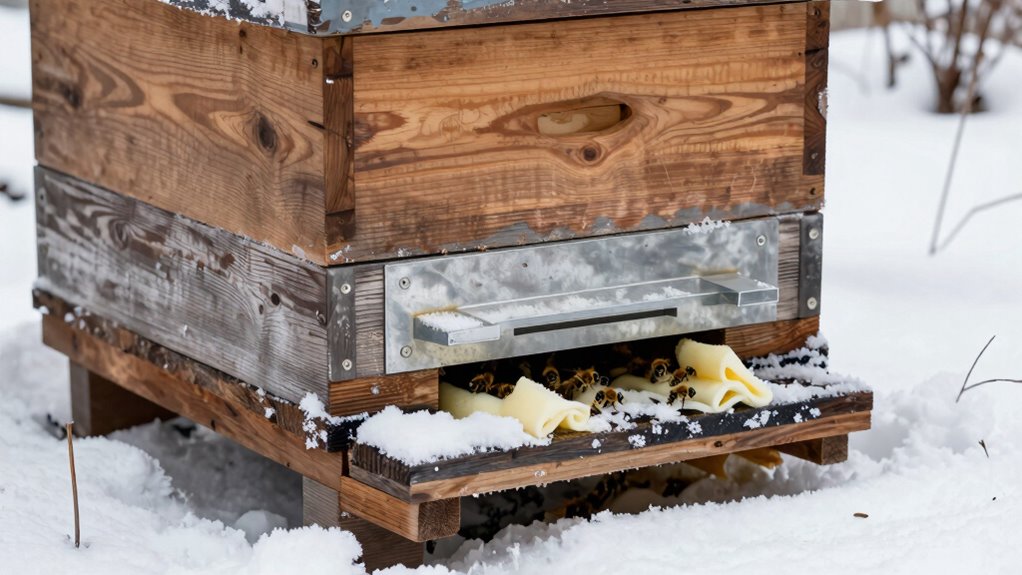
Monitoring your hive throughout winter is essential to catch early signs of stress before problems escalate. Keep an eye on beehive health by inspecting for unusual cold spots, excessive condensation, or dead bees near the entrance. These can indicate winter stress affecting the colony’s ability to maintain temperature and ventilation. Listen for increased buzzing or activity inside the hive—this may signal the bees are struggling or dehydrated. Watch for signs of moisture buildup or mold, which can weaken the hive. If you notice these issues, respond by ensuring proper ventilation and adjusting insulation if necessary. Regular checks allow you to address problems promptly, helping your bees stay healthy and resilient through the cold months. Early intervention protects your hive’s winter survival and long-term vitality.
Frequently Asked Questions
How Can I Tell if My Hive Is Too Insulated?
You can tell if your hive is too insulated by checking for excess winter moisture inside. If you notice persistent condensation or mold, it indicates poor ventilation, often caused by high insulation density. Too much insulation traps moisture and prevents airflow, risking mold and chilling the bees. Adjust your insulation to allow some moisture escape while keeping enough warmth, and monitor hive conditions to guarantee proper balance.
What Materials Are Best for Hive Insulation?
Imagine you’re a beekeeper in the 21st century, choosing the best materials for hive insulation. Rigid foam boards are premier for insulation types, offering excellent thermal retention and moisture resistance. Wool or straw can be great eco-friendly options, providing natural insulation and breathability. When comparing materials, consider durability, ease of use, and how well they support hive ventilation. Properly selected insulation keeps your bees warm without overheating, ensuring a healthy winter hive.
How Often Should I Check on My Hive in Winter?
You should check your hive every few weeks during winter to guarantee it’s healthy and protected. Focus on winter feeding to keep the bees strong, and verify hive orientation to prevent drafts. Keep inspections brief and gentle, avoiding unnecessary disturbance. Regular checks help you monitor insulation and ventilation, maintaining the right balance for warmth and airflow. This way, your bees stay cozy and survive the cold season comfortably.
Can Improper Ventilation Harm My Bees?
Ever wonder if poor ventilation could harm your bees? Improper ventilation can cause excess hive moisture, leading to mold, cold spots, and even bee mortality. Without adequate ventilation gaps, humidity builds up, risking health and hive stability. You need to strike a balance—allow fresh air in without causing drafts. Proper ventilation keeps hive moisture in check, ensuring your bees stay warm, healthy, and productive all winter long.
What Are Signs My Hive Is Overheating?
If your hive is overheating, you’ll notice the brood temperature rising above 95°F, which can stress your bees. Look for excess hive condensation, especially on the inner walls, indicating poor ventilation. Bees may cluster near the hive entrance or work harder to cool the hive, and you’ll see more bees actively fanning. Regularly check these signs to prevent overheating and keep your bees healthy through winter.
Conclusion
To keep your bees thriving through winter, strike the perfect balance between insulation and ventilation—think of it as a delicate dance, much like a courtier’s finesse. Too much warmth can trap moisture, while too much air can chill your hive. Regularly monitor for signs of stress, and don’t forget, even the wisest beekeeper knows that a well-prepared hive is your best defense against winter’s wrath. Keep at it, and your bees will thank you.