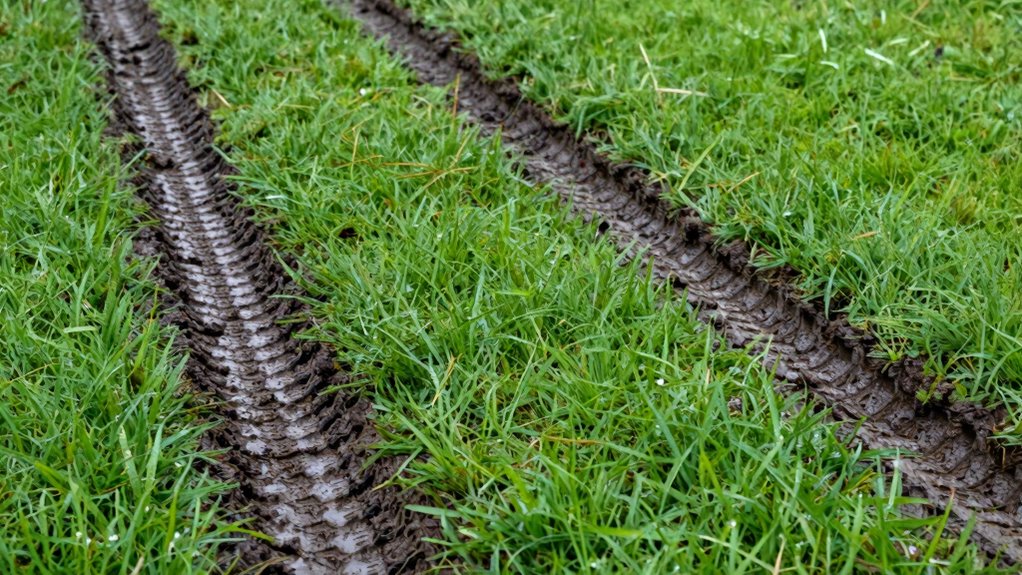
When your lawn is wet, wheel tracks stay visible longer because moisture makes the soil softer and more prone to compaction. This increased softness allows the tracks to sink deeper and linger longer, while the water-filled soil hampers grass recovery. Compact, wet soil also prevents grass from growing back quickly, keeping impressions visible for days. To understand how to speed up recovery and prevent lasting marks, keep exploring the causes and solutions.
Key Takeaways
- Wet soil is softer and more easily displaced, causing deeper and longer-lasting wheel marks.
- Moisture reduces soil strength, leading to increased compaction and slow recovery of grass.
- Waterlogged soil hampers grass root growth, delaying natural healing of wheel tracks.
- Soil crusting in wet conditions traps wheel marks, making them more visible for extended periods.
- Excess moisture impedes soil aeration and drainage, prolonging the time for wheel tracks to fade.

When your lawn is wet, wheel tracks tend to stay visible longer because the moisture makes the soil more susceptible to compaction and displacement. This is especially true when you’re using a mower, tractor, or any heavy equipment. The water content in the soil reduces its ability to resist pressure, which means the tracks you leave behind are more likely to deepen and linger. As a result, it becomes harder for the grass to recover quickly from the disturbance. The compacted soil around the wheel marks makes it difficult for roots to spread and absorb nutrients, and this can slow down grass recovery. The more compacted the soil, the longer it takes for the grass to regain its normal appearance and health.
Soil compaction is a key factor here. When the soil is saturated with water, its structure weakens, and the particles lose their natural spacing. Instead of supporting healthy root growth, the soil becomes dense and packed. This density creates a barrier for water, air, and nutrients to reach the roots effectively. As a result, the grass struggles to grow back in the areas where the soil has been pressed down. The compacted soil also increases the risk of creating a crust on the surface, which further hampers seed germination and grass recovery. If you’ve ever noticed that the footprints or wheel marks on your lawn stay visible for days after a mowing session during wet weather, this is the core reason why. Additionally, soil structure plays a crucial role in how quickly your lawn recovers from such disturbances. Improving soil health through organic amendments and proper management can also contribute to faster recovery and less persistent wheel tracks. Incorporating proper soil management practices can significantly enhance the soil’s resilience against compaction. Using appropriate equipment designed for wet conditions can further minimize soil disturbance and damage.
To minimize these effects, it’s best to avoid driving or mowing on wet lawns whenever possible. If you must do so, try to keep your equipment light and use wider tires to distribute the weight more evenly. After you’ve made tracks in wet soil, consider aerating the lawn to alleviate soil compaction and improve conditions for grass recovery. Aeration loosens the soil, allowing air, water, and nutrients to reach the roots more easily, which encourages healthier and faster grass growth. Over time, consistent aeration can help reduce the long-lasting visibility of wheel tracks and promote a more resilient lawn. Remember, patience is key—given time and proper care, your grass can recover from the compaction, but the process will be slower in moist conditions.
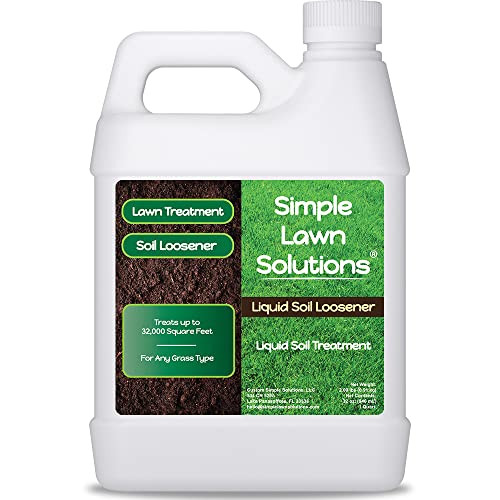
Liquid Soil Loosener- Soil Conditioner-Use alone or when Aerating with Mechanical Aerator or Core Aeration- Simple Lawn Solutions- Any Grass Type-Great for Compact Soils, Standing water, Poor Drainage
Liquid Soil Loosener: Can be used Alone or with Mechanical or Core Aeration, Aerating and Aerate Tools. Liquid…
As an affiliate, we earn on qualifying purchases.
As an affiliate, we earn on qualifying purchases.
Frequently Asked Questions
How Can I Prevent Wheel Tracks From Forming on Wet Lawns?
To prevent wheel tracks on wet lawns, guarantee your tires have proper pressure to reduce lawn compaction. Avoid driving on the grass when it’s very wet, as moisture makes tracks more visible and causes damage. Use wider tires or distribute weight evenly to lessen pressure. Additionally, wait until the lawn dries before moving your equipment, and consider using specialized turf-friendly wheels to minimize impact and preserve your lawn’s appearance.
Does Lawn Type Affect How Long Wheel Tracks Stay Visible?
Imagine your lawn as a canvas—different types leave distinct impressions. Yes, lawn type influences track visibility. Sandy soil drains faster, making wheel marks less lasting, while clay retains moisture, prolonging impressions. Likewise, dense grass offers more resistance, causing tracks to stay longer, whereas sparse grass reveals wheel marks quickly. Your lawn’s soil composition and grass density work like a natural canvas, shaping how long wheel tracks remain visible after a walk or mow.
Are There Specific Tires That Minimize Lawn Damage?
Yes, certain tires can minimize lawn damage. Look for tires with proper tire pressure and softer rubber compounds, as they distribute weight more evenly and reduce soil compaction. Lowering your tire pressure slightly increases surface area contact, decreasing the likelihood of deep wheel tracks. Opt for tires designed for lawn or garden use, which are specifically engineered to prevent damage and leave minimal marks on your wet or dry lawn.
How Does Lawn Maintenance Influence Track Visibility?
Lawn maintenance considerably influences track visibility by affecting soil compaction and grass resilience. When you regularly aerate your lawn, you reduce soil compaction, allowing roots to grow stronger and making grass more resilient to wheel marks. Proper fertilization and watering also help grass recover quickly, minimizing visible tracks. Consistent maintenance guarantees your lawn stays healthy, so wheel tracks are less noticeable, even after wet conditions or frequent use.
Can Certain Fertilizers Reduce Wheel Track Appearance?
Imagine applying a balanced fertilizer that improves soil health and reduces soil acidity. This can lessen wheel track visibility because healthier, well-nourished grass recovers faster and resists compaction. Fertilizer impact promotes stronger roots and better soil structure, which helps grass bounce back after lawn traffic. By maintaining best soil conditions, you make your lawn less prone to lasting wheel marks, especially in wet conditions where tracks tend to linger.

15×6.00-6 Lawn Mower Tire and Wheel Front Tire Compatible with John Deere Craftsman Husqvarna Riding Mowers Lawn Tractors
【Compatible and Specifications】 15×6.00-6 Lawn mower tires and wheels compatible with Craftsman John Deere Husqvarna Riding mowers, fit…
As an affiliate, we earn on qualifying purchases.
As an affiliate, we earn on qualifying purchases.
Conclusion
Next time you notice wheel tracks lingering in your wet lawn, remember that water increases soil compaction, making footprints and tracks more visible. *Interestingly enough*, studies show that soil remains compacted for up to a week after heavy rain, especially in clay-rich soils. So, if you want your lawn to recover quickly, avoid driving on it when it’s wet. By giving your grass time to dry and recover, you’ll keep your lawn looking pristine and healthy.

Walensee Lawn Aerator Spike Metal Manual Dethatching Soil Aerating Lawn with 15 Iron Spikes, Pre-Assembled Grass Plug Aerator Tools for Yard, Lawn Aeration, Garden Tool, Revives Lawn Health, Patented
【EFFECTIVE MANUAL LAWN AERATOR TOOL】: Walensee spike lawn aerator helps loosen soil and create small channels so air,…
As an affiliate, we earn on qualifying purchases.
As an affiliate, we earn on qualifying purchases.
Scotts EZ Seed Dog Spot Repair Sun and Shade, Combination Mulch, Grass Seed Mix and Soil Amendment to Neutralize and Repair Pet Spots, 2 lbs.
Repair Pet Spots: Scotts EZ Seed Dog Spot Repair Sun and Shade has a special salt neutralizer formula…
As an affiliate, we earn on qualifying purchases.
As an affiliate, we earn on qualifying purchases.