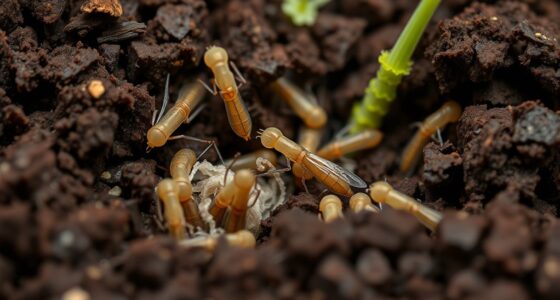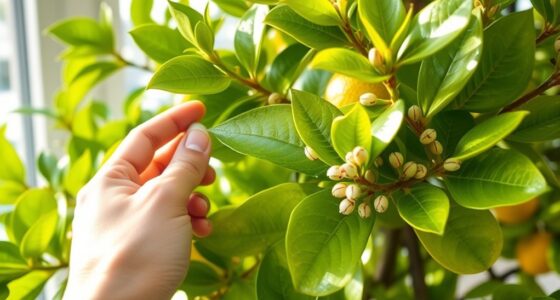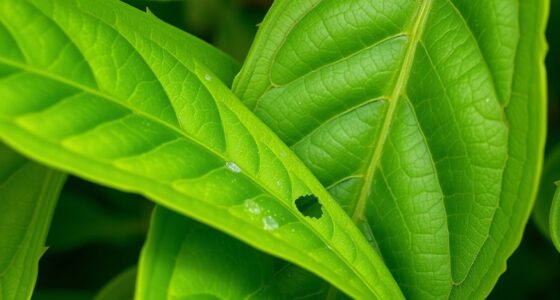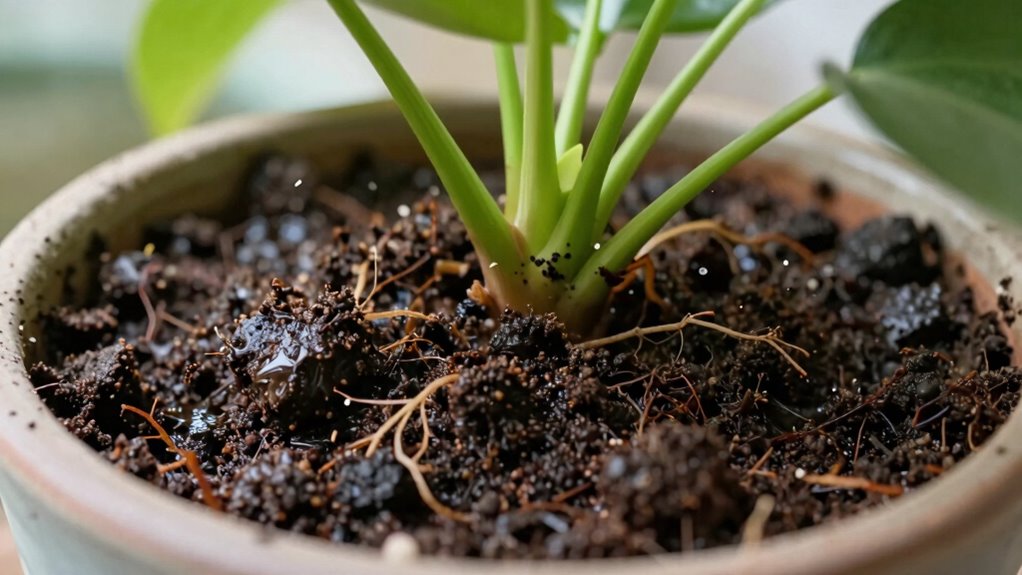

Using a potting mix that retains too much moisture is a common mistake that invites gnats and harms your houseplants. When the soil doesn’t drain well or stays overly wet, it creates the perfect habitat for fungus gnats to breed and lay eggs. Overwatering and choosing mixes lacking proper aeration worsen the problem. To keep pests and root issues at bay, guarantee your soil drains well and is suited for your plants. Keep exploring to discover more ways to improve your plant’s health.
Key Takeaways
- Using a potting mix that retains too much moisture creates ideal conditions for fungus gnats.
- Overwatering plants leads to waterlogged soil, attracting gnats and their larvae.
- Choosing mixes lacking proper aeration components encourages excess moisture buildup.
- Failing to allow soil to dry out between waterings sustains pest-friendly dampness.
- Ignoring soil drainage properties promotes persistent gnat infestations around houseplants.
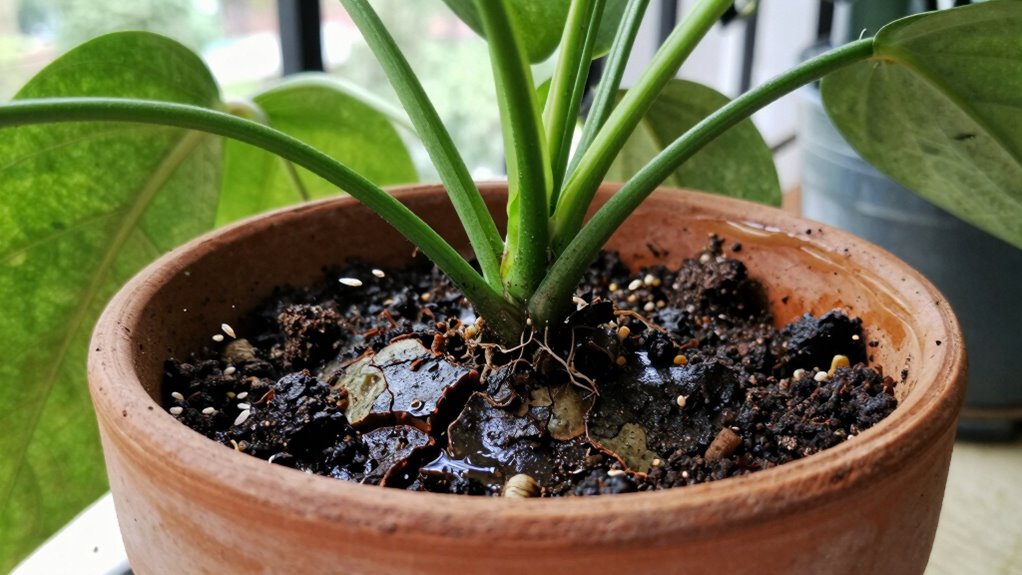
Have you ever wondered why your houseplants aren’t thriving despite your best efforts? One common mistake many plant owners make is choosing or making a potting mix that doesn’t suit the plant’s needs. A key issue stems from improper soil drainage, which results in water sitting around the roots longer than it should. When the soil retains too much moisture, it creates a perfect environment for pests like fungus gnats to thrive. These tiny insects are drawn to damp, poorly-drained soil, and their presence is often a sign that your soil isn’t doing its job properly. Over time, this excess moisture can also lead to nutrient deficiency, weakening your plants and making them more vulnerable to pests and diseases.
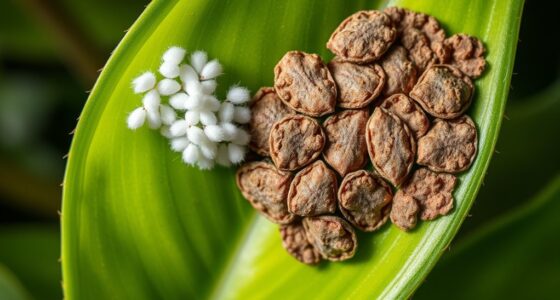
If your potting mix doesn’t drain well, you might notice your plants developing yellowing leaves or wilting despite regular watering. This happens because sitting water drowns the roots, preventing them from absorbing essential nutrients. When roots are compromised, your plants can’t get the nourishment they need, which leads to nutrient deficiency. This weakens their overall health and makes them more susceptible to pests, including gnats. The presence of these tiny pests often begins with small flying insects buzzing around the soil surface, and they lay eggs in the moist soil. When those eggs hatch, the larvae feed on organic matter and root debris, further damaging your plant’s roots and perpetuating a cycle of poor health and persistent pest problems. Ensuring proper soil drainage helps prevent these issues from developing in the first place. Additionally, choosing the right type of potting mix can significantly improve soil aeration and moisture control. Using a well-draining soil designed specifically for houseplants can make a significant difference in avoiding these issues. Understanding the importance of soil composition can help you select or create the best mix for your plants’ needs. Proper soil management practices are essential for maintaining healthy, pest-free houseplants.
well-draining houseplant potting mix
As an affiliate, we earn on qualifying purchases.
As an affiliate, we earn on qualifying purchases.
Frequently Asked Questions
How Can I Prevent Gnats From Returning After Treatment?
To prevent gnats from returning after treatment, you should reduce indoor humidity and improve soil aeration. Keep your houseplants in a well-ventilated area and avoid overwatering, as moist soil attracts gnats. Use a fan or loosen the soil surface to promote airflow. Regularly check for signs of moisture buildup, and consider using yellow sticky traps to catch any remaining gnats, ensuring they don’t come back.
Are Certain Houseplants More Prone to Gnat Infestations?
A wise gardener knows that certain houseplants, like ferns and succulents, are more prone to gnat infestations. You should pay attention to plant watering and soil drainage because overly moist soil attracts gnats. Plants with poor soil drainage or those watered excessively create perfect breeding grounds. To prevent infestations, make sure your plants have well-draining soil and avoid overwatering. This approach keeps your plants healthy and gnat-free.
Does Using Organic Potting Mix Reduce Gnat Problems?
Using organic potting mix can reduce gnat problems if you soil sterilize it first. Soil sterilization kills off larvae and eggs, preventing infestations. Additionally, organic fertilizers are less likely to attract gnats compared to chemical ones, as they don’t create excess moisture or organic matter that pests feed on. However, always make sure your mix is well-drained and avoid overwatering, which creates ideal conditions for gnats to thrive.
How Often Should I Repot to Avoid Gnat Issues?
You should repot your houseplants every 1-2 years to prevent gnat issues. This helps improve soil drainage and reduces excess moisture, which attracts gnats. When repotting, choose pest-resistant plants or use fresh, well-draining potting mix. Regularly inspecting and replacing old soil minimizes gnat breeding sites, keeping your plants healthier and gnat-free. Consistent repotting and soil care are key to avoiding pest problems.
Can Overwatering Cause Gnat Infestations?
Overwatering is a common culprit behind gnat infestations, as it creates ideal conditions for soil drainage issues and root rot. Did you know that over 70% of indoor plant problems stem from excessive watering? When you overwater, it keeps the soil overly moist, attracting gnats and promoting fungal growth. To prevent this, make sure your potting mix drains well and only water when the top inch feels dry, keeping gnats at bay.
fungus gnat control soil additive
As an affiliate, we earn on qualifying purchases.
As an affiliate, we earn on qualifying purchases.
Conclusion
By paying closer attention to your potting mix choices, you gently steer clear of subtle missteps that invite those unwelcome gnats. A mindful approach, such as ensuring proper drainage and avoiding overly damp soil, helps your houseplants flourish in harmony. Embrace these small adjustments as a refined touch of care, transforming your green sanctuary into a space of elegance and energy. With a little finesse, you can maintain a pristine environment that naturally discourages those tiny intruders.
indoor plant soil aeration mix
As an affiliate, we earn on qualifying purchases.
As an affiliate, we earn on qualifying purchases.
drainage-enhancing potting soil
As an affiliate, we earn on qualifying purchases.
As an affiliate, we earn on qualifying purchases.