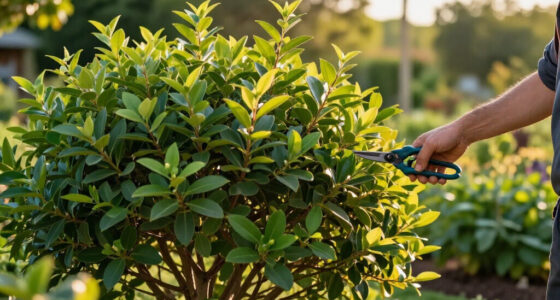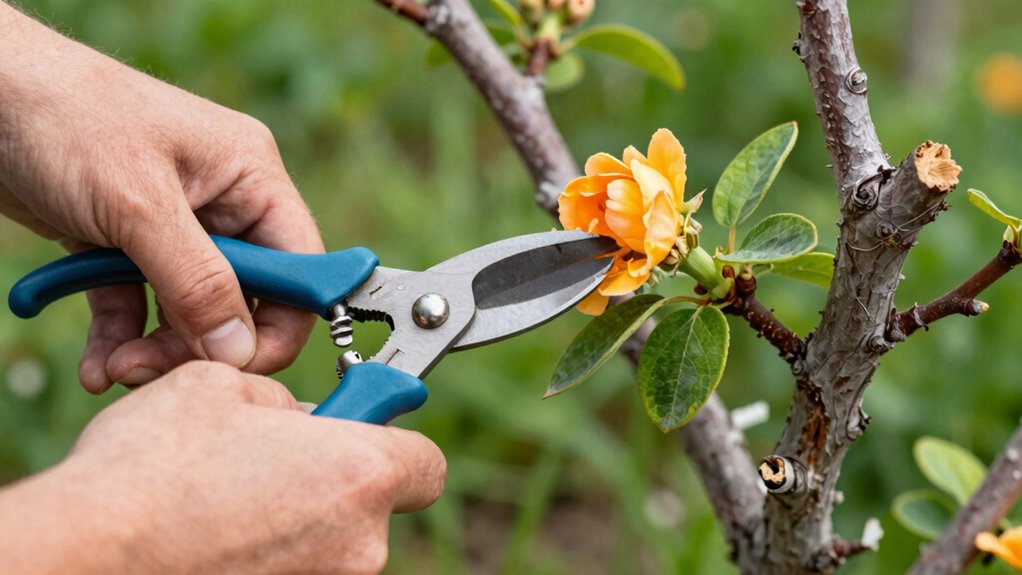

Pruning too early or too late can disrupt your plant’s natural flowering cycle, risking removal of buds needed for next season’s blooms. Pruning at the wrong time weakens the plant, making it vulnerable to frost or disease, and can diminish next year’s floral display. To protect your garden’s beauty, it’s essential to prune at the right moment, just after blooming or during the appropriate dormant period. Keep going to learn how to time your pruning perfectly.
Key Takeaways
- Pruning too early or late can remove buds necessary for next season’s blooms.
- Pruning during the wrong season disrupts the plant’s natural flowering cycle.
- Cutting back after flowering prevents the formation of future flower buds.
- Incorrect timing can weaken plants, reducing their ability to produce vibrant flowers next season.
- Pruning outside the optimal window hampers plant recovery and flowering potential.

Pruning your plants at the wrong time can profoundly hinder their growth and overall health. When you cut back your plants too early or too late, you risk damaging their ability to produce vibrant blooms next season. Timing is everything, especially because improper pruning can disrupt the natural cycle of flowering plants, leaving you disappointed when your garden doesn’t flourish as expected. To avoid this, you need to understand when to prune and how it ties into your overall garden plan, including flower bed design and soil preparation.
The key is aligning your pruning schedule with the plant’s growth habits. Most flowering shrubs and perennials bloom on specific wood—either last year’s or new growth. Prune these plants at the wrong time, like cutting them back in late winter or early fall when they’re about to bloom, and you can inadvertently remove the buds that would have produced flowers next season. This mistake diminishes your garden’s visual appeal and reduces your flowering success. Instead, focus on pruning just after the plant has finished blooming, allowing it to set new buds for the upcoming season.
Timing also connects deeply with soil preparation. Before pruning, ensure your soil is ready to support vigorous growth. Healthy, well-prepared soil provides the nutrients necessary for plants to recover quickly after pruning. When you neglect soil health, plants struggle to regenerate, making it even more critical to prune at the right time. Proper soil preparation, combined with strategic pruning, enhances flower bed design, giving you a lush, colorful display year after year. Additionally, understanding the flowering cycle of your plants can help you determine the optimal pruning window, as this knowledge guides your overall garden management. Incorporating soil health into your garden care routine can further improve plant resilience and flowering success. Recognizing the growth habits of your plants can also help you fine-tune your pruning schedule for better results.
If you prune too late in the season, you risk stimulating new growth that won’t harden off before winter, leading to frost damage and weakened plants. Conversely, pruning too early can cause the plants to produce unnecessary new growth that’s vulnerable to pests and weather. The best approach is to observe your plants’ flowering patterns and plan your pruning schedule accordingly—typically right after their blooming period ends. This timing ensures the plant’s energy is directed toward developing healthy buds for the next season, resulting in a more abundant floral display.
In essence, understanding the precise timing for pruning is critical for maintaining a thriving, beautiful garden. Combining knowledge of your plants’ flowering cycles with proper soil preparation and thoughtful flower bed design ensures you don’t make the costly mistake of pruning too early or too late. Mastering the pruning timing can significantly improve your garden’s overall health and productivity. When you get it right, your garden will reward you with vibrant blooms and healthy growth year after year.
pruning shears for flowering shrubs
As an affiliate, we earn on qualifying purchases.
As an affiliate, we earn on qualifying purchases.
Frequently Asked Questions
How Can I Tell if My Plant Needs Pruning Now?
You can tell if your plant needs pruning now by observing its overall health and growth. Look for dead or damaged branches, which should be removed promptly. If your plant is in its flowering season, avoid pruning too early or too late, as this impacts its flowering response. Seasonal pruning at the right time encourages healthy growth and vibrant blooms, so regularly check for signs that your plant needs a gentle trim.
What Tools Are Best for Pruning at the Right Time?
You should use sharp, clean pruning tools like pruning shears or loppers for precise cuts. For seasonal pruning, choose tools suited to the plant’s size and branch thickness. Use pruning techniques that promote healthy growth, such as making clean cuts just above a node or bud. Always sterilize your tools before and after pruning to prevent disease. Proper tools and techniques guarantee you prune at the right time, encouraging vibrant blooms next season.
Does Pruning Affect Plant Disease Susceptibility?
Pruning can influence a plant’s disease susceptibility, especially if you don’t do it correctly. For example, improper pruning can create open wounds that invite fungal infections, reducing disease prevention. Proper pruning promotes fungal resistance by improving airflow and reducing moisture buildup, which are key factors in preventing diseases. So, timely, careful pruning helps manage disease risk, keeping your plants healthier and more resistant to fungal issues.
Can Incorrect Pruning Timing Harm Plant Growth Long-Term?
Yes, incorrect pruning timing can harm your plant’s long-term growth. Pruning techniques matter greatly, especially when it comes to seasonal growth patterns. If you prune too early or too late, you risk stunting growth or encouraging disease. Proper timing guarantees healthy development and flowering in future seasons. Learn the specific needs of your plants and adjust your pruning schedule accordingly for sustained, vigorous growth.
Are There Differences in Pruning Timing for Various Plant Species?
Yes, different plant species require specific pruning timings aligned with their seasonal growth patterns. You should adjust your pruning techniques based on each plant’s needs; for example, some trees need winter pruning, while others are best pruned in summer. Proper timing guarantees healthy growth, flower production, and disease prevention. By understanding these differences, you can optimize your pruning schedule and techniques for the best results.
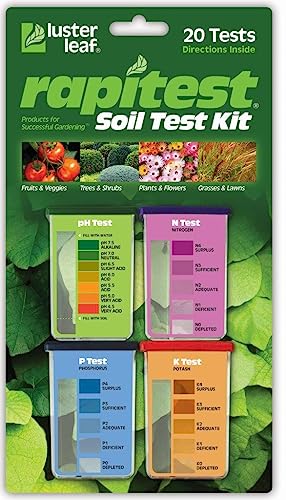
Rapitest Soil Test Kit for Gardens, Vegetables, Flowers and Lawns. USA designed and assembled soil tester completely, quickly and accurately measures/analyzes soil pH acidity and garden nutrients.
- Quick at-home soil pH testing: Measures soil pH, Nitrogen, Phosphorous, Potash
- Easy-to-use capsule system: Innovative and inexpensive testing method
- Includes 20 tests: 5 tests each for pH, N, P, K
As an affiliate, we earn on qualifying purchases.
As an affiliate, we earn on qualifying purchases.
Conclusion
If you’re a bit early or late with your pruning, you might find next season’s blooms a touch shy of their usual glory. Think of it as a gentle nudge in the right direction rather than a setback — a small misstep that offers a chance to learn and grow. With a little patience and attention, you’ll soon find your garden flourishing at just the right moment, rewarding your efforts with vibrant, beautiful flowers year after year.
As an affiliate, we earn on qualifying purchases.
plant growth regulator for pruning
As an affiliate, we earn on qualifying purchases.
As an affiliate, we earn on qualifying purchases.