
To narrow down plant trouble using pattern and spread, observe how symptoms appear and grow. Look for patches, scattered spots, or lesions on specific parts of the plant to identify contagious diseases, while isolated damage points to environmental issues. Note if symptoms spread quickly or gradually, which hints at pathogens versus stress. Patterns like upward movement or new growth help determine transmission mode. Continuing will reveal how these clues lead to precise diagnoses.
Key Takeaways
- Observe symptom distribution to determine if issues are localized or widespread, indicating pests, disease, or environmental stress.
- Assess the speed of symptom spread to distinguish between fast-acting pathogens and gradual abiotic problems.
- Identify whether symptoms start at the base or on new growth to infer transmission mode or systemic issues.
- Correlate symptom patterns with environmental conditions like humidity or dryness to differentiate biotic from abiotic causes.
- Use progression and pattern analysis to narrow down specific diseases or stress factors affecting the plant.
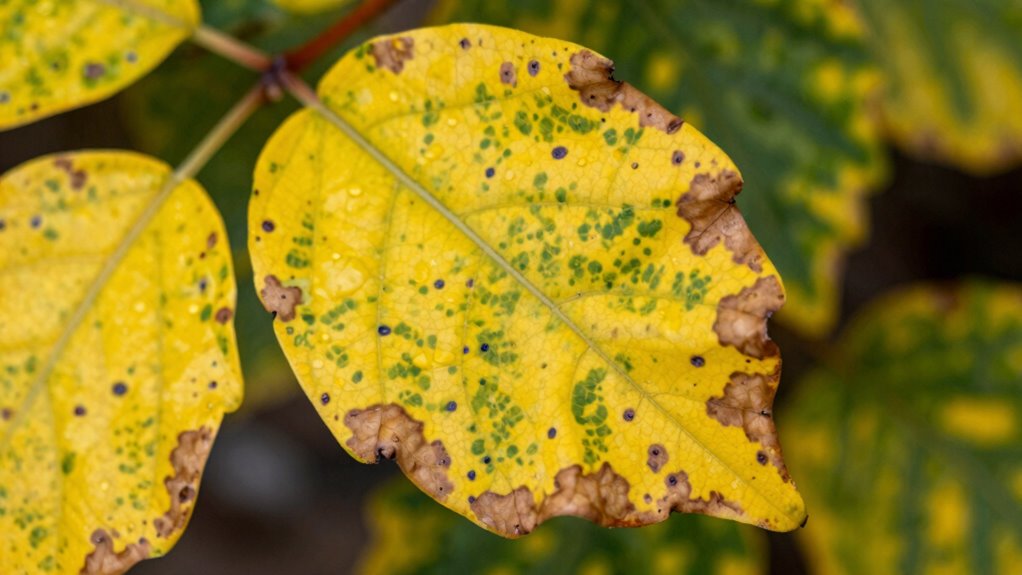
When diagnosing plant problems, recognizing patterns and understanding how symptoms spread can considerably narrow down the cause. This approach is essential because plants often display similar symptoms for different issues, making it vital to analyze how these symptoms develop over time and space. Using pattern and spread effectively allows you to differentiate between various plant diseases and environmental stresses, streamlining your diagnosis process. To do this successfully, you need to incorporate plant disease identification techniques that focus on both the appearance of symptoms and their progression. Symptom analysis techniques, such as noting the location, shape, color, and texture of affected areas, help you build a clear picture of what’s happening.
Start by observing whether symptoms appear in patches or are scattered randomly across the plant. For example, if you notice spots or lesions spreading along the leaves or stems, it could suggest a contagious disease like fungal or bacterial infections. Conversely, if damage seems isolated or limited to specific parts, it might point to abiotic factors such as nutrient deficiencies or physical injury. Pay attention to how quickly symptoms spread. Rapid, widespread development may indicate a fast-moving pathogen like a virus or fungus, whereas slow, gradual changes could suggest environmental stress or nutrient issues. Recognizing these patterns helps you narrow down potential causes early on.
Observe symptom distribution and spread speed to identify contagious diseases, environmental stress, or nutrient deficiencies.
The pattern of symptom spread also offers clues about the mode of transmission. For instance, if symptoms start at the base of the plant and move upward, it might be a systemic issue or root rot. If, instead, symptoms appear on new growth first, you could be dealing with a pest infestation or a virus that targets young tissue. Monitoring the spread over time can reveal whether the problem is ongoing or seasonal, which is valuable information for diagnosis. Isolated or localized symptoms might indicate localized pests or physical damage, while widespread, uniform symptoms suggest systemic disease or environmental problems. Additionally, understanding plant disease identification techniques can significantly improve your ability to diagnose issues accurately and efficiently. Recognizing how symptoms develop and disease progression patterns are key components in this process.
In addition to observing spread, consider the pattern of symptoms in relation to environmental factors. For example, leaf spots that develop after rain or high humidity suggest fungal diseases, while yellowing or browning leaves in dry conditions could point to water stress. Recognizing environmental stress symptoms can help differentiate between biotic and abiotic issues. Combining these observations with symptom analysis techniques creates a thorough picture of the issue. This methodical approach reduces guesswork, enabling you to identify plant diseases with greater accuracy and respond more effectively. Ultimately, understanding how symptoms spread and form patterns is your best tool for quick, precise plant diagnosis, saving time and resources in maintaining healthy plants.
plant disease identification kit
As an affiliate, we earn on qualifying purchases.
As an affiliate, we earn on qualifying purchases.
Frequently Asked Questions
What Tools Are Best for Identifying Plant Pattern Issues?
You should use a magnifying glass or a smartphone with a good camera to spot disease symptoms and pest signs clearly. A handheld loupe helps you examine tiny details like spots, lesions, or pests on leaves and stems. Additionally, keeping a plant health journal allows you to track pattern issues over time. These tools help you identify specific problems quickly, making it easier to determine the cause of plant trouble.
How Quickly Should I Observe Changes in Plant Spread?
You should observe changes in plant spread within a week or two, depending on growth rate and environmental conditions. Look for visible differences in color variation or new growth patterns that indicate progress. Regular monitoring helps you catch early signs of trouble or improvement. Keep track of these updates consistently, so you can adjust your care promptly and guarantee your plant’s health by noticing subtle shifts in spread and coloration.
Can Pattern Analysis Predict Future Plant Health Problems?
Yes, pattern analysis can help predict future plant health problems. By monitoring disease markers and growth trends, you can identify early warning signs of issues developing. Recognizing these patterns allows you to take preventative actions before problems worsen. Regularly observing your plants’ growth and health trends helps you stay ahead, enabling timely interventions that can save your plants and maintain their overall health and robustness.
Are Certain Plants More Prone to Pattern and Spread Issues?
Yes, certain plants are more prone to pattern and spread issues due to genetic predisposition and pest susceptibility. You’ll notice that plants with weaker genetics or those susceptible to pests often show specific, predictable patterns of trouble. By observing these patterns, you can identify vulnerable plants early and take targeted action to prevent or manage problems. Recognizing these tendencies helps you maintain healthier plants and avoid widespread issues.
How Do Environmental Factors Influence Pattern and Spread?
You notice a pattern of leaf spots spreading across your plant, and environmental stress plays a key role. Harsh sunlight, drought, or poor soil weakens defenses, making pests more aggressive in their behavior. These conditions create a ripple effect, encouraging infections and pest invasion to spread rapidly. By understanding how environmental factors influence pest behavior and stress, you can better anticipate issues and take targeted actions to protect your plants.
plant symptom pattern analysis guide
As an affiliate, we earn on qualifying purchases.
As an affiliate, we earn on qualifying purchases.
Conclusion
By recognizing patterns and spreading out your observations, you’re like a detective unraveling a tangled web of plant problems. Each clue you gather narrows the field, guiding you closer to the root cause. Just as a lighthouse casts a beam to illuminate the dark, your careful analysis brightens the path to healthy plants. Keep tracking those patterns, and you’ll turn confusion into clarity, ensuring your garden thrives with confidence and precision.
As an affiliate, we earn on qualifying purchases.
As an affiliate, we earn on qualifying purchases.