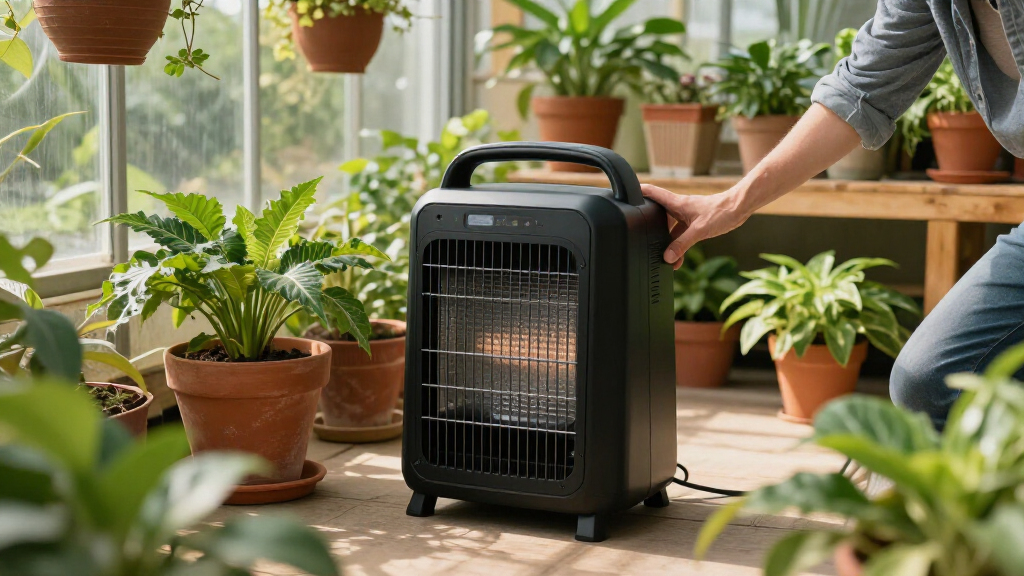

Compact greenhouse heaters have one job: keep a small growing space above frost temperature without eating your electricity budget or crowding your plants. After comparing nine leading models, the BioGreen PALMA earns the top spot for its precise digital thermostat and combined heater-fan design that also circulates air in summer — something no basic 1500W unit in this lineup can do. The 1500W Blower Heater with Thermostat stands out as a strong value pick with reliable temperature control, while the VEVOR 3-Speed PTC model makes sense for growers who also want ventilation in one device. The main tradeoff in this category is between thermostat precision and price: cheap fan heaters overshoot and cycle constantly, while better-controlled units cost more but protect tender plants. Read on for the full breakdown.

Get garden gear delivered free — and shop member deals
- Fast, free delivery on millions of items
- Access to Prime Big Deal Days deals on October 6–7
- Prime Video, Amazon Music and more included
Complete the kit


Key Takeaways
- Almost every heater in this roundup is rated 1500W, so raw heating power barely separates them — the real differentiators are thermostat quality, safety cutoffs, and airflow design.
- Only the BioGreen PALMA offers a true precision digital thermostat that can hold a narrow temperature band, which matters for seedlings and orchids that tolerate small swings.
- Several VEVOR units share the same 1500W PTC core and differ mainly in adjustable angle, fan modes, and included safety features — buyers should pick based on mounting flexibility, not brand.
- Waterproofing and overheat protection varied more than expected: the Waterproof 1500W Thermostat model is the safest choice for damp greenhouses where condensation is constant.
- Budget models without a thermostat or with only basic cutoffs cost less upfront but risk cooking plants on sunny days when greenhouse temperatures spike unexpectedly.


| compact greenhouse heater | Power | Safety | Weight |
|---|---|---|---|
| Greenhouse Heater with Thermos | 1500W | Overheat protection, flame-retardant materials | — |
| Greenhouse Heater with Digital | 1500W | — | — |
| Greenhouse Heater with Digital | 1500W | Overheat protection | 7.7 lb |
| VEVOR Greenhouse Heater | 1500W | Overheat protection, tip-over shut-off | 3.1 lb |
| VEVOR Greenhouse Heater | 1500W | Overheat protection | 3.7 lb |
| 1500W Blower Heater with Therm | 1500W | — | — |
| BioGreen Electric Greenhouse H | 1500 Watts | — | — |
| VEVOR Greenhouse Heater | 1500W | — | Under 5 pounds |
| VEVOR Greenhouse Heater | 1500 watts | Overheat protection | 2.8 pounds |
More Details on Our Top Picks
Greenhouse Heater with Thermostat, 1500W, Waterproof & Overheat Protection
This model earns the top spot because it solves the problem that actually matters in a greenhouse: keeping temperatures stable without babysitting a dial. The independent digital thermostat holds a setpoint across long stretches, which matters more for seedlings than raw heating speed. Its IPX5 waterproof rating is the best in this lineup — a step up from the IPX4 housing on the VEVOR models — and that gap counts in a humid greenhouse where condensation drips onto everything. The three power levels (down to a gentle 20W) also let it run economically during mild nights.
The tradeoff is coverage: at 120 sq ft, it heats the smallest area here, well behind the 215 sq ft unit from the second entry. And unlike the VEVOR PTC fan heater, it skips a tip-over shut-off, so placement needs a stable, level floor.
Pros:- Independent digital thermostat holds a set temperature automatically
- IPX5 waterproofing, the highest rating in this lineup
- Three power levels including a low 20W mode for economical overnight running
- Flame-retardant housing adds peace of mind near plants and wiring
Cons:- Smallest coverage area of the batch at 120 sq ft
- No tip-over shut-off, so it needs a stable, level surface
- Noise output is unspecified, a question mark for attached spaces
Best for: Seed starters and hobby growers in small greenhouses who need precise, hands-off temperature control in damp conditions
Not ideal for: Anyone heating a greenhouse larger than roughly 120 sq ft — a bigger-space model like the 215 sq ft digital thermostat heater will serve better
- Power:1500W
- Power Levels:20W / 750W / 1500W
- Coverage Area:120 sq ft
- Waterproof Rating:IPX5
- Controls:Independent digital thermostat
- Safety:Overheat protection, flame-retardant materials
- Portability:Portable indoor/outdoor design
Our verdict“The most balanced pick for small greenhouse owners who prioritize waterproof safety and true set-and-forget thermostat control over raw coverage.”
Greenhouse Heater with Digital Thermostat 1500W (Red)
If the Best Overall pick is about precision in a small footprint, this one is about sheer reach. At 215 sq ft of effective heating, it covers nearly double the 120 sq ft of the waterproof model above and comfortably beats the 160 sq ft grow tent heater — enough for a mid-sized hobby greenhouse rather than a cold frame or a single rack of trays. The 40°F to 108°F thermostat range is the widest in this batch, giving real flexibility between cool-season crop holding and warm-weather germination.
What it gives up: an IPX4 rating rather than IPX5, and no smart features or remote, so every adjustment means a walk to the unit. Compared with the VEVOR models, though, it trades gadgetry for substance — the digital thermostat alone puts it in a different usefulness class.
Pros:- Largest effective heating area in this lineup at 215 sq ft
- Wide 40°F–108°F temperature range for different growth stages
- Corrosion-resistant housing suited to humid greenhouse air
- Three power modes help manage energy use
Cons:- IPX4 rating is a step below the IPX5 waterproof model
- No remote or smart connectivity
- Coverage still caps out around 215 sq ft for larger structures
Best for: Owners of mid-sized greenhouses (150–215 sq ft) who need wider heat distribution and a wide thermostat range
Not ideal for: Tech-focused buyers wanting app control or remote adjustment — everything here is set manually at the unit
- Power:1500W
- Temperature Range:40°F–108°F (5°C–42°C)
- Effective Heating Area:215 sq ft
- Waterproof Rating:IPX4
- Modes:High, Medium, Low
- Construction:Corrosion-resistant housing
- Use Locations:Greenhouses, patios, indoor spaces
Our verdict“The pick when your greenhouse is too big for the 120–160 sq ft units but you still want genuine thermostat control.”
Greenhouse Heater with Digital Thermostat, 1500W Grow Tent Heater
This one carves out a middle lane between the two thermostat models above. It matches the Best Overall pick’s precision — digital display, adjustable temperature from 41°F to 108°F — while covering a more useful 160 sq ft, which fits a standard grow tent or small greenhouse far better than the 120 sq ft unit. At 7.7 pounds and about a foot tall, it still moves easily between a tent and a patio, and the forced-air design pushes warmth into corners that radiant setups miss.
Where it falls short: the IPX4 splash resistance is fine for a tent but weaker than the IPX5 model in a genuinely wet greenhouse, and there are no mounting options — it’s floor-only, which eats tent floor space. Compared with the 215 sq ft model, you sacrifice coverage for a tighter, tent-friendly form factor.
Pros:- Digital display with adjustable 41°F–108°F control for precise climate management
- 160 sq ft coverage hits the sweet spot for grow tents
- Splash-resistant IPX4 housing handles tent humidity
- Simple setup — plug in, set temperature, walk away
Cons:- Floor-standing only, with no mounting options
- IPX4 rating is weaker than the IPX5 pick for wet greenhouses
- Heavier at 7.7 pounds than the ~3-pound VEVOR models
Best for: Grow tent and small-greenhouse growers who want digital temperature precision in a compact footprint
Not ideal for: Buyers with large greenhouses or anyone wanting wall mounting — coverage stops at 160 sq ft and it sits on the floor only
- Power:1500W
- Temperature Range:41°F–108°F
- Coverage Area:160 sq ft
- Dimensions:7″D x 9.4″W x 12″H
- Weight:7.7 lb
- Water Resistance:IPX4
- Heating Method:Forced air
- Safety:Overheat protection
Our verdict“The best match for grow tent growers who want thermostat precision without paying for coverage they can’t use.”
VEVOR Greenhouse Heater, 1500W Electric PTC Space Heater with Fan, Low & High Heat Modes, Overheat Protection, Tip-Over Shut-Off
At 3.1 pounds with a carry handle, this is the lightest heater in the batch, and it’s the only one here with a tip-over shut-off — a genuinely meaningful safeguard on a greenhouse floor where hoses, pets, and clumsy elbows are facts of life. The fan-only mode also makes it usable year-round for air circulation, something none of the thermostat models offer. For a backup heater or a small grow tent on a budget, that package is hard to argue with.
But the low price shows: there’s no thermostat and no temperature display, so it’s High, Low, or Off. Compared with the grow tent heater above, you give up any ability to hold a target temperature, which means manual checking during cold snaps. Fine for a hobbyist; risky for delicate seedlings left unattended overnight.
Pros:- Tip-over shut-off, unique in this lineup and valuable on busy greenhouse floors
- Fan-only mode doubles as a year-round circulation fan
- Lightest option here at 3.1 pounds with a carry handle
- PTC heating with overheat protection at a low price point
Cons:- No thermostat or temperature display — just two heat settings
- Basic design without programmable controls
- Suited only to small grow tents and compact greenhouses
Best for: Budget-minded growers who want basic, safe supplemental heat plus summer air circulation in a small space
Not ideal for: Anyone who needs unattended overnight temperature holding — the lack of a thermostat means manual monitoring
- Power:1500W
- Heating Method:Forced air (PTC)
- Modes:High, Low, Fan only
- Amperage:12.5 A
- Weight:3.1 lb
- Dimensions:8.27″D x 5.12″W x 10.24″H
- Safety:Overheat protection, tip-over shut-off
- Housing:Flame-retardant PP
Our verdict“The cheapest way to get safe, portable supplemental heat and airflow, as long as you don’t need automatic temperature control.”
VEVOR Greenhouse Heater, 1500W Electric PTC Space Heater with Fan, Adjustable Angle, Overheat Protection, Portable
This sibling of the budget VEVOR above makes a different argument: spend a little more and get a steel housing instead of plastic, which holds up better to the knocks, moisture, and UV exposure a greenhouse dishes out. Its standout trick is the 15° adjustable angle, letting you direct warm air at a specific shelf of seedlings rather than heating the whole air mass — something no other heater in this batch can do. The stable base and handle keep repositioning easy despite the tougher build.
Like its plastic counterpart, it lacks any digital temperature control, so it can’t compete with the grow tent heater for precision. It’s also rated indoor use only, which rules out open or semi-exposed patio setups. Think of it as the manual-control heater for growers who value aiming heat where it counts.
Pros:- Steel housing is more durable than the plastic VEVOR model’s shell
- 15° adjustable angle directs heat at specific plant shelves
- Two heat modes plus fan for year-round use
- Stable base and carry handle make repositioning simple
Cons:- No digital thermostat or temperature display
- Indoor use only, less versatile than IPX4/IPX5 rivals
- Power cord length unspecified, which can complicate placement
Best for: Growers with shelf-based setups who want to aim heat directly at plants and prefer a rugged metal build
Not ideal for: Anyone needing setpoint temperature control or outdoor-exposed placement — it’s indoor-only with no thermostat
- Power:1500W
- Voltage:120V
- Amperage:8.33 A
- Heating Method:Forced air (PTC)
- Adjustable Angle:15°
- Speeds:2
- Weight:3.7 lb
- Construction:Steel housing
- Safety:Overheat protection
Our verdict“The right choice when you’d rather aim heat at your plants than automate it, and you want a heater that survives greenhouse wear.”
1500W Blower Heater with Thermostat for Greenhouse Plants, Black
When a cold snap hits overnight, this option stands out for raw warming speed rather than finesse. The fan-forced blower design pushes heat across your plants quickly, and the wide 32°F to 158°F thermostat range gives plenty of headroom for seed starting or tropical setups. Compared with the BioGreen Palma, it matches the 1500W output but trades away splash protection and the digital precision in exchange for a simpler, cheaper package. The natural wind mode is a nice bonus for summer air circulation. The tradeoff is the 120 sq ft ceiling: in genuinely cold climates, one unit will struggle to hold temperature, and the lack of any moisture resistance means it should sit well away from misting lines and damp benches.
Pros:- Powerful 1500W output with fast warm-up
- Wide 32°F–158°F adjustable thermostat range
- Natural wind mode doubles as a summer circulation fan
- Compact footprint is easy to reposition between benches
Cons:- 120 sq ft coverage means multiple units for larger structures
- Output drops off in very cold conditions
- No splash or moisture protection rating
Best for: Hobby growers in mild climates who need quick morning warm-up in a small greenhouse or cold frame
Not ideal for: Growers in hard-freeze zones or anyone running humidification systems — it lacks splash protection and stalls below freezing
- Power:1500W
- Voltage:120V
- Coverage:Up to 120 sq ft
- Temperature Range:32°F to 158°F
- Modes:High, Low, Natural Wind
- Dimensions:9.8 x 9.1 x 8.3 inches
- Warranty:1 year
Our verdict“Buy this if fast, affordable heat for a small space matters more than precision controls or weatherproofing.”
BioGreen Electric Greenhouse Heater & Fan with Digital Thermostat PALMA
This is the pick where greenhouse-specific engineering justifies the higher price. The IPX4 splash protection is the standout differentiator — unlike the 1500W Blower Heater or either VEVOR model, this unit can shrug off mist, condensation, and damp floors, which is exactly the reality inside a working greenhouse. The digital thermostat with a range up to 185°F offers tighter control than any analog dial in this lineup, and the two-stage heating lets you run at half power on milder days instead of cycling full blast. The airflow rating of 5800 ft³/h also makes it a serious circulation fan in summer mode. The catch: at full draw it will show on your electric bill, and there are no smart or remote features at this price point.
Pros:- IPX4 splash-proof housing safe for damp greenhouse conditions
- Digital thermostat with the widest range in this lineup (up to 185°F)
- Two-stage heating for economical half-power operation
- Powerful 5800 ft³/h air circulation doubles as a summer fan
Cons:- Premium price compared with the other 1500W options here
- High energy consumption when both elements run at full power
- No remote control or smart scheduling features
Best for: Serious greenhouse growers who run humid environments and need precise, splash-proof climate control year-round
Not ideal for: Budget-conscious buyers with a dry grow tent — the price pays for moisture protection they won’t use
- Power:1500 Watts
- Heating Output:5100 BTU/hr
- Air Circulation:5800 ft³/h
- Temperature Range:32°F to 185°F
- Coverage Area:Up to 120 sq ft
- Splash Protection:IPX4
Our verdict“This model makes the most sense for growers who treat their greenhouse as a year-round, humidity-heavy operation and want the most precise control available here.”
VEVOR Greenhouse Heater, 1500W PTC Fast Heating with Overheat Protection, 3-Speed Small Grow Tent Fan, Portable Electric Heater for Greenhouse and Indoor Use
For buyers who want heating plus year-round fan utility without paying the BioGreen premium, this is the smart middle pick. The PTC heating element is self-regulating, which means it warms fast and is less prone to runaway overheating than basic coil designs — a real safety plus in a structure full of flammable plastic and dry foliage. The three-speed fan with adjustable angle gives it more summer flexibility than the two-speed VEVOR 2.8-lb model, and it doubles as a circulation fan for strengthening seedlings. Compared with the BioGreen Palma, you give up splash protection entirely — the IP20 rating means this is strictly for drier setups like grow tents, not misted greenhouses. The vague temperature specs also mean you’re trusting the overheat cutoff rather than precise dial control.
Pros:- Fast, self-regulating PTC heating with overheat protection
- 3-speed fan with adjustable angle for year-round use
- Under 5 pounds with a handle for easy relocation
- Attractive price for a heater-plus-fan combo
Cons:- IP20 protection is unsuitable for damp environments
- No detailed temperature range published
- Small-space heating capacity only
Best for: Grow tent owners and budget growers who want one device for winter heating and summer air circulation
Not ideal for: Humid or misted greenhouses — the IP20 rating leaves it vulnerable to moisture damage
- Power:1500W
- Heating Technology:PTC
- Protection:Overheat protection, IP20
- Fan Speeds:3
- Weight:Under 5 pounds
- Features:Adjustable angle, portable handle, hot and cold modes
Our verdict“This pick makes the most sense for dry grow-tent setups where a cheap, versatile heater-fan hybrid beats a specialized unit.”
VEVOR Greenhouse Heater, 1500W Electric PTC Space Heater with Fan, Adjustable Angle, Overheat Protection, Portable for Grow Tent and Small Greenhouse
At 2.8 pounds and roughly 7 inches deep, this is the true featherweight of the lineup — small enough to tuck onto a crowded shelf beside seedling trays or move between a grow tent and a garage shelf as needs shift. It shares the 1500W PTC approach of the VEVOR 3-speed model but strips things down further: two speeds instead of three, and a 40-degree adjustable angle that’s adequate for directing warm air across a bench, if not a whole room. The compact size is genuinely the point here — it heats a small tent efficiently precisely because it isn’t trying to do more. What you give up is reach and redundancy: in anything larger than a small greenhouse, one unit simply won’t keep up, and there’s no tip-over shut-off listed, so placement needs to be stable and level.
Pros:- Ultra-light 2.8-pound body with carry handle for shelf-to-shelf moves
- Small 7-inch footprint fits crowded propagation areas
- 40° adjustable angle directs heat where trays need it
- Overheat protection included at a low price
Cons:- Strictly limited to small spaces and grow tents
- Only two fan speeds versus three on the sibling VEVOR model
- No tip-over shut-off listed, so stable placement is on you
Best for: Grow tent and propagation-shelf growers with tight spaces who need light, shiftable heat
Not ideal for: Anyone heating a walk-in greenhouse — the tiny footprint and output cap it at bench-scale tasks
- Power:1500 watts
- Heating Method:Forced air
- Amperage:12.5 A
- Fan Speeds:2
- Adjustable Angle:40°
- Dimensions:7.09″D x 6.3″W x 8.46″H
- Weight:2.8 pounds
- Safety:Overheat protection
Our verdict“Choose this if your heating problem is a single tent or shelf rather than a room, and portability outweighs raw capability.”
How We Picked
Since every heater here pushes roughly the same 1500W, I ranked these models on the factors that actually change outcomes in a small greenhouse: thermostat accuracy and control range, safety features (overheat protection, tip-over shut-off, waterproof housing), airflow and circulation, and practical footprint. A heater that can hold a temperature within a couple of degrees protects seedlings far better than one that blasts full power and cycles off, so thermostat quality carried the most weight in the ranking. Durability in humid conditions was the second filter — a heater that corrodes or trips its safety cutoff in a damp greenhouse is useless regardless of price.
From there, I separated models by buyer fit. The BioGreen PALMA took the top spot for its precision control and dual heater-fan function, while value picks like the 1500W Blower Heater and the various VEVOR units were ranked by which safety features and design touches (adjustable angle, multiple fan speeds) justify their price over the cheapest options. Models with weaker temperature control or fewer safety cutoffs ranked lower even when cheaper, because a fried crop costs more than any heater.
| compact greenhouse heater | Safety |
|---|---|
| Greenhouse Heater with Thermos | Overheat protection, flame-retardant materials |
| Greenhouse Heater with Digital | — |
| Greenhouse Heater with Digital | Overheat protection |
| VEVOR Greenhouse Heater | Overheat protection, tip-over shut-off |
| VEVOR Greenhouse Heater | Overheat protection |
| 1500W Blower Heater with Therm | — |
| BioGreen Electric Greenhouse H | — |
| VEVOR Greenhouse Heater | — |
| VEVOR Greenhouse Heater | Overheat protection |
Factors to Consider When Choosing Compact Greenhouse Heaters
Choosing a compact greenhouse heater involves more than comparing wattage. These are the factors that separate a good purchase from a disappointing one.Thermostat Quality Matters More Than Wattage
Nearly every compact heater on the market outputs 1500W, so wattage tells you almost nothing about how well a unit will perform. What separates a good heater from a bad one is how tightly it holds your target temperature. Cheap analog thermostats can swing five degrees or more in either direction, which is fine for hardy plants but dangerous for germinating seedlings or tropical species. Digital thermostats, like the one on the BioGreen PALMA, maintain much narrower bands and reduce the constant on-off cycling that wears out components. A common mistake is buying the cheapest heater available and assuming any thermostat is the same as the next — in a small space, an imprecise thermostat means wild temperature swings within minutes.
Waterproofing and Safety Cutoffs Are Non-Negotiable
Greenhouses are humid environments, and condensation forms constantly on cold nights. A heater without proper waterproofing on its housing and electronics is a short-circuit risk, not just a durability concern. Look for an IPX4 rating or equivalent splash protection if your greenhouse gets damp in winter. Overheat protection and tip-over shut-off are equally important — greenhouses have uneven floors, and a knocked-over heater near dry leaves or plastic sheeting is a genuine fire hazard. Multiple units in this roundup include these features, but not all do, and saving ten dollars by skipping them is a poor trade when the failure mode is electrical or fire-related.
Size Your Heater to Your Space Honestly
A 1500W heater is generally right for a greenhouse of roughly 50 to 120 square feet, depending on your insulation and climate. Buyers in cold regions with single-pane glass or polycarbonate walls will get less coverage than the label suggests, while a well-sealed small grow tent may only need low mode. Running a heater that is undersized means it never cycles off, shortening its life and spiking your electric bill; oversizing means constant short cycles and uneven temperatures. Before buying, measure your space and check whether your greenhouse leaks air at door seals and panel joins — plugging gaps is often cheaper than buying a bigger heater.
Fan-Only Mode Doubles Your Equipment’s Usefulness
A frequently overlooked feature is whether the heater’s fan runs independently of the heating element. Models with fan-only mode, like the BioGreen PALMA and one of the VEVOR units, become circulation fans in summer, preventing hot spots and fungal issues that come from stagnant air. This effectively gives you two tools for the price of one and reduces how much equipment you need to store in a compact space. Heaters without this function sit idle for half the year. If your greenhouse struggles with humidity and mold even in warm months, prioritizing a fan-only mode is one of the smartest value decisions you can make.
Running Costs: Electric Heat Adds Up Fast
At 1500W, any of these heaters consumes 1.5 kWh per hour at full power. If your greenhouse needs heat for twelve hours a night through winter, that adds up quickly on most electricity tariffs. A precise thermostat pays for itself by cycling the heater off when the target temperature is reached, while a crude one runs longer than necessary. Some growers pair an electric heater with thermal mass — water barrels or stone — that absorbs heat during the day and releases it at night, cutting heater runtime substantially. Also check whether your greenhouse has power routed to it at all; running an extension cord to a damp outdoor structure is a safety problem waiting to happen.
Placement and Airflow Strategy
Even the best heater performs poorly if it is placed wrong. Positioning a compact heater at plant level, away from direct water drip lines and with clear airflow toward the center of the space, produces far more even temperatures than tucking it in a corner. Adjustable-angle units help here, letting you direct warm air under benches where cold air pools. Never point a heater directly at plant foliage from close range — the dry, warm blast can desiccate leaves overnight. A common beginner error is placing the heater next to the thermostat sensor or a sunny wall, causing false readings and uneven heating across the greenhouse.
Frequently Asked Questions
Is 1500W enough to heat my greenhouse through winter?
For most compact greenhouses and grow tents up to about 100 square feet, 1500W is sufficient to maintain frost-free temperatures, but performance depends heavily on insulation and outdoor temperatures. Single-pane glass greenhouses in freezing climates lose heat faster than a 1500W element can replace it, so expect the heater to run constantly on the coldest nights. If your space is larger than roughly 120 square feet or you experience sustained sub-freezing weather, you will likely need two heaters or a larger dedicated unit. Sealing drafts, adding bubble insulation to panels, and introducing thermal mass can dramatically extend what a single 1500W heater can handle.
Can I use a regular home space heater in my greenhouse instead?
You can, but it is usually a false economy. Standard room heaters are not built for humid environments and typically lack the waterproof housing a greenhouse demands, so condensation can trigger corrosion or safety cutoffs. They also tend to have consumer-grade thermostats tuned for human comfort, with wide temperature swings that stress plants. Purpose-built greenhouse heaters include splash-resistant enclosures and, in the better models, thermostats designed to hold growing temperatures precisely. If you do use a home heater as a stopgap, choose one with tip-over protection and keep it elevated away from standing water, but plan to replace it before the humid season.
Do I need a digital thermostat, or is a dial thermostat good enough?
It depends on what you are growing. Hardy plants like overwintering geraniums or established succulents tolerate a five-degree swing without complaint, so a dial thermostat saves money without much risk. Seedlings, orchids, and propagation setups are far less forgiving — a cold dip can stall germination and a hot spike can kill tender growth in hours. Digital thermostats also reduce cycling, which extends heater life and lowers electricity use, so the upgrade often pays for itself over a season or two. If your greenhouse hosts anything sensitive, or if you leave plants unattended for days at a time, digital control is worth every extra dollar.
How close can a compact heater sit to my plants?
Keep at least two to three feet between the heating element and the nearest foliage, and never aim a heater directly at plants from close range. The dry air coming off a fan heater can desiccate leaves and create a hot zone that damages tissue overnight, even when the overall greenhouse temperature reads fine. Elevating the heater slightly and directing airflow along a walkway or under benches distributes warmth more evenly than pointing it at your growing area. Also make sure the unit cannot be knocked over by watering cans, hoses, or plant growth — tip-over shut-off is a backup, not an invitation to place it somewhere unstable.
Are PTC ceramic heaters actually better for greenhouses?
PTC (positive temperature coefficient) ceramic elements have a genuine safety advantage: as they heat up, their resistance rises, which naturally limits output and prevents runaway overheating even if the thermostat fails. Several units in this roundup, including most of the VEVOR models, use PTC elements for exactly this reason. Compared with traditional coil heaters, PTC units also degrade more gracefully over time and tend to distribute warmth more evenly with a fan. The tradeoff is that PTC heaters rarely feel as aggressively hot as coil units at point-blank range, but for a greenhouse application where steady, safe background heat is the goal, that is a feature rather than a flaw.
Conclusion
The right pick depends on what you are growing and how much control you need. For the best overall choice, the BioGreen PALMA justifies its higher price with precision digital control and summer fan mode that keeps it useful year-round. The best value goes to the 1500W Blower Heater with Thermostat, which delivers dependable temperature control at a mid-range price without the premium features you may not use. For beginners, the VEVOR PTC heater with tip-over shut-off and simple two-mode operation is forgiving, safe, and hard to misuse. If damp conditions are your main concern, the Waterproof 1500W Thermostat model is the pick for humid or condensation-heavy greenhouses. And for growers who want heating and ventilation in one footprint, the VEVOR 3-Speed model covers both jobs. Whatever you choose, match the thermostat quality to the sensitivity of your plants — that single decision matters more than any other spec on the box.
Fall Picks
fall essentials
As an affiliate, we earn on qualifying purchases.