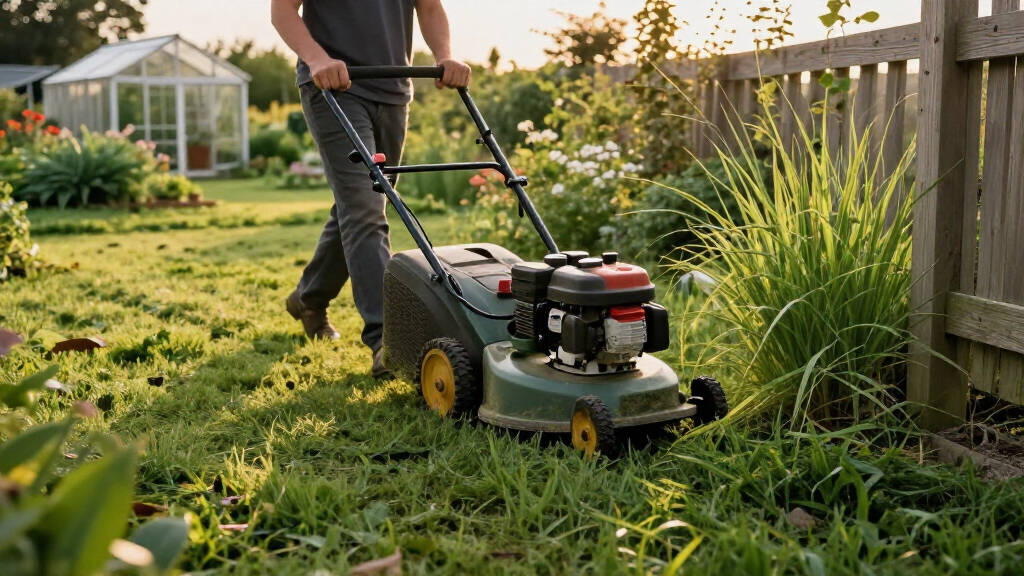

The best walk-behind trimmer mowers combine a manageable cutting width with enough power to handle tall grass and rough edges. My best overall pick is the YARDMAX YL2250, a 22-inch, 170cc gas model that balances familiar power and useful cutting capacity. The Earthquake 60V stands out for buyers who want a battery-powered alternative, while the BILT HARD self-propelled trimmer is worth a look if reduced pushing effort matters most. The main tradeoffs are gas power versus battery convenience, self-propelled help versus simpler operation, and cutting capacity versus storage and maneuverability. Read on for the full breakdown and buying advice tailored to these 11 options.

Get garden gear delivered free with Prime
- Fast, free delivery on millions of items
- Prime Video, Amazon Music and more included
- Member-only deals all year
Complete the kit


Key Takeaways
- 22-inch cutting paths dominate this lineup. Most choices share that width, so engine type, handling, and support matter more than a small nominal difference in cutting span.
- Gas is the main format, but not the only one. The Earthquake 60V offers a battery-powered route; buyers should weigh its included two 4Ah batteries against their likely runtime and charging needs.
- Self-propelled operation is a standout differentiator. The BILT HARD model calls out this feature, which may matter more on larger or sloped areas than a modest engine-size difference.
- Several models share 170cc engines and 22-inch paths. With similar headline specs across BILT HARD, AMERISUN, YARDMAX, PROYAMA, and PowerSmart, buyers should compare controls, construction, parts access, and maintenance support.
- The OMMUNICT cultivator is the lineup outlier. Its 63cc, 3-in-1 micro-cultivator format is not a direct substitute for a conventional string trimmer mower, so it best fits buyers whose work also includes soil cultivation.
| BILT HARD Self-Propelled Walk-Behind String Trimmer, 170cc Gas Brush Cutter |  | Best for Self-Propelled Cutting | Engine: 170cc OHV four-cycle gas | Cutting width: 22 inches | Cutting height: 1.6–3.7 inches | VIEW LATEST PRICE | See Our Full Breakdown |
| SENIX STMG-L 22-Inch Walk-Behind Gas Brush Cutter and String Trimmer |  | Best for Uneven Ground | Engine: 160cc four-cycle gasoline | Cutting width: 22 inches | Line diameter: 0.155 inches | VIEW LATEST PRICE | See Our Full Breakdown |
| Earthquake 60V Walk-Behind String Mower with Two 4Ah Batteries |  | Best Battery-Powered Pick | Voltage: 60V | Batteries: Two 4Ah batteries included | Maximum stated runtime: Up to 90 minutes | VIEW LATEST PRICE | See Our Full Breakdown |
| SENIX 22-Inch Walk-Behind String Trimmer with 160cc 4-Cycle Engine |  | Best for Dense Brush | Engine: 160cc four-cycle gas | Cutting width: 22 inches | Trimmer line diameter: 0.155 inches | VIEW LATEST PRICE | See Our Full Breakdown |
| Earthquake Walk-Behind String Mower, 160cc 4-Cycle Viper Engine, 22-Inch Cutting Width |  | Best for Quick Height Changes | Engine: 160cc four-cycle Viper | Cutting width: 22 inches | Cutting height: 1–4 inches; tool-free adjustment | VIEW LATEST PRICE | See Our Full Breakdown |
| AMERISUN 22-Inch 170cc Walk-Behind String Trimmer |  | Best for Adjustable Cutting Height | Engine: 170cc 4-stroke OHV | Power source: Gas | Cutting width: 22 inches | VIEW LATEST PRICE | See Our Full Breakdown |
| OMMUNICT 63cc Walk-Behind Micro Cultivator, 4 HP, 3-in-1 |  | Best for Multi-Task Garden Plots | Engine displacement: 63cc | Engine type: 4-stroke gasoline | Power: 4 HP | VIEW LATEST PRICE | See Our Full Breakdown |
| YARDMAX YL2250 22-Inch 170cc Gas Walk-Behind String Trimmer Mower |  | Best for Fence-Line Trimming | Engine: 170cc | Power source: Gasoline | Cutting width: 22 inches | VIEW LATEST PRICE | See Our Full Breakdown |
| PROYAMA Walk-Behind String Trimmer Mower, 170cc, 22-Inch Cutting Path |  | Best for Rough-Terrain Clearing | Model: PWT-22 | Engine displacement: 170cc | Engine power: Up to 3.5 kW (5 HP) | VIEW LATEST PRICE | See Our Full Breakdown |
| PowerSmart 22-Inch 170cc Gas Walk-Behind String Trimmer |  | Best for Easier Storage and Setup | Model: DB6222 | Engine: 170cc 4-cycle OHV | Power source: Gas | VIEW LATEST PRICE | See Our Full Breakdown |
| PROYAMA 170cc Walk-Behind String Trimmer Mower |  | Best for Storage-Friendly Gas Power | Engine: 170cc four-cycle OHV, 5 HP | Engine speed: 3600 rpm | Torque: 6.64 ft-lb | VIEW LATEST PRICE | See Our Full Breakdown |
| walk-behind trimmer mower | Cutting width | Engine | Cutting height | Weight |
|---|---|---|---|---|
| BILT HARD Self-Propelled Walk- | 22 inches | 170cc OHV four-cycle gas | 1.6–3.7 inches | — |
| SENIX STMG-L 22-Inch Walk-Behi | 22 inches | 160cc four-cycle gasoline | 1.57–3 inches; 5 positions | 48.5 pounds |
| Earthquake 60V Walk-Behind Str | 22 inches | — | 1.5–4 inches | — |
| SENIX 22-Inch Walk-Behind Stri | 22 inches | 160cc four-cycle gas | 1.57–3 inches; 5 settings | 48.5 pounds |
| Earthquake Walk-Behind String | 22 inches | 160cc four-cycle Viper | 1–4 inches; tool-free adjustment | — |
| AMERISUN 22-Inch 170cc Walk-Be | 22 inches | 170cc 4-stroke OHV | 1.9–4.0 inches | 62 pounds |
| OMMUNICT 63cc Walk-Behind Micr | — | — | — | 30.5 pounds |
| YARDMAX YL2250 22-Inch 170cc G | 22 inches | 170cc | 1.5–3.5 inches | 61.7 pounds |
| PROYAMA Walk-Behind String Tri | 22 inches | — | — | 59 pounds |
| PowerSmart 22-Inch 170cc Gas W | 22 inches | 170cc 4-cycle OHV | 1.9–3.9 inches | 56 pounds |
| PROYAMA 170cc Walk-Behind Stri | 22 in | 170cc four-cycle OHV, 5 HP | — | — |
More Details on Our Top Picks
BILT HARD Self-Propelled Walk-Behind String Trimmer, 170cc Gas Brush Cutter
The BILT HARD is the clearest choice here for buyers who want drive assistance rather than simply pushing a walk-behind trimmer. Its 1.9 mph self-propelled drive can reduce effort across larger or uneven patches, while the 22-inch cutting path keeps it aligned with the SENIX STMG-L on swath width. The BILT HARD offers a wider height range than that SENIX model—1.6 to 3.7 inches across eight settings—so it gives more room to adapt between shorter growth and rougher edges. The tradeoff is a recoil-start gas engine and side discharge, which leaves clippings where they fall rather than collecting them. Flat-free wheels and a folding handle help with upkeep and storage, but buyers seeking a quieter, lower-maintenance option should compare it with the battery-powered Earthquake 60V.
Pros:- Self-propelled drive helps reduce pushing effort on larger or uneven areas.
- 22-inch cutting path covers a broad strip per pass.
- Eight height settings offer more adjustment than the five-position SENIX STMG-L.
- Flat-free wheels and a foldable handle support easier upkeep and storage.
Cons:- Recoil starting takes more effort than electric starting.
- Side discharge does not collect or direct clippings into a bag.
- Gas power requires fuel and routine engine maintenance.
Best for: Property owners clearing long or uneven stretches who want self-propelled assistance and several cutting-height choices.
Not ideal for: Buyers who prefer push-button electric starting, want clippings collected, or need a low-maintenance battery-powered machine.
- Engine:170cc OHV four-cycle gas
- Cutting width:22 inches
- Cutting height:1.6–3.7 inches
- Height positions:8
- Drive speed:1.9 mph self-propelled
- Wheel size:10 inches
- Deck and discharge:Steel deck; side discharge
- Storage feature:Foldable handle
Our verdict“Choose the BILT HARD if self-propelled assistance and fine height adjustment matter more than electric convenience or clipping collection.”
SENIX STMG-L 22-Inch Walk-Behind Gas Brush Cutter and String Trimmer
The SENIX STMG-L suits buyers who value wheel size and straightforward handling over powered drive. Its 14-inch rubber wheels are larger than the 10-inch wheels on the BILT HARD, a useful distinction when steering across uneven ground; the BILT HARD counters with self-propulsion, which can reduce effort on longer runs. Both cut a 22-inch swath, but this SENIX uses a 160cc four-cycle engine and provides five height positions from 1.57 to 3 inches. That range is narrower than the Earthquake 160cc’s 1-to-4-inch adjustment, so it is less adaptable to taller growth. At 48.5 pounds, it is relatively light among these listed machines, though it still asks the operator to push it. A folding handle and included engine oil help with storage and initial setup.
Pros:- 14-inch rubber wheels aid maneuvering over uneven ground.
- 22-inch cutting swath covers a broad area per pass.
- Fold-down handle makes storage more manageable.
- Includes engine oil and 20-inch trimmer line for setup.
Cons:- Push-only operation may tire users on long or sloped routes.
- Five height positions cover a narrower range than the Earthquake 160cc.
- Gas engine requires fuel and routine maintenance.
Best for: Homeowners with uneven yards who want a gas-powered 22-inch trimmer with large wheels and a folding handle.
Not ideal for: Buyers who need self-propelled drive, a broad cutting-height range, or a lightweight machine for frequent lifting.
- Engine:160cc four-cycle gasoline
- Cutting width:22 inches
- Line diameter:0.155 inches
- Cutting height:1.57–3 inches; 5 positions
- Wheel size:14-inch rubber wheels
- Weight:48.5 pounds
- Deck:Steel
- Warranty:3-year limited
Our verdict“Pick the SENIX STMG-L if large wheels and a folding handle matter more than self-propelled drive or a wider height range.”
Earthquake 60V Walk-Behind String Mower with Two 4Ah Batteries
Among these five, the Earthquake 60V is the choice for buyers who want to avoid gas, oil, and recoil starting. Its brushless direct-drive motor and two included 4Ah batteries offer a stated runtime of up to 90 minutes, although actual runtime varies with cutting conditions. That makes it a different proposition from the gas-powered BILT HARD and SENIX models, which can keep working with refueling but require engine maintenance. The Earthquake matches them with a 22-inch cutting width and exceeds the SENIX STMG-L’s height range, adjusting from 1.5 to 4 inches. Three speed settings offer control over pace, while airless wheels and a folding handle simplify ownership. The tradeoff is dependence on battery charge and the need to plan around the included batteries’ available runtime.
Pros:- Two included 4Ah batteries provide up to 90 minutes of stated runtime.
- Brushless motor avoids routine gas-engine maintenance.
- 1.5-to-4-inch height range spans more than the SENIX STMG-L’s range.
- Three speed settings, airless wheels, and a folding handle add operating flexibility.
Cons:- Runtime varies with conditions and is limited by battery charge.
- Battery power may not suit long clearing sessions without charging breaks.
- The complete setup depends on the included batteries rather than quick refueling.
Best for: Homeowners with overgrown edges or medium-sized rough areas who want battery power and can work within stated battery runtime.
Not ideal for: Buyers clearing extensive brush for long stretches without charging access, or those who prefer refueling to managing battery charge.
- Voltage:60V
- Batteries:Two 4Ah batteries included
- Maximum stated runtime:Up to 90 minutes
- Motor:Direct-drive brushless
- Cutting width:22 inches
- Cutting height:1.5–4 inches
- Wheel size:14 inches; airless
- Warranty:5-year limited tool; 3-year limited battery
Our verdict“Choose the Earthquake 60V if you want a lower-maintenance battery trimmer and its stated runtime fits your clearing workload.”
SENIX 22-Inch Walk-Behind String Trimmer with 160cc 4-Cycle Engine
This SENIX is a straightforward gas-powered option for dense weeds, pairing a 160cc four-cycle engine with .155-inch line and a 22-inch cutting width. Its core setup closely matches the SENIX STMG-L: both have 14-inch rubber wheels, five height settings, and a 1.57-to-3-inch range. The clearest difference is the warranty information: this listing gives conflicting terms, with a two-year limited warranty in item details and a three-year term in the description, so buyers should verify coverage before choosing it over the STMG-L. It includes engine oil, a line spool, and a manual, which helps with initial setup. Like the other push-only SENIX, it lacks the BILT HARD’s self-propelled assistance and does not offer the Earthquake 160cc’s wider height range.
Pros:- 0.155-inch line is specified for dense weeds and brush.
- 22-inch cutting width covers a broad strip per pass.
- 14-inch rubber wheels aid movement over uneven ground.
- Includes engine oil, a trimmer line spool, and a manual.
Cons:- Warranty details conflict between the item information and description.
- Push-only design lacks the BILT HARD’s self-propelled assistance.
- Height range ends at 3 inches, below the Earthquake 160cc’s 4-inch maximum.
Best for: Buyers clearing dense weeds who want a 22-inch gas trimmer with thick line and included setup items.
Not ideal for: Shoppers who need confirmed warranty terms, self-propelled drive, or a cutting height suited to taller growth.
- Engine:160cc four-cycle gas
- Cutting width:22 inches
- Trimmer line diameter:0.155 inches
- Cutting height:1.57–3 inches; 5 settings
- Wheel size:14-inch rubber wheels
- Weight:48.5 pounds
- Included items:Engine oil, 20-inch trimmer line spool, user manual
- Warranty:Conflicting listing terms: 2-year and 3-year limited
Our verdict“Consider this SENIX for dense brush and included setup supplies, but verify the warranty and accept its limited height range and push-only drive.”
Earthquake Walk-Behind String Mower, 160cc 4-Cycle Viper Engine, 22-Inch Cutting Width
The Earthquake 160cc Viper stands out for adjustments that do not require tools: its cutting height moves from 1 to 4 inches, and line loading is also described as tool-free. That flexibility beats the narrower 1.57-to-3-inch range on both SENIX models, making it a stronger fit for switching between shorter edges and rougher growth. The engagement bail stops the cutting head without shutting off the engine, so brief pauses do not require restarting; that is a practical convenience absent from the listed BILT HARD features. Its weed-wrap-resistant head and 22-inch path target grass and brush rather than large open-lawn mowing. The tradeoff is a 160cc gas engine that needs fuel and routine maintenance, while the Earthquake 60V avoids engine upkeep at the cost of battery runtime limits.
Pros:- Tool-free height adjustment spans 1 to 4 inches.
- Engagement bail stops the cutting head without stopping the engine.
- Weed-wrap-resistant head is designed for grass and brush.
- Airless wheels and folding handlebar support maneuvering and storage.
Cons:- Gas engine requires fuel and routine maintenance.
- 22-inch cutting width may be slow for large open areas compared with a wider mower.
- The 0.095- or 0.155-inch line options require choosing line suited to the growth.
Best for: Property owners who regularly change cutting height or pause during brush clearing and want a gas-powered trimmer.
Not ideal for: Buyers seeking battery power, a wider-than-22-inch path for open lawns, or a machine with no engine maintenance.
- Engine:160cc four-cycle Viper
- Cutting width:22 inches
- Cutting height:1–4 inches; tool-free adjustment
- Cutting line:0.095 or 0.155 inches
- Wheels:2.5 × 14.5 inches; airless
- Deck:One-piece steel
- Cutting-head control:Engagement bail stops the head without shutting off the engine
- Warranty:5-year limited
Our verdict“Choose the Earthquake 160cc Viper if quick, tool-free adjustments and a pause-friendly engagement bail matter more than battery power or open-lawn speed.”
AMERISUN 22-Inch 170cc Walk-Behind String Trimmer
The AMERISUN pairs a 22-inch cutting path with a height range of 1.9–4.0 inches, giving buyers more adjustment at the upper end than the YARDMAX YL2250, which tops out at 3.5 inches. That extra clearance can help when rough growth needs a less close cut. Its 14-inch wheels suit uneven ground better than a small-wheeled yard tool, while the offset head helps reach along obstacles. The foldable handle makes storage less awkward, but it does not change the fact that this is a 62-pound push mower. Compared with the lighter PowerSmart DB6222, the AMERISUN offers a slightly higher maximum cutting setting at the cost of more weight. I’d choose it for varied growth and terrain, not for frequent lifting or a small, level lawn.
Pros:- 22-inch cutting path covers a broad strip with each pass
- Adjustable 1.9–4.0-inch cutting height accommodates varied growth
- 14-inch wheels are suited to rough or uneven ground
- Foldable handle makes storage and transport more manageable
Cons:- At 62 pounds, it is heavier than the PowerSmart DB6222
- Manual push operation requires effort across large or overgrown areas
Best for: Property owners who need a wide cutting path, large wheels, and extra height adjustment for mixed patches of tall grass and weeds.
Not ideal for: Buyers who need to lift or frequently transport the mower, or who want a lighter push model for a compact, level yard.
- Engine:170cc 4-stroke OHV
- Power source:Gas
- Cutting width:22 inches
- Cutting height:1.9–4.0 inches
- Wheel diameter:14 inches
- Weight:62 pounds
- Handle:Foldable
- Model:AM6222
Our verdict“Choose the AMERISUN if broad coverage and a high adjustable cut matter more than keeping weight down.”
OMMUNICT 63cc Walk-Behind Micro Cultivator, 4 HP, 3-in-1
The OMMUNICT stands apart from the dedicated trimmer mowers here: it is a three-function cultivator listed for mowing, tilling, and trenching. That flexibility may suit a small plot where one tool needs to handle several kinds of garden work, unlike the YARDMAX YL2250, which is purpose-built around a 22-inch string-trimming path. Its 30.5-pound weight is also far below the roughly 60-pound gas trimmers in this group, though its smaller 63cc engine and lack of a stated cutting width make it a less direct choice for clearing broad areas of brush. Controls sit on the upright handle, and the wheeled frame helps move it around. The tradeoff is manual operation: the operator still pushes it, and its mixed-purpose design is not the clearest fit for buyers seeking a conventional walk-behind trimmer mower.
Pros:- Combines mowing, tilling, and trenching functions
- 30.5-pound weight is lighter than the 22-inch gas trimmers in this group
- Wheeled steel frame helps with moving the machine
- Throttle and stop controls are integrated into the upright handle
Cons:- Manual operation still requires the operator to push it
- No cutting width or adjustable cutting-height range is provided
- Its small-plot, multi-task design is less suited to broad brush clearing than dedicated trimmer mowers
Best for: Small-plot gardeners who want one gasoline-powered machine for light mowing alongside tilling and trenching tasks.
Not ideal for: Buyers focused on clearing wide stretches of tall grass or brush who want a dedicated trimmer mower with a specified cutting width.
- Engine displacement:63cc
- Engine type:4-stroke gasoline
- Power:4 HP
- Functions:Mowing, tilling, and trenching
- Rotational speed:240 rpm
- Weight:30.5 pounds
- Dimensions:57.09 × 27.56 × 17.32 inches
- Operation:Manual, pull-start
Our verdict“Pick the OMMUNICT for small garden plots needing several functions, not as a substitute for a wide-cut brush trimmer.”
YARDMAX YL2250 22-Inch 170cc Gas Walk-Behind String Trimmer Mower
The YARDMAX earns its place for buyers who regularly trim beside fences or landscaped edges: its offset trimmer head is designed to reach beyond the wheels, reducing the need to run the whole mower close to an obstacle. Like the AMERISUN, it pairs a 22-inch path with 14-inch wheels, but the YARDMAX adds five tool-free height settings and onboard storage for spare line. That makes adjustments and mid-job line changes more convenient than on a simpler setup. Its 1.5–3.5-inch cutting range, however, does not reach as high as the AMERISUN’s 4-inch maximum. At 61.7 pounds, it is still a substantial manual-push machine, and gasoline operation brings fuel and upkeep. I’d favor it for edge-heavy yards, not for buyers prioritizing a higher cut or minimal physical effort.
Pros:- Offset head is suited to trimming along fences and landscaping
- Five tool-free height settings simplify adjustment
- 14-inch ball-bearing wheels support movement over varied ground
- Onboard storage keeps spare trimmer string with the mower
Cons:- Manual push operation takes effort over larger or rough areas
- Maximum cutting height is lower than the AMERISUN’s 4.0 inches
- Gasoline engine requires fuel and routine maintenance
Best for: Homeowners with fence lines, landscaping borders, and obstacles who want a dedicated 22-inch trimmer mower with quick height adjustments.
Not ideal for: Buyers who need a cut above 3.5 inches, want self-propelled assistance, or prefer not to manage a gasoline engine.
- Engine:170cc
- Power source:Gasoline
- Cutting width:22 inches
- Cutting height:1.5–3.5 inches
- Cutting-height positions:5
- Wheel size:14 inches
- Weight:61.7 pounds
- Warranty:2-year limited manufacturer warranty
Our verdict“Choose the YARDMAX for obstacle-heavy yards where its offset head and tool-free height settings are more useful than a higher maximum cut.”
PROYAMA Walk-Behind String Trimmer Mower, 170cc, 22-Inch Cutting Path
The PROYAMA is aimed at rougher, overgrown areas where a wide swath and large wheels matter more than a long list of convenience features. Its 22-inch cutting path and 14-inch wheels put it in the same broad-capacity class as the YARDMAX YL2250, while its 59-pound listed weight is slightly lower than that model’s 61.7 pounds. The supplied data also lists engine output at up to 3.5 kW (5 HP), making this a gas-powered choice for tall grass and brush. Unlike the YARDMAX, there is no stated offset head, height-setting range, or onboard string storage, so buyers get less detail about edge work and adjustment. Its foldable handle helps with storage, but it remains a manual-push mower and is not a low-effort option for large properties.
Pros:- 22-inch cutting path covers a wide area
- 14-inch wheels are designed for rough terrain
- 170cc engine is listed at up to 3.5 kW (5 HP)
- Foldable handle supports more compact storage
Cons:- Manual push operation can be tiring across large or overgrown areas
- At 59 pounds, it still requires effort to lift and move
- No cutting-height range or offset-head feature is specified in the supplied product data
Best for: Owners clearing tall grass and weeds on rough ground who want a wide cutting path and large wheels in a foldable design.
Not ideal for: Buyers who need clearly specified cutting-height adjustments, offset trimming for fence lines, or powered assistance on large plots.
- Model:PWT-22
- Engine displacement:170cc
- Engine power:Up to 3.5 kW (5 HP)
- Power source:Gas
- Cutting width:22 inches
- Wheel diameter:14 inches
- Weight:59 pounds
- Design:Foldable handle
Our verdict“The PROYAMA suits rough-ground clearing when wide coverage and large wheels matter more than detailed adjustment features or self-propulsion.”
PowerSmart 22-Inch 170cc Gas Walk-Behind String Trimmer
The PowerSmart is the most appealing option here for buyers who want the practical basics without taking on the heaviest frame in the group. It weighs 56 pounds, less than the AMERISUN and YARDMAX, while keeping the familiar 22-inch cutting swath and 14-inch wheels. Its 1.9–3.9-inch height range gives useful flexibility for weeds and tall grass, though the AMERISUN reaches a slightly higher 4.0 inches. Easy-start ignition and auto choke are meant to simplify startup, and the folding handle, replacement line, and basic tools help with storage and initial setup. It is still a manual-push gas mower, so lighter does not mean effortless, and fuel plus engine maintenance remain part of ownership. I’d pick it over the YARDMAX for lower listed weight and included accessories, but not for fence-line features.
Pros:- 56-pound listed weight is lower than the AMERISUN and YARDMAX
- 22-inch cutting swath and adjustable 1.9–3.9-inch height suit varied growth
- Easy-start ignition and auto choke are designed to simplify starting
- Folding handle, replacement trimmer line, and basic tools are included
Cons:- Gas engine requires fuel and ongoing maintenance
- Manual push operation still takes physical effort
- Maximum cutting height is just below the AMERISUN’s 4.0-inch setting
Best for: Homeowners who want a lighter-than-most 22-inch gas trimmer mower with a folding handle and basic replacement line and tools included.
Not ideal for: Buyers seeking self-propelled movement, a maximum cut above 3.9 inches, or a specifically stated offset head for fence trimming.
- Model:DB6222
- Engine:170cc 4-cycle OHV
- Power source:Gas
- Cutting width:22 inches
- Cutting height:1.9–3.9 inches
- Trimmer line diameter:0.155 inches
- Wheel size:14 inches
- Weight:56 pounds
- Warranty:2-year limited warranty
Our verdict“Choose the PowerSmart if a lighter frame, folding storage, and included setup accessories matter more than self-propulsion or the highest cut.”
PROYAMA 170cc Walk-Behind String Trimmer Mower
The PROYAMA pairs a 170cc four-cycle engine with a 22-inch cutting path, a practical match for clearing grass and weeds across larger or rougher yard areas. Its 14-inch flat-free rear wheels can help it roll over uneven ground without the hassle of tire inflation, while the foldable handle makes storage easier than the wide working dimensions suggest. Compared with the similarly sized PROYAMA 22-inch model in this roundup, this listing’s clearest distinction is its supplied side bag, engine oil, and trimmer line; the shared engine and cutting width do not establish a performance advantage over it. The tradeoff is familiar for gas equipment: fuel and engine upkeep are part of ownership, and its 57.5-inch width calls for a roomy storage spot even with the handle folded. I’d choose it for its included setup items and large wheels, not for a smaller footprint.
Pros:- 22-inch cutting path covers a broad swath with each pass.
- 170cc four-cycle OHV engine provides gas-powered cutting capacity.
- 14-inch flat-free rear wheels avoid tire inflation and suit uneven ground.
- Foldable handle and included side bag, engine oil, and trimmer line support storage and setup.
Cons:- Gas engine requires fuel and ongoing maintenance.
- Listed 57.5-inch width can make storage difficult despite the foldable handle.
- The available product data does not specify self-propulsion, so buyers should not assume it drives itself.
Best for: Homeowners clearing overgrown, uneven areas who want a wide gas-powered cutting path, flat-free wheels, and included startup supplies.
Not ideal for: People with a tight shed or who want low-maintenance electric equipment; its listed width is substantial, and its gas engine needs fuel and routine care.
- Engine:170cc four-cycle OHV, 5 HP
- Engine speed:3600 rpm
- Torque:6.64 ft-lb
- Power source:Gas
- Cutting width:22 in
- Line diameter:0.155 in (also listed as 0.16 in)
- Rear wheels:14 in, flat-free
- Dimensions:46.8 in L × 57.5 in W
- Included accessories:Side bag, 450 ml engine oil, trimmer line
Our verdict“Choose the PROYAMA if you want a wide-cut gas trimmer mower with large flat-free wheels and included supplies, and have room to store it.”

How We Picked
I ranked these products around the work a walk-behind trimmer mower needs to do: cut tall or coarse vegetation, reach edges a standard mower may miss, and remain manageable across the buyer’s property. The main comparison points were cutting width, power source, engine or battery setup, and ease of handling. I also considered how clearly each model’s design fits common needs, such as reducing push effort, avoiding gas, or using a multipurpose machine.
The ranking gives more weight to a clear fit for routine trimming than to a headline spec by itself. That is why the YARDMAX YL2250 leads as a straightforward gas-powered option, while the battery Earthquake and self-propelled BILT HARD earn distinct places for different priorities. Models with similar 22-inch, 170cc specifications are separated by their stated features and intended use, not treated as interchangeable winners. The OMMUNICT sits apart because its cultivator design serves a different job and should not be mistaken for a conventional string trimmer mower.
Factors to Consider When Choosing Best Walk-behind Trimmer Mowers
Choosing among these machines starts with the terrain and vegetation, not just the engine number. I would match the mower to how often the growth gets away from me, how much ground needs trimming, and whether I want gas, battery, or extra assistance moving the machine.
Match the cutter to the growth and terrain
Walk-behind trimmer mowers suit areas where ordinary mower decks struggle, but not every tough-looking patch calls for the same machine. Think about whether you are cutting grass along fence lines, broad rough areas, or mixed brush, and check the manufacturer’s guidance for acceptable material. Thick woody stems may call for a brush-cutting tool rather than a string-based mower. Slopes and uneven ground also change the decision because traction and control can matter more than a wider path. A common mistake is buying for the worst patch on the property and then wrestling an oversized machine through routine trimming. Choose for the work you do most, and plan a separate tool for growth the mower is not designed to cut.
Choose gas or battery around your work pattern
Gas models in this group are the majority, with several offering 160cc or 170cc four-cycle engines; the Earthquake 60V is the battery alternative. Gas can make sense when sessions are long or charging access is inconvenient, while battery operation may appeal if you prefer not to store fuel or manage engine upkeep. Battery runtime depends on vegetation, pace, and conditions, so the included two 4Ah batteries are a starting point rather than a guarantee of a full day’s work. Check whether replacement batteries and charging equipment are readily available before committing to a platform. Avoid choosing by voltage or engine displacement alone: those figures do not tell you how efficiently a machine handles your specific grass and terrain. Match the power source to your typical session length and maintenance preferences.
Treat cutting width as a workload and access tradeoff
A wider cutting path can reduce the number of passes across an open area, but the advantage shrinks in tight corners and narrow gates. Since most models here list a 22-inch path, their practical differences may come down to maneuvering room and how frequently you need to work around obstacles. Measure gates, storage doors, and the narrowest routes on your property before buying. Also think about how often the mower will be turned around trees, posts, or garden beds, where a broad path can feel less nimble. Buyers sometimes focus on maximum coverage and overlook the time spent repositioning. If the site is mostly open, width can help; if it is fragmented, handling may matter more.
Decide whether self-propulsion is worth prioritizing
How the mower moves can have a bigger effect on comfort than a small difference in engine size. A self-propelled model such as the BILT HARD may reduce the effort of pushing, particularly across larger areas, though it adds mechanical complexity compared with a simpler push design. On flat, compact ground, that assistance may not justify making it a deciding factor. On slopes or long passes, pushing effort and control deserve close attention before purchase. Check the manufacturer’s details for drive operation and any adjustments the system requires. A common buying error is treating self-propulsion as a substitute for choosing a machine suited to the terrain; it helps with movement but does not remove the need for safe footing and careful handling.
Plan for maintenance, storage, and replacement parts
A trimmer mower is a seasonal tool, so ownership needs include more than cutting performance. Gas models call for routine engine care and sensible fuel storage, while battery models need charging and battery storage that follow the manufacturer’s instructions. Before buying, check access to replacement trimmer line, cutting components, service information, and parts for the engine or drive system. Storage space matters too: account for the handle position, fuel-related storage rules, and the room needed to move the machine safely. Do not assume two products with similar engines will have the same service network or parts availability. A model that is easy to maintain and support may be a better fit than one with a marginally different specification.
Pay extra for capability you will use
Added features make sense when they solve a recurring problem rather than merely sound appealing. Self-propulsion can be worthwhile for repeated work over long or sloped routes, and battery power can suit buyers who value a non-gas setup and already understand charging limits. A 3-in-1 cultivator such as the OMMUNICT may appeal if soil work is part of the job, but its different design makes it a poor stand-in for a conventional trimmer mower. Compare the full task list you expect the machine to handle with its stated purpose. Avoid paying for versatility that will sit unused or choosing a specialty tool that cannot perform your main trimming job. The best upgrade is the one that removes a real bottleneck in your routine.
Frequently Asked Questions
Is a 22-inch walk-behind trimmer mower enough for a large property?
A 22-inch cutting path can cover open ground at a reasonable pace, and that width appears across most of this roundup. Property size alone does not settle the question: obstacles, rough terrain, and how often the grass is cut all affect the time required. A large, open lot is easier to cover than the same area split by trees, fences, and narrow passages. If your property has long stretches or slopes, also compare drive assistance and machine handling, not only cutting width. For substantial acreage, check the maker’s intended duty and support details before treating a walk-behind trimmer mower as a replacement for a larger mowing setup.
Should I choose a battery model or a gas model for occasional trimming?
For occasional work, battery power may appeal if you want to avoid fuel storage and engine upkeep, while gas can suit jobs that run longer than a charge comfortably allows. The Earthquake 60V includes two 4Ah batteries, but actual runtime varies with vegetation and workload. Gas models in this group use four-cycle engines, so factor in routine engine maintenance even if you only use the machine seasonally. Check how long the machine may sit between uses and follow the maker’s storage instructions for either power type. Your best fit depends on session length, charging access, and how much maintenance you want to handle.
Does self-propulsion matter if my yard is mostly flat?
On a small, level area, self-propulsion may add less value because the machine does not have to climb or cover long distances. It can still help if you routinely trim large open sections or prefer not to push for extended periods. The BILT HARD is the model in this lineup explicitly identified as self-propelled, so compare that feature with simpler alternatives rather than assuming every 170cc model offers it. Drive systems can add parts and maintenance needs, which may be a poor trade for short, flat jobs. Consider the distance and terrain of a typical session, not just the steepest spot on the property.
Can a walk-behind string trimmer mower cut brush and saplings?
These machines are intended for vegetation their cutting system and manufacturer guidance permit; a string trimmer mower should not automatically be treated as a brush saw. Fine, tall grass and rough edges are different from woody stems or saplings, which can exceed a trimmer’s intended use and create safety risks. The SENIX STMG-L is described as a brush cutter and string trimmer, but buyers should still consult its operating instructions for material limits and approved equipment. Wear the specified protective gear and keep people clear of the cutting area. If woody growth is a regular task, choose a tool rated for it rather than forcing a mower beyond its design.
Is the OMMUNICT 63cc cultivator a substitute for a trimmer mower?
No, its listed identity is a 3-in-1 micro-cultivator, which makes soil cultivation part of its purpose and sets it apart from the conventional string trimmer mowers here. It may suit a buyer whose needs include cultivating garden ground, but that does not make it a direct match for routine trimming of tall grass. Compare the task each machine is designed to perform before using the lineup’s shared walk-behind label as a guide. If mowing rough edges is your main job, prioritize a model specifically presented as a walk-behind string trimmer mower. Confirm the OMMUNICT’s attachments and operating instructions before expecting it to cover both jobs.
Conclusion
For the broadest fit among conventional gas models, I would start with the YARDMAX YL2250 as my best overall pick: it pairs a 170cc engine with a 22-inch cutting path. The PowerSmart 22-inch 170cc is a sensible value-oriented alternative for buyers comparing the common gas configuration, while the Earthquake 60V is my premium-style choice for shoppers who put battery operation ahead of gas runtime. Beginners who want a familiar gas setup can start with the straightforward 22-inch options, but should check controls, assembly, service support, and maintenance requirements before choosing; the Earthquake battery model may suit newcomers who prefer to avoid engine care and can work within its runtime. For reduced pushing effort, look to the self-propelled BILT HARD; for a machine that also addresses soil cultivation, investigate the OMMUNICT while recognizing it is not a direct trimmer-mower substitute. Match the final choice to your vegetation, terrain, and typical session length rather than relying on engine size alone.