
TL;DR
A Homes & Gardens report identifies five evergreen plants that may need extra care during their first winter: arborvitae, boxwood, rhododendron, Japanese holly and yew. The advice centers on watering during dry autumn weather, mulching without covering stems or crowns, and using breathable wind protection when a site is exposed.
A Homes & Gardens report says newly planted arborvitae, boxwood, rhododendron, Japanese holly and yew may need added winter protection while their roots establish. The guidance focuses on deep watering during dry autumn weather, mulch around the root zone and breathable wind screens at exposed sites, because winter sun and wind can dry evergreen foliage while frozen soil limits access to water.

Get garden gear delivered free with Prime
- Fast, free delivery on millions of items
- Prime Video, Amazon Music and more included
- Member-only deals all year
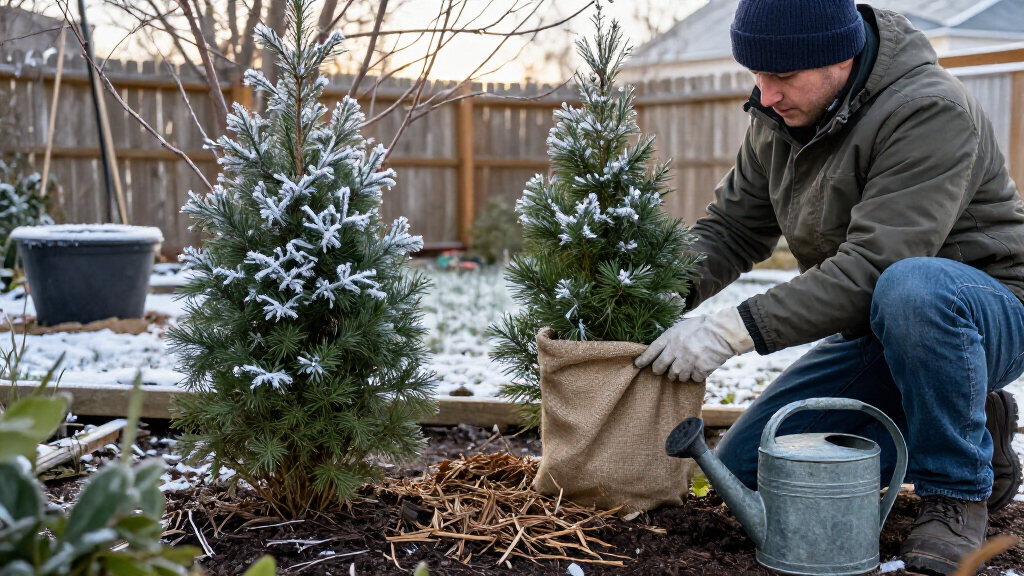
The report says even plants described as hardy can struggle in their first winter if their roots have not spread far enough to replace moisture lost from foliage. It recommends checking soil moisture in October and watering deeply during dry spells, then applying mulch over the root zone. Mulch should not touch trunks or stems, and rhododendron crowns should remain clear. The advice does not call for routine wrapping of every evergreen: it recommends a breathable screen on the windward side where a plant is exposed.
For arborvitae, especially tall, narrow trees, the report advises a slow soak if rain has been scarce and a few inches of mulch beneath the canopy. It says loose, soft ties can help hold branches of a loose or multi-leader tree together before heavy, wet snow, but should not be tightened. New boxwood should be watered plant by plant so water reaches each root ball. Container-grown boxwood needs a sheltered position and insulation around the pot, whose roots experience greater cold and temperature swings than roots in the ground.
The report says rhododendrons need freely draining soil as well as moisture: they do not tolerate waterlogging. It recommends a sheltered location, a variety suited to the local USDA hardiness zone and organic mulch over the shallow root zone. For Japanese holly, it advises checking cultivar hardiness, monitoring exposed plants at the ends of rows, and checking windbreak ties after storms. The yew section stresses that adaptability once established does not remove the vulnerability of a recently planted specimen; the source excerpt ends before giving its full care instructions.
Why First-Winter Root Care Matters
The advice is relevant because winter injury is not limited to extreme cold. According to the report, cold, frozen ground, sun and drying winds can combine: leaves continue losing moisture, while shallow or newly establishing roots may not be able to replace it. That can leave foliage damaged even when the plant itself is considered hardy.
Practical preparation can also help gardeners avoid treating every plant the same way. Exposure, drainage, container planting and cultivar all affect what protection is appropriate. A wind screen is a targeted measure for exposed sites, while watering and careful mulching address root-zone conditions. The report does not provide trial data or a guarantee that these steps will prevent damage; it presents them as seasonal care guidance.
Products Worth Considering

EGO Power+ SNT2122 21-Inch Single-Stage Snow Blower with Two 4.0Ah Batteries and 320W Charger

Husqvarna 110iL FLXi Cordless Grass Trimmer and Edger with 4 Ah Battery and Charger

EGO Power+ 12-Inch Cordless Electric Snow Shovel with 56V 2.5Ah Battery and Charger
As an affiliate, we earn on qualifying purchases.
The Five Plants in the Report
The Homes & Gardens article presents the recommendations as first-winter care, rather than as a claim that these five evergreens are generally unable to withstand winter. It explains that recently planted specimens have had less time to establish roots than settled plants, and that susceptibility varies with location and growing conditions.
Its plant-specific notes reflect those differences: rhododendrons need drainage, container-grown boxwood may need protection around the pot, and the hardiness of Japanese holly varies by cultivar. The report also cautions against late-season feeding for rhododendrons, saying it could prompt tender growth before cold weather. These recommendations are seasonal guidance from the cited report, not a substitute for local plant labels or climate-specific advice.
“In their first winter, even hardy evergreens can struggle because their roots have not spread far enough to replace moisture lost to cold, sun, and drying winds.”
— Homes & Gardens report
Local Conditions Shape Protection
The report does not specify a single watering amount, mulch depth for every plant, or temperature threshold for adding or removing covers. Those choices depend on rainfall, soil drainage, exposure, container size and local winter conditions. It advises checking plant labels and choosing varieties suited to the local USDA hardiness zone, but does not list zone ranges for all five plants.
The supplied article excerpt cuts off during its yew section, so the report’s complete yew-specific instructions are unavailable here. It is also unclear from the source material whether its recommendations were independently tested or how often winter protection prevents foliage damage. Gardeners should not interpret the list as proof that every newly planted evergreen needs a cover.
Check Plants Before the Ground Freezes
The immediate next step in the report’s seasonal schedule is to check soil moisture during dry autumn weather and water before the ground freezes, while avoiding waterlogged conditions around rhododendrons. Gardeners can then mulch the root zone, keeping material clear of trunks and crowns, and assess whether wind exposure warrants a breathable screen.
After storms, check stakes, ties and screens for rubbing or tightening. Remove temporary frost covers during mild spells, the report advises, rather than leaving plants sealed beneath them. The source gives no forecast or date for a particular cold event, so timing should follow local weather and plant conditions.
Key Questions
Which newly planted evergreens does the report identify?
The report names arborvitae, boxwood, rhododendron, Japanese holly and yew as evergreens that may need extra attention in their first winter.
Why can a hardy evergreen struggle after planting?
According to the report, its roots may not yet have spread far enough to replace moisture lost from foliage to winter sun and drying winds, particularly when the soil is frozen.
What basic winter preparation does the report recommend?
It recommends deep watering during dry autumn spells, mulch over the root zone and a breathable wind screen where exposure calls for one. Keep mulch away from trunks and stems, and leave rhododendron crowns clear.
Should every new evergreen be wrapped?
No. The report recommends wind screens or temporary frost covers where site exposure or conditions warrant them. It favors breathable protection and says temporary covers should come off during mild spells.
What does the report say about yew?
It notes that yew is adaptable once established but that a recently planted plant has a smaller root system. The supplied source excerpt ends before the full yew-specific care advice, so additional instructions cannot be confirmed from it.
Source: homesandgardens.com