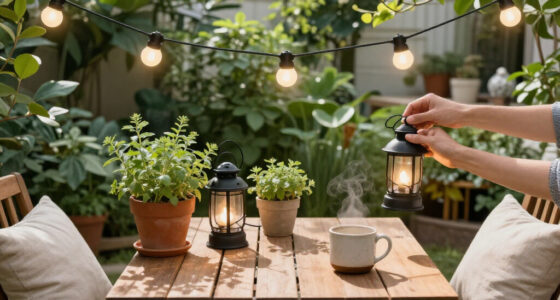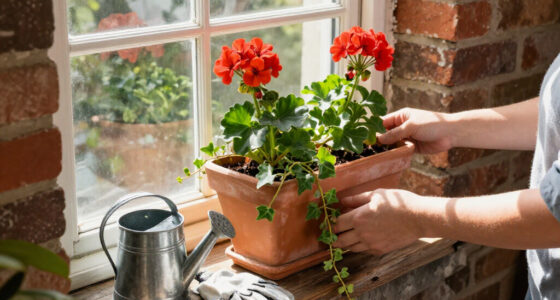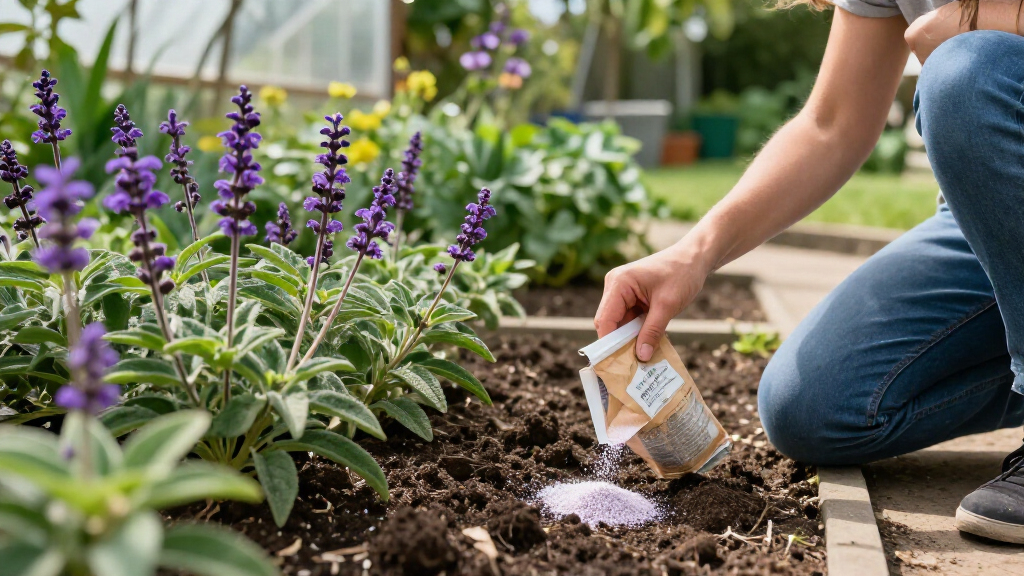

The best garden fertilizers for salvias support steady growth and flowering without pushing soft, leafy growth at the expense of blooms. Espoma Organic Plant-Tone is my best overall pick for gardeners who want a gentle, general-purpose granular feed, while Miracle-Gro Bloom Booster suits those seeking a higher-phosphorus option for flowering plants and Neptune’s Harvest Fish & Seaweed offers a liquid feed with a lower nutrient concentration. The main tradeoff is between convenient, concentrated feeding and gentler products that fit a lighter-feeding approach. Salvia species and garden conditions vary, so the right choice also depends on soil fertility and how often you want to feed. Read on for the full breakdown and guidance on choosing a fertilizer for your salvias.

Get garden gear delivered free with Prime
- Fast, free delivery on millions of items
- Prime Video, Amazon Music and more included
- Member-only deals all year
Complete the kit


Key Takeaways
- Plant-Tone stands out as the best overall match for gardeners seeking an organic, moderate-strength granular feed rather than a bloom-focused formula.
- Bloom Booster has the lineup’s highest phosphorus ratio, 10-52-10, but that does not make it a universal salvia fertilizer; it is best treated as a targeted option, not a default feeding plan.
- The three 10-10-10 products are not interchangeable in use. Espoma Garden Food and GARDENWISE are granular, while ASTEVORA is liquid, so application style and package size shape their appeal.
- Liquid feeds favor gardeners who want adjustable, repeat applications; granular choices suit those who prefer feeding less often, subject to each label’s directions.
- Fish-based products and flower-specific organics offer different tradeoffs: Neptune’s Harvest and Alaska Fish have low-analysis liquid formulas, while Jobe’s Organics and Espoma Bloom! are aimed more directly at flowering plants.




| garden fertilizers for salvia | Brand | Form |
|---|---|---|
| Miracle-Gro Water Soluble Bloo | Miracle-Gro | Water-soluble |
| Espoma Organic Plant-Tone 5-3- | Espoma | Granules |
| Espoma Garden Food 10-10-10 Gr | Espoma | Granules |
| GARDENWISE 10-10-10 Slow-Relea | GARDENWISE | Granules |
| ASTEVORA 10-10-10 All-Purpose | — | Liquid |
| Espoma Organic Bloom! Concentr | — | — |
| Miracle-Gro Water Soluble All | — | — |
| Jobe’s Organics Granular Ferti | Jobe’s Organics | Granular |
| Neptune’s Harvest Fish & Seawe | — | — |
| Alaska Fish Fertilizer for Pla | Alaska | — |
More Details on Our Top Picks
Miracle-Gro Water Soluble Bloom Booster Flower Food, 10-52-10, 1 lb
For salvias that are already established and approaching bud set, this 10-52-10 water-soluble formula stands out for its unusually high phosphorus level and flexible application. It can feed through roots and leaves, and a watering can or garden feeder makes it adaptable to beds and containers. Compared with Espoma Garden Food 10-10-10, this is the more bloom-focused choice; the Espoma formula offers a more balanced nutrient ratio for general growth. Salvia growers should still avoid treating extra phosphorus as a shortcut to more flowers: use it only as directed and where a bloom-stage feed fits the plant’s needs. The tradeoff is a repeat schedule every 7–14 days, plus mixing before each use, unlike ready-to-apply granules such as Espoma Organic Plant-Tone.
Pros:- High-phosphorus 10-52-10 formula is specifically oriented toward flowering plants.
- Can feed through roots and leaves.
- Works with a watering can or compatible garden feeder.
- Can be used for flowering plants in containers or garden beds.
Cons:- Requires dilution before every application.
- Needs repeat applications every 7–14 days during bud set and bloom.
- The bloom-focused nutrient ratio is less suited to routine, balanced feeding than a 10-10-10 formula.
Best for: Salvia growers with established plants entering bud set who want a water-soluble feed for container or in-ground plants.
Not ideal for: Gardeners seeking a low-maintenance seasonal feeding routine or a ready-to-use organic granular fertilizer.
- Brand:Miracle-Gro
- Formula:10-52-10
- Size:1 lb
- Form:Water-soluble
- Application methods:Watering can or garden feeder
- Outdoor mixing ratio:1 tablespoon per gallon
- Application frequency:Every 7–14 days during bud set and bloom
- Approximate feeder coverage:500 sq ft
Our verdict“Choose this for a targeted, water-soluble feed during salvia bud set and bloom, not for effortless season-long feeding.”
Espoma Organic Plant-Tone 5-3-3 All-Purpose Plant Food, 4 lb Bags, Pack of 2
My pick for buyers who want an organic-input granular fertilizer they can use across a mixed garden is Espoma Organic Plant-Tone. Its 5-3-3 analysis is gentler and less concentrated than Espoma Garden Food 10-10-10, making it a more moderate option for routine feeding rather than a fast, balanced nutrient boost. The ready-to-use granules also avoid the repeated measuring and mixing required by Miracle-Gro Bloom Booster. Plant-Tone is intended for flowers as well as vegetables, trees, and shrubs, so one product can serve a varied planting area. For salvias, that broad use is convenient, but it is not a bloom-specialist formula; buyers seeking a targeted flowering feed may prefer the Bloom Booster. You must water thoroughly after application, and the schedule varies with plant type and season.
Pros:- Made with natural and organic ingredients and registered as an Organic Input Material.
- Ready-to-use granules require no mixing.
- Suitable for flowers, vegetables, trees, and shrubs.
- Slow nutrient release provides a longer-lasting nutrient reservoir.
Cons:- Must be watered thoroughly after application.
- Recommended application timing varies by plant type and season.
- The 5-3-3 formula is less bloom-focused than Miracle-Gro Bloom Booster.
Best for: Organic-minded gardeners feeding salvias alongside vegetables, shrubs, and other flowers who prefer ready-to-apply granules.
Not ideal for: Growers wanting a dedicated bloom-stage formula, a fixed feeding schedule, or a liquid fertilizer for quick application.
- Brand:Espoma
- Fertilizer analysis:5-3-3
- Calcium:5%
- Form:Granules
- Pack size:Two 4 lb bags
- Total weight:8 lb
- Target plants:Flowers, vegetables, trees, and shrubs
- Mixing:Ready to use; no mixing required
Our verdict“Choose Plant-Tone for an organic-input, multi-purpose granular feed; skip it if your main goal is a specialized bloom-stage formula for salvias.”
Espoma Garden Food 10-10-10 Granular Fertilizer, 6.75-Pound Bag
For a gardener who wants one balanced granular fertilizer for salvias and a wider range of plants, Espoma Garden Food provides equal 10-10-10 portions of the three major nutrients. That makes it less bloom-specific than Miracle-Gro Bloom Booster, whose high-phosphorus ratio targets flowering, but more evenly balanced than that product for general garden feeding. The granules are ready to apply, so there is no dilution step like the one required by ASTEVORA’s liquid fertilizer. The tradeoff is a monthly growing-season routine for flowers and vegetables, along with watering after application. Its broad target list suits mixed beds, though salvia growers focused on simpler, less frequent feeding may prefer GARDENWISE, which is described as feeding for up to eight weeks. Follow the package directions for application amounts and placement.
Pros:- Equal 10-10-10 nutrient analysis for balanced general feeding.
- Ready-to-use granules require no mixing.
- Suitable for flowers, vegetables, trees, and shrubs.
- Applied to soil around the drip line.
Cons:- Flowers and vegetables need monthly applications during the growing season.
- Granules must be watered in after application.
- Less specifically oriented toward flowering than Miracle-Gro Bloom Booster.
Best for: Gardeners with mixed flower and vegetable beds who want a balanced granular formula and are comfortable with monthly feeding.
Not ideal for: Salvia growers seeking a bloom-focused nutrient ratio or a longer interval between applications.
- Brand:Espoma
- NPK ratio:10-10-10
- Weight:6.75 lb
- Form:Granules
- Application method:Apply to soil around the drip line
- Target plants:Flowers, vegetables, trees, and shrubs
- Application frequency:Monthly for flowers and vegetables during the growing season
- Origin:Made in the USA
Our verdict“Pick this for balanced feeding across a mixed garden, but choose a bloom-focused or longer-feeding option if that better matches your salvia routine.”
GARDENWISE 10-10-10 Slow-Release Granular Fertilizer, 16 oz
GARDENWISE 10-10-10 is the strongest fit here for salvia growers who prefer granular feeding but do not want Espoma Garden Food’s stated monthly schedule. Its slow-release formula feeds for up to eight weeks, while quick-release nitrogen provides an earlier nutrient contribution. Both products offer balanced 10-10-10 nutrition, so the main difference is feeding duration and package size rather than a specialized bloom profile. Compared with Miracle-Gro Bloom Booster, GARDENWISE is less targeted to flowering but avoids frequent liquid mixing. Its 16-ounce pack may suit a smaller planting area, although the coverage is not specified and varies with soil and plant conditions. You still need to spread the granules and water them in, and the eight-week duration is an upper limit, not a fixed result for every garden.
Pros:- Balanced 10-10-10 nutrient formula.
- Feeds for up to eight weeks according to the product description.
- Combines slow-release feeding with quick-release nitrogen.
- Listed for indoor and outdoor flowers and other plant types.
Cons:- Coverage depends on soil and plant conditions and is not specified.
- Granules must be spread and watered in.
- Balanced nutrition is less bloom-focused than Miracle-Gro Bloom Booster.
Best for: Salvia growers with a modest planting area who want balanced granules and fewer planned applications than a monthly-feeding product.
Not ideal for: Gardeners who need a clearly stated coverage area, a bloom-specific formula, or a liquid feed for easy application to containers.
- Brand:GARDENWISE
- NPK ratio:10-10-10
- Form:Granules
- Weight:16 oz
- Volume:0.5 quarts
- Feeding duration:Up to 8 weeks
- Coverage:Depends on soil and plant conditions
- Suitable plants:Indoor and outdoor vegetables, fruits, flowers, trees, shrubs, and lawns
Our verdict“Choose GARDENWISE for a less-frequent balanced granular routine in a smaller garden, provided variable coverage is acceptable.”
ASTEVORA 10-10-10 All-Purpose Liquid Plant Fertilizer, 8 oz
ASTEVORA is the liquid option for salvia growers who want balanced nutrition alongside 6% chelated iron and seaweed kelp extract. Its 10-10-10 analysis is more general-purpose than Miracle-Gro Bloom Booster’s strongly phosphorus-heavy 10-52-10, so it makes more sense for broad feeding than a targeted bloom-stage application. The liquid format can be convenient when watering container salvias, while Espoma Garden Food avoids liquid dilution altogether with ready-to-use granules. ASTEVORA still needs to be mixed with water, and the 8-ounce bottle offers less product than the larger granular options in this group. The product is listed for indoor and outdoor plants, but the supplied details do not give a mixing ratio or application schedule, so buyers should consult its label rather than guess.
Pros:- Balanced 10-10-10 formula for general plant feeding.
- Includes 6% chelated iron and seaweed kelp extract.
- Liquid form is designed for quick absorption.
- Listed for indoor and outdoor plants.
Cons:- Must be diluted with water before use.
- The supplied product details do not state a mixing ratio or application frequency.
- Its balanced formula is less bloom-focused than Miracle-Gro Bloom Booster.
Best for: Container and mixed-plant gardeners who prefer a liquid fertilizer and specifically want a formula that includes chelated iron and kelp extract.
Not ideal for: Growers who want ready-to-use granules, a stated application schedule, or a fertilizer explicitly focused on flowering.
- NPK formula:10-10-10
- Form:Liquid
- Size:8 oz
- Pack count:1
- Chelated iron:6%
- Additive:Seaweed kelp extract
- Application:Mix with water
- Country of manufacture:USA
Our verdict“Choose ASTEVORA if you want a liquid, balanced feed with iron and kelp; skip it if you need a clearly specified routine or bloom-focused formula.”
Espoma Organic Bloom! Concentrated Plant Food, 16 fl oz
For salvias grown for flowers, Espoma Organic Bloom! offers a targeted feeding routine without relying on a high-nitrogen formula. Its 1-3-1 analysis, with more phosphorus than nitrogen, suits gardeners looking for a flowering-plant concentrate for beds, containers, or hanging baskets. Compared with Miracle-Gro Water Soluble All Purpose Plant Food, it is specifically positioned for blooms and approved for organic gardening, while Miracle-Gro provides a much stronger, broader-purpose 24-8-16 formula. The tradeoff is a smaller 16-ounce bottle that must be diluted and reapplied every two to four weeks. I’d choose this for routine organic feeding, but skip it if you want a ready-to-use product or prefer less frequent applications.
Pros:- Formulated for flowering plants, including annuals and perennials
- Can be used in containers, gardens, and hanging baskets
- Includes natural proteins, kelp extracts, and humic acids
- Approved for organic gardening
Cons:- Must be measured and diluted before watering plants
- Requires repeat feeding every two to four weeks during the growing season
- The 16-fluid-ounce volume may be limiting for large gardens
Best for: Organic gardeners feeding salvias in mixed flower beds, pots, or hanging baskets who want a flowering-plant formula.
Not ideal for: Gardeners who want a dry, slow-maintenance feed or a ready-to-use liquid; this concentrate needs dilution and repeat applications.
- Product type:Liquid fertilizer concentrate
- Volume:16 fluid ounces
- Fertilizer analysis:1-3-1
- Ingredients:Natural proteins, kelp extracts, and humic acids
- Suitable plants:Flowering plants, annuals, and perennials
- Application:Mix with water and water plants
- Recommended frequency:Every 2–4 weeks during the growing season
- Organic gardening:Approved; registered Organic Input Material
- Origin:USA
Our verdict“Choose Espoma Organic Bloom! if you want an organic, flower-focused liquid feed for salvias and don’t mind mixing it regularly.”
Miracle-Gro Water Soluble All Purpose Plant Food, 1.5 lb
Miracle-Gro Water Soluble All Purpose Plant Food is the broadest, quickest-feeding option in this group: its 24-8-16 formula is described as starting to work instantly and suits flowers alongside vegetables, houseplants, roses, trees, and shrubs. That versatility can be useful if salvias share a watering routine with many other plants. Compared with Espoma Organic Bloom!, it has a much higher nutrient analysis and a wider-use brief, but it is not the organic-focused, bloom-specific choice. The stated coverage of about 600 square feet helps gardeners estimate use across a larger planting, while the short seven-to-fourteen-day outdoor interval means more frequent mixing and feeding. I’d favor it for a mixed garden and skip it if your priority is organic inputs or a flower-focused formula.
Pros:- Suitable for a wide range of indoor and outdoor plants
- Described as starting to work instantly
- Approximately 600 square feet of coverage
- Can be used on flowers as well as vegetables, roses, trees, and shrubs
Cons:- Must be mixed with water before application
- Outdoor feeding is repeated every 7 to 14 days
- Its 24-8-16 analysis is less flower-specific than Espoma Organic Bloom!’s 1-3-1 formula
Best for: Gardeners feeding salvias alongside vegetables, houseplants, and other outdoor plants who want one fast-acting soluble fertilizer.
Not ideal for: Salvia growers prioritizing organic gardening or less frequent feeding; this formula is broad-purpose and calls for repeated applications outdoors.
- Product type:Water-soluble plant fertilizer
- Weight:1.5 lb
- NPK:24-8-16
- Coverage:Approximately 600 sq. ft.
- Indoor application:Mix 1/2 teaspoon per gallon of water; reapply every 2 weeks
- Outdoor application:Mix 1 1/2 tablespoons per 1 1/2 gallons of water; reapply every 7 to 14 days
- Suitable plants:Indoor and outdoor plants, including flowers, vegetables, houseplants, roses, trees, and shrubs
Our verdict“Choose this if you want one fast-acting soluble feed for salvias and a diverse garden, rather than an organic or bloom-specific product.”
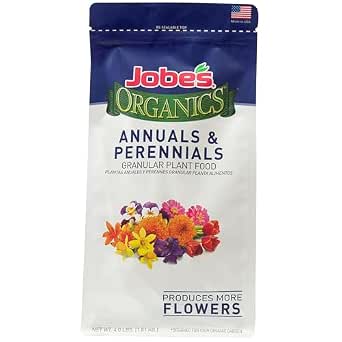
Jobe’s Organics Granular Fertilizer for Perennial and Annual Flowers, 4 lbs
Jobe’s Organics Granular Fertilizer makes the most sense for salvia growers who would rather apply a dry flower fertilizer than mix a liquid feed at every watering. Its 3-5-4 analysis is formulated for annual and perennial flowers, and its OMRI listing supports an organic gardening approach. Compared with Neptune’s Harvest Fish & Seaweed, Jobe’s avoids repeated liquid dilution and can be applied on a four-to-eight-week schedule instead of every one to two weeks outdoors. That convenience comes with a different task: the granules may need watering to activate, and you still need to keep up with seasonal reapplication. It is also less adaptable as a foliar feed than Neptune’s liquid. I’d pick it for flower beds and established containers, not for gardeners wanting a sprayable or immediately mixed feed.
Pros:- OMRI Listed for organic gardening
- 3-5-4 formula is made for annual and perennial flowers
- Granular form avoids mixing a fresh liquid dose for each application
- Application interval is every 4 to 8 weeks
Cons:- Granules may need watering to activate effectively
- Still requires repeat applications during the growing season
- Does not offer the soil-drench or foliar-feed options available with Neptune’s Harvest
Best for: Organic gardeners with perennial or annual salvia beds who prefer measured granular applications spaced several weeks apart.
Not ideal for: Growers seeking foliar feeding, an immediately mixed liquid, or a fertilizer suited to a broad range of plant types.
- Brand:Jobe’s Organics
- Weight:4 lbs
- NPK ratio:3-5-4
- Form:Granular
- Target plants:Perennial and annual flowers
- Certification:OMRI Listed
- Application frequency:Every 4–8 weeks
- Model number:09627
Our verdict“Choose Jobe’s if you want an OMRI-listed granular feed for flower-focused salvia beds and prefer applications spaced several weeks apart.”
Neptune’s Harvest Fish & Seaweed Liquid Fertilizer, 2-3-1, 36 fl oz
Neptune’s Harvest Fish & Seaweed is the most adaptable liquid option here for gardeners who want to feed salvias either at the roots or as a foliar feed. The blend is made with 75% fish and 25% seaweed, and the product description also notes that it adds organic matter and supports soil structure. Compared with Espoma Organic Bloom!, it offers two application routes and a larger 36-ounce volume, while Espoma has a more explicitly flower-focused 1-3-1 analysis. Neptune’s Harvest is OMRI Listed, but the outdoor schedule of every one to two weeks asks for frequent mixing and careful dilution. Its fish-based ingredients may also be a poor fit for gardeners who want to avoid fish-derived products. I’d choose it for flexible organic-style feeding, not for a low-effort schedule.
Pros:- Can be applied as a soil drench or foliar feed
- Made with 75% fish and 25% seaweed
- Product description notes added organic matter and support for soil structure
- OMRI Listed and suitable for indoor and outdoor plants
Cons:- Requires dilution before application
- Outdoor feeding is recommended every 1 to 2 weeks
- Fish-based ingredients may not suit gardeners avoiding fish-derived products
Best for: Gardeners seeking an OMRI-listed fish-and-seaweed liquid for salvias that can be applied as a soil drench or foliar feed.
Not ideal for: Growers who want infrequent feeding, a dry fertilizer, or to avoid fish-based ingredients and regular dilution.
- NPK ratio:2-3-1
- Volume:36 fluid ounces
- Ingredients:75% fish, 25% seaweed
- Application methods:Soil drench or foliar feed
- Dilution:1 oz per gallon of water
- Indoor feeding:1 tablespoon per gallon weekly
- Outdoor feeding:1/8 cup per gallon every 1–2 weeks
- Certification:OMRI Listed
- Pack count:1
Our verdict“Choose Neptune’s Harvest if flexible soil-drench and foliar applications matter more to you than a less frequent feeding schedule.”
Alaska Fish Fertilizer for Plants, OMRI Listed, 5-1-1
Alaska Fish Fertilizer is a fish-emulsion liquid for gardeners feeding salvias along with a wide mix of vegetables, flowers, perennials, shrubs, and container plants. Its 5-1-1 ratio has more nitrogen than Neptune’s Harvest Fish & Seaweed at 2-3-1, so the two products serve different feeding preferences: Alaska is the more nitrogen-forward fish fertilizer, while Neptune pairs fish with seaweed and supports either soil-drench or foliar use. Alaska is OMRI Listed and has stated coverage of 1,000 square feet, which suits a larger planting, but its application still requires mixing with water. The every-three-weeks schedule is less frequent than Neptune’s outdoor interval, though it is not a no-maintenance option. I’d choose it for broad garden use, not for a flower-specific, phosphorus-forward formula.
Pros:- OMRI Listed for organic use
- Suitable for a broad range of indoor and outdoor plants
- Stated coverage of 1,000 square feet
- Recommended every three weeks during the growing season
Cons:- Must be mixed with water before application
- Its 5-1-1 ratio is more nitrogen-forward than the 2-3-1 Neptune’s Harvest formula
- Product data does not specify a foliar-feed method
Best for: Organic-minded gardeners feeding salvias as part of a large, mixed planting of flowers, vegetables, shrubs, and container plants.
Not ideal for: Salvia growers seeking a bloom-focused nutrient ratio, a ready-to-use product, or a fertilizer with foliar feeding specified in its product data.
- Brand:Alaska
- Model number:100551778
- Fertilizer ratio:5-1-1
- Item form:Liquid
- Application method:Mix with water
- Coverage:1,000 square feet
- Target plants:Vegetables, flowers, perennials, shrubs, trees, and container plants
- Item weight:8.8 pounds
- Organic listing:OMRI Listed
Our verdict“Choose Alaska for a fish-based, OMRI-listed feed across a large mixed garden, but pick a more flower-focused option if bloom feeding is your priority.”
How We Picked
I compared the 10 products by how well their nutrient profile, formulation, and application style fit the varied needs of salvias. Since salvias range from compact annuals to established perennials and can grow in beds or containers, I gave weight to products that allow measured feeding rather than implying that every plant needs frequent or heavy fertilizing. I also looked at whether each formula is general-purpose, flower-focused, organic, or fish-based, and what that means for a buyer choosing a routine.
The ranking favors versatility and a sensible fit for regular garden use over the biggest nutrient number or the narrowest bloom claim. Plant-Tone ranks first as a moderate organic all-purpose option; Bloom Booster ranks as a more specialized choice, not a one-size-fits-all winner. Granular and liquid products serve different schedules, while smaller packages, concentrated formulas, and specialized ingredients can narrow the audience. I treated product names and nutrient analyses as starting points, not guarantees of better flowering, and buyers should follow the label and account for soil fertility.
| garden fertilizers for salvia | Brand | Form |
|---|---|---|
| Miracle-Gro Water Soluble Bloo | Miracle-Gro | Water-soluble |
| Espoma Organic Plant-Tone 5-3- | Espoma | Granules |
| Espoma Garden Food 10-10-10 Gr | Espoma | Granules |
| GARDENWISE 10-10-10 Slow-Relea | GARDENWISE | Granules |
| ASTEVORA 10-10-10 All-Purpose | — | Liquid |
| Espoma Organic Bloom! Concentr | — | — |
| Miracle-Gro Water Soluble All | — | — |
| Jobe’s Organics Granular Ferti | Jobe’s Organics | Granular |
| Neptune’s Harvest Fish & Seawe | — | — |
| Alaska Fish Fertilizer for Pla | Alaska | — |
Factors to Consider When Choosing Best Garden Fertilizers For Salvias
Before choosing a formula, I would match the fertilizer to the plant’s actual growing situation rather than buying by bloom claims alone. These factors can help prevent overfeeding and make it easier to choose between granular, liquid, general-purpose, and flower-oriented options.
Match Feeding to Salvia Type and Soil
Salvias include annual bedding plants as well as perennial and woody types, and their growth habits do not all call for the same feeding schedule. A plant growing vigorously in rich soil may need little or no added fertilizer, while a container plant can use up available nutrients sooner. Start by checking the plant’s growth and the soil or potting mix rather than assuming that more food means more flowers. A soil test can help identify existing nutrient levels and reduce guesswork, especially in a garden bed. If growth is healthy but flowering is weak, excess nitrogen or light conditions may be more relevant than a lack of fertilizer. This distinction can save you from adding nutrients that the plant does not need.
Read the N-P-K Ratio for Its Purpose
The three numbers on a fertilizer label describe nitrogen, phosphorus, and potassium, but a higher number is not a quality score. Nitrogen supports leafy growth, phosphorus has roles in root and reproductive development, and potassium supports broader plant functions. A high-phosphorus bloom formula such as 10-52-10 is much more concentrated in phosphorus than a balanced 10-10-10 product, so it should not be treated as an automatic upgrade for every salvia. Repeatedly adding phosphorus where soil already has enough can create nutrient imbalance without fixing other limits on flowering. Use a product’s analysis in conjunction with soil conditions and its label directions. For routine care, a moderate formula may be a more flexible starting point than a specialized high-analysis feed.
Choose Granular or Liquid for Your Routine
Granular fertilizers are often easier to apply across beds and can suit gardeners who prefer fewer feeding sessions, though release behavior varies by formulation. Liquid products let you measure and apply nutrients in a diluted form, which can be useful for containers or for gardeners who want to adjust feeding as plants grow. That flexibility also means liquid feeding can become more frequent and more prone to dosing errors if directions are ignored. Do not assume that every granular product is slow-release or that every liquid product acts in the same way. Check whether the label calls for mixing, watering in, or repeating an application. Pick the format you can use accurately and consistently, not just the one that sounds faster.
Treat Organic Claims as One Factor, Not a Feeding Schedule
Organic formulas may appeal to gardeners who prefer ingredients such as plant meals, fish, or seaweed, but the word organic does not mean a product is automatically mild, complete, or suitable for every situation. Nutrient analysis still matters, as does how the label directs you to apply the product. Fish-based liquids can have a noticeable odor, which may be inconvenient near doors, patios, or indoor growing areas. Granular organic products can be easier to place around outdoor plants, though they still need careful measurement. If you garden around pets or wildlife, read handling and storage instructions rather than relying on a broad product label. Choose based on the ingredients and practical use, not a claim alone.
Account for Containers, Rain, and Watering
Container salvias have limited growing medium, so nutrients and moisture can shift faster than they do in garden beds. At the same time, frequent watering can move soluble nutrients out of a pot, making an easy-to-measure liquid feed appealing to some container growers. That does not mean a stronger or more frequent dose is safer; roots in a small volume of mix can be sensitive to excess fertilizer salts. In beds, rainfall and irrigation affect how granular products are watered in and how nutrients move through the soil. Consider the container size, drainage, and your regular watering pattern before setting a feeding routine. Follow the label’s interval and avoid combining multiple fertilizers unless their nutrient contributions have been accounted for.
Know When a Specialized Product Is Worth It
A specialized bloom or fish-based fertilizer can make sense when its formulation and application style match a specific garden need, but specialization can add steps or limitations. A bloom-focused product may be unnecessary for a salvia already growing well in fertile soil, while an all-purpose feed may be easier to use across mixed plantings. Concentrated liquids can take less storage space but require accurate dilution; larger granular bags may suit broad beds but leave excess product for a small garden. Compare the package size with the number and size of plants you actually feed. Pay more attention to fit, clear directions, and how much product you can use appropriately than to a bold claim on the front label. If you cannot identify a specific need, a moderate general-purpose option is often the simpler choice.
Frequently Asked Questions
Should I use a high-phosphorus bloom fertilizer on every salvia?
No. A high-phosphorus formula such as 10-52-10 is a specialized option, not a default requirement for all salvias. Flowering also depends on light, water, plant maturity, and soil conditions, so fertilizer may not address the actual cause of weak blooms. Excess phosphorus can build up where soil already has enough. Check soil conditions when possible and follow the product label rather than applying it simply because the plant is flowering.
Can I use one fertilizer for salvias in pots and in garden beds?
Often you can use the same product if its label permits both settings, but the feeding routine may need to differ. Potting mix holds a smaller nutrient reserve than garden soil, and frequent watering can carry soluble nutrients out of a container. Garden beds may already contain nutrients from compost or previous feeding. Use the label’s directions for each setting and avoid giving container plants extra doses just because they are watered often. If you grow many salvias in pots, a format that is easy to measure accurately can be especially useful.
Is a balanced 10-10-10 fertilizer a safer choice than a bloom formula?
Balanced formulas can be a straightforward general-purpose choice, but they are not automatically safer or necessary for every plant. They provide nutrients in equal listed proportions, while a bloom formula such as 10-52-10 has a much higher phosphorus proportion. Either can be misapplied if the dose or frequency exceeds the label directions. Soil fertility and the salvia’s current growth should guide the decision. If you have no evidence of a particular nutrient need, avoid treating a specialized ratio as a guaranteed shortcut to more flowers.
Do fish-based fertilizers make sense for salvias near a patio?
They can, but location and personal tolerance matter because fish-based products may have a noticeable odor during application. This can be less convenient near seating areas, entryways, or enclosed spaces than a low-odor granular option. Check the product directions for dilution, placement, and cleanup, and store the container securely. If odor is a concern, choose a different formulation rather than applying a fish fertilizer where people spend time. The nutrient analysis and application fit should still guide the choice, not the ingredient name alone.
How can I tell if my salvia needs fertilizer or has another problem?
Look at the whole growing situation before feeding: light exposure, watering, drainage, recent planting, and visible pest or disease signs can all affect growth and flowering. A salvia in too much shade may produce fewer blooms even when nutrients are available. Yellowing or weak growth can have several causes, so one symptom does not prove that fertilizer is needed. Check soil conditions or seek a soil test if the problem persists, and avoid stacking multiple products while diagnosing it. If the plant is healthy and flowering well, adding fertilizer may offer little benefit.
Conclusion
For most gardeners comparing the best garden fertilizers for salvias, I would choose Espoma Organic Plant-Tone as the best overall for a moderate, organic, general-purpose approach. GARDENWISE 10-10-10 is my best value-style pick for someone seeking a compact granular balanced formula, while Miracle-Gro Bloom Booster is the specialized choice for gardeners who specifically want a high-phosphorus flower feed and will use it according to its label. Beginners may find Plant-Tone easier to fit into a straightforward routine than a concentrated liquid or bloom-specific product. For liquid feeding, look to Neptune’s Harvest for a fish-and-seaweed formula or ASTEVORA 10-10-10 for a balanced liquid option; choose Jobe’s Organics or Espoma Bloom! if a flower-oriented organic product better suits your preferences. The best match is the one that fits your salvia, soil, and feeding habits without adding nutrients the plant does not need.
Fall yard work Picks

EGO POWER+ LB7654 56V Cordless Leaf Blower with 5.0Ah Battery
As an affiliate, we earn on qualifying purchases.