
The best mealybug treatments for houseplants balance effective pest control with a treatment method you can use safely and consistently. I rank Bonide Systemic House Plant Insect Control Granules as the best overall for buyers seeking longer-lasting, soil-applied control, while Garden Safe Insecticidal Soap stands out for direct treatment of visible pests and Arber Organic Insecticide Concentrate for shoppers who prefer a concentrate. The main tradeoff is between sprays that contact pests directly and systemics that work through the plant but may have use restrictions. Plant sensitivity, application effort, and whether you need immediate contact or ongoing control also shape the choice. Read on for the full comparison and advice on matching a treatment to your plants and infestation.

Get garden gear delivered free with Prime
- Fast, free delivery on millions of items
- Prime Video, Amazon Music and more included
- Member-only deals all year
Complete the kit


Key Takeaways
- Systemic granules dominate the lineup: several Bonide listings and Ferti-lome offer soil-applied options, so compare the exact label and package rather than assuming similar names mean identical products.
- Contact sprays suit visible colonies: soap, neem, and plant-based sprays require direct coverage, making careful application more important than simply spraying the top of the foliage.
- Application format separates the standouts: ready-to-use sprays avoid measuring, while Arber’s concentrate takes dilution and preparation but may suit buyers treating multiple plants.
- One treatment method does not fit every plant: systemic products can be a poor match when label restrictions, plant type, or household circumstances rule them out; contact treatment offers a different route.
- Repeated Bonide listings make label checking worthwhile: the roundup includes several similarly named granules and a multi-pack, so buyers should verify formulation, directions, and quantity before choosing.
| YARDi Houseplant Pest and Disease Spray, 32 oz |  | Best Ready-to-Use Multi-Purpose Spray | Volume: 32 oz | Form: Ready-to-use spray | Active ingredients: Peppermint oil, cinnamon oil, citric acid | VIEW LATEST PRICE | See Our Full Breakdown |
| Bonide Systemic House Plant Insect Control Granules, 8 oz |  | Best for Longer-Lasting Protection | Brand: Bonide | Item weight: 8.2 ounces | Active ingredient: Imidacloprid | VIEW LATEST PRICE | See Our Full Breakdown |
| Colton’s Naturals Mealybug Control Spray for Indoor and Outdoor Plants |  | Best for Targeted Mealybug Treatment | Target pest: Mealybugs | Use: Indoor and outdoor plants | Application: Ready-to-use spray | VIEW LATEST PRICE | See Our Full Breakdown |
| Bonide Captain Jack’s Neem Max 12 oz Ready-to-Use Spray for Houseplants |  | Best Neem-Based Multi-Action Spray | Brand: Bonide | Form: Ready-to-use spray | Active ingredient: Cold-pressed neem oil | VIEW LATEST PRICE | See Our Full Breakdown |
| Arber Organic Insecticide Concentrate for Indoor and Outdoor Plants, 16 fl oz |  | Best Concentrate for Large Plant Collections | Volume: 16 fl oz | Type: Biological concentrate | Yield: Up to 16 gallons of finished spray | VIEW LATEST PRICE | See Our Full Breakdown |
| Bonide Houseplant Systemic Insect Control Granules, 8 oz |  | Best for Low-Maintenance Soil Treatment | Brand: Bonide | Model number: 951 | Part number: 951 | VIEW LATEST PRICE | See Our Full Breakdown |
| EcoVenger Garden Insect Control Spray, Plant-Based, 16 oz |  | Best Plant-Based Contact Spray | Volume: 16 oz | Type: Ready-to-use spray | Active ingredients: Citronella oil, geraniol, cedarwood oil | VIEW LATEST PRICE | See Our Full Breakdown |
| Garden Safe Insecticidal Soap Insect Killer Spray, 32 oz |  | Best Direct Treatment for Mealybugs | Brand: Garden Safe | Volume: 32 fluid ounces | Form: Ready-to-use spray | VIEW LATEST PRICE | See Our Full Breakdown |
| Ferti-lome Houseplant Hero Systemic Insecticide, 8 oz |  | Best Systemic Pick for Mealybugs | Brand: Ferti-lome | Active ingredient: Imidacloprid 0.22% | Volume: 8 fluid ounces | VIEW LATEST PRICE | See Our Full Breakdown |
| Bonide Systemic Houseplant Insect Control | 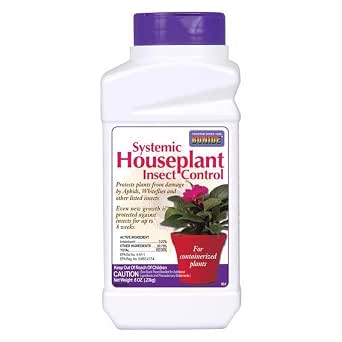 | Best for Whole-Plant Systemic Coverage | Brand: Bonide | Model number: 951 | Part number: 951 | VIEW LATEST PRICE | See Our Full Breakdown |
| Bonide Systemic Houseplant Insect Control Granules, 8 oz |  | Best for Long-Lasting Mealybug Control | Brand: Bonide | Form: Granules | Net quantity: 8 oz | VIEW LATEST PRICE | See Our Full Breakdown |
| Dr. Killigan’s Doom & Bloom Plant Bug Spray, 16 fl oz |  | Best for Contact Treatment | Brand: Dr. Killigan’s | Product: Doom & Bloom Insect Spray | Volume: 16 fluid ounces | VIEW LATEST PRICE | See Our Full Breakdown |
| Bonide Captain Jack’s Neem Oil Spray for Plants, 32 oz, Ready-to-Use |  | Best Multi-Purpose Neem Spray | Brand: Bonide | Volume: 32 fluid ounces | Form: Ready-to-use liquid spray | VIEW LATEST PRICE | See Our Full Breakdown |
| BioAdvanced Houseplant Insect and Mite Control Spray, 24 fl oz |  | Best for Mixed Pest and Disease Problems | Brand: BioAdvanced | Volume: 24 fl oz | Form: Ready-to-use spray | VIEW LATEST PRICE | See Our Full Breakdown |
| Bonide Systemic Houseplant Insect Control Granules, 8 oz, 3-Pack |  | Best Multi-Pot Supply | Brand: Bonide | Product type: Systemic insect control granules | Unit count: 3 | VIEW LATEST PRICE | See Our Full Breakdown |
| mealybug treatments for houseplant | Brand | Form | Volume | Application |
|---|---|---|---|---|
| YARDi Houseplant Pest and Dise | — | Ready-to-use spray | 32 oz | — |
| Bonide Systemic House Plant In | Bonide | Granules | — | Shake into soil |
| Colton’s Naturals Mealybug Con | — | — | — | Ready-to-use spray |
| Bonide Captain Jack’s Neem Max | Bonide | Ready-to-use spray | — | — |
| Arber Organic Insecticide Conc | — | — | 16 fl oz | Dilute according to label; spray foliage and soil surface until wet |
| Bonide Houseplant Systemic Ins | Bonide | Granules | — | — |
| EcoVenger Garden Insect Contro | — | — | 16 oz | — |
| Garden Safe Insecticidal Soap | Garden Safe | Ready-to-use spray | 32 fluid ounces | — |
| Ferti-lome Houseplant Hero Sys | Ferti-lome | Ready-to-use liquid | 8 fluid ounces | — |
| Bonide Systemic Houseplant Ins | Bonide | — | — | Absorbed by the plant through sap flow |
| Bonide Systemic Houseplant Ins | Bonide | Granules | — | Mix into soil and water in |
| Dr. Killigan’s Doom & Bloom Pl | Dr. Killigan’s | Spray | 16 fluid ounces | Indoor and outdoor plants |
| Bonide Captain Jack’s Neem Oil | Bonide | Ready-to-use liquid spray | 32 fluid ounces | Trigger spray for indoor and outdoor plants |
| BioAdvanced Houseplant Insect | BioAdvanced | Ready-to-use spray | 24 fl oz | Indoor and outdoor houseplants, flowers, and herbs |
| Bonide Systemic Houseplant Ins | Bonide | — | — | — |
More Details on Our Top Picks
YARDi Houseplant Pest and Disease Spray, 32 oz
YARDi’s 32-ounce ready-to-use formula suits plant owners who want to treat mealybugs while also addressing several other common houseplant pests and fungal problems. Its peppermint oil, cinnamon oil, and citric acid formula is applied directly to leaves, stems, and pests, so there’s no concentrate to measure. Compared with Colton’s Naturals Mealybug Control Spray, which focuses specifically on mealybugs and their hiding places, YARDi covers a wider range of listed pests and conditions. That breadth makes it a flexible choice when the problem is not yet clearly identified, but it also means the formula is less narrowly specialized. Reapplication is needed as required, so it is not a set-and-forget treatment like Bonide Systemic House Plant Insect Control Granules. Keep the bottle away from children.
Pros:- Ready-to-use spray avoids mixing and measuring.
- Lists mealybugs and several other common houseplant pests among its targets.
- Also treats mold, mildew, and fungus.
- Peppermint and cinnamon oils provide plant-based active ingredients.
Cons:- Requires reapplication as needed rather than providing a stated long-duration treatment.
- The broad pest-and-disease scope is less specialized than Colton’s mealybug-focused spray.
- Must be kept out of reach of children.
Best for: Houseplant owners seeking a ready-to-spray option for mealybugs alongside other listed pests, mold, or mildew.
Not ideal for: People who want longer-lasting soil-based protection or a mealybug-only formula with targeted application guidance.
- Volume:32 oz
- Form:Ready-to-use spray
- Active ingredients:Peppermint oil, cinnamon oil, citric acid
- Intended use:Indoor houseplants
- Listed pests:Aphids, whiteflies, spider mites, mealybugs, fungus gnats, thrips
- Other listed targets:Mold, mildew, fungus
- Origin:Made in the USA
Our verdict“Choose YARDi if you want one ready-to-use spray for mealybugs and a range of other houseplant problems.”
Bonide Systemic House Plant Insect Control Granules, 8 oz
Bonide Systemic House Plant Insect Control Granules take a different approach from contact sprays: shake the granules into the soil, where the systemic active ingredient is taken up by the plant. The product description lists protection for up to 8 weeks, including protection for new growth, which can suit plants where mealybugs keep returning after surface treatments. Compared with YARDi Houseplant Pest and Disease Spray, this requires less frequent direct spraying, but it is not a quick foliage application for knocking down visible insects. Its active ingredient is imidacloprid, and the product is specifically designed for houseplants rather than broad outdoor use. I’d choose it for ongoing indoor pest pressure, not as a one-step answer for every plant; follow the label directions and keep its limited use scope in mind.
Pros:- Ready-to-use granules are shaken into the soil without mixing.
- Provides protection for up to 8 weeks, according to the product description.
- Targets mealybugs along with fungus gnats, whiteflies, thrips, and aphids.
- Systemic action protects new growth.
Cons:- Soil application is not a direct spray for visible mealybugs on leaves or stems.
- The active ingredient is imidacloprid, which may not suit buyers seeking plant-oil or biological treatments.
- Designed for houseplants, limiting its usefulness for outdoor garden treatment.
Best for: Indoor plant owners dealing with recurring mealybugs who prefer soil-applied systemic treatment and protection for new growth.
Not ideal for: Buyers wanting a contact spray for visible bugs, a treatment for outdoor garden plants, or a non-systemic approach.
- Brand:Bonide
- Item weight:8.2 ounces
- Active ingredient:Imidacloprid
- Form:Granules
- Application:Shake into soil
- Protection period:Up to 8 weeks
- Listed pests:Fungus gnats, mealybugs, whiteflies, thrips, aphids
- Model number:BCI109145
Our verdict“Pick Bonide granules for recurring indoor infestations when longer-lasting systemic protection matters more than direct contact spraying.”
Colton’s Naturals Mealybug Control Spray for Indoor and Outdoor Plants
Colton’s Naturals Mealybug Control Spray is the most narrowly focused pick in this group: it is made for mealybugs and directs users to spray stems, leaf joints, and leaf undersides, where the insects often hide. That guidance gives it a clearer role than YARDi Houseplant Pest and Disease Spray, which lists a broader mix of pests and fungal conditions. The ready-to-use format is useful when a few plants need prompt, localized attention, and its indoor-and-outdoor scope extends beyond houseplants. The tradeoff is equally clear: it is mealybug-specific, rather than a multi-pest option like YARDi or Bonide Captain Jack’s Neem Max. The product also calls for a small-area test before treating the whole plant, adding a step that broad-use buyers may prefer to avoid.
Pros:- Ready-to-use format supports quick, localized application.
- Application guidance calls out stems, leaf joints, and leaf undersides.
- Suitable for indoor and outdoor plants.
- Focused mealybug positioning makes its intended use easy to understand.
Cons:- Targets mealybugs specifically rather than a broad range of pests.
- Requires testing on a small, inconspicuous area before broader application.
- Product details do not specify its active ingredients or bottle volume.
Best for: Plant owners who have identified mealybugs and want a ready-to-use spray for careful treatment of stems, joints, and leaf undersides.
Not ideal for: Buyers seeking one spray for several different pests or those who do not want to patch-test before full application.
- Target pest:Mealybugs
- Use:Indoor and outdoor plants
- Application:Ready-to-use spray
- Recommended application areas:Stems, leaf joints, and leaf undersides
- Patch testing:Test a small, inconspicuous area before treating the whole plant
Our verdict“Choose Colton’s Naturals when mealybugs are the confirmed problem and precise coverage matters more than broad pest control.”
Bonide Captain Jack’s Neem Max 12 oz Ready-to-Use Spray for Houseplants
Captain Jack’s Neem Max pairs cold-pressed neem oil with a ready-to-use pump bottle, making it a practical choice for plant owners who want a single spray with insect, mite, fungal, and nematode control claims. Its 4-in-1 positioning is broader than Colton’s Naturals Mealybug Control Spray, which is centered on mealybugs, while the 12-ounce bottle is smaller than YARDi’s 32-ounce spray. That smaller format may be easier to keep on hand for a limited number of houseplants, but it offers less product for treating a large collection. The product is described as organic-approved and suitable for indoor gardening; however, the bottle must be shaken thoroughly before each use. Buyers who want soil-based, longer-lasting coverage should compare it with Bonide’s systemic granules instead.
Pros:- Ready-to-use pump bottle avoids dilution.
- Cold-pressed neem oil is described as suitable for indoor gardening.
- Combines insecticide, fungicide, miticide, and nematicide action.
- Broad-spectrum positioning extends beyond a mealybug-only treatment.
Cons:- Must be shaken thoroughly before each use.
- At 12 fluid ounces, the bottle is smaller than YARDi’s 32-ounce spray.
- Unlike Bonide’s systemic granules, it does not offer the stated soil-based protection period.
Best for: Indoor gardeners who want a ready-to-use neem spray with listed insect, mite, fungal, and nematode control.
Not ideal for: Owners of large plant collections who need a larger-volume spray, or buyers seeking systemic soil treatment rather than foliage spraying.
- Brand:Bonide
- Form:Ready-to-use spray
- Active ingredient:Cold-pressed neem oil
- Liquid volume:12 fluid ounces
- Target category:Insects
- Claimed actions:Insecticide, fungicide, miticide, and nematicide
- Use:Houseplants and indoor gardening
Our verdict“Choose Neem Max if you want a compact, ready-to-use neem spray that addresses more than mealybugs.”
Arber Organic Insecticide Concentrate for Indoor and Outdoor Plants, 16 fl oz
Arber Organic Insecticide Concentrate is the lineup’s high-yield option for people treating many plants or switching between indoor and outdoor growing spaces. The 16-fluid-ounce bottle makes up to 16 gallons of finished spray, and the mixture can be applied to foliage and soil surface. That versatility contrasts with Colton’s Naturals Mealybug Control Spray, which comes ready to use and focuses specifically on mealybugs; Arber lists mealybugs among several targets and suits broader, recurring treatment schedules. The tradeoff is hands-on preparation: the concentrate must be diluted according to its label, and repeat applications follow the label schedule. For a single affected houseplant, a ready-to-use spray such as YARDi may be simpler. Arber makes more sense when the extra mixing effort is balanced by its broad use across multiple plant settings.
Pros:- One 16-fluid-ounce bottle makes up to 16 gallons of finished spray.
- Lists mealybugs among several targeted pests.
- Can be applied to foliage and soil surface.
- Suitable for houseplants, gardens, edible gardens, and greenhouses.
Cons:- Requires dilution according to the label before use.
- Repeat treatments are needed on the label schedule.
- Preparing a spray is less convenient for small, occasional treatments than using YARDi or Colton’s ready-to-use sprays.
Best for: Houseplant owners with a sizable collection, or growers treating both indoor and outdoor plants who can mix concentrate and follow a repeat schedule.
Not ideal for: People treating one or two plants who want a ready-to-use spray with no dilution or mixing step.
- Volume:16 fl oz
- Type:Biological concentrate
- Yield:Up to 16 gallons of finished spray
- Application:Dilute according to label; spray foliage and soil surface until wet
- Suitable for:Houseplants, pots, raised beds, edible gardens, and greenhouses
- Listed targets:Fungus gnats, aphids, spider mites, whiteflies, mealybugs, foliage-feeding beetles, fruit flies
- Treatment schedule:Repeat according to the label schedule
Our verdict“Choose Arber if you need a high-yield concentrate for recurring treatment across many indoor and outdoor plants.”
Bonide Houseplant Systemic Insect Control Granules, 8 oz
For houseplant owners who want to avoid repeated leaf spraying, Bonide’s ready-to-use granules offer a soil-applied approach with insect control listed for up to eight weeks. That makes this a better fit for ongoing prevention and routine care than Garden Safe Insecticidal Soap, which requires direct contact and thorough coverage of leaf undersides. Granules also avoid spray drift and have no odor, but they are not an instant cleanup for visible mealybugs: follow the label directions and monitor plants while the treatment takes effect. The product description names aphids, whiteflies, and fungus gnats, but does not specifically identify mealybugs, so I would not make it my sole choice for a confirmed mealybug outbreak. Keep it away from pets, and prevent treated material from reaching bees.
Pros:- Ready-to-use granules avoid mixing and spraying.
- Listed control duration is up to eight weeks.
- Odorless application avoids spray residue on nearby surfaces.
- Can help control aphids, whiteflies, and fungus gnats.
Cons:- The supplied product description does not specifically list mealybugs as a target pest.
- Must be applied according to package directions.
- Must be kept away from pets and from bees that could encounter treated material.
Best for: Houseplant owners seeking a low-mess, soil-applied option for ongoing control of listed indoor pests, who can keep granules away from pets.
Not ideal for: Anyone dealing with a confirmed mealybug infestation who wants a treatment specifically listed for mealybugs, or households where pets could reach treated soil.
- Brand:Bonide
- Model number:951
- Part number:951
- Form:Granules
- Container size:8 oz
- Control duration:Up to 8 weeks
- Target species:Insects
Our verdict“Choose these granules for low-mess, longer-lasting soil treatment of listed pests, but pick Garden Safe Insecticidal Soap or another product specifically labeled for mealybugs when treating an active infestation.”
EcoVenger Garden Insect Control Spray, Plant-Based, 16 oz
EcoVenger’s botanical spray is the lineup’s plant-based choice for shoppers who want a contact treatment rather than a soil systemic. Its listed ingredients include citronella oil, geraniol, and cedarwood oil, and the product description says it kills aphids, gnats, and whiteflies on contact. Compared with Bonide Houseplant Systemic Insect Control Granules, this gives you a direct way to treat visible pests on foliage, plus the option to treat soil. The tradeoff is that the description does not specifically list mealybugs, so I would check the label before relying on it for them. Delicate or newly sprouted plants may need dilution to reduce leaf-burn risk, and the spray nozzle is described as vulnerable to transit damage. Its broad household-safety claims do not replace careful label use.
Pros:- Ready-to-use spray provides a direct-contact application for listed pests.
- Can be applied to both foliage and soil.
- Plant-based active ingredients include citronella oil, geraniol, and cedarwood oil.
- Product information describes it as non-staining and suitable for use around children, pets, birds, and fish.
Cons:- The supplied description does not specifically list mealybugs as a target pest.
- Delicate or newly sprouted plants may require dilution to reduce leaf-burn risk.
- The nozzle has delicate parts that may be damaged during transit.
Best for: Plant owners who prefer a plant-based foliage-and-soil spray for listed pests and want an alternative to systemic granules.
Not ideal for: Buyers seeking a product specifically described as controlling mealybugs, or anyone who wants a no-spray treatment for delicate new growth.
- Volume:16 oz
- Type:Ready-to-use spray
- Active ingredients:Citronella oil, geraniol, cedarwood oil
- Other ingredients:Sodium lauryl sulfate, glyceryl dicaprylate, silica hydrate, glyceryl monooleate, water
- Usage:Foliage and soil treatment
- Safety information:Described as non-toxic, non-staining, and safe for children, pets, birds, and fish
Our verdict“Pick EcoVenger for a plant-based contact spray with foliage-and-soil use, but choose a product explicitly listing mealybugs if that is the pest you need to control.”
Garden Safe Insecticidal Soap Insect Killer Spray, 32 oz
Garden Safe Insecticidal Soap is the clearest match here for a visible mealybug problem: its listed pests explicitly include mealybugs, and its ready-to-use formula needs no mixing. The potassium salts of fatty acids work as a contact spray, so the buyer’s role matters: you need to reach the pests directly and cover the whole plant, including leaf undersides. Compared with Ferti-lome Houseplant Hero, which is applied as a systemic treatment, this soap favors immediate, targeted coverage over ongoing protection between applications. It also has broader stated use locations—indoors, outdoors, and greenhouses—and can be used on listed edible plants up to harvest day. The main limitation is labor: hidden or missed pests may escape treatment, so careful inspection and thorough application matter.
Pros:- Mealybugs are explicitly included among the listed target pests.
- Ready-to-use spray requires no mixing.
- Labeled for indoor, outdoor, and greenhouse use.
- May be applied to listed edible plants up to and including harvest day.
Cons:- Pests must be sprayed directly for control.
- Thorough coverage of all plant parts, including leaf undersides, takes care and time.
- Does not provide the systemic, ongoing protection described for Ferti-lome Houseplant Hero.
Best for: Houseplant owners who can inspect leaves closely and want a ready-to-use contact spray explicitly listing mealybugs.
Not ideal for: People who cannot reach undersides and concealed plant parts, or who want a soil-applied treatment with longer-lasting protection.
- Brand:Garden Safe
- Volume:32 fluid ounces
- Form:Ready-to-use spray
- Active ingredient:Potassium salts of fatty acids
- Use locations:Indoors, outdoors, and in greenhouses
- Listed target pests:Mealybugs, aphids, mites, whiteflies, and other listed pests
- Harvest use:May be applied to listed edible plants up to and including the day of harvest
- Model number:HG-93216
Our verdict“Choose Garden Safe when you want a no-mix contact spray that specifically lists mealybugs and can thoroughly coat the affected plant.”
Ferti-lome Houseplant Hero Systemic Insecticide, 8 oz
When mealybugs are the specific concern and you want protection beyond a surface spray, Ferti-lome Houseplant Hero stands out because mealybugs appear on its target-pest list. Its ready-to-use liquid contains imidacloprid at 0.22% and is applied at a rate tied to pot size, with repeat applications every eight weeks during the growing season. That makes it a more directly documented systemic choice for mealybugs than Bonide’s granules in this batch, whose supplied description does not name them. Compared with Garden Safe Insecticidal Soap, Ferti-lome is less dependent on coating each visible pest, but it may take longer to show results than a contact killer. Measuring accurately for each pot adds work, and buyers should follow the product label for use and precautions.
Pros:- Mealybugs are explicitly listed among its target pests.
- Ready-to-use liquid needs no mixing or dilution.
- Broad target-pest list includes aphids, scales, fungus gnat larvae, thrips, and whiteflies.
- Application is listed every eight weeks during the growing season.
Cons:- Application amounts must be measured according to pot size.
- Systemic action may take longer to show visible results than contact sprays such as Garden Safe Insecticidal Soap.
- The supplied information does not describe it as a direct-contact treatment for visible pests.
Best for: Houseplant owners seeking a ready-to-use systemic treatment whose listed target pests include mealybugs, and who can measure application amounts by pot size.
Not ideal for: Anyone seeking visible, immediate contact action or a treatment that requires no measuring; the product description notes that systemic results may take time.
- Brand:Ferti-lome
- Active ingredient:Imidacloprid 0.22%
- Volume:8 fluid ounces
- Form:Ready-to-use liquid
- Application rate:2.5 teaspoons per 4-inch pot; 2.5 tablespoons per 6-inch pot
- Frequency:Every 8 weeks during the growing season
- Listed target pests:Includes mealybugs, aphids, scales, fungus gnat larvae, thrips, and whiteflies
Our verdict“Choose Ferti-lome for a ready-to-use systemic option explicitly listing mealybugs, provided you are comfortable measuring doses and waiting for systemic action.”
Bonide Systemic Houseplant Insect Control
Bonide Systemic Houseplant Insect Control is described as being absorbed through a plant’s sap flow, extending protection to leaves, stems, and roots. That whole-plant approach distinguishes it from Garden Safe Insecticidal Soap, which depends on direct spray contact and complete coverage of the plant. The supplied information names aphids, whiteflies, and scale, plus other plant-feeding insects, but it does not explicitly name mealybugs. For a roundup focused on mealybug treatment, that leaves a meaningful gap: I would check the product label for the target pest before choosing it over Ferti-lome Houseplant Hero, which specifically lists mealybugs. The description also gives no form, container size, application rate, or treatment interval, so buyers have less practical application detail here.
Pros:- Plant absorbs the formula through sap flow.
- Described as protecting leaves, stems, and roots.
- Targets aphids, whiteflies, scale, and other plant-feeding insects.
- Systemic approach does not rely on spraying every visible pest directly.
Cons:- The supplied description does not specifically list mealybugs.
- Form, container size, application rate, and treatment interval are not provided.
- Less directly documented for mealybugs than Ferti-lome Houseplant Hero.
Best for: Houseplant owners who want plant-absorbed protection across leaves, stems, and roots for the listed pests and can verify the label suits their target insect.
Not ideal for: Buyers treating confirmed mealybugs who want that pest named in the supplied target list, or shoppers who need clear application and dosing details before purchase.
- Brand:Bonide
- Model number:951
- Part number:951
- Target pests:Aphids, whiteflies, scale, and other plant-feeding insects
- Application:Absorbed by the plant through sap flow
- Protection areas:Leaves, stems, and roots
Our verdict“Consider Bonide for broad plant-absorbed coverage of its listed pests, but choose Ferti-lome if you want mealybugs explicitly named as a target.”
Bonide Systemic Houseplant Insect Control Granules, 8 oz
For mealybugs that keep returning after surface treatments, root-absorbed granules offer a different approach from sprays: the plant takes up the treatment, which targets listed insects as they feed. Protection can last up to eight weeks, so this is a practical choice for someone who wants fewer repeat applications than Dr. Killigan’s Doom & Bloom Plant Bug Spray requires during an active infestation. The tradeoff is that it works through feeding, not immediate contact, so it is not a quick way to remove visible bugs from leaves. I’d choose this for non-edible container plants where ongoing protection matters more than spot treatment. It is ready to use and low odor, but you must mix it into the soil and water it in, and it is not for herbs, vegetables, or fruit-bearing plants.
Pros:- Provides up to eight weeks of protection against listed plant-feeding insects
- Root-absorbed treatment is not washed away by watering
- Ready-to-use granules have low odor
- Avoids spraying leaves during application
Cons:- Must be mixed into the soil and watered in
- Not intended for herbs, vegetables, or fruit-bearing plants
- Does not provide the immediate contact action of a spray
Best for: Houseplant owners treating recurring mealybugs on non-edible container plants who prefer a soil application and longer protection over frequent spraying.
Not ideal for: People treating edible plants or looking for an immediate contact treatment for visible mealybugs.
- Brand:Bonide
- Form:Granules
- Net quantity:8 oz
- Application:Mix into soil and water in
- Protection duration:Up to 8 weeks
- Intended use:Containerized ornamental plants
- Not intended for:Herbs, vegetables, or fruit-bearing plants
- Model number:951
Our verdict“Choose these granules for longer-lasting control on non-edible container plants when repeated contact spraying is not your preference.”
Dr. Killigan’s Doom & Bloom Plant Bug Spray, 16 fl oz
Contact action makes Doom & Bloom a better match than Bonide Systemic Houseplant Insect Control Granules when I want to target mealybugs on plant surfaces rather than rely on root uptake and feeding. Its soybean-oil formula is described as breaking down pests’ protective outer layer, and the adjustable nozzle switches between mist and stream for broad coverage or more directed application. It also targets several mites and aphids, which suits mixed-pest problems. Unlike Bonide Captain Jack’s Neem Oil Spray, the supplied product information does not describe fungal-disease control, so this is a narrower pick. Repeat applications may be needed to interrupt an active pest cycle, and the spray should not be mixed with fertilizers or insecticides. I’d favor it for growers willing to inspect plants and reapply rather than seeking extended systemic protection.
Pros:- Targets mealybugs, aphids, and several listed mite types
- Contact mode of action targets pests on treated surfaces
- Adjustable nozzle offers mist or stream application
- Suitable for indoor and outdoor plants
Cons:- Repeat applications may be needed during active infestations
- Does not treat fungal issues
- Should not be mixed with fertilizers or insecticides
Best for: Indoor and outdoor plant owners who want a ready-to-use contact spray for visible mealybugs and other listed pests, and can repeat treatment as needed.
Not ideal for: Growers seeking longer-lasting root-absorbed protection or a single spray that also addresses fungal issues.
- Brand:Dr. Killigan’s
- Product:Doom & Bloom Insect Spray
- Volume:16 fluid ounces
- Form:Spray
- Active ingredient:Soybean oil
- Target pests:Aphids, mealybugs, spider mites, broad mites, russet mites, and two-spotted mites
- Application:Indoor and outdoor plants
- Nozzle:Adjustable mist or stream
Our verdict“Pick this spray for direct treatment of visible mealybugs when you can reapply and do not need fungal-disease control.”
Bonide Captain Jack’s Neem Oil Spray for Plants, 32 oz, Ready-to-Use
This neem spray suits plant owners who want mealybug treatment alongside fungicide and miticide uses, rather than a product focused only on insect control. Its stated action covers insects at egg, larval, and adult stages, giving it broader life-stage coverage than BioAdvanced Houseplant Insect and Mite Control Spray’s contact-based approach. The ready-to-use trigger bottle avoids measuring or mixing, and the product is approved for organic gardening. That range comes with an application tradeoff: affected plants need thorough coverage, and the spray may need repeating every 7–14 days. Compared with Dr. Killigan’s Doom & Bloom, this is the more versatile pick for someone also concerned about listed fungal diseases, but it calls for careful coverage and repeat treatment rather than a set-and-forget soil application.
Pros:- Combines fungicide, insecticide, and miticide uses
- Targets insects at egg, larval, and adult stages
- Ready-to-use trigger spray requires no mixing
- Approved for organic gardening
Cons:- May need reapplication every 7–14 days
- Affected plants need thorough coverage
- Requires repeated surface application rather than providing systemic protection
Best for: Houseplant owners who want a ready-to-use neem treatment for mealybugs while also seeking insect, mite, and fungal-disease uses on indoor or outdoor plants.
Not ideal for: People who want to avoid repeat spraying or cannot thoroughly cover affected plant surfaces.
- Brand:Bonide
- Volume:32 fluid ounces
- Form:Ready-to-use liquid spray
- Active ingredient:Clarified hydrophobic extract of neem oil
- Uses:Fungicide, insecticide, and miticide
- Application:Trigger spray for indoor and outdoor plants
- Reapplication guidance:Every 7–14 days as needed
- Organic gardening:Approved
Our verdict“Choose this neem spray if you want one ready-to-use product with broader plant-protection uses and are prepared to cover and retreat plants.”
BioAdvanced Houseplant Insect and Mite Control Spray, 24 fl oz
BioAdvanced combines listed insect and mite control with help against fungal diseases such as powdery mildew and leaf spot, making it a fit when a plant has more than a mealybug problem. Its ready-to-use spray avoids mixing, while the sulfur and pyrethrins formula is intended to control listed pests on contact. That means coverage matters: I’d spray all plant surfaces, especially new growth and leaf undersides, rather than expect the protection provided by Bonide Systemic Houseplant Insect Control Granules. The granules are better suited to longer-lasting root uptake on non-edible plants; this spray is more flexible for treating leaves and is also listed for flowers and herbs. Its main limitation is the same feature that makes contact treatment direct: any pest the spray misses may not be controlled.
Pros:- Combines listed insect, mite, and fungal-disease control
- Ready to use without mixing
- Listed for indoor and outdoor houseplants, flowers, and herbs
- Targets pests on contact when they are reached by the spray
Cons:- Pests must be directly contacted by the spray
- Thorough application, including leaf undersides, is required
- Does not provide the extended root-absorbed protection of systemic granules
Best for: Plant owners treating listed insects or mites alongside powdery mildew or leaf spot who want a ready-to-use spray for houseplants, flowers, or herbs.
Not ideal for: People who want long-duration systemic protection or cannot reach leaf undersides and other concealed plant surfaces.
- Brand:BioAdvanced
- Volume:24 fl oz
- Form:Ready-to-use spray
- Active ingredients:Sulfur 0.20%; pyrethrins 0.01%
- Application:Indoor and outdoor houseplants, flowers, and herbs
- Target action:Contact control of listed insects and mites
- Fungal disease uses:Includes listed powdery mildew and leaf spot
- Model number:800100B
Our verdict“Choose BioAdvanced when you need a ready-to-use contact spray that addresses listed pests and fungal problems, not long-term systemic control.”
Bonide Systemic Houseplant Insect Control Granules, 8 oz, 3-Pack
This three-pack keeps the same root-absorbed, up-to-eight-week approach as the single 8 oz Bonide granules, but makes more sense for someone treating several non-edible indoor containers or keeping additional applications on hand. Because the treatment targets listed insects as they feed, it differs from Dr. Killigan’s Doom & Bloom, which acts on pests reached by a surface spray. Granules also avoid repeated leaf spraying, though they require working the product into soil and watering it in. This is not a better choice for every household: the supplied product details describe three units, but the product data does not clarify the quantity per unit beyond an 8-ounce item-weight entry. It is also limited to non-edible plants and will not affect insects that do not feed on treated plants.
Pros:- Three-unit pack suits treatment across multiple containers
- Root absorption avoids repeated leaf spraying
- Provides protection for up to eight weeks
- Low-odor, ready-to-use granule format
Cons:- Not for herbs, vegetables, or fruit-bearing plants
- Must be worked into soil and watered in
- Targets feeding insects rather than pests that do not feed on the plant
Best for: Houseplant owners treating multiple non-edible indoor containers who prefer a soil-applied systemic treatment and want a multi-unit supply.
Not ideal for: People treating herbs, vegetables, or fruit-bearing plants, or those who need a direct spray for pests that are not feeding.
- Brand:Bonide
- Product type:Systemic insect control granules
- Unit count:3
- Listed item weight:8 ounces
- Active ingredient:Imidacloprid
- Target:Listed insects that feed on plants, including mealybugs and scale
- Protection duration:Up to 8 weeks
- Use:Non-edible indoor container plants
Our verdict“Choose the three-pack over the single Bonide granule product if you need systemic treatment for several non-edible indoor plants.”
How We Picked
I compared these products by the factors that change a houseplant owner’s treatment experience: whether the product is a contact spray or soil-applied systemic, how much preparation application requires, and how practical it is to treat visible pests across foliage and stems. I also weighed format and intended use, including ready-to-use bottles, concentrates, and granules. Product labels matter especially for indoor plants, so I treated directions and restrictions as part of the buying decision rather than assuming that a product marketed for plants is suitable for every houseplant or setting.
The ranking favors options with a clear role and a workable fit for common indoor infestations. Bonide’s systemic granules lead for buyers who want soil application and longer-lasting control; direct-contact sprays rank as alternatives when visible pests call for targeted coverage or systemics do not fit. Concentrates and multi-packs may suit broader plant collections, but they involve tradeoffs in preparation or quantity. Several entries have similar names or overlapping formats, so I would check each label rather than treat near-duplicate listings as distinct performance claims.
| mealybug treatments for houseplant | Form | Brand |
|---|---|---|
| YARDi Houseplant Pest and Dise | Ready-to-use spray | — |
| Bonide Systemic House Plant In | Granules | Bonide |
| Colton’s Naturals Mealybug Con | — | — |
| Bonide Captain Jack’s Neem Max | Ready-to-use spray | Bonide |
| Arber Organic Insecticide Conc | — | — |
| Bonide Houseplant Systemic Ins | Granules | Bonide |
| EcoVenger Garden Insect Contro | — | — |
| Garden Safe Insecticidal Soap | Ready-to-use spray | Garden Safe |
| Ferti-lome Houseplant Hero Sys | Ready-to-use liquid | Ferti-lome |
| Bonide Systemic Houseplant Ins | — | Bonide |
| Bonide Systemic Houseplant Ins | Granules | Bonide |
| Dr. Killigan’s Doom & Bloom Pl | Spray | Dr. Killigan’s |
| Bonide Captain Jack’s Neem Oil | Ready-to-use liquid spray | Bonide |
| BioAdvanced Houseplant Insect | Ready-to-use spray | BioAdvanced |
| Bonide Systemic Houseplant Ins | — | Bonide |
Factors to Consider When Choosing Best Mealybug Treatments For Houseplants
Choosing a mealybug treatment starts with the pest situation and your plant-care routine, not the most familiar product name. I would use these broader factors to decide whether a spray, systemic, concentrate, or larger package makes sense for your home.
Match the treatment method to where pests are visible
Mealybugs often cluster in protected spots such as leaf joints, stem creases, and undersides, where a quick pass over the top of the plant may miss them. A contact spray depends on reaching the insects, so inspect the whole plant and apply only as the label directs. Systemic granules take a soil-based route and can suit buyers who do not want to coat every leaf, but they are not an instant substitute for addressing visible colonies. Avoid treating a dense infestation as a single-application problem; check the plant again and follow label instructions for any repeat treatment. The key tradeoff is direct targeting and application effort versus a soil-applied approach and its restrictions.
Check plant and household restrictions before choosing a systemic
Systemic insecticides are not automatically suitable for every plant, room, or household. Read the product label for permitted plant types, application directions, and any restrictions that matter to your setting, including whether the plant is edible or accessible to pets or children. A plant that is moved outdoors seasonally may also be subject to different use directions than one kept inside year-round. If the label does not clearly fit your plant and circumstances, choose a suitable contact product or ask a qualified local gardening professional. This check can rule out a convenient option before you spend time applying it.
Treat coverage as a skill, not just a spray feature
Ready-to-use sprays remove mixing steps, but they still require careful coverage of the places mealybugs hide. Concentrates add measuring and dilution, which may be practical for several plants but introduces room for mixing mistakes. Apply only at the labeled rate, and test a small area first when the label permits and the plant is delicate. Do not assume that a plant-based or soap-based formula cannot affect foliage; plant response can vary with species and conditions. Thorough inspection and label-led application matter more than choosing a bottle with the broadest-sounding name.
Plan for follow-up and isolation
Buying a treatment is only one part of managing an infestation. Separate an affected plant from nearby houseplants while you inspect it, since pests can be missed during the first check. Revisit stems, leaf joints, and pot edges, and follow the product label for repeat applications or other care steps. Avoid stacking multiple pesticides or combining methods unless their directions allow it; adding products can increase plant stress without improving control. A simple treatment log helps you track what was applied and when, especially if several plants need attention.
Choose package size around your plant collection
A single ready-to-use bottle can be easier to store and handle for a small collection, while a concentrate or multi-pack may make sense when many plants need treatment. Larger quantities are not automatically better value if the product has a limited shelf life after opening or you will not use it before storage conditions become unsuitable. Check the package quantity and whether listings with similar product names contain the same formulation. The Bonide entries here include several granule listings and a three-pack, so compare the exact label and amount rather than selecting by name alone. For a one-plant problem, avoid buying more product than you can use responsibly.
Frequently Asked Questions
Should I choose a systemic granule or a contact spray for mealybugs?
I would choose based on the plant, label restrictions, and how you can apply the treatment—not on the format alone. Contact sprays such as insecticidal soap require direct coverage of visible pests and may suit targeted treatment. Systemic granules are applied to soil and offer a different treatment route, but they may not be suitable for every plant or household situation. Read the full label before buying, and do not assume one method replaces inspection or follow-up.
Can I use these treatments on every houseplant?
No single product should be assumed safe for every houseplant. Plant species, growing conditions, and product directions can affect whether an application is appropriate. Check the label for listed plants, use restrictions, and application instructions before treating the whole plant. Where directions permit, test a small area and watch for signs of plant stress before broader use. If the label does not address your plant, seek advice from a qualified plant-care professional.
Are ready-to-use sprays a better choice than concentrates?
Ready-to-use sprays reduce preparation and measuring, which can make a small, targeted treatment easier. A concentrate may be a better fit for someone treating a larger collection, but it requires accurate dilution and careful handling. Neither format guarantees better results if the product does not reach the pests or is used outside label directions. For a few affected plants, convenience may matter most; for many plants, the concentrate format may be more practical. Compare the directions and package size before deciding.
Why are there several similar Bonide systemic granule listings?
The roundup includes multiple Bonide listings with closely related names, plus a multi-pack, so the package and exact label deserve a close check. Similar titles do not prove that listings have identical quantities, directions, or formulations. Compare the active ingredient information, package size, and approved use on the product label before ordering. If you already have a container, use its own instructions rather than relying on a listing with a similar name. This prevents a quantity or product mismatch.
What should I do if mealybugs remain after the first treatment?
Inspect the plant again, paying close attention to leaf joints, stem creases, and other sheltered areas where pests can be missed. Follow the label for any repeat application interval and do not exceed its directions. Keep the affected plant apart from others while you monitor it, and check nearby plants as well. Avoid combining products or increasing the dose on your own, since that can harm foliage or conflict with label directions. If the infestation persists, consult a local extension service or qualified plant-care specialist about next steps.
Conclusion
For most buyers, Bonide Systemic House Plant Insect Control Granules are my best overall pick when soil application fits the plant and label. For best value, compare the exact Bonide granule package sizes and choose only the quantity your collection can use; the three-pack suits broader needs better than a single plant. For beginners, Garden Safe Insecticidal Soap is a straightforward ready-to-use contact option, provided you can reach the pests and follow its directions. For a premium-format choice, Arber Organic Insecticide Concentrate is the standout for buyers who prefer a concentrate and are comfortable measuring and mixing. For visible colonies where targeted coverage is the priority, choose a contact spray; when systemics do not suit your household or plant, skip granules and follow a label-approved spray approach.