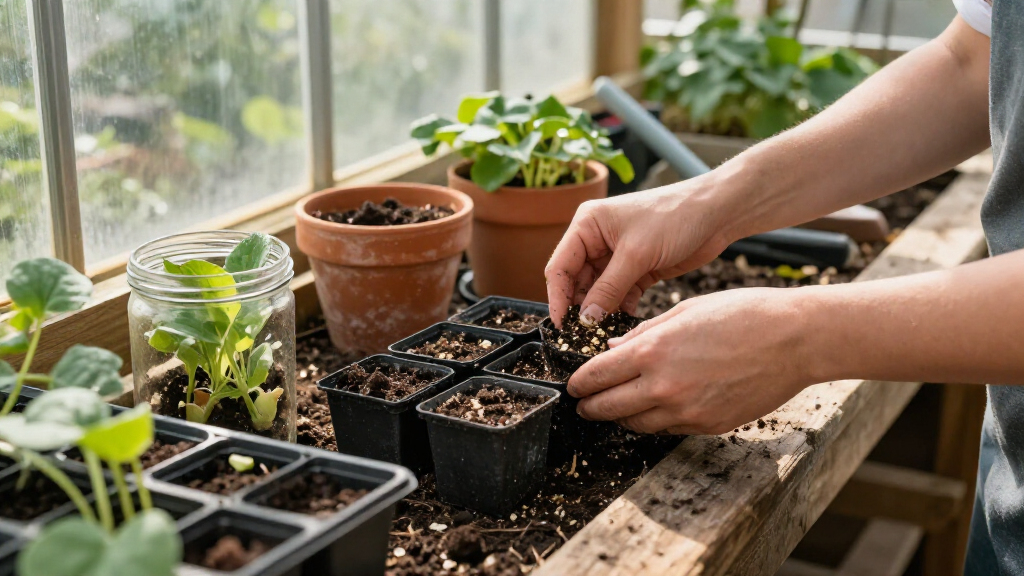

The best garden propagation supplies depend on whether you’re rooting cuttings, starting seeds, or raising plants that need a more specialized method. My best overall pick is the Burpee SuperSeed 36-Cell Reusable Seed Starting Tray for its reusable, seed-focused design; the Renmxj five-tube station is a strong display-friendly choice for water-rooted cuttings, while the Hon&Guan self-watering tray with grow lights suits growers who want a more contained seed-starting setup. The main tradeoff is between simple, adaptable tools and kits that add convenience but take up more space or serve fewer propagation methods. Rooting formulas, humidity domes, and air-layering gear address different jobs, so a single kit rarely covers every plant. Read on for the full breakdown and help matching each option to your propagation plans.

Get garden gear delivered free with Prime
- Fast, free delivery on millions of items
- Prime Video, Amazon Music and more included
- Member-only deals all year
Complete the kit


Key Takeaways
- The Burpee tray leads for seed starting because its reusable 36-cell format is more purpose-built for sowing than the glass stations, which are designed for visible water propagation.
- The Hon&Guan tray combines several setup elements—cells, self-watering features, and grow lights—while requiring more room and attention than a basic tray.
- Propagation supplies serve distinct methods: air-layering balls, rooting aids, humidity domes, and glass stations are not interchangeable substitutes.
- Rooting products vary in form and intended use. Powders, gels, and liquid drops call for different handling, so choose based on the cutting method and label directions rather than assuming one type suits every plant.
- Small-space growers have a real choice to make: a compact glass station displays a few cuttings, while nursery pots and seed trays prioritize raising more plants at once.
| Renmxj Plant Propagation Station with 5 Glass Test Tubes and Wooden Stand |  | Best for Compact Water Propagation | Materials: Borosilicate glass and wood | Test tube count: 5 | Base dimensions: 9.9 × 1.6 × 1.5 inches | VIEW LATEST PRICE | See Our Full Breakdown |
| Burpee SuperSeed 36-Cell Reusable Seed Starting Tray |  | Best for Gentle Seedling Transplanting | Cell count: 36 | Cell material: Food-grade silicone | Dimensions: 11.5 × 10.375 × 2.25 inches | VIEW LATEST PRICE | See Our Full Breakdown |
| Halatool Expanded Clay Pebbles for Plants, 2 lb, 4–16 mm |  | Best Reusable Root-Zone Medium | Material: Expanded clay | Weight: 2 lb (32 oz) | Pebble size: 4–16 mm | VIEW LATEST PRICE | See Our Full Breakdown |
| Renmxj Plant Propagation Station with 3 Bulb Glass Vases |  | Best for Decorative Rooting Displays | Vase count: 3 | Vase material: Borosilicate glass | Vase height: 3.9 inches | VIEW LATEST PRICE | See Our Full Breakdown |
| VIVOSUN 6.5-Inch Gardening Scissors with Straight Stainless Steel Blades |  | Best for Preparing Cuttings | Length: 6.5 inches | Dimensions: 6.5 × 2.7 inches | Weight: 0.07 kg | VIEW LATEST PRICE | See Our Full Breakdown |
| Houseplant Prop Drops Rooting and Propagation Formula, 8 oz |  | Best for Flexible Water or Soil Propagation | Form: Liquid | Volume: 8 fluid ounces | Ingredients: Seaweed extract and humic acid | VIEW LATEST PRICE | See Our Full Breakdown |
| Southside Plants Root Drops Liquid Rooting Hormone for Plant Cuttings, 4 oz |  | Best for Measured Water Propagation | Form: Liquid drops | Volume: 4 oz | Active ingredient: 0.025% indole butyric acid | VIEW LATEST PRICE | See Our Full Breakdown |
| 10-Piece Air Layering Propagation Kit with Reusable Half-Transparent Grafting Balls and Zip Ties (Medium) |  | Best for Air Layering Woody Stems | Number of grafting balls: 10 | Ball diameter: 3.15 in (8 cm) | Applicable branch thickness: 7–12 mm | VIEW LATEST PRICE | See Our Full Breakdown |
| Hon&Guan 30-Cell Self-Watering Seed Starter Tray with Grow Lights |  | Best All-in-One Indoor Seed Starter | Cell count: 30 | Dimensions: 12.99 × 5.31 × 9.84 inches | Dome height: 5.3 inches | VIEW LATEST PRICE | See Our Full Breakdown |
| Garden Safe TakeRoot Rooting Hormone Powder, 2 oz, 2 Pack | 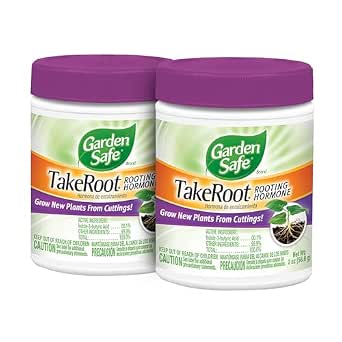 | Best for Batch Rooting Cuttings | Form: Powder | Active ingredient: Indole-3-butyric acid | Pack quantity: 2 | VIEW LATEST PRICE | See Our Full Breakdown |
| MIXC Nursery Pots with Humidity Domes, 4-Inch, 30 Pack, Red |  | Best for Covered Batch Propagation | Quantity: 30 pots | Material: Plastic | Pot dimensions: 3.7-inch top diameter × 2.5-inch bottom diameter × 3.2-inch height | VIEW LATEST PRICE | See Our Full Breakdown |
| Montorchid Liquid Rooting Hormone Drops for Plant Cuttings, 4 fl oz |  | Best for Flexible Growing Media | Form: Liquid | Volume: 4 fluid ounces | Active ingredient: Indole-3-butyric acid (IBA) | VIEW LATEST PRICE | See Our Full Breakdown |
| Miracle-Gro Plant Care Root Starter Gel, 4 Packets |  | Best for Small, Quick Batches | Form: Liquid gel | Packets per box: 4 | Cuttings per packet: Up to 5 | VIEW LATEST PRICE | See Our Full Breakdown |
More Details on Our Top Picks
Renmxj Plant Propagation Station with 5 Glass Test Tubes and Wooden Stand
Five separate glass tubes make this a tidy way to root several small cuttings while keeping their roots visible. The open-top design also makes checking water levels and refreshing water simpler than with enclosed propagation setups. Its 9.9-inch-long, narrow wooden base fits a windowsill or desk where a wider station may be awkward, and it arrives ready to use.
Compared with the Renmxj station with three bulb vases, this model holds more cuttings and takes up less depth, but its narrow tubes are better suited to slender stems than larger cuttings. It is a display-oriented water-rooting tool, not a seed-starting system like the Burpee SuperSeed tray. Buyers should also note that the listed base, tube, and overall dimensions describe different parts, so fit should be checked against the intended spot.
Pros:- Five clear borosilicate tubes let you track water levels and root growth.
- Narrow wooden base suits small shelves, desks, and windowsills.
- Open design allows convenient water changes.
- No assembly is required, and a cleaning brush is included.
Cons:- Narrow tubes can restrict the size and shape of cuttings.
- Five tubes offer less capacity than a seed-starting tray for larger propagation batches.
- The separate base, tube, and overall dimensions may make placement less intuitive.
Best for: Houseplant owners rooting several slim cuttings on a narrow windowsill or desk who want to monitor roots at a glance.
Not ideal for: Gardeners propagating thick stems, many seedlings, or cuttings that need a wider vessel; the narrow tubes and five-place capacity may be limiting.
- Materials:Borosilicate glass and wood
- Test tube count:5
- Base dimensions:9.9 × 1.6 × 1.5 inches
- Test tube dimensions:1.2 inches diameter × 4.4 inches high
- Overall dimensions:9.9 × 1.6 × 4.3 inches
- Included components:Wooden stand, 5 glass test tubes, cleaning brush
- Assembly:No assembly required
Our verdict“Choose this station for a compact, visible setup for rooting several small water-propagated cuttings.”
Burpee SuperSeed 36-Cell Reusable Seed Starting Tray
The 36 flexible silicone cells set this tray apart from propagation stations built for rooting cuttings in water. Each cell can pop out, giving seedlings a less forceful route out of the tray and helping reduce root disturbance at transplant time. Drainage slots and water channels support moisture management, while the raised edge and side handles make the tray easier to carry and contain minor spills.
For growers starting seeds in batches, the labeled rows and included Plant-o-Gram help keep varieties straight; neither the Renmxj five-tube station nor the three-vase Renmxj model offers that kind of organization. The tradeoff is capacity: 36 cells suit a modest home garden but may feel restrictive when starting a large planting. Seeds, mix, and lights are not included, so this is a reusable tray rather than a complete indoor growing setup.
Pros:- Pop-out silicone cells can make transplanting seedlings gentler.
- Drainage slots and water channels help manage excess moisture.
- Reusable tray is top-rack dishwasher safe for cleanup.
- Labeled rows and Plant-o-Gram support seed identification.
Cons:- Thirty-six cells may not provide enough space for larger sowing batches.
- Seeds, growing mix, and lighting must be supplied separately.
Best for: Home gardeners starting a modest range of vegetables or flowers who want reusable cells that release seedlings with less root disturbance.
Not ideal for: Growers starting large batches or seeking an all-in-one kit with seeds, growing mix, and lights.
- Cell count:36
- Cell material:Food-grade silicone
- Dimensions:11.5 × 10.375 × 2.25 inches
- Color:Blue
- Features:Pop-out cells, drainage slots, water channels, raised edge, side handles, alphanumeric row labels
- Care:Top-rack dishwasher safe
- Included component:Instruction manual with Plant-o-Gram
Our verdict“Pick this tray if you start a moderate number of seeds and value easier transplanting over a complete grow-light setup.”
Halatool Expanded Clay Pebbles for Plants, 2 lb, 4–16 mm
These porous expanded clay pebbles serve a different job from the roundup’s trays and glass stations: they provide a reusable medium that supports airflow and drainage around roots. Their neutral pH and light weight make them a flexible choice for hydroponic growing, potted plants, terrariums, or propagation setups that call for a granular medium. The 4–16 mm size range gives buyers a mix of pebble sizes rather than one uniform grade.
Unlike the Burpee SuperSeed tray, this is not a container for organizing seeds or seedlings, and it does not include a vessel or watering system. It is also less of a ready-to-display propagation option than either Renmxj glass station. Plan to rinse the pebbles thoroughly before use to clear fine dust, then clean them regularly if reusing them. The two-pound pack may be modest for larger hydroponic systems.
Pros:- Porous pebbles support airflow and drainage around roots.
- Lightweight expanded clay can be reused after cleaning.
- Neutral pH suits a range of plant and propagation uses.
- Can serve in hydroponics, pots, terrariums, or as a plant topping.
Cons:- Thorough rinsing is needed before first use to remove fine dust.
- Regular cleaning is needed when reusing the pebbles.
- The two-pound pack may be insufficient for larger growing systems.
Best for: Hydroponic growers and plant keepers who need a lightweight, reusable medium for drainage, airflow, or small propagation setups.
Not ideal for: Seed starters seeking a compartmented tray, or growers needing a large quantity of medium for a sizable system.
- Material:Expanded clay
- Weight:2 lb (32 oz)
- Pebble size:4–16 mm
- pH:Neutral
- Pack count:1
- Reuse:Reusable after cleaning
- Preparation:Rinse before first use to remove fine dust
Our verdict“Choose these pebbles for a reusable root-zone medium, not as a substitute for a seed tray or propagation vessel.”
Renmxj Plant Propagation Station with 3 Bulb Glass Vases
The three removable bulb-shaped vases give this station a more decorative, open presentation than the narrow test tubes in the Renmxj five-tube model. Each clear vessel makes roots and water levels easy to inspect, and removing the vases simplifies refilling and cleaning. With an 11 × 4-inch stand and wood-and-metal frame, it suits a shelf or tabletop where propagation can also serve as a small plant display.
The wider vase bottoms offer a different fit for cuttings than the five-tube station, but three places mean less capacity for propagating multiple stems at once. The one-inch openings and 140 ml tank volume still make this a small-cutting setup, not a vessel for bulky plant material. Compared with the Burpee SuperSeed tray, it is for water-rooting and visual monitoring rather than starting seeds in cells. Plants are not included, and assembly components are supplied.
Pros:- Three clear vases make roots and water levels easy to observe.
- Removable vessels simplify water changes and cleaning.
- Wooden stand and metal supports create a compact tabletop display.
- Cleaning brush and assembly components are included.
Cons:- Three vases provide less capacity than the five-tube Renmxj station.
- The openings and vessel volume limit it to small cuttings and stems.
- Plants are not included, and the stand requires assembly.
Best for: Houseplant owners who want to root a few small cuttings in visible, removable vessels that also work as tabletop decor.
Not ideal for: Gardeners who need high-capacity propagation, seed-starting cells, or containers for large cuttings.
- Vase count:3
- Vase material:Borosilicate glass
- Vase height:3.9 inches
- Vase bottom diameter:2.5 inches
- Vase mouth opening:1 inch
- Stand dimensions:11 × 4 × 4.4 inches
- Tank volume:140 ml
- Included components:3 glass vases, wooden stand, C-shaped metal support rod, cleaning brush, assembly components
Our verdict“Choose this model for a small, decorative water-propagation display rather than maximum cutting capacity.”
VIVOSUN 6.5-Inch Gardening Scissors with Straight Stainless Steel Blades
Clean, controlled cuts are part of preparing many plant cuttings, and these 6.5-inch ambidextrous snips add a practical hand tool to a propagation kit. Their precision-sharpened stainless steel blades are suited to trimming flowers, plants, and small branches, while the handle design aims to reduce hand fatigue during repeated light pruning. A sideways lock keeps the blades closed for storage, unlike the open vessels of the Renmxj stations, which are tools for holding cuttings after the cut.
This is the most useful pick here for the cutting-preparation stage, but it does not root plants on its own. The Burpee SuperSeed tray supports seed starting, while these snips suit gardeners taking cuttings from established plants. Their small scale is also a limit: they are not intended for thick branches, and the blades need cleaning after use to remove plant residue.
Pros:- Precision-sharpened stainless steel blades support controlled trimming.
- Ambidextrous design works for left- and right-handed users.
- Handle design is intended to reduce fatigue during repeated light cuts.
- Sideways lock keeps blades closed in storage.
Cons:- Small-scale snips are not suited to thick branches.
- Blades require cleaning after each use.
- Unlike the propagation stations and seed tray, this tool does not hold or root cuttings.
Best for: Houseplant and garden propagators who regularly trim flowers, soft stems, and small branches before rooting cuttings.
Not ideal for: Gardeners pruning thick woody branches or buyers looking for a propagation container, rooting medium, or seed-starting tool.
- Length:6.5 inches
- Dimensions:6.5 × 2.7 inches
- Weight:0.07 kg
- Blade length:2.1 inches
- Blade material:Stainless steel
- Handle material:Stainless steel
- Blade type and edge:Anvil blade, straight edge
- Hand orientation:Ambidextrous
Our verdict“Choose these snips as a cutting-preparation tool for light pruning, not as a stand-alone propagation solution.”
Houseplant Prop Drops Rooting and Propagation Formula, 8 oz
Houseplant Prop Drops earns a place for gardeners who want one rooting formula to use across water and soil propagation. Its seaweed extract and humic acid are intended to support root development, while the 8-ounce bottle offers more volume than Southside Plants Root Drops’ 4-ounce bottle. That larger supply suits people propagating regularly, though this formula gives less precise guidance: its listed mixing ratio is only “1:diluent,” so new users may find it harder to measure than Southside’s two-drops-per-cup direction. The two-year shelf life is useful for occasional projects, and the downloadable plant guide adds some help for newer propagators. I’d pick it for adaptable use, not for the clearest dosing instructions.
Pros:- Can be added to water or soil, allowing different propagation methods.
- Seaweed extract and humic acid are included to support root development.
- Shelf-stable for up to two years.
- Includes a downloadable plant guide.
Cons:- The mixing ratio does not give a specific amount of formula per volume of diluent.
- The description focuses on houseplants, offering less guidance for other plant types.
Best for: Houseplant growers who alternate between water and soil propagation and want a larger, shelf-stable bottle.
Not ideal for: First-time propagators who want an exact, clearly stated dilution rate before mixing.
- Form:Liquid
- Volume:8 fluid ounces
- Ingredients:Seaweed extract and humic acid
- Application:Add to water or soil
- Mixing ratio:1:diluent; specific amounts not provided
- Specific use:Root development
- Target plants:Houseplants
- Shelf life:Up to 2 years
Our verdict“Choose this larger, flexible formula if you propagate in both water and soil and are comfortable working with an incomplete dilution ratio.”
Southside Plants Root Drops Liquid Rooting Hormone for Plant Cuttings, 4 oz
Southside Plants Root Drops is the most instruction-forward liquid option in this group for water propagation: the stated dose is 2 drops per cup, giving beginners a clearer starting point than Houseplant Prop Drops, whose dilution directions lack a specific amount. Its formula contains 0.025% indole butyric acid and can also be used with soil, LECA, PON, or sphagnum moss, so it isn’t limited to jars of water. The dropper format is designed to be less messy than powder or gel. The tradeoff is upkeep: the water solution should be refreshed every four to five days, and dosage instructions aren’t supplied for every listed substrate or repotting use. Pick it for measured water setups; skip it if you want low-maintenance propagation.
Pros:- Provides a clear water-propagation dose of 2 drops per cup.
- Usable in water, soil, LECA, PON, and sphagnum moss.
- Drop format is described as less messy than powder or gel.
- Can be added to water during repotting to support plant adjustment.
Cons:- Water-propagation solution needs refreshing every 4–5 days.
- Dosage directions are not specified for every substrate or application.
- The 4-ounce bottle holds less formula than Houseplant Prop Drops’ 8-ounce bottle.
Best for: Houseplant owners starting cuttings in water who want a stated dose and also use substrates such as LECA or moss.
Not ideal for: Propagators seeking a set-and-forget water solution or exact directions for every substrate and application.
- Form:Liquid drops
- Volume:4 oz
- Active ingredient:0.025% indole butyric acid
- Water propagation dose:2 drops per cup of water
- Solution refresh:Every 4–5 days
- Suitable substrates:Water, soil, LECA, PON, and sphagnum moss
- Included components:Propagation drops, bottle, and dropper
- Country of manufacture:USA
Our verdict“Choose these drops for clearly measured water propagation and substrate flexibility, provided you’re willing to refresh the solution regularly.”
10-Piece Air Layering Propagation Kit with Reusable Half-Transparent Grafting Balls and Zip Ties (Medium)
This air layering kit serves a different propagation job from the liquid formulas and seed-starting trays: it helps root a branch while it remains attached to the parent plant. The half-transparent polypropylene balls let you check moisture and root progress without opening the layer, and ten chambers with forty zip ties give gardeners several setups without requiring professional tools. Compared with the Hon&Guan 30-Cell Self-Watering Seed Starter Tray, this kit suits larger branches and established plants rather than seedlings. The medium 3.15-inch balls fit branches around 7–12 mm thick, which limits use on thicker stems. It also demands careful packing and moisture checks, so it isn’t the most hands-off choice. I’d choose it for targeted propagation of suitable shrubs or houseplants, not batch seed starting.
Pros:- Transparent sections allow root and moisture checks without disturbing the air layer.
- Includes 10 reusable balls and 40 zip ties for multiple setups.
- Tool-free installation is described as straightforward.
- Suitable for indoor and outdoor use.
Cons:- Medium balls are sized for branches only 7–12 mm thick.
- Requires careful soil packing and regular moisture checks.
- Air layering is less suited to batch-starting small seeds or cuttings than a seed tray.
Best for: Gardeners propagating suitable woody or established plant branches, such as figs, roses, or magnolias, without cutting them off first.
Not ideal for: People rooting thin cuttings or propagating branches thicker than 12 mm, which may not fit the medium balls.
- Number of grafting balls:10
- Ball diameter:3.15 in (8 cm)
- Applicable branch thickness:7–12 mm
- Number of zip ties:40
- Material:Polypropylene (PP)
- Size:Medium
- Weight:240 g (8.48 oz)
- Usage:Indoor and outdoor
Our verdict“Pick this reusable kit when you want to root several appropriately sized branches in place and can keep up with moisture checks.”
Hon&Guan 30-Cell Self-Watering Seed Starter Tray with Grow Lights
For seed propagation indoors, the Hon&Guan 30-cell kit combines the main pieces that would otherwise need to be sourced separately: tray, humidity dome, lights, watering mat, and stand. Its adjustable LED bars and timer give growers control over light exposure, while dome vents provide a way to manage humidity as seedlings develop. That makes it a more self-contained setup than the Burpee SuperSeed 36-Cell Reusable Seed Starting Tray, which has six more cells but is not described here with built-in lights or a watering mat. The tradeoff is a fixed 30-cell capacity and indoor-only use; gardeners raising larger batches may prefer the Burpee tray, while outdoor propagation won’t suit this kit. Choose it when convenience and light control matter more than maximum cell count.
Pros:- Includes tray, bottom tray, humidity dome, grow lights, watering mat, and stand.
- Lights offer three modes, adjustable brightness, and 6/9/12-hour timers.
- Adjustable dome vents allow humidity and temperature management.
- Self-watering mat distributes water, and the tray includes a drain outlet with stopper.
Cons:- Capacity is fixed at 30 cells.
- Designed for indoor use only.
- The lights provide 6 W total, which may not suit growers seeking a higher-output lighting setup.
Best for: Indoor gardeners starting a modest batch of seeds who want lighting, humidity control, and bottom watering in one kit.
Not ideal for: Growers starting more than 30 seedlings at once or anyone who needs a propagation tray for outdoor use.
- Cell count:30
- Dimensions:12.99 × 5.31 × 9.84 inches
- Dome height:5.3 inches
- Grow lights:2 waterproof LED bars; 6 W total
- Light settings:3 modes; 10%–100% brightness; 6/9/12-hour timer
- LEDs:24 pink and 24 warm white (3000 K)
- Materials:Plastic and polypropylene (PP)
- Usage:Indoor
Our verdict“Choose this kit for a compact, self-contained indoor seed-starting station, but look to a larger tray for bigger batches.”
Garden Safe TakeRoot Rooting Hormone Powder, 2 oz, 2 Pack
Garden Safe TakeRoot is the straightforward powder choice for gardeners preparing multiple cuttings: moisten each cut end, dip it into the powder, tap away excess, then plant. Its indole-3-butyric acid formula is listed for a range of home, garden, and greenhouse plants, including roses, African violets, and philodendrons. Compared with Southside Plants Root Drops, this avoids measuring liquid doses or refreshing a water solution, but it only works as a dip before planting rather than as an additive for water or several substrates. The two-pack provides a reserve for repeat propagation sessions, though the application takes more handling than a dropper, and the product directions call for following the full label and precautions. Choose it for soil-bound cuttings and broad plant variety, not water propagation.
Pros:- Powder application avoids measuring a liquid dilution.
- Listed for many home, garden, and greenhouse plant varieties.
- Suitable examples include African violets, roses, poinsettias, philodendrons, and geraniums.
- Two-pack supplies product for repeated propagation sessions.
Cons:- Cuttings must be moistened, dipped, and tapped to remove excess powder.
- The application is not described for water propagation.
- Full product-label directions and precautions need to be followed.
Best for: Gardeners preparing batches of plant cuttings for soil or greenhouse propagation who prefer a dip-on powder.
Not ideal for: People propagating cuttings in water or those who want a liquid formula that can be dosed into several substrates.
- Form:Powder
- Active ingredient:Indole-3-butyric acid
- Pack quantity:2
- Total unit count:4 ounces
- Application method:Moisten cutting, dip cut end in powder, and tap off excess
- Specific uses:Plant growth and root development
- Target species:Plants
- Model number:HG-93221
Our verdict“Choose this two-pack for repeated soil-bound cutting work if you prefer a direct powder dip over liquid dosing.”
MIXC Nursery Pots with Humidity Domes, 4-Inch, 30 Pack, Red
For growers starting several cuttings or seeds at once, the 30-pot set offers more individual growing spots than the Burpee SuperSeed 36-Cell Reusable Seed Starting Tray, while giving each plant its own container. The included humidity domes help hold moisture and warmth around new seeds and cuttings, and eight drainage holes per pot let excess water escape. Raised rims make the lightweight pots easier to lift and stack, and labels help keep varieties organized. The tradeoff is space per plant: at 3.7 inches across the top and 3.2 inches tall, these are starter pots, not long-term homes for vigorous growth. The plastic is washable and reusable, but may not withstand rough handling as well as more rigid containers.
Pros:- Thirty separate pots support organized, multi-variety propagation.
- Domes help retain moisture and warmth during early growth.
- Eight drainage holes per pot support drainage and airflow.
- Lightweight, washable pots have raised rims for handling and stacking.
Cons:- The small dimensions limit root and foliage growth before transplanting.
- Plastic construction may be less durable than rigid pot materials.
- Individual domes and pots require storage space between propagation cycles.
Best for: Gardeners starting multiple seeds or small cuttings who want individual covered pots and labels for organizing batches.
Not ideal for: Growers raising plants that need roomy containers from the start, or anyone seeking a rigid pot for frequent rough handling.
- Quantity:30 pots
- Material:Plastic
- Pot dimensions:3.7-inch top diameter × 2.5-inch bottom diameter × 3.2-inch height
- Dome height:3.5 inches
- Drainage:8 holes per pot
- Included components:Humidity domes and labels
- Capacity:1 liter per pot
- Color:Red
Our verdict“Choose this set for starting many seeds or cuttings in individually covered pots, but plan to transplant as they grow.”
Montorchid Liquid Rooting Hormone Drops for Plant Cuttings, 4 fl oz
The measured-drop format and broad media compatibility make this a flexible pick for propagators who switch between water, soil, LECA, and moss. Its stated water-propagation ratio—three drops per 500 ml—gives buyers a clear starting point, while the dropper helps control dosing. Compared with Miracle-Gro Plant Care Root Starter Gel, which is applied by dipping cuttings, Montorchid is better suited to growers who want to add a formula to water or use it across different setups. That flexibility brings more routine: the directions call for water changes every 7–10 days, and propagation and post-transplant care use different dosing. The listing identifies IBA as the active ingredient but does not specify its concentration, so buyers seeking a precisely stated strength may prefer a product with fuller formulation details.
Pros:- Compatible with water, soil, LECA, and moss.
- Dropper supports measured application.
- Provides a stated mixing ratio for water propagation.
- Directions also cover use with established houseplants.
Cons:- Propagation and post-transplant care require different dosing.
- Water propagation directions call for regular changes every 7–10 days.
- The supplied product data does not state the IBA concentration.
Best for: Houseplant propagators who use several media and want a dropper-dosed formula for water propagation and post-transplant care.
Not ideal for: Growers who want a simple dip-once treatment, need a published IBA concentration, or prefer not to maintain water-propagation routines.
- Form:Liquid
- Volume:4 fluid ounces
- Active ingredient:Indole-3-butyric acid (IBA)
- Application method:Drops with included dropper
- Water mixing ratio:3 drops per 500 ml of fresh water
- Compatible growing media:Water, soil, LECA, and moss
- Target plants:Houseplants, including Pothos, Monstera, and Philodendron
Our verdict“Pick Montorchid if you want one drop-dosed rooting formula for multiple media and are comfortable following separate care directions.”
Miracle-Gro Plant Care Root Starter Gel, 4 Packets
Packet-by-packet application keeps this gel straightforward: dip a cutting, then place it in water or soil. Each packet treats up to five cuttings, making the four-pack a practical fit for a modest houseplant propagation session without measuring drops. Compared with Montorchid Liquid Rooting Hormone Drops, this option favors a direct dip rather than dosing a propagation vessel, but it supports fewer cuttings per container of product and is limited to water or soil. The gel is described for leaf or stem cuttings and targets houseplants, so it is a focused choice rather than a general multi-media formula. Buyers planning larger batches may find the packet limit restrictive; the 30-pot MIXC set is better for organizing many starts, though it does not provide a rooting treatment.
Pros:- Pre-portioned packets avoid measuring a dose.
- Can be used for cuttings placed in water or soil.
- Suitable for a range of houseplant leaf and stem cuttings.
- Each packet treats up to five cuttings.
Cons:- Four packets may be limiting for larger propagation batches.
- Listed for water or soil rather than the wider range of media supported by Montorchid drops.
- Dip application requires handling each cutting individually.
Best for: Houseplant owners rooting a small number of leaf or stem cuttings who prefer a pre-portioned dip treatment over measured liquid drops.
Not ideal for: High-volume propagators or growers using LECA or moss, since the packets are limited to up to five cuttings each and the listed methods are water or soil.
- Form:Liquid gel
- Packets per box:4
- Cuttings per packet:Up to 5
- Liquid volume:0.33 fluid ounces
- Application method:Dip
- Propagation methods:Water or soil
- Target species:Houseplants
- Specific use:Root development
Our verdict“Choose this gel for a small, simple houseplant propagation batch; larger or multi-media setups are better matched to a dropper formula.”
How We Picked
I compared these 13 supplies by the propagation task they support, how much setup they ask of the gardener, and whether their design suits repeat use or a specific growing method. I also weighed practical details such as cell or container format, included components, maintenance needs, and how easily a buyer can tell what the product is meant to do. Because the lineup mixes tools, vessels, rooting aids, and seed-starting kits, I judged each against its closest alternatives rather than treating all products as direct substitutes.
The ranking favors versatility and clear usefulness for common home propagation first, then rewards products that offer a distinct advantage for a specific method. That puts the Burpee tray ahead for straightforward seed starting, while the Hon&Guan kit earns attention for a more equipped setup and the Renmxj five-tube station serves a different, smaller-scale purpose. Specialized products such as air-layering equipment and rooting formulas rank according to how well they address their narrower job; none should be read as a complete propagation setup on its own.
Factors to Consider When Choosing Best Garden Propagation Supplies
Before choosing, start with the plants and propagation method rather than the product format. A seed tray, rooting hormone, and water-propagation vase solve different problems, and buying more accessories does not automatically improve results. These factors can help you build a setup that fits your growing space and the number of plants you plan to raise.
Match the Supply to the Propagation Method
Seeds, stem cuttings, and air layering each need different support. Seed trays organize small starts, while a vase keeps water-rooted cuttings visible and accessible; air-layering equipment stays attached to a parent plant as roots form. A common mistake is buying a rooting aid before confirming that the plant and method call for it. Check plant-specific guidance and product directions before choosing between water, a growing medium, or air layering. If you propagate several ways, prioritize a few adaptable basics rather than expecting one kit to do every job.
Choose Capacity for Your Real Growing Plans
Cell count can look attractive, but capacity only helps when you have room to keep seedlings evenly lit and cared for. A large tray may leave you managing more starts than you can transplant, while a small propagation station can be limiting if you want multiples of each plant. Think about how many plants you can actually grow on after they root or sprout. For a mixed collection, separate small batches by plant type instead of filling every cell with one sowing date or care requirement. This can make labeling, watering, and later transplanting easier.
Account for Light, Moisture, and Airflow Together
Propagation covers more than keeping a cutting damp or a seed tray covered. Seedlings need suitable light, and enclosed or humid setups still need attention to moisture and airflow. A built-in grow light may simplify placement, but it does not remove the need to follow the plant’s light needs or monitor growth. Domes can help retain humidity, yet leaving covers closed without checking conditions can encourage excess moisture. Plan where the setup will sit and how you will inspect, water, and ventilate it before choosing an enclosure.
Decide Whether Rooting Aids Fit Your Routine
Powders, gels, and liquids differ in how they are applied, stored, and handled; the product label should guide use. A rooting aid is not a replacement for clean cutting technique, a suitable growing medium, or appropriate moisture. Avoid combining products just because they are all marketed for propagation, and don’t assume a formula intended for one application method suits another. Consider how often you propagate: a small, ready-to-use format may be simpler for occasional cuttings, while frequent propagation can make application and storage details more relevant. Check ingredient and plant-use directions before treating edible or sensitive plants.
Weigh Reuse Against Storage and Cleanup
Reusable trays and containers can make sense for repeated sowing, but they need cleaning between batches and a place to live when idle. Disposable or single-use components may reduce storage demands, though they can create recurring waste. Glass propagation vessels offer visibility and a display role, but require careful handling and cleaning around roots and water. Before buying a multi-piece kit, check which parts you will use regularly and whether replacement components are available. The most useful setup is often the one you can keep clean and ready between growing cycles.
Prioritize the Bottleneck in Your Setup
Paying for more features helps only when those features solve a real constraint. If your seedlings lack suitable light, a more elaborate tray without lighting may not address the problem; if you only root a few cuttings in water, a large seed-starting kit adds little. List what currently limits your success: space, light, humidity control, containers, or a method-specific tool. Spend on that gap first, then add accessories as your propagation routine grows. This approach also reduces duplicate purchases, such as multiple rooting aids when the main issue is inconsistent moisture or poor cutting selection.
Frequently Asked Questions
Should I start with a seed tray or a propagation station?
Choose a seed tray if your main goal is sowing seeds in an organized batch and raising multiple seedlings for transplanting. A glass propagation station is better suited to a smaller number of cuttings rooted in water, especially when you want to observe root development. Neither replaces the other, since seeds and cuttings have different starting needs. If you have not settled on a method, begin with the plants you most want to propagate and check how they are commonly started. That will prevent buying a vessel that looks useful but does not fit your plants.
Do I need a grow light with a seed-starting tray?
Not always; the answer depends on how much suitable natural light your seedlings will receive and on the plants you are starting. A tray organizes seeds, but it cannot compensate for a dim growing location. A setup with an included light can reduce the need to source lighting separately, though you still need to follow the light’s placement and operating guidance. If you already have an appropriate grow light, a simpler tray may be enough. Decide where the tray will sit before choosing a kit with or without lighting.
Are rooting hormone powders, gels, and liquid drops interchangeable?
No. Their application formats differ, and the directions may specify how much to use and how to apply it to a cutting. Check the label for the intended plants and method, and avoid substituting one format for another based only on convenience. Rooting aids also do not replace clean tools, a suitable propagation medium, or appropriate care after planting. If you propagate only occasionally, choose a format that is easy to handle and store safely. When uncertain, follow the plant-specific guidance and product instructions rather than layering multiple products.
When does an air-layering kit make more sense than taking a cutting?
Air layering can suit plants that are difficult to root from detached cuttings or when you want roots to form on a stem that remains attached to the parent plant. It is a more specialized method than placing a cutting in water or a seed-starting medium, so its equipment will not be useful for every propagation project. Research whether the particular plant responds well to air layering before buying a kit. Also consider whether you can keep the equipment secured on the plant while roots develop. For routine seed sowing or small water-rooted cuttings, a tray or propagation vessel is a more relevant purchase.
What should I buy first if I want to propagate several kinds of plants?
Start by grouping your plants by propagation method, since one set of supplies may not serve all of them. A reusable seed tray can support seed batches, while a few suitable containers can handle cuttings in a medium; a water-propagation vessel or air-layering tool is only needed for plants that suit those methods. Avoid buying every rooting formula and accessory at once, because they may overlap or remain unused. Keep a simple record of plant names, start dates, and methods so you can see which supplies your routine actually needs. Add specialized gear after you identify a recurring need.
Conclusion
For most home growers focused on starting seeds, I’d choose the Burpee SuperSeed tray as the best overall because it offers a clear, reusable seed-starting role without bundling in a more specialized method. The best value for a straightforward seed-starting setup is the Burpee tray; growers who want lighting and self-watering features in one package should look at the Hon&Guan kit as the more equipped, premium-style choice, with the tradeoff of a larger, more involved setup. For beginners, the simplest path is to pick one method and start with a tray for seeds or a glass station for water-rooted cuttings, rather than buying every accessory. The Renmxj five-tube station fits display-minded growers with a few cuttings, while the air-layering kit is the specific-method pick for plants suited to that technique. Choose the product that addresses your current propagation task first; add rooting aids or extra containers only when your plants call for them.