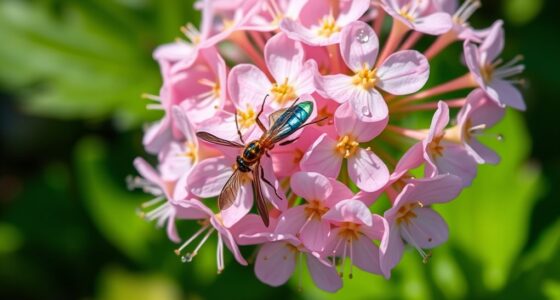
Integrated Pest Management (IPM) is a smart approach that helps you control pests by combining natural enemies like ladybugs and parasitic wasps, with regular pest monitoring. It focuses on early detection and targeting pests precisely, reducing your reliance on chemical pesticides. By understanding pest behavior and using eco-friendly methods, you can keep your garden healthy and productive. Keep exploring to discover how to implement these strategies for a thriving garden.
Key Takeaways
- IPM combines biological control, pest monitoring, and other techniques to manage pests sustainably and effectively in gardens.
- It emphasizes using natural enemies like beneficial insects to reduce reliance on chemical pesticides.
- Regular pest monitoring helps detect early signs of infestation and informs targeted, timely interventions.
- IPM promotes ecological health by minimizing chemical use and encouraging biodiversity.
- It supports long-term garden resilience through understanding pest behavior and integrating multiple control methods.

Have you ever wondered how farmers and gardeners control pests effectively without relying solely on chemicals? The answer lies in integrated pest management (IPM), a strategic approach that combines various techniques to keep pest populations under control while minimizing environmental impact. One key aspect of IPM is biological control, which involves using natural enemies like predators, parasites, or pathogens to reduce pest numbers. This method works in harmony with pest monitoring, a critical step in IPM that helps you keep an eye on pest activity and decide when intervention is necessary. Pest monitoring involves regular inspections of your garden or farm to detect early signs of pest presence, identify specific pests, and assess their population levels. By doing so, you avoid unnecessary treatments and target pests precisely when they pose a threat, reducing the reliance on chemical pesticides.
Integrated pest management combines biological control and pest monitoring for eco-friendly, effective pest control.
Biological control starts with understanding the pests you’re dealing with and selecting appropriate natural enemies. For example, ladybugs can control aphids, while parasitic wasps target specific caterpillars. Introducing these beneficial organisms can help establish a balanced ecosystem, where pests are kept in check naturally. However, biological control isn’t a one-time fix; it requires ongoing pest monitoring to determine if the natural enemies are working effectively or if additional measures are needed. Regular monitoring allows you to catch pest outbreaks early, making control easier and more sustainable. It also helps you avoid overusing pesticides, which can harm beneficial insects and disrupt your garden’s ecological balance. Additionally, understanding the life cycle of pests aids in timing your control strategies more effectively.
Implementing biological control and pest monitoring together creates a proactive approach to pest management. Instead of reacting to full-blown infestations, you stay ahead by tracking pest activity and deploying natural enemies as needed. This synergy reduces chemical dependency, lowers costs, and promotes healthier plants and soil. Furthermore, pest monitoring helps you understand the life cycle of pests, so you can time your interventions more precisely. For instance, releasing biological control agents at the right stage of pest development maximizes their effectiveness. Overall, these practices foster a resilient garden ecosystem where pests are managed in a way that’s safe for you, your plants, and the environment.
In essence, effective pest control through IPM relies on a combination of biological control and pest monitoring. By actively observing your garden, you can make informed decisions, target pests selectively, and maintain a healthy, balanced environment. This approach not only reduces chemical use but also encourages biodiversity, making your garden more sustainable and productive in the long run. With patience and attentiveness, you’ll develop a deeper understanding of pest behavior and natural control methods, leading to a more eco-friendly and successful gardening experience.
Frequently Asked Questions
How Does IPM Differ From Traditional Pest Control Methods?
You’ll notice that IPM differs from traditional pest control by focusing on sustainable practices and pest monitoring rather than relying solely on chemical treatments. Instead of immediate, blanket pesticide use, you identify pests early, assess the threat, and choose targeted, environmentally friendly solutions. This approach minimizes harm to beneficial insects and your garden, promoting long-term health and balance while reducing reliance on harmful chemicals.
Can IPM Be Used in Organic Gardening?
They say “the proof is in the pudding,” and yes, IPM can be used in organic gardening. It emphasizes natural methods like composting benefits and plant disease management, reducing chemical use. By monitoring pests and encouraging healthy plants, you protect your garden sustainably. IPM aligns perfectly with organic principles, helping you maintain a thriving, eco-friendly garden while managing pests effectively.
What Are Common Pests Managed With IPM?
You’ll find that common pests managed with IPM include aphids, caterpillars, beetles, and whiteflies. You actively monitor pests through pest monitoring to catch issues early. By encouraging beneficial insects like ladybugs and lacewings, you naturally control pest populations. This approach minimizes chemical use, promotes a healthy garden, and keeps pests in check efficiently. Regular observation and biological controls are key to successful pest management with IPM.
How Long Does It Take to See Results With IPM?
You might think you’ll see instant results with IPM, but patience is key—sometimes it takes weeks to notice visible improvements. Timing expectations vary depending on pest severity and methods used, but consistent monitoring and interventions usually lead to gradual, sustainable success. Stick with your plan, and you’ll eventually see your garden healthier and pest-free, proving that real change takes time but is totally worth the wait.
Are There Any Risks to Beneficial Insects Using IPM?
You might wonder if using IPM poses risks to beneficial insects. When you follow proper IPM practices, beneficial insect safety is a priority, reducing harm to helpful pollinators and predators. This approach also minimizes the IPM environmental impact by limiting chemical use, protecting ecosystems. By carefully monitoring pests and applying targeted methods, you support a healthy garden while safeguarding beneficial insects and maintaining ecological balance.
Conclusion
So, next time pests crash your garden party, remember, you’ve got the secret weapon: IPM. It’s like being the clever guest who outsmarts troublemakers without ruining the vibe. No need for harsh chemicals or over-the-top measures—just smart, strategic moves. With IPM, you can keep your garden happy and pest-free, all while feeling like a gardening genius. Because, honestly, who needs chaos when you’ve got a plan? Happy gardening, pest patrol hero!