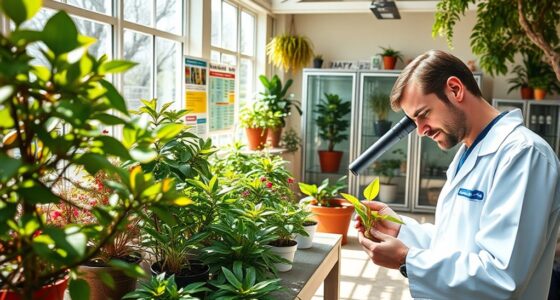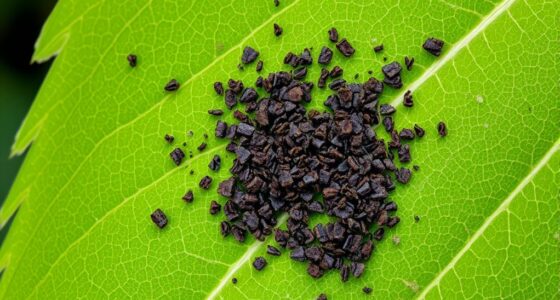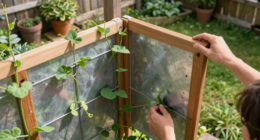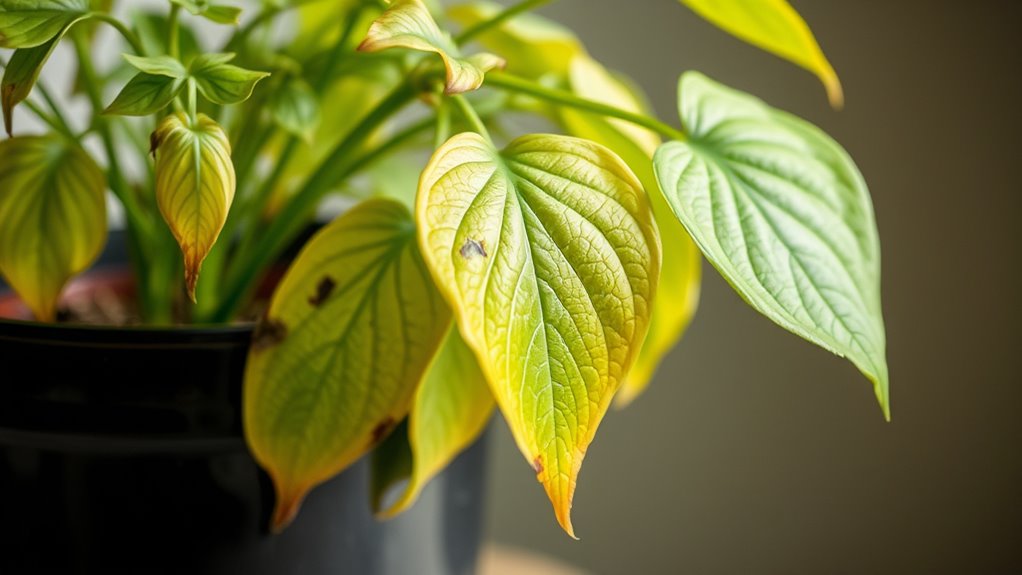

If your plant shows yellow or pale leaves, it might be nutrient deficiency or root issues. Wilting, crispy foliage, and brown tips often indicate overexposure to too much sun or underwatering. Drooping or signs of pests like webbing or sticky residue point to infestations. Sudden leaf drop or stunted growth can mean improper watering, poor drainage, or environmental stress. Spot these signs early, and you’ll be on your way to diagnosing more issues with confidence.
Key Takeaways
- Observe leaf color and texture for signs of overwatering, underwatering, or nutrient deficiencies.
- Check for pests like aphids or mites, indicated by sticky residue, webbing, or speckled leaves.
- Monitor light exposure and temperature stability to prevent stress-related issues like scorch or legginess.
- Inspect soil moisture and drainage to identify overwatering or root-bound conditions.
- Look for wilting, yellowing, or crispy foliage as signs of environmental or soil-related plant health problems.
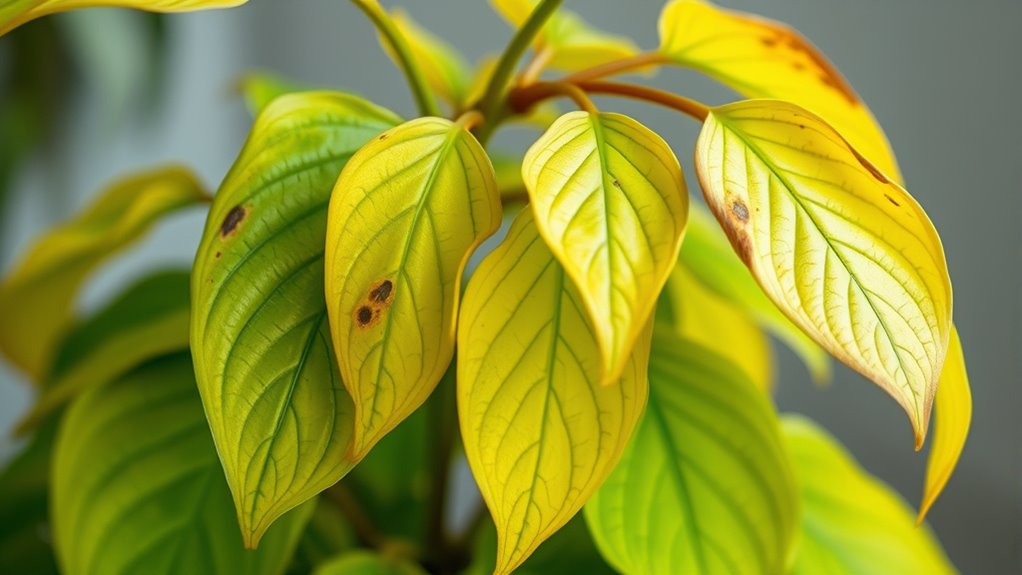
If your plant isn’t thriving, it can be hard to pinpoint what’s wrong. Many issues stem from simple mistakes or overlooked factors, but identifying the problem quickly can save your plant’s life. One of the first things to check is your plant watering habits. Overwatering can lead to root rot, causing leaves to yellow and wilt, while underwatering results in dry, crispy foliage. It’s essential to find a balance—water when the top inch of soil feels dry, and ensure proper drainage so excess water doesn’t sit around the roots. Consistent watering habits help maintain healthy growth, but also observe your plant for signs of distress. If it’s drooping despite regular watering, you might need to adjust your schedule or check for other issues.
Another common cause of plant problems is pest infestation. Pest identification becomes crucial at this stage; look closely at your leaves, stems, and soil for tiny creatures or unusual spots. Common pests like aphids, spider mites, or mealybugs can drain your plant’s vital nutrients, leading to stunted growth and discolored foliage. If you notice sticky residue, webbing, or speckled leaves, it’s time to act. You can often remove pests manually or use gentle insecticidal soap to control the infestation. Regular inspections help catch pests early before they cause serious damage, and maintaining good plant hygiene can prevent future issues.
Apart from watering and pests, pay attention to environmental factors. Insufficient light can cause leggy, weak stems, while too much direct sunlight might scorch leaves, leaving them brown and crispy. Temperature fluctuations or drafts can stress your plant, making it more susceptible to pests and diseases. Nutrient deficiency might also be a culprit if leaves turn yellow or pale, indicating a need for fertilizer. Root-bound plants can struggle to absorb nutrients and water, so repotting into a slightly larger container with fresh soil might help. Additionally, understanding the importance of contrast ratio in lighting and display conditions can help you optimize your plant’s environment for better growth and health.
indoor plant watering can with measurement
As an affiliate, we earn on qualifying purchases.
As an affiliate, we earn on qualifying purchases.
Frequently Asked Questions
How Often Should I Water My Plant?
You should establish a watering schedule based on your plant’s needs and the moisture levels of its soil. Check the top inch of soil; if it feels dry, it’s time to water. Most plants prefer consistent watering, but avoid overwatering, which can lead to root rot. Adjust your schedule seasonally and observe your plant’s response to make certain it stays healthy and hydrated, promoting strong growth.
What Type of Fertilizer Is Best for My Plant?
When choosing fertilizer types, consider your plant’s soil nutrition needs. You can opt for organic options like compost or fish emulsion for gentle feeding, or synthetic fertilizers for quick results. Always check your plant’s specific requirements, as some thrive on nitrogen-rich formulas, while others prefer phosphorus-heavy blends. Proper fertilizer choices guarantee your plant gets the nutrients it requires to stay healthy and grow vigorously.
Can Overwatering Cause Root Rot?
Overwatering can definitely cause root rot, especially if your soil drainage isn’t good. When you water too often or don’t let the soil dry out between watering, excess moisture builds up around the roots, leading to rot. To prevent this, adjust your watering schedule and make certain your plant’s soil drains well. Proper watering and good drainage help keep your roots healthy and avoid root rot.
How Do I Identify Pest Infestations Early?
Did you know that early pest detection can reduce plant damage by up to 80%? To identify pest infestations early, regularly inspect your plants’ leaves, stems, and undersides for tiny holes, webbing, or discolored spots. Look for unusual movement or sticky residue. Early intervention is key to preventing widespread problems, so stay vigilant and act quickly whenever you notice signs of pests. This keeps your plants healthy and thriving.
What Are Natural Remedies for Plant Diseases?
You can treat plant diseases with organic cures and homemade remedies to keep your plants healthy naturally. Try spraying neem oil or a garlic and chili spray to combat fungal infections and pests. Baking soda solutions can help with powdery mildew. Using these natural options minimizes chemical use and promotes eco-friendly gardening. Regularly inspect your plants and act quickly with these organic cures to prevent diseases from spreading.
pest control insecticidal soap for plants
As an affiliate, we earn on qualifying purchases.
As an affiliate, we earn on qualifying purchases.
Conclusion
So, next time you notice your plant acting up, remember these signs—you might just catch a problem before it really takes hold. Funny thing is, I was just checking my own plants when I realized some leaves looked a bit dull. Turns out, I’d forgotten to water them! Sometimes, the tiniest signs are a coincidence waiting to be spotted. Stay observant, and your plants will thank you for catching issues early.
plant grow light for indoor plants
As an affiliate, we earn on qualifying purchases.
As an affiliate, we earn on qualifying purchases.
As an affiliate, we earn on qualifying purchases.