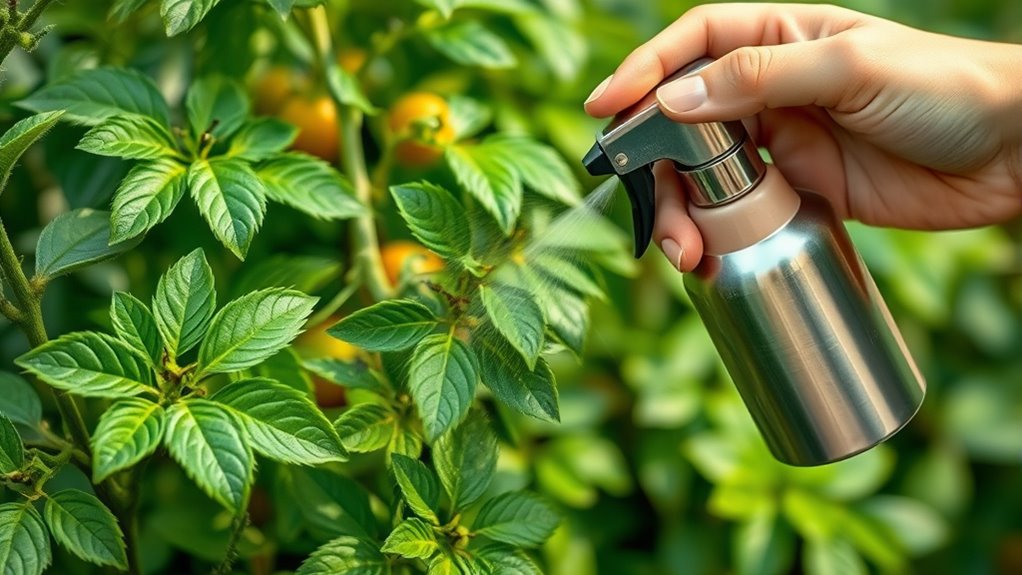
To use neem oil safely on your plants, start by choosing cold-pressed, high-quality oil and dilute it with water—about 1-2 teaspoons per quart—adding a few drops of liquid soap to help it stick. Spray evenly on all plant surfaces, especially the undersides, during early morning or late afternoon to prevent scorching. Reapply weekly or after rain, and avoid direct sunlight to keep your plants healthy. Keep discovering tips to maximize its benefits.

Get garden gear delivered free — and shop member deals
- Fast, free delivery on millions of items
- Access to Prime Big Deal Days deals on October 6–7
- Prime Video, Amazon Music and more included
Key Takeaways
- Always use high-quality, cold-pressed neem oil and dilute with water (1-2 teaspoons per quart) for safe application.
- Spray thoroughly on all plant parts, including undersides, during early morning or late afternoon to prevent scorch.
- Reapply weekly and after rain or heavy dew to maintain effective pest control.
- Avoid spraying during the hottest part of the day and ensure even coverage for best results.
- Neem oil is eco-friendly and safe for beneficial insects when used as directed, supporting sustainable gardening.

Have you ever wondered how a single natural oil can revolutionize your gardening and pest control routines? Neem oil is that powerful solution. Derived from the seeds of the neem tree, this oil has gained popularity among gardeners seeking effective, eco-friendly ways to protect their plants. Its versatility makes it a favorite for organic pest control and sustainable gardening practices. When used correctly, neem oil offers a safe alternative to chemical pesticides, helping you maintain a healthy garden without harmful residues.
Discover how neem oil can transform your gardening with eco-friendly pest control solutions.
To harness the full benefits of neem oil, you need to understand how to apply it properly. First, always choose a high-quality, cold-pressed neem oil, as processed versions may lose some of their active compounds. Before applying, dilute the neem oil with water, following the instructions on the label—typically about one to two teaspoons per quart of water. Adding a few drops of liquid soap helps the mixture adhere better to plant surfaces. Spray this solution thoroughly on the leaves, stems, and undersides where pests often hide. The key is to cover all plant parts evenly, ensuring maximum contact with pests and their eggs.
Timing your application is vital. Neem oil works best when pests are in their early stages, such as eggs or young larvae. Regular, weekly treatments can help prevent infestations from taking hold. Avoid spraying during the hottest part of the day, as sunlight can cause the oil to scorch plant tissues. Instead, opt for early morning or late afternoon applications. Additionally, be mindful of weather forecasts; rain can wash away the oil, reducing its effectiveness. Reapply after rain or heavy dew to keep your plants protected.
Using neem oil aligns perfectly with sustainable gardening principles. It’s biodegradable, non-toxic to beneficial insects like bees and ladybugs, and doesn’t accumulate in soil or water supplies. This makes it an ideal choice for organic pest control, especially if you’re committed to eco-conscious gardening. You can confidently use neem oil around edible plants, knowing it’s safe when applied as directed. Moreover, neem oil can strengthen plants’ natural defenses, promoting overall health and resilience against pests and diseases.
cold pressed neem oil for plants
As an affiliate, we earn on qualifying purchases.
As an affiliate, we earn on qualifying purchases.
Frequently Asked Questions
Can Neem Oil Harm Beneficial Insects in My Garden?
You might wonder if neem oil harms beneficial insects. Generally, neem oil impact on beneficial insect safety is minimal when applied correctly. To protect pollinators and natural predators, avoid spraying during their active hours and focus on pest-infested areas. Proper application guarantees you control pests without considerably affecting helpful insects, making neem oil a safe, eco-friendly choice for your garden. Always read label instructions for best results.
How Long Should I Wait After Applying Neem Oil Before Harvesting?
Did you know that waiting at least 24 hours after neem oil application can help make certain your harvest stays safe? If you’re concerned about plant drying or crop timing, it’s best to wait this period before harvesting. This allows the neem oil to break down, minimizing residue. Always check the product label for specific guidelines, but generally, a 24-hour wait strikes a good balance for safe, healthy crops.
Is Neem Oil Safe for Edible Plants and Vegetables?
Yes, neem oil is generally safe for edible plants and vegetables when used properly. It’s a natural pest control option that helps keep pests at bay without harming your plants. Just make sure to follow the recommended application guidelines, including wait times before harvesting, to guarantee plant safety. Always wash your vegetables thoroughly after treatment to remove any residual oil, ensuring your produce stays safe to eat.
Can Neem Oil Be Used on Indoor Plants Without Risks?
Think of your indoor garden as a delicate dance, where every step matters. You can safely use neem oil on your indoor plants, but focus on indoor safety and plant health. Dilute it properly and apply in a well-ventilated space to avoid harm. When used correctly, neem oil acts as a gentle guardian, protecting your plants without risking their well-being, ensuring your indoor oasis thrives naturally.
What Is the Best Time of Day to Apply Neem Oil?
The best time of day for ideal application of neem oil is early morning or late afternoon. During these times, the sun isn’t at its peak, reducing the chances of leaf burn and allowing the oil to adhere better. Applying neem oil at these times helps maximize its effectiveness while minimizing stress on your plants. Always avoid applying it during the hottest part of the day for safe and successful results.
organic neem oil pest control spray
As an affiliate, we earn on qualifying purchases.
As an affiliate, we earn on qualifying purchases.
Conclusion
Now that you know how to use neem oil safely, you can protect your plants effectively. Imagine spraying your tomato plants, and seeing fewer pests like aphids, all while avoiding harm to beneficial insects. Just like Sarah did in her garden, you’ll enjoy healthier, pest-free plants without chemical worries. Remember, following proper instructions guarantees neem oil works its magic safely. With a little care, your garden will thrive beautifully!
As an affiliate, we earn on qualifying purchases.
eco-friendly pest control neem oil
As an affiliate, we earn on qualifying purchases.
As an affiliate, we earn on qualifying purchases.
Fall yard work Picks
leaf blowers
As an affiliate, we earn on qualifying purchases.