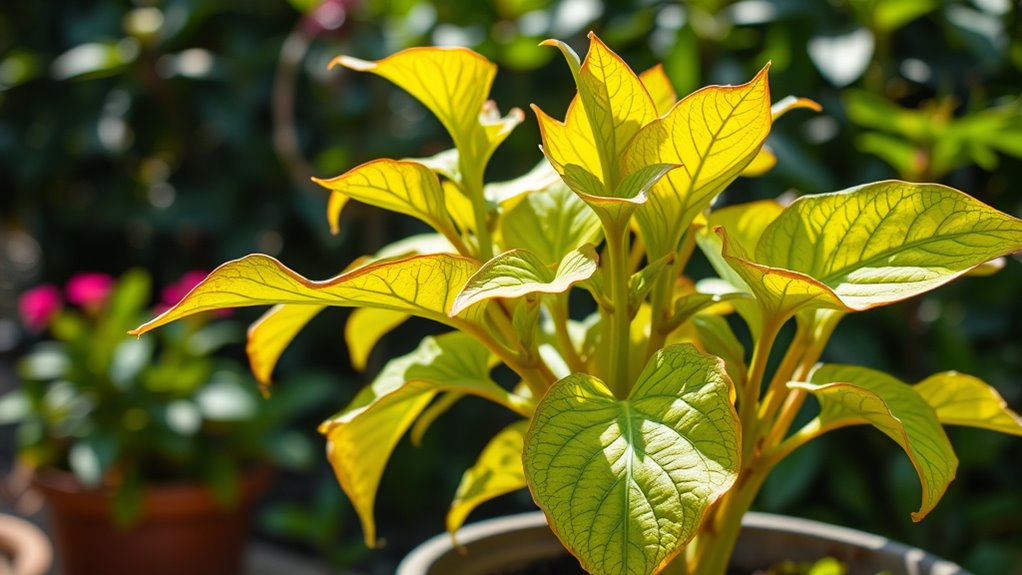
If your plant shows signs like yellowing or wilting leaves, browning edges, or stunted growth, it could be due to overwatering, underwatering, pests, or environmental stress. Look for webs, sticky residue, or deformed leaves to spot pests. Notice if the soil feels soggy or dry and check for signs of too much sun or insufficient light. Recognizing these early clues helps you fix issues quickly—stay tuned to learn how to address each problem effectively.
Key Takeaways
- Observe leaf color and texture for signs of overwatering, underwatering, pests, or nutrient deficiencies.
- Check soil moisture to differentiate between overwatering and underwatering issues.
- Look for pests’ presence, webbing, or sticky residue on leaves and undersides.
- Monitor environmental conditions like sunlight, temperature, and drafts that stress plants.
- Examine plant symptoms such as wilting, browning, spots, or holes to identify specific problems.

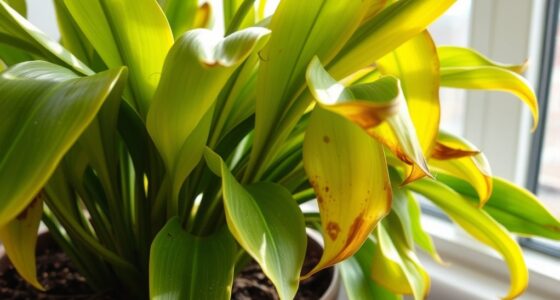
When your plants start showing signs of distress, identifying the problem early is key to saving them. One of the first things to contemplate is watering issues. Overwatering can lead to root rot, causing leaves to yellow and wilt despite the soil being moist. Conversely, underwatering makes the plant dehydrated, resulting in wilting, browning leaf edges, and stunted growth. Check the soil moisture level by feeling it with your fingers—if it’s soggy, cut back on watering; if it’s dry, give your plant a thorough soak. Remember, different plants have varied water needs, so research your specific species to avoid common watering pitfalls.
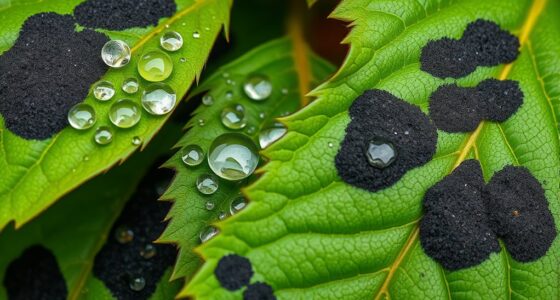
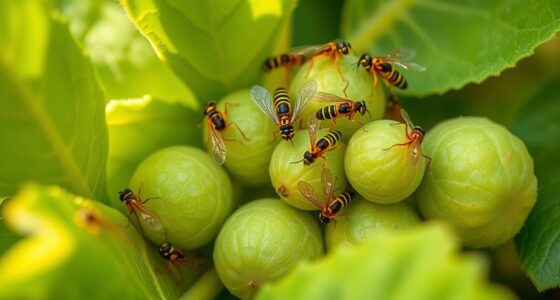
Another essential aspect is pest identification. Tiny pests like aphids, spider mites, or mealybugs can cause significant damage, often going unnoticed until the plant’s health visibly declines. Look for signs such as sticky residue, webbing, or discolored, deformed leaves. Sometimes, pests hide on the undersides of foliage, so inspect thoroughly. If you spot pests, act quickly with appropriate treatments—use insecticidal soap or neem oil for most pests, but always follow the instructions carefully. Early detection prevents infestations from spreading and causing irreversible harm.
Apart from watering issues and pests, think about environmental factors. Too much direct sunlight can scorch leaves, leading to brown patches, while too little light stunts growth and causes leggy, weak stems. Temperature fluctuations or drafts can also stress plants, making them more susceptible to pests and disease. Keep your plant in a consistent, suitable environment, and adjust its placement if you notice these signs.
Fertilizer problems might also be at play. Over-fertilizing can cause salt buildup, leading to leaf burn and root damage, while under-fertilizing results in pale, weak growth. Always follow recommended feeding schedules and use the right type of fertilizer for your plant. If you notice leaf tip browning or slow growth, consider whether you’re providing enough nutrients.
Additionally, understanding plant physiology can help you better diagnose issues, as different parts of the plant may show specific symptoms related to particular problems. Lastly, observe your plant’s overall appearance. Wilting, yellowing, spots, or holes in leaves are clues pointing to specific issues. Take time to diagnose carefully—often, a combination of watering issues, pest identification, and environmental conditions contribute to plant distress. By paying close attention to these signs and acting promptly, you increase your chances of reviving your plant and keeping it healthy in the long run.
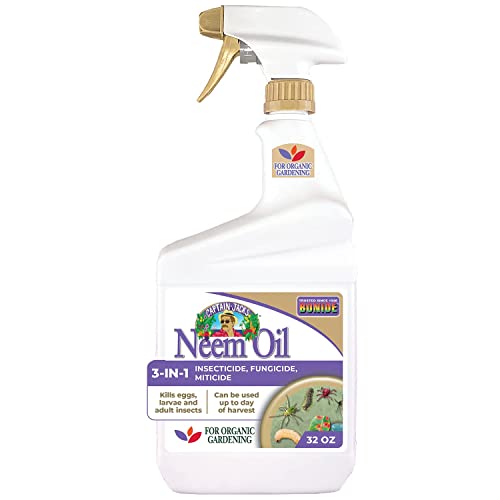
Bonide Captain Jack's Neem Oil, 32 oz Ready-to-Use Spray, Multi-Purpose Fungicide, Insecticide and Miticide for Organic Gardening
MULTI-PURPOSE BUG KILLER – Bonide Neem Oil is a perfect pest control solution for any garden dealing with…
As an affiliate, we earn on qualifying purchases.
As an affiliate, we earn on qualifying purchases.
Frequently Asked Questions
How Often Should I Water My Plant to Prevent Overwatering?
To prevent overwatering, you should establish a consistent watering schedule based on your plant’s needs. Check the top inch of soil; if it feels dry, it’s time to water. Avoid watering on a strict timetable—let the plant’s hydration cues guide you. Overwatering can lead to root rot, so guarantee proper drainage and only water when necessary. Adjust your watering habits as seasons change for healthy plant growth.
Can Pests Cause Leaf Discoloration in My Houseplants?
They say, “A stitch in time saves nine,” and the same applies to pests. Yes, pest infestation can cause leaf discoloration and spotting in your houseplants. Pests like spider mites or aphids feed on leaves, leading to damage and discoloration. Regularly check for tiny insects or webbing, and act quickly to control pests before they cause more harm. Early detection keeps your plants healthy and vibrant.
What Soil Type Is Best for Promoting Healthy Root Growth?
For healthy root growth, you should choose soil that offers good drainage and maintains proper pH balance, usually between 6.0 and 7.0. You want a mix that doesn’t hold too much water, preventing root rot, while still retaining enough moisture. Look for a balanced blend with organic matter and avoid overly dense soils. This way, your plant’s roots stay oxygenated and healthy, encouraging strong, vigorous growth.
How Do I Distinguish Between Disease and Nutrient Deficiency?
When you’re trying to tell disease from deficiency, you’re walking a tightrope. Use diagnosis methods like examining leaf color, spots, or wilting, then compare symptoms closely. Diseases often cause spots, mold, or unusual growths, while deficiencies lead to color changes, stunted growth, or leaf curling. With keen observation and symptom comparison, you can spot the difference—think of it as reading the plant’s story to give it the right fix.
Are There Specific Signs That Indicate My Plant Needs More Sunlight?
If your plant isn’t thriving, it might be a sunlight deficiency. Look for signs like leaf pale or yellowing, which indicate it’s not getting enough light. You may also notice leggy growth or leaves stretching toward a light source. If you see these signs, consider moving your plant to a brighter spot or providing additional light. Ensuring proper sunlight helps your plant stay healthy and vibrant.

XLUX Long Probe Deep Use Soil Moisture Meter, Water Monitor Indicator Sensor, Hygrometer for Outdoor Indoor Large Pot Plants, Flower, Gardening, Farming
Accurate Soil Moisture Detection: The XLUX Soil Moisture Meter can tell you if the soil deep inside your…
As an affiliate, we earn on qualifying purchases.
As an affiliate, we earn on qualifying purchases.
Conclusion
If you ignore these warning signs, your plant might just stage a full-blown rebellion, turning into a leafless, drooping disaster that’s impossible to revive. By paying close attention and acting quickly, you can prevent your once-thriving green companion from transforming into a lifeless skeleton. Remember, your plant’s health depends on your vigilance—don’t let it suffer in silence. With the right care, you’ll keep your plant happy, lush, and bursting with life—no matter how many signs it shows!

Aokrean Plant Grow Light, 48 LEDs Full Spectrum Grow Lights for Indoor Plants, Height Adjustable Small Halo Grow Light with Base, 3 Optional Spectrums, Auto Timer 3/9/12Hrs, 10 Brightness, 3 Pack
NOTE: The product stand needs to be pressed down by the flower pot to be stable. Not wireless…
As an affiliate, we earn on qualifying purchases.
As an affiliate, we earn on qualifying purchases.

Miracle-Gro Indoor Plant Food for All Plants, 8 fl. oz. (2-Pack)
Miracle-Gro Indoor Plant Food for All Plants contains nutrients for healthier, stronger plants (vs unfed when used as…
As an affiliate, we earn on qualifying purchases.
As an affiliate, we earn on qualifying purchases.