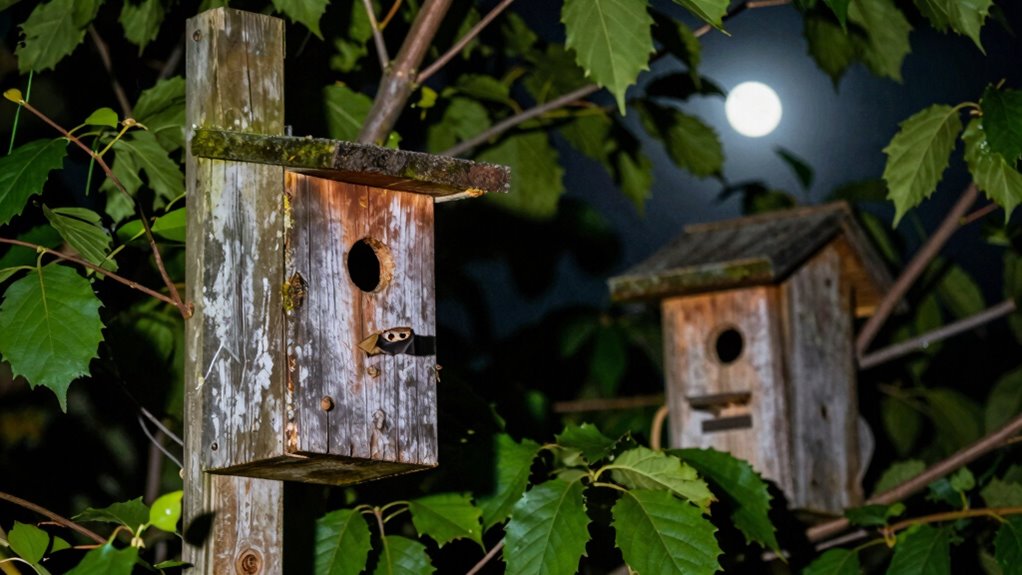
Installing bat houses and owl boxes attracts natural predators like bats and owls to your yard, helping control nighttime pests such as mosquitoes, moths, and rodents. Bats hunt insects, reducing their numbers, while owls target small rodents, lowering pest populations naturally. This eco-friendly approach supports a healthier environment without chemicals. To learn how to choose and install these shelters effectively, explore further to discover tips for encouraging these beneficial creatures and enhancing your pest control strategy.

Get garden gear delivered free with Prime
- Fast, free delivery on millions of items
- Prime Video, Amazon Music and more included
- Member-only deals all year
Key Takeaways
- Bat houses attract bats that hunt night-flying insects like mosquitoes and moths, reducing pest populations naturally.
- Owl boxes encourage owls to roost, helping control rodents such as mice and rats that are active at night.
- Both bats and owls provide eco-friendly pest management, decreasing reliance on chemical pesticides.
- Proper placement and design of bat houses and owl boxes support healthy populations of these natural predators.
- Installing these structures promotes biodiversity and sustainable pest control in outdoor and urban environments.
As an affiliate, we earn on qualifying purchases.
How Do Bat Houses and Owl Boxes Control Nighttime Pests Naturally?
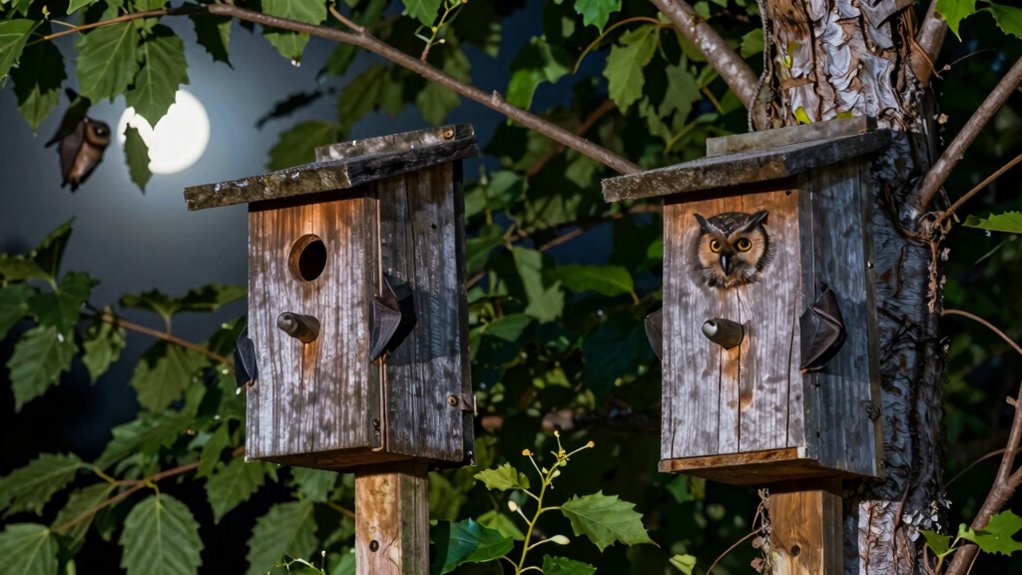
Even though many people may not realize it, bat houses and owl boxes are effective natural tools for controlling nighttime pests. By supporting bat conservation, you encourage these creatures to thrive nearby, boosting their numbers as natural pest controllers. Bats, known for their incredible echolocation, hunt insects like mosquitoes and moths at night, reducing pest populations without chemicals. Similarly, owl behavior involves hunting small rodents and insects, helping keep these populations in check. Installing owl boxes attracts these nocturnal predators to your yard, where they naturally hunt pests. This method minimizes the need for chemical pesticides and promotes a balanced ecosystem. Additionally, understanding the habitat needs of bats and owls ensures that these natural predators can effectively contribute to pest control. Creating suitable nesting sites is crucial for encouraging their presence and support. Overall, encouraging bat and owl presence leverages their natural hunting instincts to control pests efficiently and sustainably.
As an affiliate, we earn on qualifying purchases.
Which Pests Do Bats and Owls Help Reduce?

Have you ever wondered which pests bats and owls help reduce? These natural predators target a variety of pests, including invasive species and urban pests that threaten your environment. Bats eat large quantities of night-flying insects, such as moths and beetles, helping control invasive species that damage crops and native plants. Owls primarily hunt rodents like mice and rats, which are common urban pests and carry diseases. This natural pest control reduces the need for chemical pesticides, benefiting your local ecosystem. Bats and owls are also beneficial because they help maintain ecosystem balance by controlling pest populations naturally. Here’s a quick overview:
| Pest Type | Targeted by |
|---|---|
| Moths and Beetles | Bats |
| Rodents | Owls |
| Invasive insects | Bats |
| Mosquitoes | Bats |
| Urban rats | Owls |
As an affiliate, we earn on qualifying purchases.
What Are the Benefits of Installing Bat Houses and Owl Boxes?

Installing bat houses and owl boxes offers natural pest control, reducing the need for chemical treatments. These methods are eco-friendly, helping you protect the environment while managing pests. By encouraging wildlife, you create a healthier, more balanced outdoor space. Incorporating herbal remedies in your pest management approach can further enhance the effectiveness of natural predators. Additionally, understanding art care techniques can help you preserve your outdoor decorations and structures. Recognizing the scientific skepticism surrounding astrology and natural phenomena can also inspire a more research-based approach to maintaining eco-friendly pest control methods. Considering wave and wind factors can improve the placement and effectiveness of your wildlife habitats. Paying attention to European cloud innovation can also lead to more sustainable and energy-efficient solutions for outdoor environments.
Natural Pest Control
Wondering how to naturally reduce pests around your property? Installing bat houses and owl boxes is a smart move. These natural predators help control insects and rodents without chemicals. Bats participate in bat conservation and are highly effective due to their nocturnal behavior, feeding at night when pests are most active. Owls also hunt during the night, targeting rodents that damage crops and property. Incorporating ecological pest control methods like these supports healthier ecosystems and encourages beneficial wildlife to thrive. Additionally, providing suitable habitats for these creatures can increase their populations, further enhancing pest management around your home.
Eco-Friendly Benefits
Choosing to add bat houses and owl boxes to your property offers significant eco-friendly advantages. These natural predators reduce the need for chemical pesticides, helping protect local ecosystems. They also promote water conservation by minimizing runoff pollution from chemical treatments. Plus, supporting wildlife aligns with solar power initiatives by reducing reliance on energy-intensive pest control methods. Installing these habitats encourages biodiversity and creates a balanced environment. Additionally, these natural solutions can contribute to the local ecosystem’s health by promoting sustainable pest control methods. Incorporating wildlife-friendly practices can further enhance the ecological benefits of your property. Moreover, the presence of bats and owls can help control insect populations, reducing the need for electric-powered equipment that may harm the environment. Engaging in such practices supports biodiversity conservation, which is crucial for maintaining resilient ecosystems. Furthermore, providing suitable habitats can foster a thriving urban wildlife population, enriching your backyard’s ecological diversity.
As an affiliate, we earn on qualifying purchases.
How Do You Choose the Right Bat House and Owl Box for Your Yard?
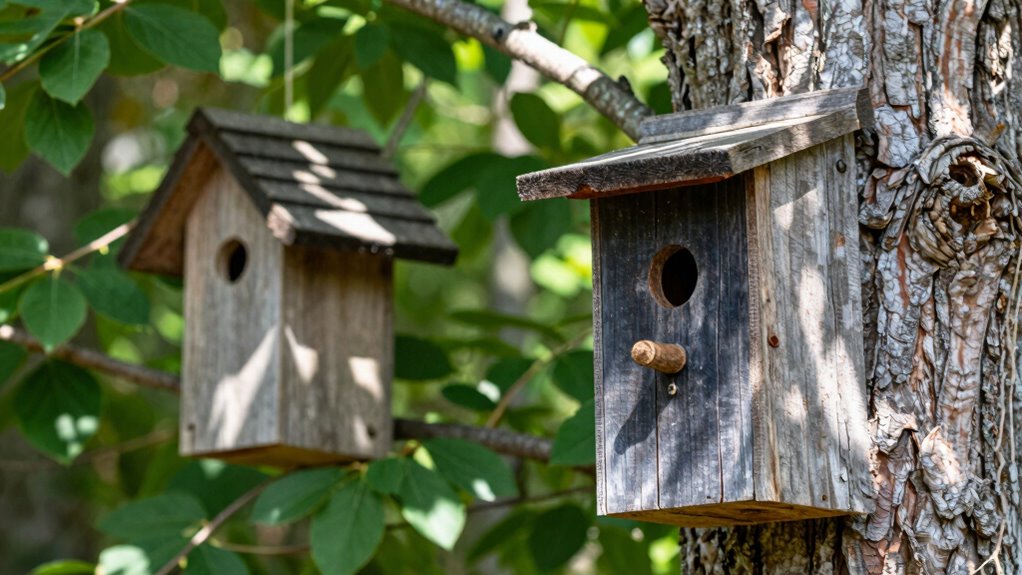
Choosing the right bat house or owl box depends on the size and space available in your yard, so make sure it fits comfortably. Consider the materials and durability to guarantee it withstands weather over time, and think about the placement to match the local environment. By paying attention to these factors, you’ll create a safe and inviting spot for these helpful creatures. Additionally, selecting appropriate ventilation considerations can help ensure the health and comfort of the inhabitants over the seasons. Incorporating local climate factors into your planning can further enhance the success and longevity of your birdhouses. Ensuring proper construction techniques can also improve the likelihood of attracting and retaining these natural predators in your yard, especially when considering weather-resistant materials.
Size and Space
Selecting the right size and space for your bat house or owl box is essential to guarantee these creatures feel secure and comfortable. You need to contemplate the appropriate roost size to accommodate their needs without overcrowding. Shelter space should be ample enough to prevent stress and ensure proper airflow. Ensuring the correct net worth of your habitat can also influence the success of attracting these species. Proper habitat size is crucial for supporting healthy populations and encouraging their natural behaviors. Additionally, the design and material of the boxes can impact their durability and suitability for different species. Choose a size that matches the typical roosting habits of the species you want to attract — Ensure the entrance is proportionate to the bird or bat size — Allow enough vertical space inside for comfortable roosting — Avoid overcrowding by providing multiple units if your yard is large — Position the box or house at the right height for safety and accessibility — Incorporating appropriate insulation can help maintain suitable temperatures inside the habitat. To optimize the habitat, consider the environmental factors that influence occupancy and health of the creatures.
Material and Durability
The materials you choose for your bat house or owl box determine how well they withstand the elements and protect the inhabitants. When considering material selection, focus on durability factors such as weather resistance, rot resistance, and insulation. Wooden options like cedar or redwood are popular because they’re naturally durable and withstand moisture without warping or rotting. Avoid cheap or treated woods that may emit harmful chemicals or deteriorate quickly. Consider adding a weatherproof coating or sealant for extra protection. Metal or plastic may seem durable, but they can trap heat or cause condensation, which can harm the animals. Ultimately, choosing high-quality, weather-resistant materials ensures your bird or bat homes last for many seasons and provide a safe environment for their nighttime activities. Additionally, selecting materials with proper insulation can help maintain suitable temperatures inside the habitat, encouraging consistent use by the animals. Using weather-resistant materials can further prolong the lifespan of your bird or bat houses and reduce maintenance needs.
Placement and Environment
To guarantee your bat house or owl box provides a safe and welcoming environment, you need to contemplate its placement carefully. Consider the cultural significance and historical practices of these animals, which highlight their importance in ecosystems. Position the boxes where they’re sheltered from harsh weather and predators. Keep in mind:
- Height: Mount at least 10-20 feet above ground
- Sun Exposure: Place in a spot with morning sun and afternoon shade
- Shelter: Avoid areas with dense foliage that block airflow
- Distance: Maintain separation from busy areas and competing nests
- Environment: Choose a quiet, natural setting that mimics their preferred habitats
Thoughtful placement encourages natural behaviors and ensures these natural predators help control pests effectively.
Where and How Should You Install Your Wildlife Shelters?
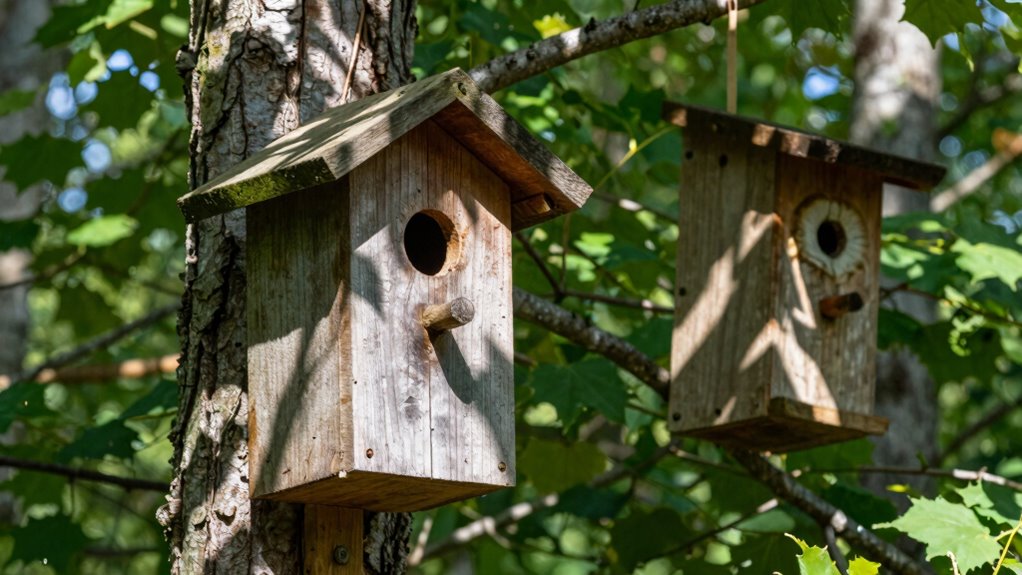
Choosing the right location for your wildlife shelters guarantees they provide safe and effective habitat for bats and owls. Place owl boxes and bat houses away from busy areas to reduce disturbance and enhance predator avoidance. Position them at least 10-20 feet high, ideally on a sturdy tree or pole, to mimic natural roosts. Consider bird migration patterns; avoid locations that may interfere with migrating birds or cause accidental predation. Ensure the shelters face away from prevailing winds and receive ample sunlight for warmth. Keep them a few hundred feet apart if installing multiple units to prevent competition. Proper placement encourages natural behaviors, supports predator avoidance, and attracts bats and owls to help manage night pests efficiently.
Will Installing Bat Houses and Owl Boxes Affect Your Local Ecosystem?
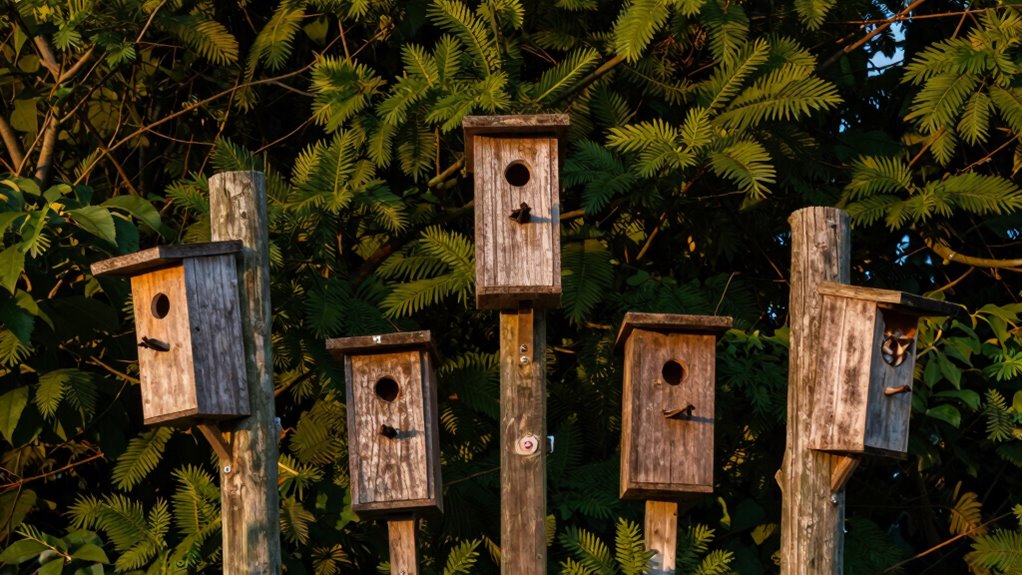
Installing bat houses and owl boxes can positively influence your local ecosystem by supporting natural pest control and enhancing biodiversity. These structures encourage bat migration and attract owls, which help regulate insect populations. As a result, you may notice fewer night pests around your property. Additionally, attracting these predators can:
- Reduce the need for chemical pesticides
- Promote healthy insect populations
- Support local biodiversity
- Provide safe roosting sites for bats and owls
- Balance the ecosystem by integrating natural predator-prey relationships
How Can You Encourage Bats and Owls to Roost and Stay?

Creating inviting environments is key to encouraging bats and owls to roost and stay. To attract them, consider placement that minimizes disturbances from urban development and provides predator deterrence. Position bat houses and owl boxes in quiet, sheltered areas away from high activity zones. Ensuring proximity to water sources and native trees also supports their needs.
| Environment Factor | Effect on Roosting Success |
|---|---|
| Quiet Location | Reduces stress and disturbance |
| Elevated Placement | Enhances predator deterrence and safety |
| Shelter from Wind | Keeps inhabitants warm and secure |
| Nearby Water Source | Supports insect and small prey populations |
| Safe Distance from Urban Development | Limits noise and light pollution |
Are Bat Houses and Owl Boxes Safe? How Do You Maintain Them?
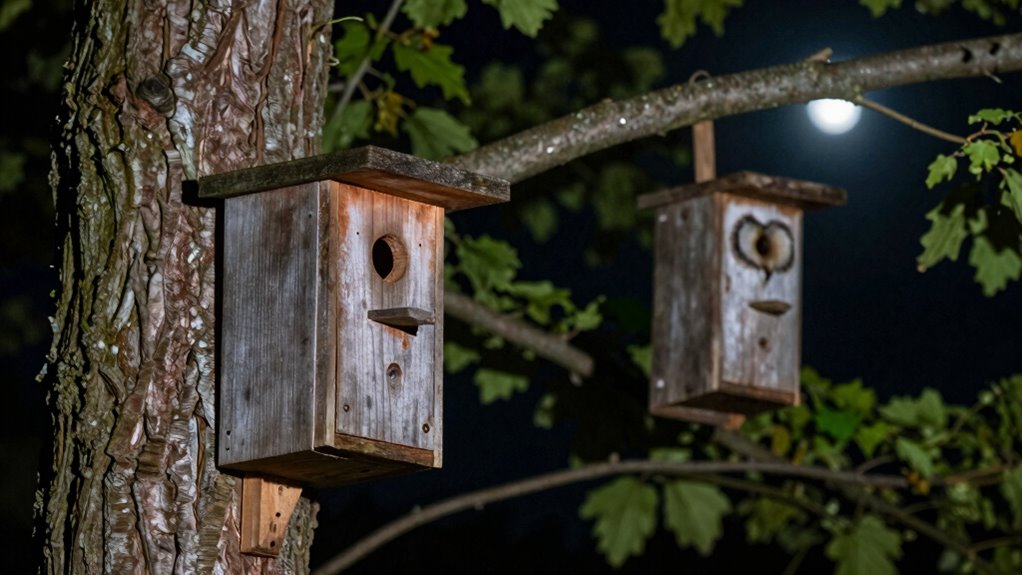
Bat houses and owl boxes are generally safe when properly designed and maintained, but neglecting regular care can pose risks to both the inhabitants and the environment. To guarantee safety and longevity, follow these maintenance tips:
- Regularly check for signs of damage or wear.
- Clean out old debris and pest buildup.
- Ensure the entrance is unobstructed and secure.
- Replace rotting or broken parts promptly.
- Keep the structures away from pesticides or toxins.
Frequently Asked Questions
How Effective Are Bat Houses and Owl Boxes in Urban Environments?
In urban habitats, bat houses and owl boxes are quite effective at controlling night pests. They attract natural predators, boosting their presence and predator impact. By providing safe nesting sites, you encourage these animals to settle nearby, reducing insect populations naturally. Your efforts help maintain a balanced ecosystem, making your urban environment healthier and less reliant on chemical pest control. Overall, they’re a smart, eco-friendly pest management solution.
Can Installing These Shelters Attract Other Wildlife or Pests?
Think of installing bat houses and owl boxes as planting a wildlife magnet. Yes, they can attract beneficial animals, but they might also draw some pests or unwanted wildlife if not properly maintained. To minimize pest concerns, position these shelters away from your home and keep the area clean. Proper placement and regular monitoring help make certain you’re welcoming helpful predators without inviting trouble.
What Is the Typical Lifespan of a Bat House or Owl Box?
A bat house or owl box typically lasts around 5 to 10 years with proper shelter maintenance. To guarantee longevity, regularly check for wear, clean out debris, and replace damaged parts. Predator prevention is key; position the shelters high and away from predators, and use predator guards if needed. Proper upkeep not only extends their lifespan but also keeps your natural pest control effective and safe for the wildlife.
Are There Specific Seasons Best for Installing These Structures?
Think of spring as your garden’s awakening; it’s the best time for seasonal installation. Installing bat houses and owl boxes during early spring ensures they’re ready for the season’s pests, giving these natural predators time to settle in. Ideal timing means doing it before insects become abundant. By acting now, you set a trap for pests naturally, allowing your yard to flourish peacefully in harmony with these helpful creatures.
How Do Weather Conditions Impact the Success of Wildlife Shelters?
Weather conditions directly impact your wildlife shelters’ success. Harsh weather like heavy rain, strong winds, or extreme cold can damage structures and reduce their effectiveness. Climate change worsens these effects, causing unpredictable weather patterns that challenge shelter durability. To guarantee your shelters remain functional, choose durable materials, install them in protected locations, and regularly inspect and maintain them, especially after severe weather events.
Conclusion
Imagine the quiet nights, free from relentless pests, as bats and owls quietly take their places in your yard. With the right shelters, you might witness these incredible creatures becoming your natural pest control team. But will you notice the subtle signs of their nightly visits? The choice is yours—set the stage now, and watch as your outdoor space transforms into a haven of serenity and wonder. The night holds secrets—are you ready to uncover them?
Halloween Picks
halloween
As an affiliate, we earn on qualifying purchases.