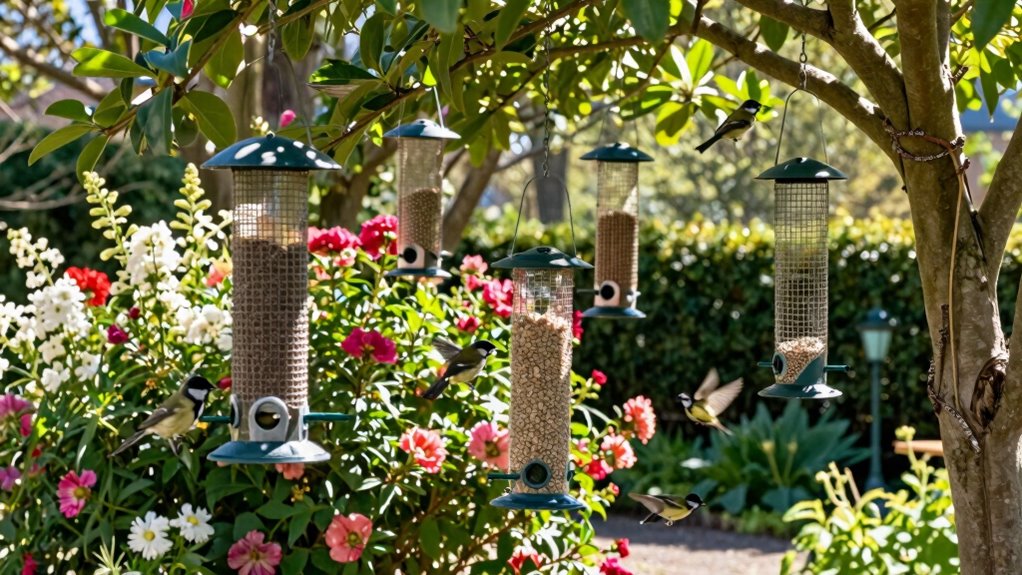

Putting bird feeders near your garden can turn it into a lively oasis, attracting beautiful songbirds and providing great wildlife observation opportunities. However, they can also invite pests, leftover seeds, and mess, making maintenance a hassle. Proper placement, regular cleaning, and pest-proof feeders help balance the benefits and challenges. If you want to create a bird-friendly space without the headaches, there’s more to take into account—keep exploring to find the best tips.
Key Takeaways
- Bird feeders enhance garden beauty and birdwatching but may attract pests if not properly maintained.
- Proper placement and regular cleaning reduce unwanted critters and health risks for birds.
- Using squirrel-proof feeders and pest-resistant seeds minimizes pest problems.
- Maintaining a balance prevents pest dominance and supports local ecosystem health.
- Thoughtful design and routine upkeep ensure bird feeders are beneficial rather than problematic.
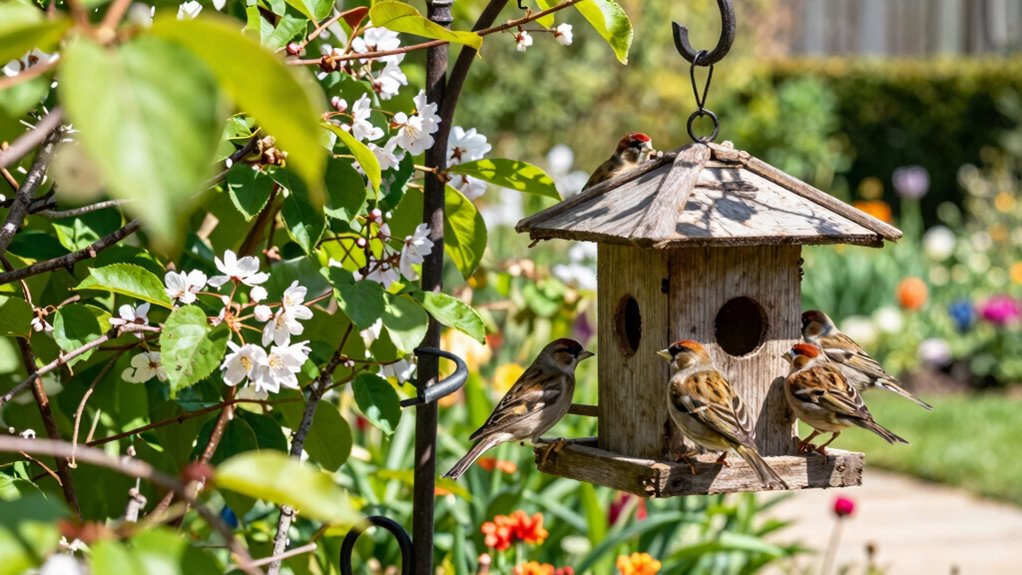
Placing bird feeders near gardens is a great way to attract a variety of songbirds and enjoy their vibrant presence up close. Not only does this enhance your outdoor space with lively colors and cheerful melodies, but it also offers an opportunity to observe wildlife in its natural habitat. However, before you set up those feeders, it’s important to ponder how they impact both wildlife attraction and pest management. When done thoughtfully, bird feeders can bring a lot of joy and ecological benefit. But if neglected or poorly maintained, they can also create challenges.
Bird feeders attract songbirds and enhance your garden, but require thoughtful placement and maintenance to avoid pest issues.
One of the biggest advantages of adding bird feeders to your garden is the boost in wildlife attraction. By providing a consistent food source, you encourage a range of species to visit regularly, giving you a front-row seat to their behaviors and interactions. This can deepen your understanding of local ecosystems and foster a stronger connection to nature. However, attracting more birds can sometimes lead to unintended consequences, especially if pest management isn’t part of your plan. Food spillage or leftover seeds can attract unwanted critters such as squirrels, rats, or even insects. These pests might not only disturb your garden’s peace but also threaten the health of the birds you’re trying to support.
To minimize pest issues, it’s vital to choose the right feeder type and placement. For example, squirrel-proof feeders can reduce the number of rodents and large pests that access the food. Regularly cleaning your feeders and removing any leftover seeds or debris can prevent mold and the spread of disease among visiting birds. Proper placement also helps; positioning feeders away from dense shrubbery or open trash areas makes it less inviting for pests to raid the feeders. Additionally, understanding wildlife behavior can help you design your garden and feeding setup to better coexist with local species. Incorporating pest-resistant seed blends** can also be an effective way to reduce attractants for unwanted visitors. Using appropriate feeder designs** can further limit pest access and improve the overall health of your backyard ecosystem. Moreover, selecting seeds that are less attractive to pests can significantly reduce the frequency of pest visits.
A further consideration is how your choices impact the local ecosystem and the balance of species within it. By maintaining a clean environment and monitoring the feeders, you can strike a balance where wildlife attraction flourishes without turning into a headache caused by pests.
Furthermore, focusing on pest management doesn’t mean you need to sacrifice the joy of birdwatching. Simple measures like using seed blends that are less attractive to pests or installing baffles can help keep unwanted visitors at bay. Routine upkeep, such as cleaning feeders and replacing old seed, ensures the health of the birds and the integrity of your garden ecosystem. When you combine strategic placement with diligent maintenance, bird feeders become a sustainable way to enjoy nature’s beauty while avoiding the pitfalls of pest invasions. In this way, your garden can transform into a thriving habitat that supports local wildlife without becoming a magnet for pests.

Squirrel Proof Bird Feeder,Metal Mesh Bird Feeders for Outdoors Hanging,Gravity Protection Squirrel Proof Wild Bird Feeders with Finch Cardinal Chickadee,3LB Large Capacity,Green
- Squirrel Proof Design: Prevents squirrels from stealing feed
- Ideal for Bird Lovers: Great gift for gardening enthusiasts
- Durable Metal Construction: Suitable for outdoor hanging use
As an affiliate, we earn on qualifying purchases.
As an affiliate, we earn on qualifying purchases.
Frequently Asked Questions
How Do Bird Feeders Affect Local Plant Growth?
Bird feeders near your garden can influence local plant growth by attracting birds that spread seeds. If you feed native birds, they often help support native plants, promoting a healthy ecosystem. However, if invasive species are attracted, they may spread non-native seeds, potentially harming native plants. Regularly cleaning feeders and choosing native seed mixes can minimize the spread of invasive species and support the growth of your native plants.
Are There Safety Concerns for Children Around Bird Feeders?
Imagine a scene from the 18th century—safe, right? Now, consider bird feeder safety today: yes, there are concerns for children. You should supervise your kids around bird feeders to prevent accidental ingestion of seeds or contact with bird droppings, which can carry germs. Keep feeders out of reach and teach your children about proper behavior. With vigilant child supervision, you can enjoy birdwatching without worry.
What Are the Best Types of Bird Feeders for Urban Gardens?
You should choose tube or tray feeders for urban gardens, as they’re easy to clean and reduce mess. Place feeders in sheltered spots, away from high traffic areas to avoid safety issues. Focus on seed selection, opting for black oil sunflower or mixed seeds, which attract a variety of birds. Proper feeder placement guarantees safety and attracts many species, making your urban garden a lively bird haven.
How Can I Prevent Squirrels From Raiding My Bird Feeder?
Think of your bird feeder as a treasure chest, tempting squirrels to raid it. To guard it, use squirrel deterrents like baffles or spicy seed mixes. Proper feeder placement is key—hang feeders away from trees and jumping-off points, ideally 5-6 feet above ground. Regularly clean and refill your feeder, and consider squirrel-proof feeders. These strategies help protect your feathered friends’ feast from pesky intruders.
Do Bird Feeders Attract Unwanted Pests or Diseases?
Bird feeders can attract unwanted pests and increase the risk of disease transmission if not maintained properly. Pest attraction occurs when leftover seed or debris accumulates, drawing insects or rodents. Disease transmission happens when birds gather in crowded feeders, spreading illnesses more easily. To minimize these issues, clean your feeder regularly, use seed trays, and place feeders in open, sunny areas to discourage pests and promote bird health.

Wild Delight Sizzle N' Heat Wild Spicy Bird Seed to Deter Squirrels
- Nutritious nuts for birds: Wholesome nuts that attract birds
- Premium hot blend: Designed exclusively for birds
- Squirrel deterrent: Hot seeds effectively deter squirrels
As an affiliate, we earn on qualifying purchases.
As an affiliate, we earn on qualifying purchases.
Conclusion
So, whether bird feeders near your garden turn out to be a blessing or a headache depends on your perspective. Like a double-edged sword, they attract lovely songbirds but may also invite unwelcome critters. By choosing the right feeders and maintaining them properly, you can enjoy the symphony of chirping without the chaos. In the end, with a little effort, you can turn your garden into a harmonious haven—where nature’s melody plays just for you.

Youvip Metal Roof Bird Feeder – Chew Proof for Outdoor Hanging Wild Bird Seeds. Bronze
- Durable Chew-Proof Metal Construction: Sturdy metal build resists squirrels and damage
- Easy 30-Second Disassembly: Quick tool-free cleaning and refilling
- One-Handed Refill System: Press roof button to slide and lock for easy refilling
As an affiliate, we earn on qualifying purchases.
As an affiliate, we earn on qualifying purchases.
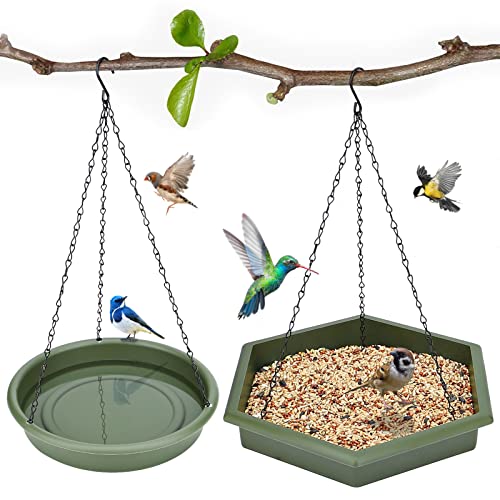
Hanging Bird Bath,2 in 1 XL Hanging Bird Feeder & Birds Bath for Outside
- Set Includes Two Items: Bird feeder and bird bath
- Dimensions: 9.8 x 9.8 x 14 inches
- Durable Material: Made of rust-proof PP plastic
As an affiliate, we earn on qualifying purchases.
As an affiliate, we earn on qualifying purchases.