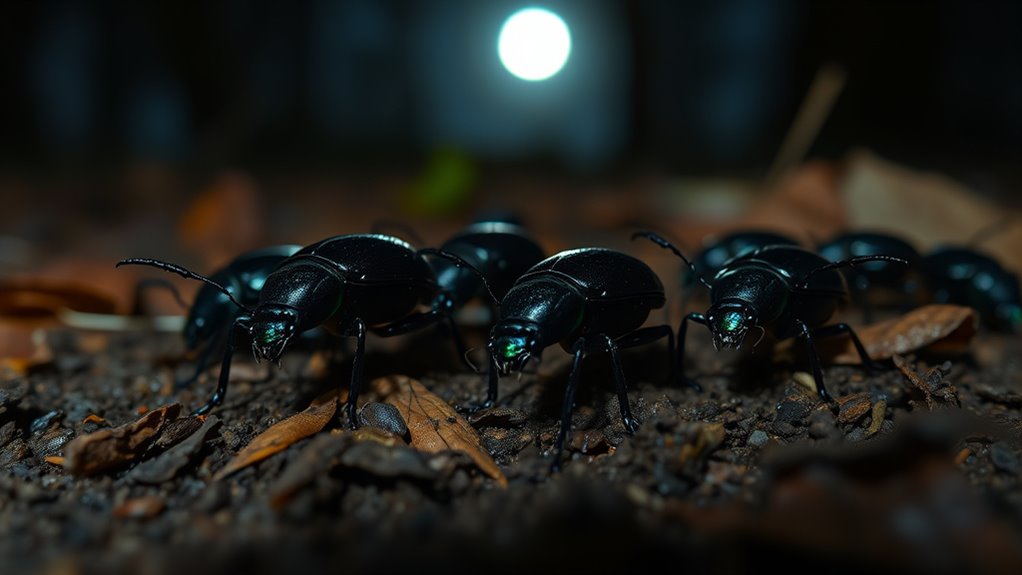

Ground beetles are your nocturnal allies in the garden, hunting insects and small invertebrates after dark. They move quickly through soil and leaf litter, using keen senses to find prey like aphids, caterpillars, and slugs. Their shiny, dark bodies help them blend into their environment, making them effective natural pest controllers. If you want to learn how these fascinating insects support your garden’s health, keep exploring what makes them such valuable helpers.
Key Takeaways
- Ground beetles are nocturnal predators that hunt insects and invertebrates during night hours.
- Their shiny, dark bodies enable effective camouflage in soil and leaf litter at night.
- They rely on senses like smell and touch, rather than vision, to locate prey in low-light conditions.
- Active at night, they help naturally control garden pests without the need for chemicals.
- Maintaining undisturbed, moist habitats supports their populations and enhances their pest control role.

Ground beetles are a diverse and widespread group of insects known for their swift movements and shiny, often dark-colored bodies. If you’ve ever encountered them darting across the ground in your garden or forest floor, you’ve seen their agility firsthand. These beetles are primarily ground dwellers, and their beetle habitat typically includes soil, leaf litter, under rocks, and logs. You might notice they prefer places that offer cover and moisture, providing the perfect environment for hunting and hiding. Their habitat choices make them valuable allies in controlling pests, as they hunt insects and other small invertebrates lurking around these areas.
Ground beetles thrive in soil, leaf litter, and under rocks, benefiting pest control naturally.
What truly sets ground beetles apart is their nocturnal behavior. You won’t often spot them during the day because they’re most active at night. When darkness falls, they emerge from their hiding spots, ready to hunt with keen senses adapted for low-light conditions. Their nocturnal activity helps them avoid predators and temperature extremes, allowing them to be efficient predators under the cover of darkness. As you observe your garden or yard after sunset, you might see these beetles scurrying across the ground, on the lookout for prey like caterpillars, aphids, or slugs. Their nocturnal lifestyle also means they’re less likely to be disturbed by human activity, which makes them effective natural pest controllers.
During the night, ground beetles rely heavily on their sense of smell and touch rather than sight, which helps them navigate through their beetle habitat with precision. They are fast movers, making it difficult for prey to escape their grasp. Their shiny, dark bodies often blend seamlessly with the soil and leaf litter, offering them camouflage as they patrol the ground. This nocturnal behavior and their choice of habitat work together to make ground beetles some of the most efficient and beneficial insects in the ecosystems they inhabit.
Understanding their beetle habitat and nocturnal habits can help you appreciate their role in pest management naturally. If you want to encourage ground beetles in your yard, consider maintaining a natural, undisturbed environment with plenty of hiding spots and moist areas. Avoid excessive use of pesticides, which can kill these helpful insects along with pests. By doing so, you create an ideal setting for ground beetles to thrive, allowing you to enjoy their benefits as nocturnal allies that work tirelessly under the cover of night to keep your garden healthy.
Frequently Asked Questions
How Do Ground Beetles Communicate With Each Other?
You might wonder how ground beetles communicate, and they do so through pheromone signaling and acoustic communication. They release chemical signals to attract mates or warn others about danger, while also using sounds, like stridulation, to send messages. When you observe them at night, you’ll notice these silent yet effective methods help them coordinate and survive in their environment. Both techniques are essential for their communication and social interactions.
Are Ground Beetles Beneficial for Organic Gardening?
Yes, ground beetles are beneficial for your organic garden because they act as natural predators of pests like aphids, caterpillars, and beetles. They thrive in diverse ground beetle habitats, especially in soil rich with organic matter. By encouraging ground beetle predators, you help keep pest populations in check without chemicals, promoting a healthy, balanced ecosystem and supporting organic gardening efforts naturally.
What Is the Lifespan of a Typical Ground Beetle?
Imagine a ground beetle scurrying through your garden at night, its sleek body moving with purpose. Usually, their lifespan is about 2 to 3 years, but this varies with ground beetle development stages and environmental influences like temperature and food availability. Warmer, moist conditions often extend their life, while harsh weather can shorten it. So, you can expect these beneficial insects to serve your garden well for a couple of years.
Do Ground Beetles Pose Any Threat to Humans or Pets?
Ground beetles don’t pose any real threat to humans or pets, despite ground beetle myths suggesting otherwise. You can safely interact with them, as they don’t bite or sting. In fact, they’re beneficial predators, helping control pest populations. When you encounter them, avoid unnecessary handling and appreciate their role in natural pest control. Their presence is a sign of a healthy, balanced ecosystem around your home.
How Can I Attract More Ground Beetles to My Yard?
To attract more ground beetles, you should plant native plants that provide natural habitat and food sources. Keep your yard clutter-free and avoid excessive pesticide use. Mulch your garden beds carefully, as ground beetles thrive in moist, dark environments. By managing mulch properly and incorporating native plantings, you create an inviting environment that encourages ground beetles to stay and help control pests naturally.
Conclusion
Don’t overlook ground beetles—they’re your nocturnal allies in natural pest control. You might think bugs are a nuisance, but these beetles quietly work overnight to keep harmful insects in check. By appreciating their role, you’re supporting a balanced ecosystem right in your yard. So next time you spot one scurrying by, remember, you’re witnessing a helpful, beneficial creature doing its part to maintain a healthy environment—no fuss, just nature’s quiet teamwork.