TL;DR
Lasagna gardening is a no-dig way to prepare a garden bed over winter by layering cardboard, brown organic material, green material and finished compost. The gardening guide says a bed built in late autumn or early winter may be ready to plant by April or May, but timing depends on decomposition and conditions.
A gardening guide describes a four-layer, no-dig method for preparing beds over winter: cover the soil with cardboard, add brown and green organic materials, then finish with compost or topsoil. The guide says the approach is intended to let those materials decompose in place before spring planting, without turning the soil by hand.

Get garden gear delivered free with Prime
- Fast, free delivery on millions of items
- Prime Video, Amazon Music and more included
- Member-only deals all year
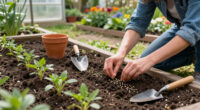
The guide’s first step is to cut back existing grass and weeds, then lay flattened cardboard over the bed, overlapping the sheets so the ground is covered. It recommends wetting the cardboard with water after placing it. The guide describes the cardboard as a barrier against weeds while still allowing earthworms to move through as it breaks down.
Next, the guide recommends adding a layer of brown, carbon-rich material, such as dry autumn leaves, straw, sawdust, wood chips or shredded newspaper. Follow it with green material that supplies nitrogen, including kitchen scraps, grass clippings, coffee grounds or manure. The guide advises using roughly twice as much brown material as green and says gardeners can repeat those layers if they have enough material.
According to the guide, the bed should be finished with a cap of finished compost or topsoil. It says that top layer is especially relevant if planting soon, because it gives seeds a surface in which to establish roots. For a bed prepared in late autumn or early winter, the guide gives April or May as a possible planting timeframe, while noting that decomposition depends on moisture and time.
A Simple Winter Soil Refresh 3 Steps for Lasagna Gardening
Build a no-dig garden bed over winter by layering organic materials in place. Spring readiness depends on how well the layers decompose.
Build the bed in three steps
Layer materials over the soil and let them break down in place.
Cut back grass and weeds, overlap flattened cardboard across the bed, then wet it.
Add brown material such as dry leaves, then green material such as kitchen scraps. Use about twice as much brown as green; repeat if you have enough.
Cap the bed with finished compost or topsoil, especially if you plan to plant soon.
What goes into each layer?
- Dry autumn leaves
- Straw, sawdust or wood chips
- Shredded newspaper
- Kitchen scraps
- Grass clippings
- Coffee grounds or manure
Let winter do the work
The layers decompose in place, using moisture and time to prepare the bed without turning the soil.
Less Digging Before Spring Planting
The guide presents the method as a way for gardeners to use fallen leaves and kitchen or yard waste to build a bed rather than removing or discarding those materials. It also avoids the labor of turning over the soil, a task some gardeners prefer to skip. For readers planning spring beds, the guide’s main practical point is that preparation can begin months before planting.
The guide describes layering organic materials in place as a form of cold composting, in which microbes and soil organisms break down material over time. The resulting soil condition and planting date are not guaranteed, but the approach can make garden waste useful while establishing a bed ahead of the growing season.
Products Worth Considering

EAGLE PEAK 12 x 8 ft Walk-In Pop-Up Greenhouse with Support Pole

Greenworks 80V Cordless Axial Leaf Blower Kit with 4Ah Battery and Charger

Husqvarna 460 Rancher 24-Inch Gas Chainsaw
As an affiliate, we earn on qualifying purchases.
A Compost Pile Built in Place
The source presents lasagna gardening as another name for no-dig or no-till gardening. Rather than mixing amendments into the soil, gardeners place successive layers on top and allow them to decompose. The guide compares this process with the forest floor, where fallen leaves and other debris break down over time.
The guide’s stated four-part recipe is cardboard, brown material, green material and finished compost. It also allows additional alternating brown and green layers. The guide frames late autumn and early winter as suitable times to start, so seasonal rain and winter moisture can keep the materials damp as decomposition proceeds.
Timing Depends on Decomposition
The guide’s April-or-May readiness estimate is not a guarantee, and it does not provide a tested schedule for different climates, bed depths or material combinations. How quickly a bed breaks down may vary with moisture, temperature and the materials used; the guide does not quantify those effects.
The guide also does not specify a minimum thickness for each layer or provide detailed guidance for every type of kitchen scrap. Gardeners should not assume that every bed will be ready for direct sowing by spring. The source recommends a finished-compost or topsoil cap, but does not set out how to assess readiness beyond the stated seasonal estimate.
Check the Bed Before Sowing
After building the layers, gardeners can leave the bed in place through winter and check its condition as spring approaches. The source’s suggested milestone is planting in April or May, if the materials have decomposed enough and the capped surface is suitable for the intended crop.
If the layers remain largely intact or the surface is not ready for seeds, the source gives no alternate planting schedule. Gardeners may need to allow more time or add a suitable planting layer; the exact next step will depend on the bed and local conditions.
Key Questions
What are the four layers in a lasagna garden?
The guide lists flattened cardboard, brown material such as dry leaves, green material such as kitchen scraps or grass clippings, and a top layer of finished compost or topsoil.
How much brown material should I use?
The guide recommends using about twice as much brown material as green. It says gardeners may repeat the alternating layers if they have enough organic material.
When can a winter lasagna garden be planted?
The guide says a bed started in late autumn or early winter may be ready by April or May. That is an estimate, not a guaranteed date, because the source does not give a fixed decomposition schedule.
Does lasagna gardening require digging?
No. The guide describes the approach as no-dig: materials are laid over the bed and left to decompose in place instead of being turned into the soil.
Source: gardeningknowhow.com