To stop wasting spray and calibrate your backpack sprayer in just 10 minutes, gather a measuring container, stopwatch, and safety gear. Fill the tank with water, spray for a set period, and measure how much solution is used. Adjust the nozzle based on your target flow rate and verify the calibration with test applications. Following these quick steps guarantees precise, eco-friendly coverage every time. Keep going to discover tips that keep your sprayer accurate and efficient.
Key Takeaways
- Prepare and inspect the sprayer, nozzle, and filters to ensure proper functioning before calibration.
- Fill the tank with water, spray for a set time (e.g., 10 seconds), and measure the output accurately.
- Calculate the spray rate based on area coverage and adjust nozzle settings to match target application rates.
- Conduct quick test sprays over a known area to verify consistency and repeat adjustments if necessary.
- Regularly clean and maintain nozzles and filters to prevent clogs, ensuring precise and efficient spray application.
Why Calibrating Your Backpack Sprayer Saves Money and Reduces Waste

Calibrating your backpack sprayer is essential because it guarantees you apply the correct amount of pesticide or fertilizer, preventing waste and saving money. When your sprayer is properly calibrated, you avoid over-application, which not only saves resources but also reduces environmental impact. Accurate calibration helps ensure each treatment is efficient, targeting only what’s necessary, leading to significant cost savings over time. Additionally, it minimizes waste, meaning fewer chemicals are used and less runoff occurs. Proper calibration also accounts for projector specifications, ensuring optimal coverage and effectiveness. This not only cuts expenses but also promotes responsible gardening and farming practices. Regular calibration can improve application consistency, making your treatments more reliable. By taking a few minutes to calibrate your sprayer, you guarantee ideal use of materials, reduce unnecessary expenses, and contribute to a more sustainable approach. Calibration techniques are straightforward and can be easily learned with minimal effort. Understanding the importance of application accuracy can further improve your results and environmental responsibility, especially when considering precision application methods.
Gather the Tools You Need to Calibrate Your Sprayer

Before you start calibrating your backpack sprayer, gather all the necessary tools to guarantee a smooth process. First, you’ll need a clean, marked container or measuring cup to accurately measure the spray volume. A stopwatch or timer is essential for tracking application time. Keep a pen and paper nearby to record your results. You should also have your sprayer’s nozzle and wand, ensuring they’re in good condition for effective equipment maintenance. You may also want to verify spray consistency by inspecting the spray pattern to ensure even distribution. Wear gloves and eye protection to promote garden safety during calibration. Additionally, understanding spray pattern can help optimize your application for better coverage and efficiency. For precise calibration, it’s useful to familiarize yourself with pressure regulation, which impacts spray flow rate and uniformity. Having these tools ready not only speeds up calibration but also helps you maintain your equipment properly, reducing leaks and ensuring even coverage.
Run a Quick Calibration Test (It’s Easier Than You Think)
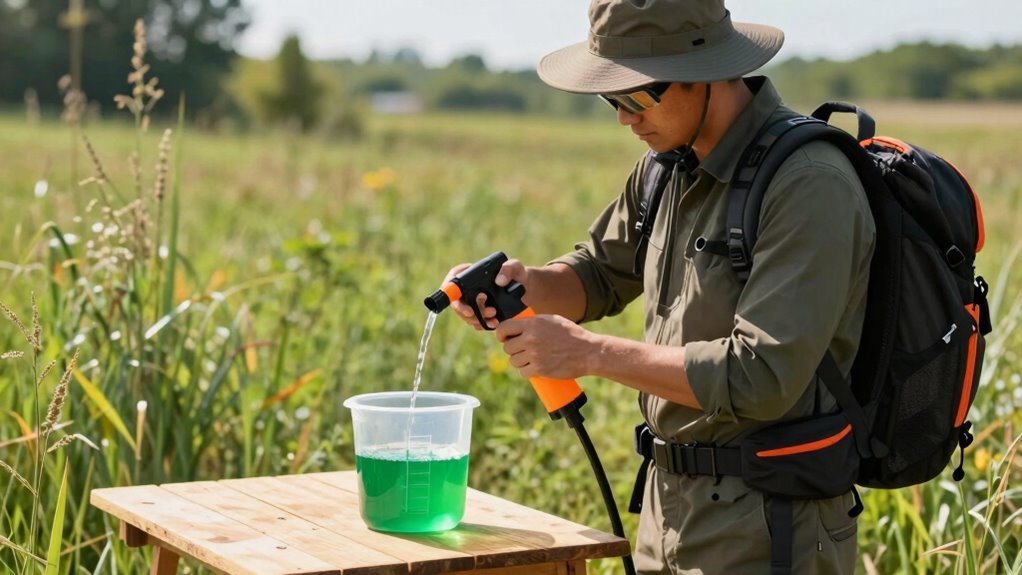
To run a quick calibration test, start by preparing your equipment and ensuring everything is ready. Measure your spray output carefully to see how much solution you’re applying per minute. Then, adjust your nozzle settings as needed to achieve the correct coverage. Incorporating simple, practical solutions can help you maintain consistent application and avoid waste. Remember, understanding your spray equipment and its optimal settings can make a significant difference in efficiency and accuracy. Additionally, being aware of digital asset management strategies can help you track and optimize your equipment use effectively. Developing a technique for calibration can further streamline the process and improve your results over time. Being familiar with essential oil properties can also guide you in adjusting your spraying techniques for specific applications.
Prepare Your Equipment
Have you ever wondered how to quickly check if your backpack sprayer is delivering the right amount of solution? Before you start, make sure your equipment is in good condition through proper equipment maintenance. Inspect hoses, seals, and nozzles for leaks or clogs, which can affect accuracy. Always follow safety precautions: wear protective gear and work in a well-ventilated area. Clear any debris or buildup that might interfere with spray patterns. Ensure the tank is clean and the filters are intact. Confirm that the spray wand and trigger work smoothly. Taking these simple steps helps guarantee your calibration test is accurate and safe, so you get the most effective application without waste or hazards. Preparing your equipment properly sets the foundation for precise calibration. Understanding how everyday kitchen tools work can help you troubleshoot issues more effectively. Additionally, familiarizing yourself with sprayer components can improve your ability to diagnose and fix common problems quickly. Regularly checking your equipment maintenance routines ensures consistent performance over time. Recognizing common spray issues can also help you identify problems early before they affect your calibration results.
Measure Spray Output
Running a quick calibration test is one of the simplest ways to measure your sprayer’s output and guarantee it’s applying the correct amount of solution. First, select the appropriate nozzle type for your task, as spray patterns vary between different nozzles. Fill a measuring container with a known amount of water—say, one or two quarts. Spray for a set period, such as 10 seconds, maintaining a consistent motion. Stop and record the total volume used. This will give you your spray output per second, which you can then multiply by your application time to ensure you’re applying the right amount. Checking spray patterns during this process helps confirm even coverage, ensuring your sprayer delivers consistent, accurate results every time. Understanding spray patterns can help you optimize your application for better coverage and efficiency, as recognizing proper spray pattern types contributes to more uniform distribution. Additionally, regularly calibrating your sprayer can prevent over-application, which saves resources and reduces environmental impact. Performing these calibrations with an awareness of your equipment’s performance can further improve accuracy and consistency.
Adjust Nozzle Settings
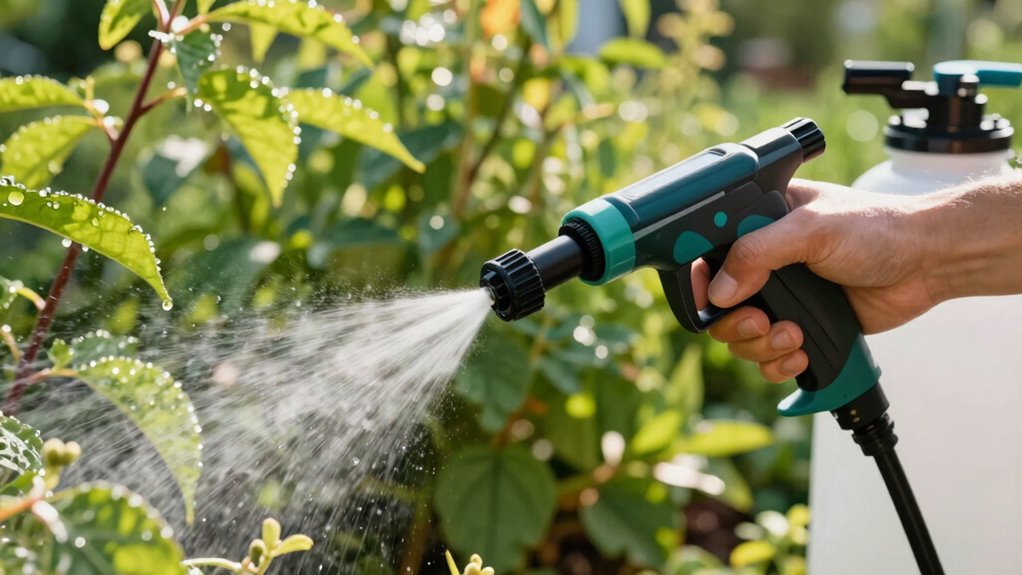
Ever wonder how small adjustments to your nozzle can markedly improve your spraying accuracy? It’s simple—you just need to tweak the nozzle adjustment slightly. Start by inspecting your spray pattern; it should be even and consistent. If the spray is uneven, narrow or wide, adjust the nozzle to correct it. Turning the nozzle clockwise usually narrows the spray, while turning it counterclockwise broadens it. Make small adjustments and test the spray on a flat surface. This quick test helps you fine-tune the spray pattern, ensuring you’re applying the right amount of solution evenly. Proper nozzle adjustment not only improves coverage but also prevents waste. Understanding product-first, problem-solving content can help you choose the most effective gear for your needs. With a few simple tweaks, you’ll achieve more precise, effective spraying every time. Additionally, performing a calibration test periodically ensures your sprayer maintains accurate flow rates, saving you time and resources.
Calculate Your Spray Rate and Adjust Your Settings
Wondering how to guarantee your backpack sprayer delivers the right amount of solution? First, measure your desired spray rate based on your target area and product recommendations. To do this, fill your tank with water, then spray a known area while timing it. Calculate your spray rate in gallons per acre or liters per hectare. Next, adjust your nozzle to match this rate—if your spray is too heavy or light, tweak the nozzle adjustment accordingly. Ensuring your nozzle is correctly set helps you apply the right volume uniformly. Keep track of your adjustments and repeat the process if needed. This method guarantees your sprayer delivers consistent, accurate coverage, saving you time, solution, and effort while maximizing effectiveness. Proper calibration procedures are essential for achieving optimal results. Additionally, regularly inspecting your equipment for wear and blockages can help maintain consistent spray performance.
Verify That Your Sprayer Is Properly Calibrated
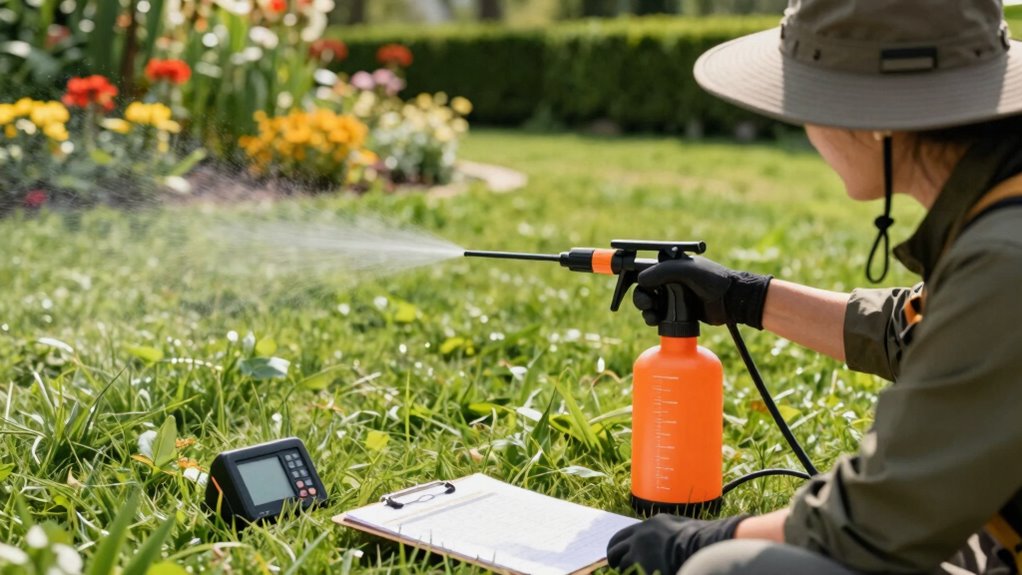
To guarantee your backpack sprayer is properly calibrated, you should verify its output by conducting a test application on a measured area. This step ensures your sprayer accuracy aligns with your intended application rate. Use simple calibration techniques, like marking a known space and spraying over it, then measuring the amount of liquid used. If the amount applied matches your target rate, your calibration is correct. If not, make adjustments to your settings and repeat the test until the output is consistent. Verifying calibration helps prevent over- or under-application, saving you time, money, and chemical. Regularly checking your sprayer ensures it remains properly calibrated, giving you confidence in its accuracy during each application. This process is essential for maintaining effective and efficient spraying.
Tips to Keep Your Backpack Sprayer Calibrated and Accurate

Maintaining your backpack sprayer’s calibration requires regular attention and careful practices. Consistent sprayer maintenance ensures your equipment stays accurate and safe to use. To keep your sprayer calibrated, follow these tips:
- Regularly check for wear and tear, replacing damaged parts promptly.
- Clean the nozzle and filters to prevent clogs that affect spray volume.
- Follow safety precautions, like wearing protective gear and ensuring proper ventilation during maintenance.
These steps help preserve calibration accuracy and extend your sprayer’s lifespan. By staying on top of sprayer maintenance, you avoid wasted chemicals and reduce potential hazards. Remember, proper care not only improves effectiveness but also keeps you safe in the field. Staying vigilant with these tips ensures your backpack sprayer remains reliable and precise every time you use it.
Common Mistakes to Avoid When Calibrating Your Sprayer

While regular maintenance keeps your sprayer accurate, it’s equally important to avoid common mistakes during calibration that can throw off your results. One mistake is overlapping topics, such as measuring twice without adjusting your calculations, which skews application rates. Avoid irrelevant details like focusing on equipment cleaning instead of calibration steps, as they distract from the core process. Rushing through calibration or skipping steps can lead to inconsistent coverage and waste spray. Also, don’t rely solely on visual estimates of spray patterns; always measure output accurately. Overcomplicating the process with unnecessary tools or procedures can cause confusion and errors. Staying focused on proper measurement, consistent procedures, and avoiding distractions ensures your calibration is precise and saves you time and resources.
Frequently Asked Questions
How Often Should I Calibrate My Backpack Sprayer for Optimal Results?
You should calibrate your backpack sprayer every 20 to 30 hours of use or at least once a season. Imagine your sprayer as a precise tool, like a watch that needs timing adjustments to stay accurate. Regular calibration ensures proper sprayer maintenance, prevents waste, and guarantees even application. Keep an eye on your sprayer’s performance, and don’t skip calibration—it’s crucial for maximum results and efficiency.
Can I Calibrate My Sprayer for Different Liquids or Just Water?
You can calibrate your sprayer for different liquids, but it’s important to take into account liquid compatibility and calibration flexibility. Different liquids may have varying viscosities and flow rates, which affect calibration accuracy. Always test and adjust your settings accordingly to ensure proper coverage without waste. This approach helps you maintain calibration flexibility, letting you switch between liquids confidently while achieving consistent, effective application every time.
What Signs Indicate My Sprayer Needs Recalibration?
You’ll need to recalibrate your sprayer if you notice leaks or uneven coverage, which can lead to wasted product and ineffective application. These signs suggest your sprayer isn’t functioning properly, and recalibration will help fix the issue. Regular checks ensure your sprayer delivers consistent spray patterns and volume, saving you time and money. Don’t ignore these signs—calibrate promptly to maintain peak performance.
Is There a Specific Time of Day Best for Calibration?
Did you know that environmental factors like temperature and humidity can affect spray accuracy by up to 20%? You should calibrate your backpack sprayer during the cooler part of the day, such as early morning or late afternoon, to minimize these variations. The time of day matters because environmental conditions fluctuate, impacting spray consistency. Calibrating under stable conditions guarantees better accuracy and more efficient application.
Can Calibration Be Done With Homemade or DIY Tools?
Yes, you can do DIY calibration with homemade tools, but it’s not always precise. Using basic items like a measuring cup, stopwatch, and a marked container can help you estimate your spray output. Just make certain your homemade tools are accurate and consistent. Keep in mind, DIY calibration might not be as reliable as professional methods, but it can work if you’re careful and methodical.
Conclusion
Calibrating your backpack sprayer in just 10 minutes can save you up to 30% on chemical costs and reduce waste considerably. By ensuring accurate application, you not only save money but also protect the environment. Regular calibration is key—experts recommend checking your sprayer every 10 hours of use. Don’t overlook this simple step; it’s quick, easy, and impactful for both your wallet and the planet.