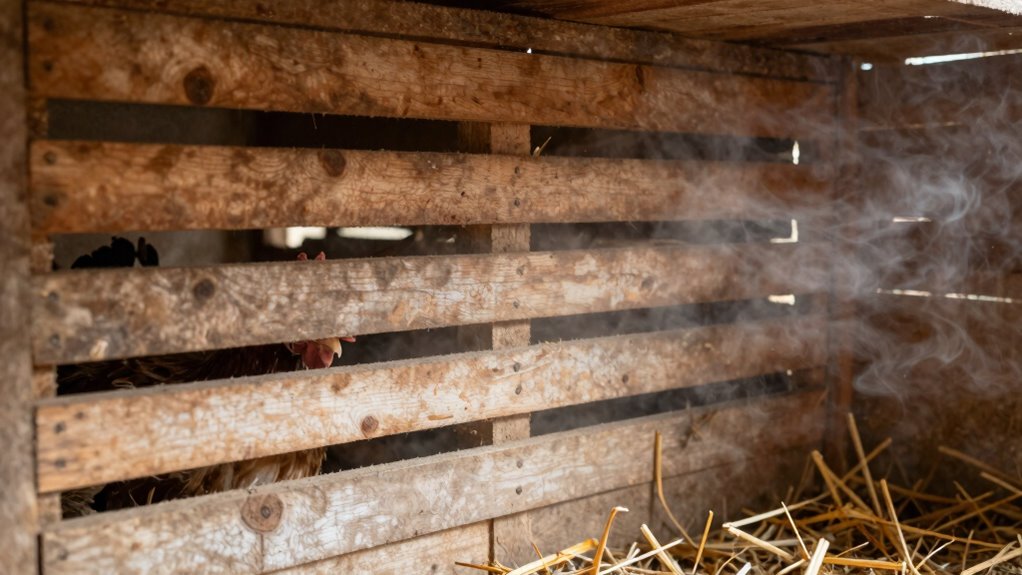
One common mistake that causes ammonia buildup and illness in your chicken coop is poor ventilation. When airflow is blocked or insufficient, moisture and droppings release ammonia fumes that can irritate your flock’s respiratory system. Ignoring vents, covering openings, or neglecting regular maintenance worsens the problem. To keep your chickens healthy, it’s vital to guarantee proper airflow and avoid these mistakes. Keep exploring for tips on how to do this effectively.
Key Takeaways
- Blocking vents or debris obstructs airflow, trapping ammonia and moisture, leading to respiratory issues and illness in chickens.
- Poor ventilation design causes ammonia buildup, which irritates respiratory tissues and weakens flock immunity.
- Insufficient or improperly placed vents prevent proper gas dispersion, increasing ammonia levels and health risks.
- Neglecting regular maintenance and cleaning allows debris to block airflow, worsening ammonia accumulation.
- Relying solely on inadequate natural ventilation or ignoring seasonal adjustments can lead to stagnant, harmful air conditions.
Why Proper Ventilation Is Key to Healthy Chickens
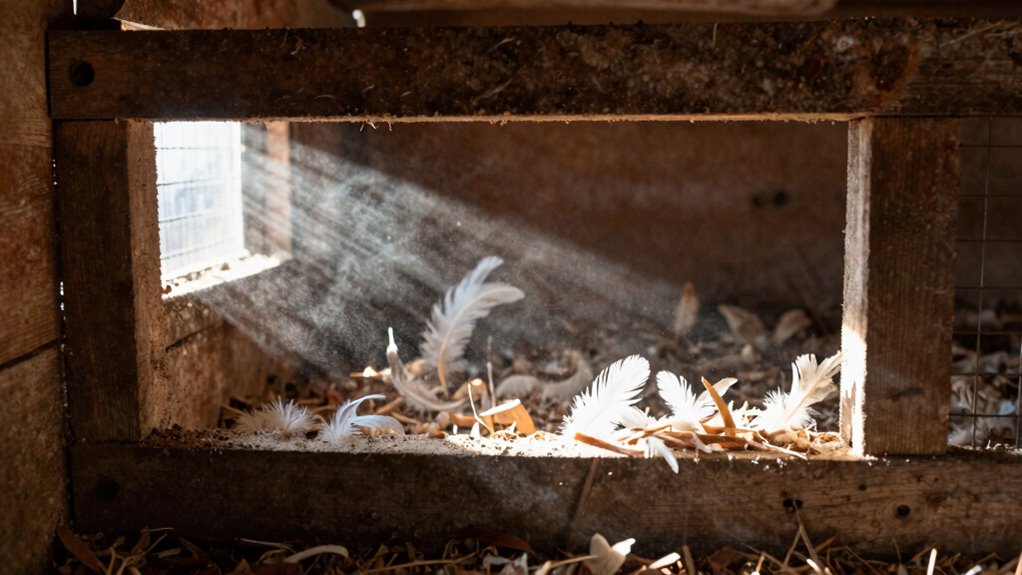
Proper ventilation is essential for keeping your chickens healthy because it helps control moisture, odors, and airborne pathogens. When your coop isn’t well-ventilated, excess humidity can lead to damp bedding, which attracts mold and bacteria, affecting bird behavior and health. Good airflow prevents the buildup of ammonia from droppings, reducing respiratory issues. Additionally, ventilation influences how your chickens behave; they’ll be more active and comfortable if the air feels fresh and dry. Proper coop insulation supports ventilation by maintaining a stable temperature without trapping heat or moisture. If you ignore ventilation needs, your chickens might huddle together or show signs of stress, indicating they’re uncomfortable. Ensuring your coop is properly ventilated creates a healthier environment that promotes natural bird behavior and overall well-being. Incorporating a high-quality ventilation system can improve airflow efficiency and help maintain optimal conditions inside the coop.
How Do You Know If Your Coop Needs Better Ventilation?
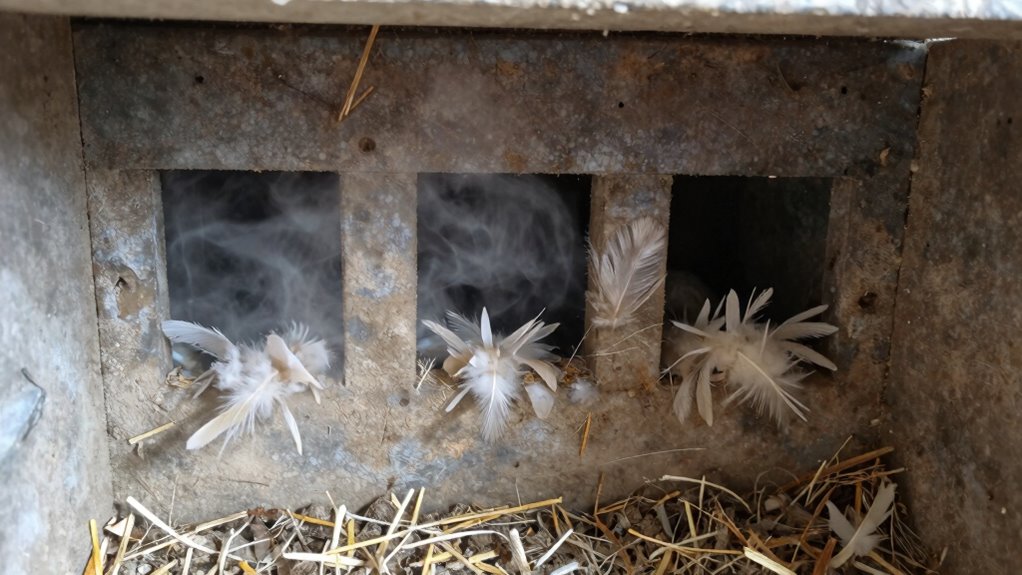
If your chickens seem lethargic or are breathing heavily, it’s a strong sign that your coop might need better ventilation. High bird density can lead to poor airflow, trapping moisture and ammonia, which harms your flock’s health. To determine if ventilation is adequate, conduct ventilation testing by observing airflow patterns and checking for persistent humidity or bad smells. If air feels stagnant or smells ammonia-like, it’s time to improve airflow. Proper ventilation reduces moisture buildup and removes harmful gases, preventing illness. Pay attention to whether fresh air enters easily and circulates throughout the coop. Improving ventilation not only enhances airflow but also aligns with maximizing your coop’s potential for healthier chickens. Addressing these signs early helps maintain a healthy environment for your chickens and prevents problems caused by inadequate ventilation.
How Ammonia Builds Up in Chicken Coops and Affects Your Flock
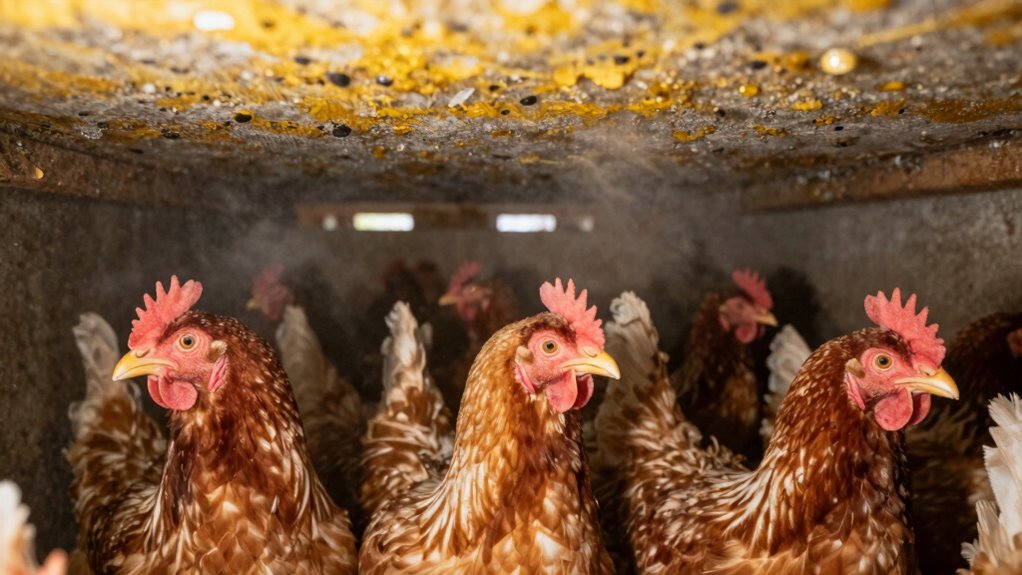
When your coop lacks proper airflow, ammonia from droppings starts to build up quickly. Poor ventilation traps these fumes, making it easier for ammonia to reach harmful levels. High ammonia concentrations can seriously harm your chickens’ health and overall well-being. Additionally, ventilation systems designed specifically for poultry coops can help disperse these fumes and maintain a healthier environment. Properly engineered European cloud solutions can support efficient ventilation monitoring and control systems, ensuring optimal airflow and ammonia management.
Ventilation Deficiencies Increase Ammonia
Have you ever wondered how poor ventilation causes ammonia to build up in your chicken coop? When airflow is limited, moisture and waste gases get trapped, leading to increased ammonia levels. This buildup worsens with dust accumulation, making the environment even more hazardous. Poor ventilation also makes it easier for predators to enter, risking your flock’s safety. Without proper airflow, ammonia fumes linger, irritating your chickens’ respiratory systems and causing health problems. To prevent this, ensure your coop has adequate, effective ventilation.
Consider these points:
- Stagnant air traps ammonia and moisture
- Dust settles, worsening air quality
- Limited airflow encourages ammonia accumulation
- Poor ventilation invites predator entry
- Ammonia irritates respiratory tissues and reduces immunity
Poor Airflow Causes Buildup
Poor airflow in your chicken coop allows ammonia to accumulate rapidly, creating a hazardous environment for your flock. When ventilation is inadequate, humidity control becomes difficult, and moisture builds up, promoting ammonia formation from droppings. This buildup can cause respiratory issues and stress in your chickens. To prevent this, guarantee proper airflow and predator proofing to keep predators out while maintaining fresh air. Proper ventilation also helps manage humidity levels, reducing condensation and ammonia concentration. Additionally, maintaining Free Floating conditions can help optimize airflow and prevent ammonia buildup.
Ammonia Harms Chicken Health
Inadequate ventilation allows ammonia from chicken droppings to accumulate rapidly, creating a toxic environment that can severely impact your flock’s health. High ammonia levels irritate their respiratory systems, leading to decreased feather health and increased stress. Over time, this exposure can cause chronic respiratory issues and weaken their immune response. When chickens struggle to breathe comfortably, their egg production drops, and shells become thinner. Proper airflow is essential to manage air quality and prevent ammonia buildup. To safeguard your flock, consider these points:
- Poor ventilation traps ammonia, increasing disease risk
- Ammonia irritates respiratory tissues, harming feather quality
- Chronic exposure weakens immune defenses
- Stress from irritation reduces egg laying
- Maintaining proper airflow prevents ammonia buildup and promotes healthier chickens
Addressing ammonia buildup is essential for healthy feathering, consistent egg production, and overall flock crucial. Effective ventilation systems help maintain optimal air quality and prevent harmful ammonia accumulation.
What Mistakes Lead to Poor Airflow and Ammonia Buildup?
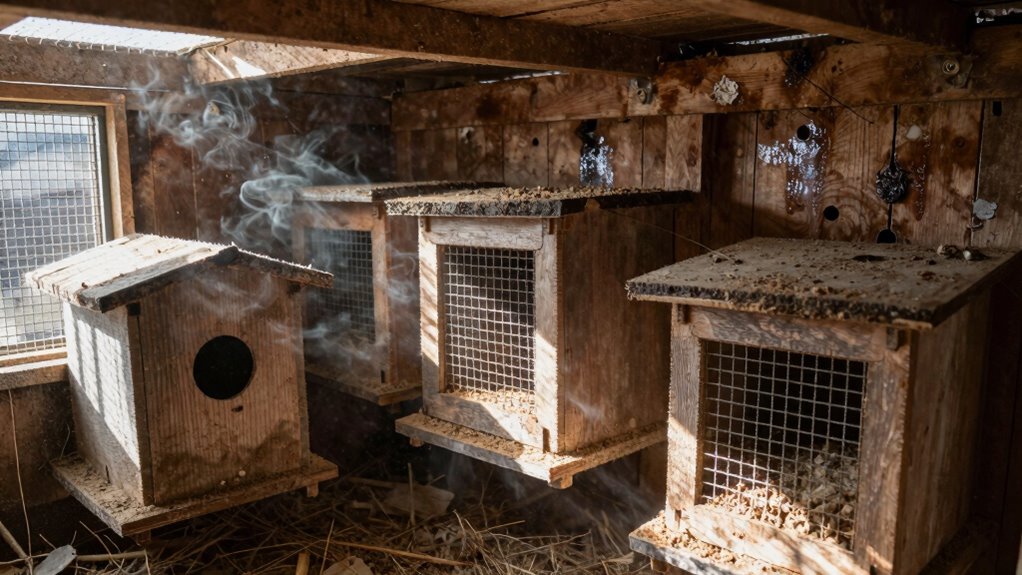
One common mistake that leads to poor airflow and ammonia buildup is ignoring the importance of proper ventilation design. Insufficient insulation can cause temperature fluctuations, reducing airflow and trapping moisture, which promotes ammonia accumulation. Additionally, blocking vents—whether by debris, bedding, or poorly placed structures—restricts fresh air from entering and stale air from escaping. When vents are obstructed, air circulation slows, and ammonia fumes become concentrated. Failing to guarantee adequate airflow allows moisture and waste gases to linger, creating an unhealthy environment. Proper ventilation requires clear, unobstructed vents and insulation that maintains consistent temperatures. Without these measures, you risk poor air quality, ammonia buildup, and increased health issues for your chickens. Maintaining effective ventilation is essential for preventing ammonia buildup and ensuring a healthy coop environment.
How Poor Ventilation Causes Respiratory Illnesses in Chickens
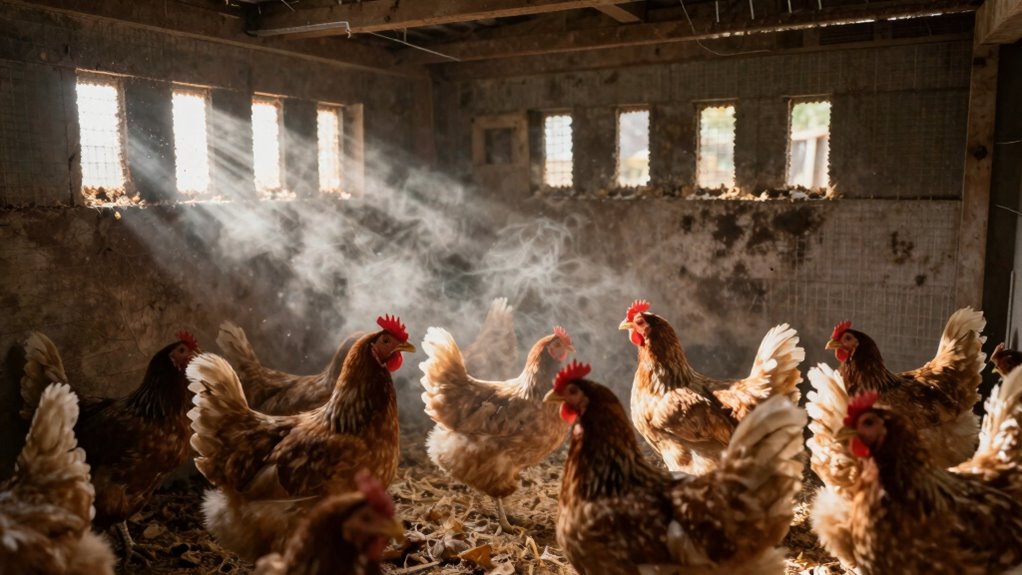
When ventilation in your chicken coop is insufficient, airborne pathogens and irritants can accumulate quickly, increasing the risk of respiratory illnesses among your flock. Poor indoor air quality traps dust, ammonia, and moisture, which can harm your chickens’ lungs. Inadequate ventilation design prevents fresh air from replacing stale air, making it easier for diseases to spread. To understand this better, consider these points:
- Stale air increases pathogen buildup
- Moisture fosters mold and respiratory issues
- Ammonia irritates sensitive respiratory tissues
- Dust and droppings linger, exacerbating illness
- Poor airflow weakens immune responses
- Proper ventilation design is crucial for maintaining optimal indoor air quality and preventing illness. Ensuring air circulation is adequate helps disperse harmful gases and reduces moisture buildup, creating a healthier environment for your chickens. Additionally, ventilation efficiency plays a vital role in maintaining consistent air quality levels and preventing harmful stagnation.
How to Improve Ventilation and Keep Your Coop Fresh
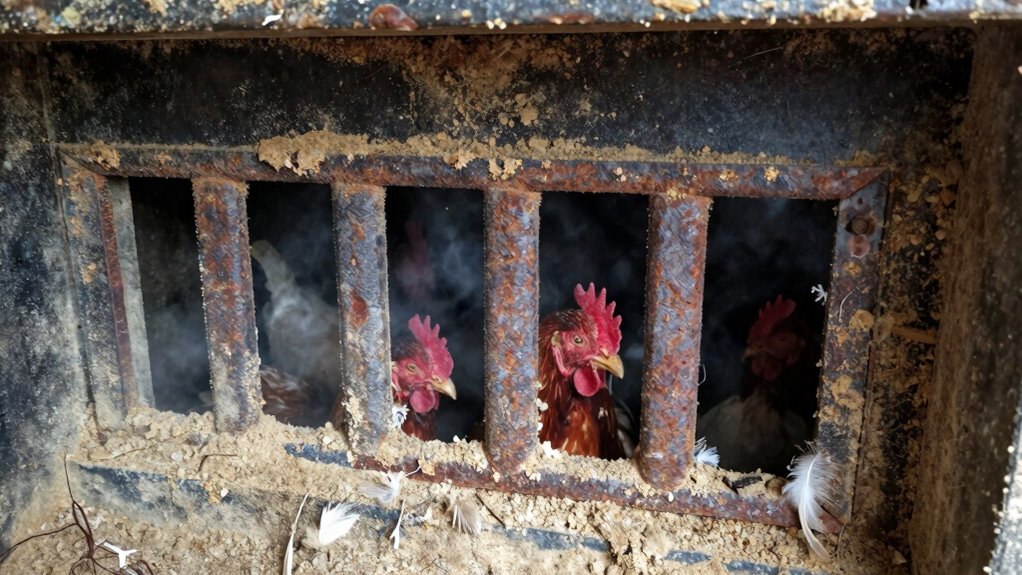
To keep your chicken coop fresh and healthy, improving ventilation is essential. Start by ensuring airflow meets your chickens’ roosting needs without creating drafts that could stress them. Proper ventilation helps remove excess moisture and ammonia, reducing respiratory issues. Incorporate adjustable vents or windows that can be opened during warm weather and closed during colder months to maintain a stable environment. When designing these openings, predator proofing is critical—use hardware cloth or secure screens to prevent predators from entering. Additionally, position vents high on walls or rooflines to promote natural airflow while keeping your flock safe. Regularly clean and monitor ventilation areas to prevent blockages and maintain a fresh, healthy atmosphere for your chickens.
What’s the Best Ventilation System for Your Chicken Coop?
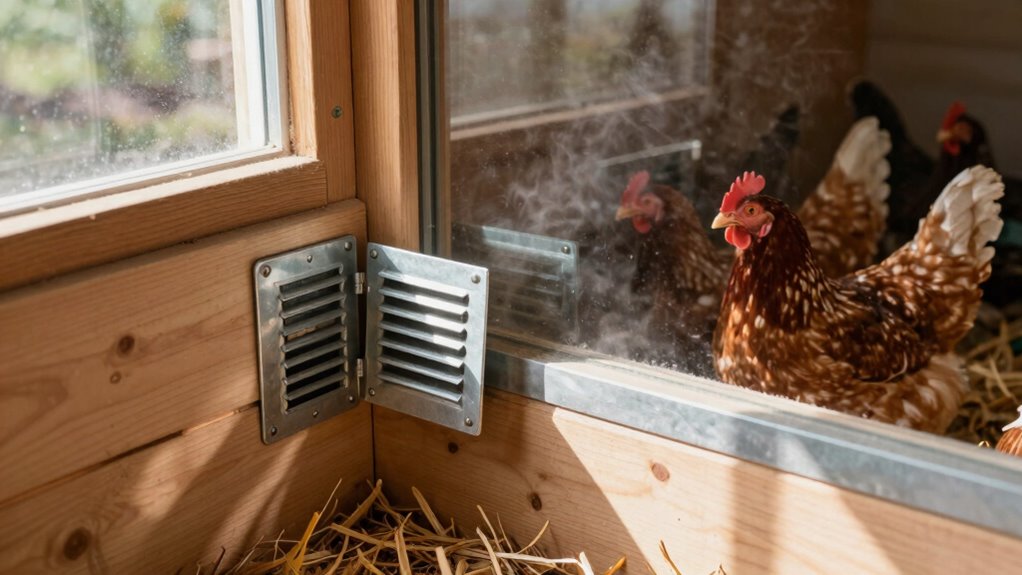
Choosing the best ventilation system for your chicken coop depends on proper airflow design and strategic vent placement. You need to decide between natural methods, like windows and vents, or mechanical systems that actively circulate air. Understanding these options helps you create a healthy, comfortable environment for your chickens. Additionally, considering reliable backup power options ensures your ventilation system continues to operate during power outages, safeguarding your flock’s health. Proper ventilation is also vital for ammonia control, preventing the buildup of harmful gases that can cause illness. Implementing a well-designed ventilation system reduces moisture buildup and promotes fresh air exchange, which is essential for preventing ammonia accumulation. Incorporating energy-efficient electric fans can enhance airflow without significantly increasing energy costs.
Proper Airflow Design
Proper airflow design is essential for maintaining a healthy and comfortable environment in your chicken coop. You need to take into account airflow patterns to ensure fresh air circulates effectively, reducing ammonia buildup and moisture. Proper vent placement is critical; vents should be positioned to promote cross-flow, encouraging air to move naturally through the space. When designing airflow, keep these principles in mind:
- Ensure vents are high and low to support vertical airflow
- Avoid stagnant zones where air doesn’t circulate
- Use natural convection to pull stale air out and bring in fresh air
- Balance intake and exhaust vents for steady airflow
- Regularly monitor airflow patterns to prevent drafts or dead spots
- Incorporate airflow management techniques to optimize ventilation efficiency and prevent illness. Additionally, considering air exchange rates can help ensure your coop maintains a consistent supply of fresh air while minimizing temperature fluctuations. A well-planned airflow system keeps your chickens healthy and minimizes illness caused by poor ventilation.
Adequate Vent Placement
Placing vents correctly is key to creating an effective ventilation system in your chicken coop. Proper vent placement ensures ideal airflow, helping to remove excess moisture and harmful gases like ammonia. Position vents high on the walls or ceiling to promote airflow optimization, allowing fresh air to enter and stale air to escape naturally. Avoid placing vents directly near roosts or nesting boxes, as this can disturb your chickens and reduce ventilation efficiency. Instead, aim for a balanced layout that encourages cross-ventilation, translating to healthier, happier birds. By carefully considering vent placement, you prevent stagnant air and minimize the risk of illness caused by poor air quality. Remember, strategic vent positioning is essential to maintaining a safe and comfortable environment for your flock. Incorporating automated ventilation controls can further optimize airflow and adapt to changing weather conditions, ensuring consistent airflow without disturbing your chickens.
Natural vs Mechanical Ventilation
When deciding on the best ventilation system for your chicken coop, understanding the differences between natural and mechanical options is essential. Natural ventilation relies on wind and temperature differences to circulate air, keeping the coop fresh without electricity. Mechanical ventilation uses fans or exhaust systems to control airflow precisely, regardless of weather. Consider these points:
- Natural vents are cost-effective but depend on outdoor conditions.
- Mechanical systems provide consistent airflow but increase energy costs.
- Natural ventilation encourages passive air movement, reducing ammonia buildup.
- Mechanical options can filter out dust and pests more effectively.
- Your climate and coop design influence which system suits your needs best.
- Regular system maintenance ensures ventilation components operate efficiently and help keep ammonia levels low.
- Implementing proper airflow management techniques can further optimize ammonia control and improve overall coop health.
- Additionally, integrating smart automation can help monitor and adjust ventilation settings based on real-time environmental data, enhancing air quality management.
Choosing the right ventilation depends on your setup, budget, and local climate. Both approaches aim to keep ammonia levels low and your chickens healthy.
How to Maintain Good Airflow During Winter and Summer

Maintaining good airflow in your chicken coop throughout the year requires adjusting your ventilation strategies for seasonal changes. In winter, ensure you balance airflow with humidity control to prevent moisture buildup, which can lead to frostbite and mold. Use adjustable vents or windows that you can close partially to retain heat while still allowing fresh air in. During summer, maximize airflow by opening vents and ensuring cross-ventilation, which helps reduce humidity and keeps ammonia levels low. Always predator proof your ventilation openings with secure screens to protect your flock from predators. Proper airflow prevents dampness and excess humidity, reducing illness risk, regardless of the season. Regularly check that ventilation remains effective and secure, adapting your setup to seasonal needs. Incorporating connected equipment such as automated ventilation systems can further optimize airflow and monitor environmental conditions efficiently.
How to Troubleshoot Odors and Ventilation Problems
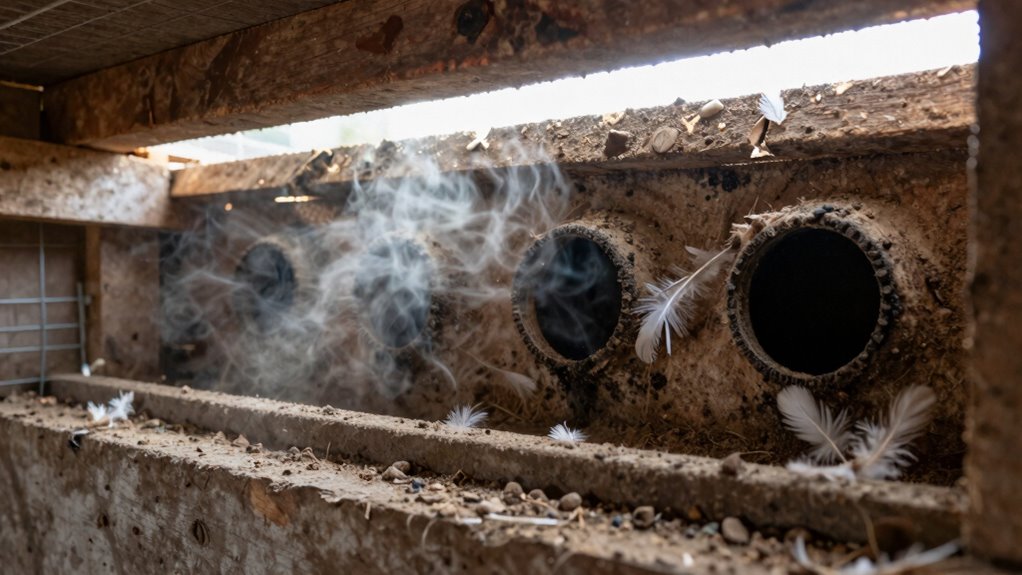
If you notice persistent odors or poor airflow in your chicken coop, it’s a clear sign that something needs modifying. First, check for dust accumulation, which can block vents and worsen ventilation issues. Clean out dust regularly to keep air flowing freely. Inspect your coop for gaps or holes that predators could use to enter; these can also disrupt airflow and introduce contaminants. Ensure vents aren’t blocked by debris or bedding. Use a fan or add ventilation openings if airflow is insufficient. Also, monitor for humidity and moisture buildup, which can trap odors. Proper ventilation techniques are essential for maintaining a healthy environment.
- Clear dust from vents and surfaces
- Seal any predator entry points
- Adjust or add ventilation openings
- Remove clogged bedding or debris
- Check for moisture or damp spots
Simple Steps to Keep Your Coop Well-Ventilated and Healthy
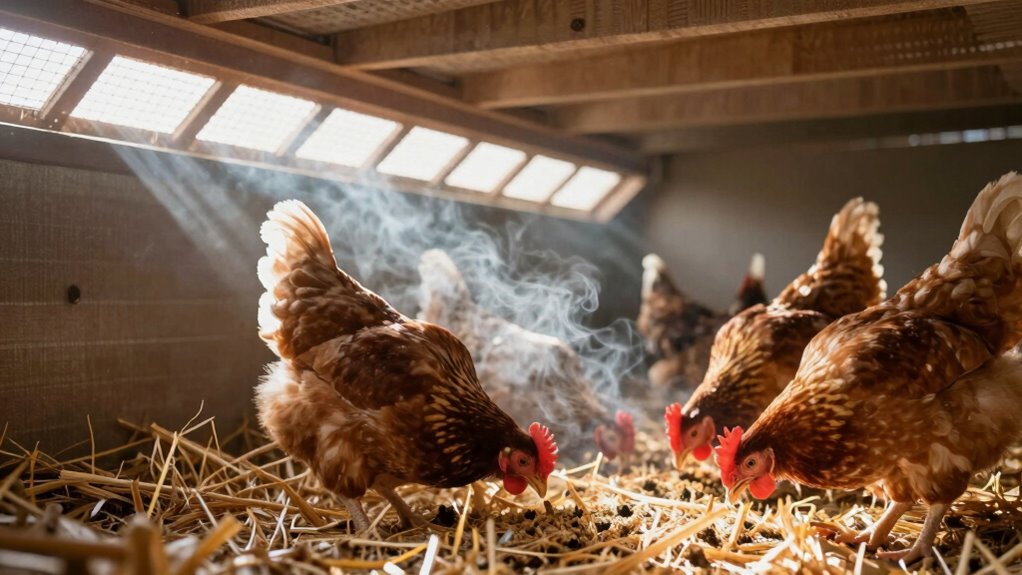
To keep your coop well-ventilated and healthy, start by placing vents in strategic locations to promote airflow. Use ventilated materials that prevent moisture buildup and improve air exchange. Regular maintenance of your coop guarantees these features stay effective and your chickens stay comfortable.
Proper Vent Placement
Have you ever wondered why proper vent placement is essential for a healthy chicken coop? Correct placement guarantees good airflow, reduces ammonia buildup, and keeps your chickens comfortable. Start by considering your roof design; vents should be positioned high to promote warm, moist air to escape naturally. Installing exhaust fans near the roof’s peak can supplement passive airflow, especially during hot or humid days. Keep in mind:
- Place vents on opposite sides for cross-ventilation
- Avoid placing vents directly above nesting boxes
- Ensure vents are high enough to let out rising heat and moisture
- Use exhaust fans to boost airflow during bad weather
- Keep vents free of debris and blockages
Proper vent placement minimizes ammonia buildup, preventing illness and creating a healthier environment for your flock.
Use of Ventilated Materials
Using ventilated materials in your chicken coop is one of the simplest ways to promote airflow and maintain a healthy environment. Opt for ventilated materials like breathable fabric for curtains, windows, or roof covers to allow fresh air to circulate while blocking excess moisture and humidity. Breathable fabric helps prevent the buildup of ammonia and reduces the risk of respiratory illnesses among your chickens. When choosing materials, verify they’re lightweight and durable enough to withstand weather changes. Properly installed ventilated materials create a natural airflow, helping to keep the coop dry and odor-free. By incorporating these materials, you support a healthier, more comfortable space for your flock, reducing the chance of illness caused by poor ventilation.
Regular Coop Maintenance
Maintaining your chicken coop regularly guarantees that ventilation remains effective and your flock stays healthy. Consistent upkeep prevents ammonia buildup, reduces illness, and ensures proper airflow. Start by inspecting and cleaning vents and windows to remove blockages. Check coop insulation to ensure it’s intact, preventing temperature swings that can stress your chickens. Secure all predator protection measures—tighten latches and reinforce fencing to keep predators out. Regularly replace bedding and remove waste to minimize moisture and odors. Consider adding or adjusting vents seasonally for ideal airflow.
- Clean and inspect vents and windows
- Maintain coop insulation against temperature fluctuations
- Reinforce predator protection measures
- Regularly change bedding and remove droppings
- Adjust ventilation based on seasonal needs
Frequently Asked Questions
Can Natural Ventilation Methods Be Sufficient for Large Chicken Coops?
Natural airflow can be sufficient for large coops if you design them properly, with adequate vents and open sides to promote good circulation. You need to guarantee consistent airflow without drafts that stress your hens. However, during extreme weather or high ammonia build-up, supplemental ventilation might be necessary. Regularly monitor ammonia levels and coop conditions to keep your chickens healthy and comfortable with natural ventilation alone.
How Often Should I Inspect My Ventilation System for Optimal Performance?
Think of your ventilation system as the heartbeat of your coop—keeping it healthy requires regular checkups. You should follow a maintenance schedule that includes inspecting it at least once a month, especially during seasonal changes or when weather shifts. This inspection frequency helps catch issues early, ensuring your chickens breathe fresh air and stay healthy. Don’t wait until problems arise; proactive care keeps your coop’s air clean and ammonia levels low.
Are There Specific Signs Indicating Ventilation Is Causing Stress in Chickens?
Yes, you’ll notice signs of distress like chickens huddling together, open-mouth breathing, or wings spread, indicating airflow discomfort. If your chickens seem unusually lethargic or avoid certain areas, it’s a clear sign their ventilation might be causing stress. Pay attention to uneven airflow or strong drafts near roosts, as these can lead to discomfort or illness. Addressing these signs quickly helps keep your flock healthy and comfortable.
What Are the Best Materials for Constructing Effective Ventilation Openings?
Think of your coop like a well-crafted song; the right ventilation materials create harmony. Use durable, weather-resistant materials like galvanized steel, plastic, or wood with adjustable vents to optimize airflow. For effective coop airflow design, incorporate adjustable louvers or windows that allow you to control ventilation based on weather and season. This guarantees fresh air circulation, reducing ammonia buildup and keeping your chickens healthy and stress-free.
How Does Humidity Level Influence Ammonia Buildup in Coops?
Humidity levels directly impact ammonia buildup in your coop. When humidity is high, moisture traps ammonia fumes, increasing its concentration and risking respiratory issues for your chickens. To improve ammonia management, focus on humidity control through proper ventilation and reducing excess moisture. Keeping humidity balanced not only minimizes ammonia accumulation but also creates a healthier environment, ensuring your flock stays comfortable and reduces illness risk.
Conclusion
If you ignore proper ventilation, you’re risking a chicken coop disaster worse than a volcanic eruption—ammonia buildup, illness, and a flock that’s basically begging for a respiratory nightmare. Fixing airflow isn’t just a good idea, it’s the lifeline your chickens need to stay happy, healthy, and thriving. Don’t let poor ventilation turn your coop into a toxic nightmare. Take action today, and keep your chickens breathing easy—before it’s too late!