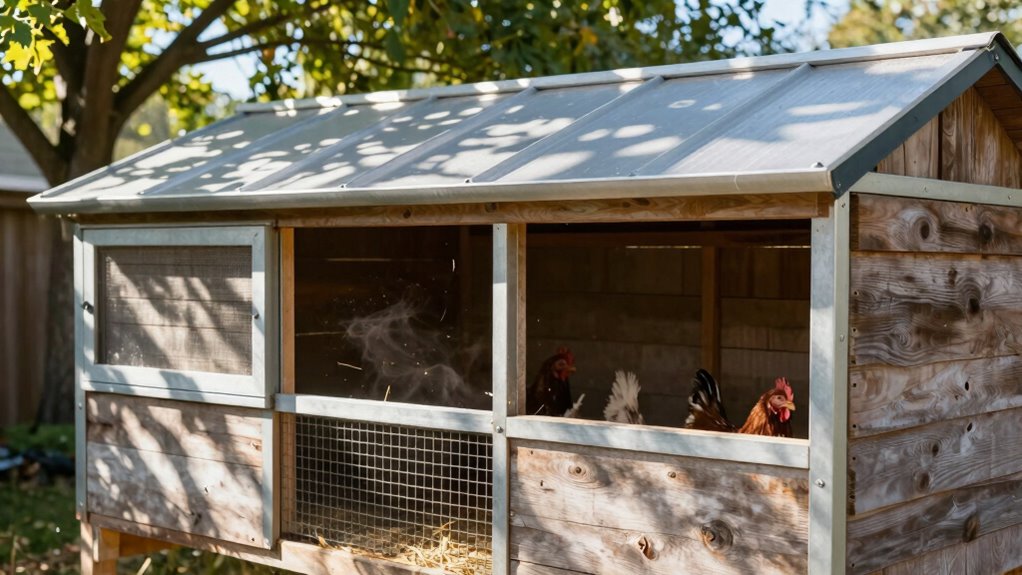

Balancing proper coop ventilation with avoiding drafts is key to keeping your chickens healthy. You want enough airflow to remove moisture, ammonia, and stale air, but not so much that it creates chilly gusts that stress or chill your flock. Position high vents for natural air escape and use adjustable options to control airflow seasonally. Pay close attention to how your coop feels—if you’re unsure, exploring these tips further will help you create a safe, comfortable environment.

Get garden gear delivered free with Prime
- Fast, free delivery on millions of items
- Prime Video, Amazon Music and more included
- Member-only deals all year
Key Takeaways
- Proper ventilation ensures fresh air and moisture control without creating direct drafts on chickens.
- Place vents high on walls to allow warm, moist air to escape while avoiding chilling breezes.
- Use adjustable or sealed vents to balance airflow seasonally and prevent cold drafts in winter.
- Regularly inspect and maintain vents to ensure effective airflow and prevent obstructions.
- Achieving optimal airflow involves controlling draft risk while promoting good indoor air quality.

Proper ventilation is essential for a healthy chicken coop, but it’s easy to mistake good airflow for drafts that can harm your flock. You want fresh air circulating through the space to maintain good indoor air quality, which helps reduce moisture buildup and prevents respiratory issues. At the same time, excessive drafts can make your chickens cold and stressed, increasing their risk of illness. Striking the right balance means understanding how to promote airflow without creating chilly gusts that could harm your birds. When designing your coop, consider vents placed high on the walls or near the roof, where warm, moist air naturally rises and escapes. This setup ensures fresh air enters and stale air exits without creating direct drafts that can chill your chickens. You’ll also want to regularly check that these vents are unobstructed and properly sealed during cold weather to prevent unwanted cold air from sneaking in. Using proper ventilation techniques can help maintain a comfortable environment and prevent moisture problems. Additionally, incorporating seasonal adjustments can optimize airflow as weather conditions change throughout the year.
Maintaining good indoor air quality isn’t just about comfort; it’s a key factor in keeping your flock healthy and productive. Poor air quality can lead to respiratory problems, which can spread quickly among your chickens. Proper ventilation helps remove ammonia fumes from droppings and excess moisture from the coop, reducing the risk of infection and disease. But be cautious—if your ventilation system isn’t carefully designed, you might inadvertently create drafts that stress your birds or make them more susceptible to cold-related illnesses. You can use adjustable vents or small windows with adjustable openings to control airflow based on the season. This way, you can maximize fresh air intake while minimizing the potential for drafts. Ensuring proper coop ventilation is also vital for preventing moisture buildup and creating a healthier environment for your flock. Regularly inspecting and maintaining your ventilation system helps ensure its effectiveness and keeps your chickens comfortable year-round. Understanding air circulation and its role in regulating temperature and humidity levels is essential for promoting overall flock health.
As an affiliate, we earn on qualifying purchases.
Frequently Asked Questions
How Often Should I Clean My Coop’s Ventilation System?
You should clean your coop’s ventilation system at least once every three to four months to maintain proper ventilation maintenance. Regular cleaning guarantees that coop airflow remains unobstructed and healthy for your chickens. Check vents and filters for dust, debris, or cobwebs, and clear them out. Consistent upkeep prevents drafts and promotes fresh air circulation, keeping your flock comfortable and reducing respiratory issues.
Can Too Much Ventilation Harm My Chickens?
Too much ventilation can harm your chickens by creating excessive drafts that lead to stress and health issues. While good ventilation improves airflow and prevents moisture buildup, it’s essential to balance it for draft prevention. Make certain your coop has proper ventilation efficiency without causing strong drafts. Properly positioned vents and adjustable windows help you maintain this balance, keeping your chickens comfortable and healthy while avoiding the negative effects of over-ventilation.
What Materials Are Best for Coop Vents?
You should choose vent materials like metal, plastic, or wood with proper weatherproofing for durability. A good ventilation design combines adjustable vents or windows that allow airflow without creating drafts. Use hardware cloth or fine mesh to prevent predators while ensuring proper air exchange. The key is balancing ample ventilation with draft prevention, so your chickens stay comfortable and healthy without risking chilling or stress from excessive airflow.
How Do I Detect if My Coop Has Drafts?
Think of your coop as a ship steering through the delicate waters of ventilation maintenance and draft prevention. To detect drafts, feel around windows, vents, and doors for cold spots or gusts of air. Use a lit candle or incense stick; if the smoke flickers or moves, there’s a draft. Regularly checking these areas helps you maintain proper airflow without letting cold air seep in, ensuring your chickens stay cozy and healthy.
Are There Seasonal Adjustments for Ventilation and Drafts?
Yes, you should adjust ventilation seasonally. In colder months, add insulation to minimize drafts and retain heat, while still allowing fresh air to circulate. During warmer seasons, increase ventilation timing to prevent overheating and moisture buildup. Monitor your coop regularly, ensuring it stays well-ventilated without creating drafts that could stress your chickens. Proper seasonal adjustments help maintain a healthy, comfortable environment year-round.
As an affiliate, we earn on qualifying purchases.
Conclusion
So, next time you’re fussing over those perfect ventilation spots, remember: a little draft might actually be your coop’s secret weapon. Ironically, in trying to keep your flock cozy, you could be overdoing it and turning your backyard haven into an unintentional wind tunnel. Sometimes, the best balance isn’t about sealing every crack but letting just enough air flow to keep things comfy. After all, a little breeze might just be the best thing for your chickens’ health—and your peace of mind.
As an affiliate, we earn on qualifying purchases.
As an affiliate, we earn on qualifying purchases.
Halloween Picks
halloween
As an affiliate, we earn on qualifying purchases.