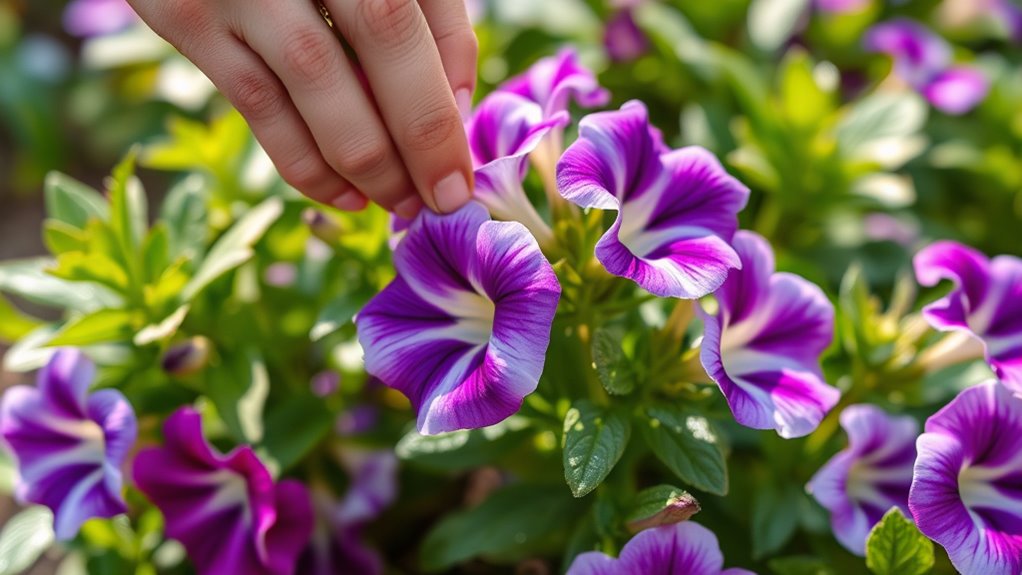

To keep your plants blooming continuously, deadhead regularly by removing faded flowers before they set seed. This process redirects the plant’s energy into producing new blooms and prevents seed formation that can slow down flowering. Use pruning shears or your fingers to cut just below the spent flower, ensuring you don’t damage healthy stems. Consistent deadheading, especially during peak seasons, boosts vibrancy and plant health—continue your efforts to maximize garden beauty.
Key Takeaways
- Deadhead flowers promptly to encourage new blooms and prolong the flowering season.
- Use clean pruning tools to cut just below faded flowers without damaging healthy growth.
- Remove spent blossoms before seed production begins to redirect energy toward new flower development.
- Regular deadheading during peak blooming periods maintains garden vibrancy and prevents pest buildup.
- Incorporate deadheading into routine garden maintenance to support continuous, healthy flowering.
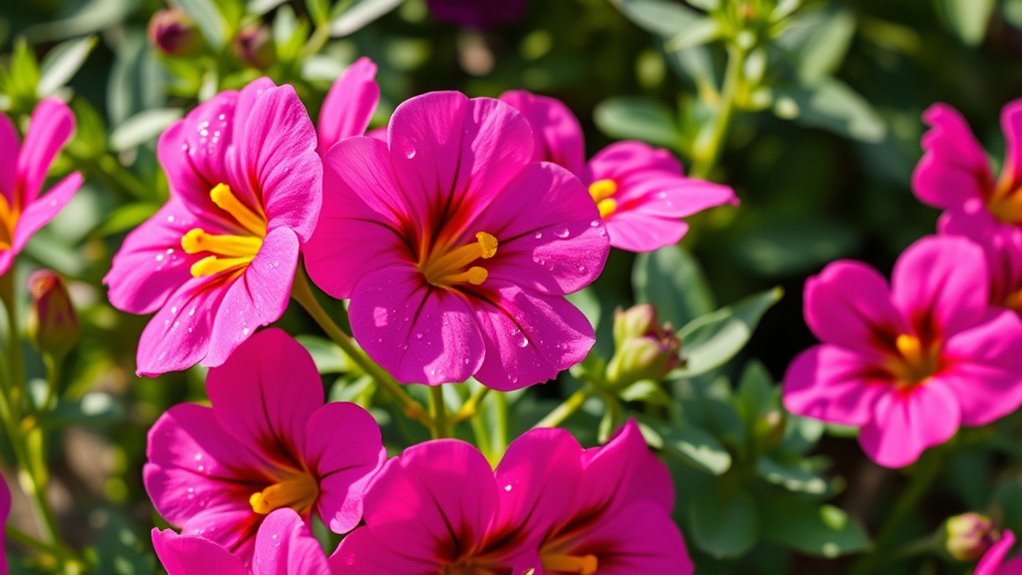
Have you ever wondered how some gardens burst with vibrant blooms year after year? The secret often lies in your plant maintenance routine, specifically how you manage flowering cycles through deadheading. Deadheading is more than just removing spent flowers; it’s a crucial process that encourages your plants to produce new blooms continuously. When you keep up with this simple task, you’re effectively telling your plants to stay in their prime, extending their flowering period and keeping your garden lively and colorful.
Understanding your plants’ flowering cycles helps you time your deadheading efforts perfectly. Most flowering plants have a natural cycle where they produce blooms, then fade as seed production begins. This is the ideal moment to deadhead — by removing the faded flowers, you prevent the plant from shifting its energy toward seed production. Instead, it redirects that energy into producing new flowers, which keeps your garden looking fresh and vibrant. This not only prolongs the display but also ensures your plants remain healthy by preventing the buildup of old, decaying blooms that can harbor pests or diseases.
When you deadhead, you’re practicing active plant maintenance that pays off in continuous beauty. Use pruning shears or your fingers to snip just below the spent flower, ideally cutting back to a set of healthy leaves or buds. Be careful not to damage the plant’s main stem or healthy growth points. Regular deadheading, especially during peak blooming seasons, keeps your plants in a constant state of renewal. This is especially important for annuals and perennials that are designed to bloom repeatedly throughout the season. By staying attentive to your plants’ flowering cycles, you can encourage a steady stream of vibrant blossoms, making your garden a true eye-catcher. Additionally, deadheading promotes plant health by reducing the risk of disease and encouraging vigorous growth.
Furthermore, deadheading can improve the overall health of your plants. Removing dead or dying flowers prevents the spread of diseases and reduces the risk of fungal issues. It also discourages your plants from diverting energy into seed production, which can weaken their overall vigor. With consistent plant maintenance, including deadheading, your garden becomes a well-managed space where flowers thrive without gaps or dead patches. Plus, this routine gives you an opportunity to inspect your plants for pests or issues that may require attention, helping you catch problems early.
Frequently Asked Questions
Which Plants Benefit Most From Deadheading?
You benefit most from deadheading plants like roses, marigolds, and petunias, as it extends their flower lifespan and encourages continuous blooms. By removing spent flowers, you prevent seed production, which signals the plant to focus energy on new growth and more flowers. Deadheading keeps your garden vibrant longer, ensuring you enjoy a steady display of blooms and maximizing your garden’s visual appeal throughout the season.
When Is the Best Time to Deadhead?
You should deadhead plants when their flowers begin to fade or wilt, which is the best time for pruning timing and flower removal. Investigating this, experts agree that removing spent blooms encourages new growth and prolongs flowering. Don’t wait too long, as leaving faded flowers can signal the plant to stop blooming. Act promptly, ideally just after flowers fade, to keep your garden vibrant and thriving.
How Do Deadheading Tools Vary?
Deadheading tools vary mainly in size and precision. Pruning shears are ideal for larger, woody stems, providing clean cuts and stability. Flower snips are perfect for delicate, smaller blooms, allowing you to trim with accuracy. You use pruning shears for tougher deadheading tasks and flower snips for more delicate flowers, ensuring your plants stay healthy and continue blooming. Choosing the right tool makes deadheading easier and more effective.
Can Deadheading Prevent Plant Diseases?
Yes, deadheading can help prevent plant diseases by removing dead or decaying flowers that attract pests and pathogens. When you regularly deadhead, you improve plant health and reduce the risk of disease spread. This maintenance practice keeps your plants healthier, making them less vulnerable to infections. By staying vigilant and deadheading promptly, you support disease prevention and guarantee your garden stays vibrant and thriving.
Is Deadheading Necessary for All Flowering Plants?
You don’t need to deadhead all flowering plants, but it can be a real game-changer. Deadheading is a pruning technique that encourages continuous bloom and supports plant health by preventing disease and decay. For some plants, it’s essential to keep them looking their best, while others naturally drop their blooms. Know your plants’ needs, and you’ll master the art of deadheading like a pro!
Conclusion
By deadheading regularly, you can enjoy continuous blooms all season long. It’s a simple task that keeps your garden vibrant and healthy. Did you know that deadheading can boost flowering by up to 50%? That means more colorful blossoms and less wasted energy for your plants. So grab your pruning shears, stay consistent, and watch your garden thrive with nonstop beauty. Your efforts will definitely pay off with lush, ongoing blooms!