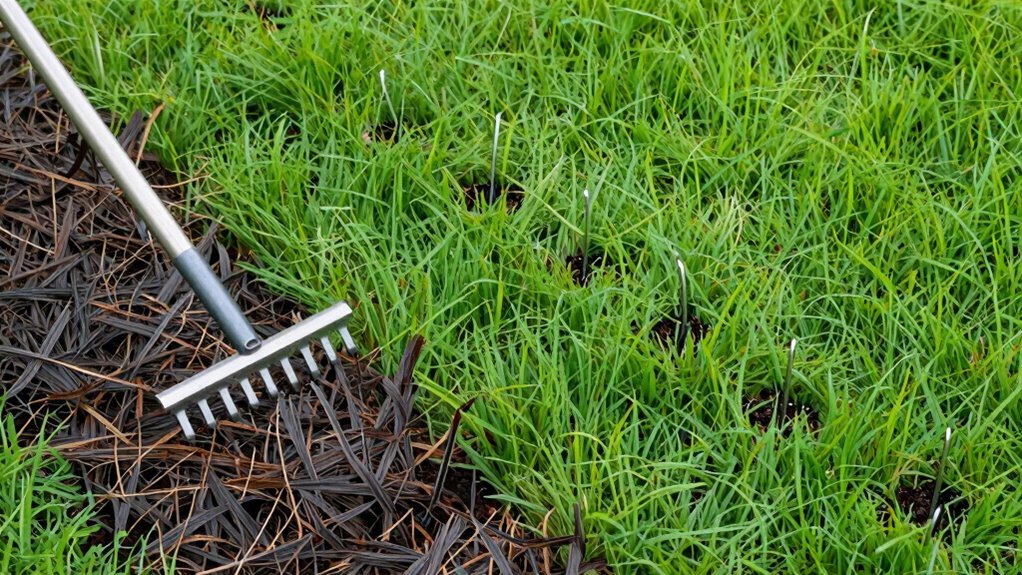

Knowing whether your lawn needs dethatching or aerating depends on its condition. If you notice a thick thatch layer over ½ inch, poor water absorption, or patches that resist fertilizing, dethatching is likely needed. If your soil feels hard, water pools, or it’s hard for roots to grow, aerating can help. Choosing the right approach improves your lawn’s health. Keep exploring to find out how to do it properly for a lush, thriving yard.
Key Takeaways
- Dethatching removes a thick layer of dead grass and roots, improving soil contact; aerating loosens compacted soil for better root growth.
- Use dethatching when thatch exceeds ½ inch; choose aeration if the soil is hard or water pools after rain.
- Dethatching targets organic buildup; aerating alleviates soil compaction and enhances airflow and water penetration.
- Both practices are best performed during early spring or fall for optimal lawn recovery.
- Assess your lawn’s specific issues—thatch buildup or soil compaction—to determine whether dethatching or aerating is needed.

Walensee Thatch Rake, 15-Inch Lawn Thatching Rake, Robust Dethatcher Rake, Efficient Steel Metal Rake with Handle, Versatile Grass Grooming Rake for Cleaning Dead Grass, Yard Garden Durable Soil Rake
Maintaining Lawn Health and Aesthetics: The Walensee Thatch Rake is designed to effectively remove thatch layers, and it…
As an affiliate, we earn on qualifying purchases.
As an affiliate, we earn on qualifying purchases.
How to Tell if Your Lawn Needs Dethatching or Aerating
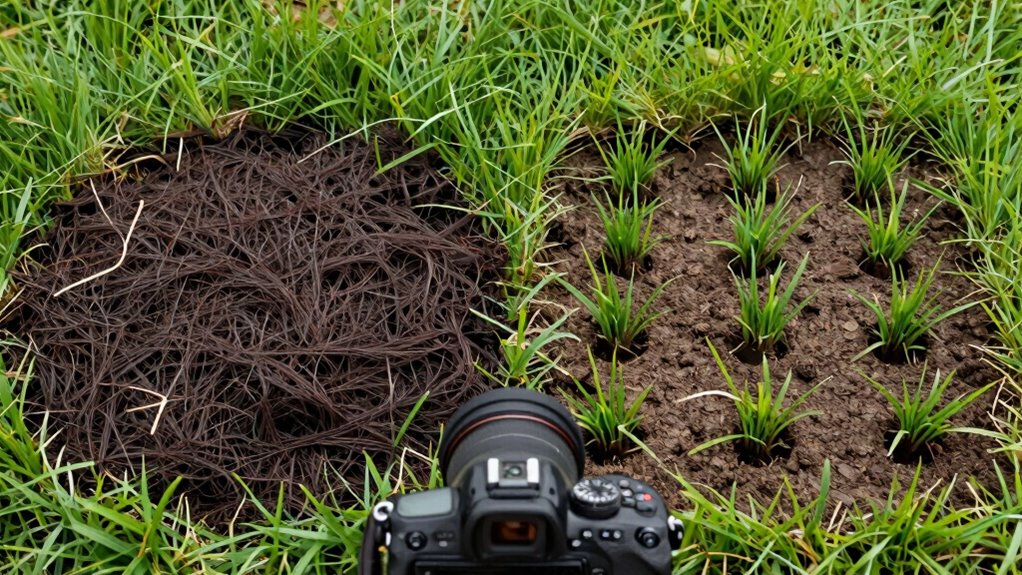
Wondering if your lawn needs dethatching or aerating? One key sign is soil compaction, which prevents roots from accessing air, water, and nutrients. If your grass feels hard or resists being dug into, it’s a sign the soil is compacted. Additionally, thatch buildup—layers of dead grass and roots—can block water and nutrients from reaching the soil. To check, remove a small section of turf and examine what’s underneath. If you see more than half an inch of thatch or notice that the soil feels dense and crusty, it’s time to contemplate dethatching or aerating. These issues hinder healthy grass growth and can make your lawn vulnerable to drought and disease. Recognizing these signs helps you determine the right lawn care step to take. Proper soil aeration in your lawn’s soil and grass can also contribute to healthier growth and appearance. For effective lawn care, understanding the difference between dethatching and aerating is crucial for maintaining a vibrant, healthy yard. Additionally, using appropriate tools can make the process more efficient and effective.

WEN DT1516 16-Inch 15-Amp 2-in-1 Electric Dethatcher and Scarifier with Collection Bag, Black
5-position height adjustment ranges from a +1/4 to -1/2-inch raking depth
As an affiliate, we earn on qualifying purchases.
As an affiliate, we earn on qualifying purchases.
Signs That Indicate You Should Dethatch Your Lawn
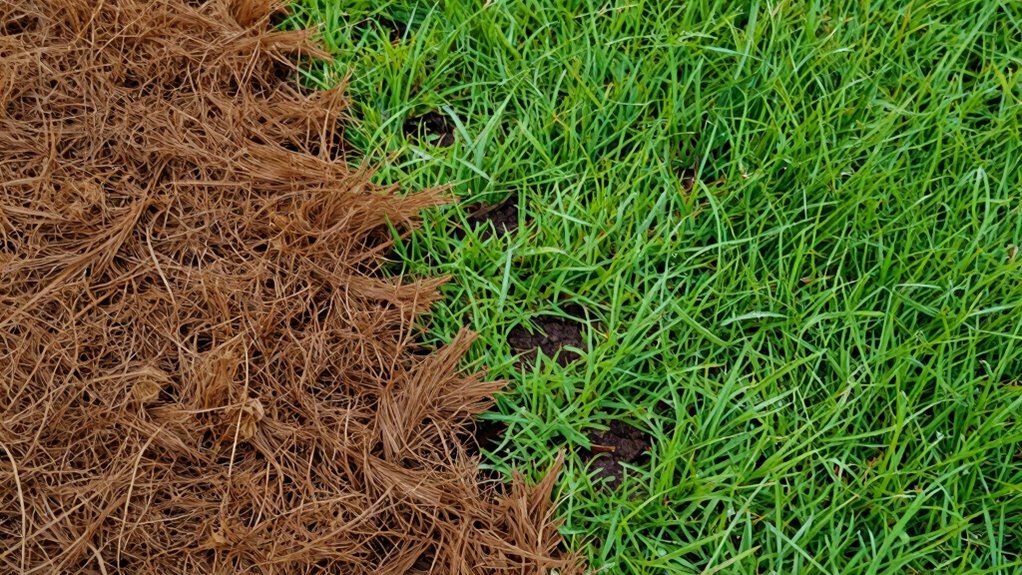
If your lawn’s health is declining despite regular watering and fertilizing, it might be a sign that dethatching is needed. Look for these indicators:
- A thick layer of thatch (over ½ inch) prevents water and nutrients from reaching roots.
- Persistent lawn disease that worsens despite treatment, often thriving in the thatch layer.
- Frequent pest infestation, which can hide within the thatch and damage turf.
- Poor grass recovery after mowing, with patches that feel spongy or depression-resistant.
These signs suggest that the thatch buildup is blocking essential elements for healthy grass. Dethatching can help reduce lawn disease and eliminate pest habitats, improving overall lawn vigor.
Walensee Thatch Rake, 15-Inch Lawn Thatching Rake, Robust Dethatcher Rake, Efficient Steel Metal Rake with Handle, Versatile Grass Grooming Rake for Cleaning Dead Grass, Yard Garden Durable Soil Rake
Maintaining Lawn Health and Aesthetics: The Walensee Thatch Rake is designed to effectively remove thatch layers, and it…
As an affiliate, we earn on qualifying purchases.
As an affiliate, we earn on qualifying purchases.
When and Why to Aerate Your Lawn
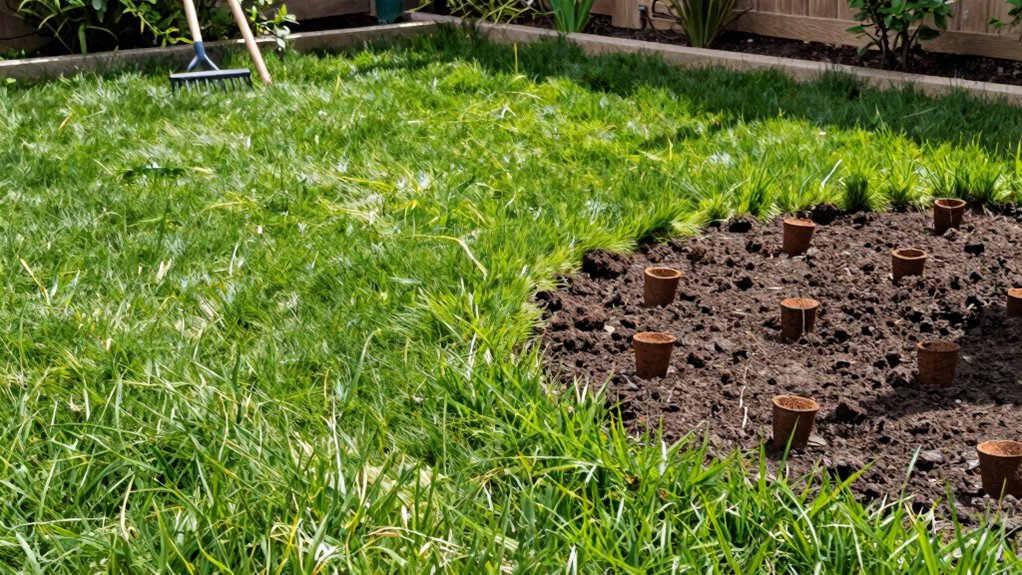
Aeration is most beneficial when your lawn shows signs of soil compaction or poor drainage, which can hinder root growth and nutrient uptake. If the soil feels hard or water pools after rain, it’s a clear indicator you need to aerate. Regular aeration helps loosen compacted soil, allowing air, water,, and nutrients to reach the roots more effectively. Consider aerating during the growing season, typically in spring or fall, when your grass is actively growing. Adjust your watering schedule accordingly; avoid overwatering before aeration, as moist soil is easier to penetrate. Proper aeration reduces thatch buildup and improves overall lawn health, especially if your soil has become dense from foot traffic or heavy equipment use. Additionally, integrating soil health management practices can enhance the benefits of aeration.
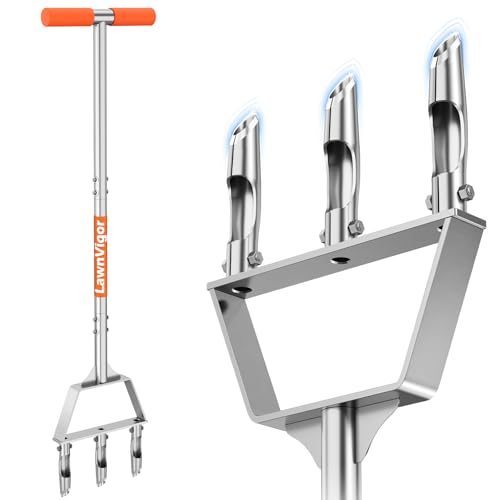
Manual Core Aerator Lawn Tool – Lawn Aerator Tool with 3 Hollow Tines, Semi-Assembled Grass Aerator Core Aeration Tool for Lawn, Yard Plug Aerator for Lawn Care Compacted Soil – Orange
LAWN AERATOR FOR HEALTHIER LAWN GROWTH: Our manual lawn aerators promotes lush, green lawns by delivering essential air,…
As an affiliate, we earn on qualifying purchases.
As an affiliate, we earn on qualifying purchases.
Dethatching or Aerating: Which Technique Is Right for Your Lawn?
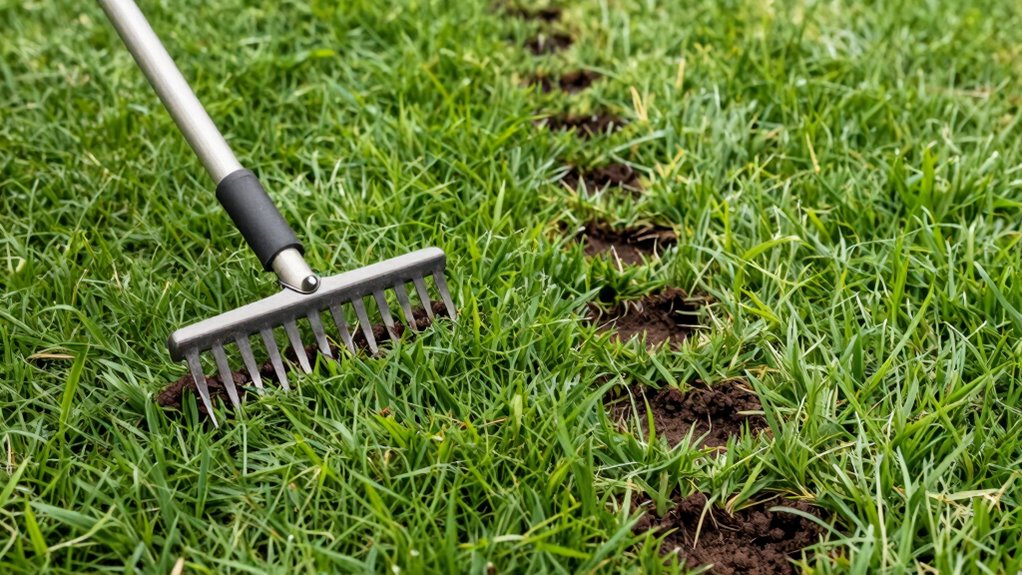
Deciding between dethatching and aerating depends on your lawn’s specific needs and conditions. If you notice a thick layer of thatch over the soil, dethatching is your best bet for effective thatch removal. Conversely, if your soil feels compacted and water or nutrients aren’t penetrating well, aerating is more suitable. Consider these factors:
Choose dethatching for thick thatch layers; opt for aerating when soil feels compacted and water penetration is poor.
- Thatch buildup: Indicates dethatching is needed.
- Soil compaction: Points to aerating.
- Water infiltration issues: Suggests aeration.
- Lawn recovery time: Faster with targeted techniques based on your lawn’s condition.
Understanding these signs helps you choose the right method to improve your lawn’s health, whether by reducing thatch or alleviating soil compaction. Properly evaluating your yard’s needs ensures you apply the correct technique for ideal results. Additionally, assessing your soil’s health and structure can guide you toward the most effective approach.
How to Properly Dethatch and Aerate for a Healthy Lawn
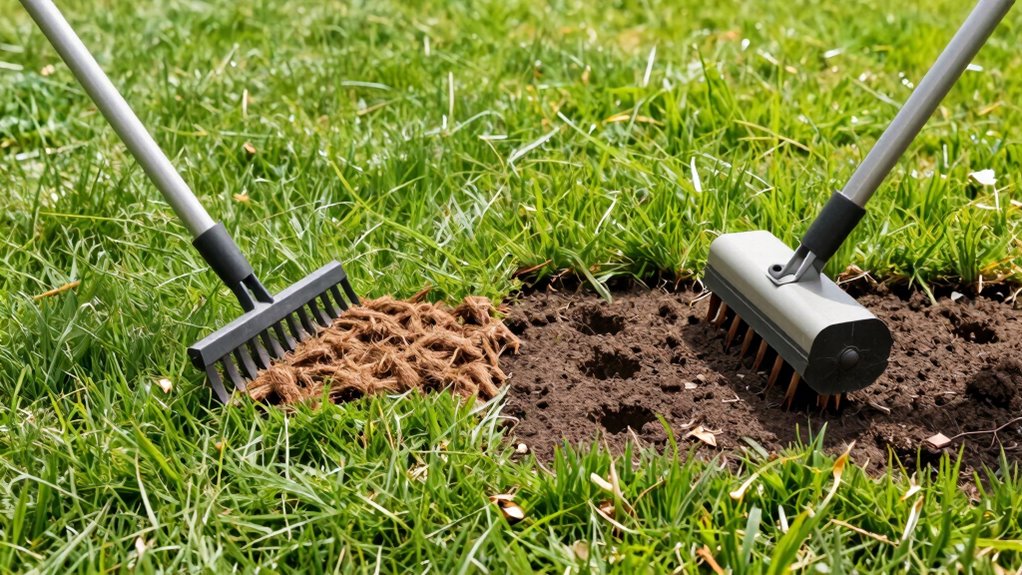
To guarantee your lawn stays healthy and vigorous, it’s vital to perform dethatching and aerating correctly. Begin by evaluating your lawn for thatch buildup, which can prevent air, water, and nutrients from reaching the soil. For dethatching, use a dethatching rake or machine to remove the layer of dead grass and roots, working in multiple directions for thorough coverage. When aerating, focus on areas with soil compaction by using a core aerator to create holes that relieve pressure and increase airflow. Avoid over-aerating, which can harm the grass. Make sure you perform these tasks at the right time—early spring or fall—when grass is actively growing. Proper dethatching and aerating promote healthier root systems and a lush, resilient lawn. Incorporating techniques like auditory processing sound therapy can also help maintain overall plant health by enhancing soil microbial activity and plant resilience. Additionally, selecting the right equipment, such as a core aerator with suitable tine sizes, can significantly improve the effectiveness of your lawn care routine. Using the correct timing and frequency for these procedures ensures optimal results without stressing your lawn. Understanding the benefits of proper lawn aeration can motivate you to keep up with regular maintenance. Recognizing the importance of soil health is essential for long-term lawn vitality and resilience.
Frequently Asked Questions
Can I Dethatch and Aerate at the Same Time?
Yes, you can dethatch and aerate at the same time. Combining techniques can be efficient, especially if your lawn needs both to improve health. Just make sure you follow your lawn care schedule, as timing is key. Doing both together helps loosen compacted soil and remove thatch buildup, promoting better airflow and water absorption. Always use proper equipment to avoid damaging your lawn during this process.
How Often Should I Perform Dethatching or Aerating?
You should dethatch and aerate your lawn once a year, ideally during spring or early fall when seasonal timing supports grass recovery. As you walk across your lawn, notice if the thatch layer feels thick or if water pools on the surface—these signs indicate it’s time. Regular dethatching and aerating promote lawn health, improve nutrient absorption, and keep your grass lush and resilient with minimal effort.
What Equipment Is Best for Dethatching Versus Aerating?
For dethatching, use a dethatching rake or a power dethatcher, which are specialized garden tools that effectively remove thick thatch layers. For aerating, opt for a core aerator or spike aerator, both of which are lawn equipment designed to create holes that improve soil health. You can find these tools at garden centers or hardware stores, and choosing the right equipment makes the job easier and more efficient.
Are There Lawn Types That Don’t Need Dethatching or Aerating?
You might find that some turfgrass varieties, like fine fescues or certain warm-season grasses, don’t need dethatching or aerating if your soil composition is naturally well-draining and has good organic matter. These lawn types tend to develop fewer thatch layers and don’t suffer from compacted soil as quickly. Regular mowing and proper fertilization usually suffice, but monitor your lawn to determine if and when these treatments become necessary.
How Do Weather Conditions Affect the Effectiveness of Dethatching and Aerating?
Weather conditions greatly impact dethatching and aerating effectiveness. Soil moisture levels are essential; too wet, and tools may cause damage, while dry soil makes work difficult. Temperature sensitivity also matters—performing these tasks during ideal weather helps roots recover faster. You’ll see better results when you choose dry, moderate weather, avoiding extremes like heavy rain or scorching heat, which can hinder soil aeration and dethatching benefits.
Conclusion
Think of your lawn as a living, breathing ecosystem—you’re the gardener tending its health. Whether you choose to dethatch or aerate, each technique is a crucial tool in your toolkit for a thriving yard. Like a skilled surgeon, you’ll remove the blockages or open up pathways, allowing nutrients and water to flow freely. With the right care, your lawn will flourish, becoming a lush, vibrant landscape that’s the envy of all.