TL;DR
Gardening Know How recommends three preparations for container plants before the first frost: move frost-sensitive plants to a suitable protected place, group hardy pots in a sheltered area and insulate exposed containers. The advice is attributed to the report’s writer’s husband, a professional gardener; insulation alone will not make tender plants frost-hardy.
Gardening Know How has outlined three ways to prepare container plants before the first frost, drawing on advice from the report’s writer’s husband, whom she describes as a professional gardener. The recommendations are to move tender plants somewhere suitable, group outdoor pots in a sheltered spot and insulate exposed containers to help protect roots from cold.

Get garden gear delivered free with Prime
- Fast, free delivery on millions of items
- Prime Video, Amazon Music and more included
- Member-only deals all year
The first step is to identify which plants can tolerate local winter conditions and which need winter protection. The gardener quoted in the report advises moving tender plants before frost is forecast, while weather remains mild enough for them to adjust. Depending on a plant’s needs, possible destinations include indoors, a frost-free greenhouse, a conservatory or a garage. The report also recommends checking plants and their potting mix for pests before bringing them inside, and making the move gradually where possible.
For pots that must remain outdoors, the advice is to group containers in a sheltered location, such as beside a protected wall. The source says this can reduce exposure to cold winds and make pots easier to protect, but does not make tender plants frost-proof. It advises grouping plants with similar needs, keeping drainage holes clear and avoiding places where containers could sit in water. Raising pots on pot feet or bricks can help excess water drain.
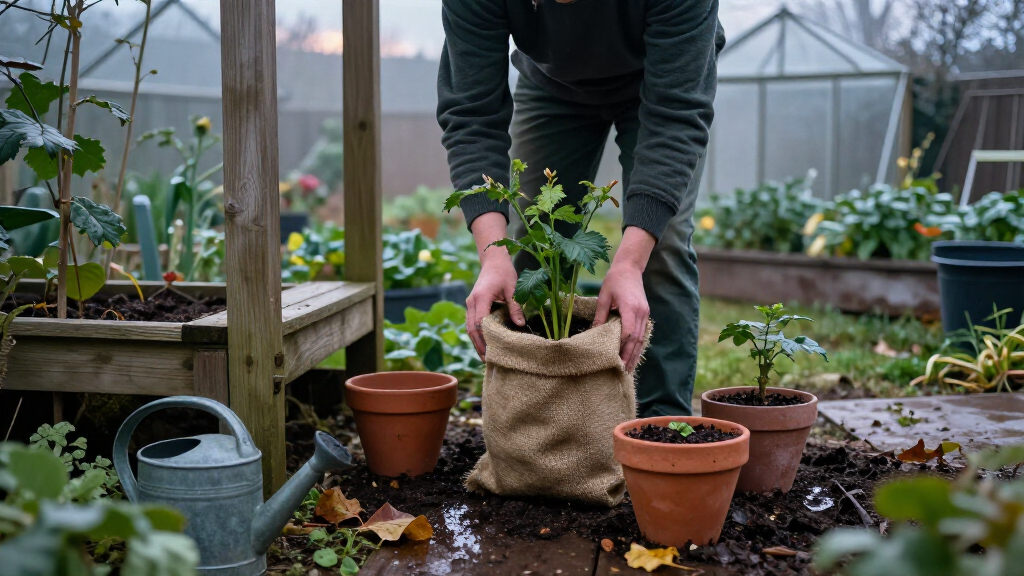
The third measure is to protect roots and containers with insulation. The gardener suggests wrapping pots in bubble wrap or hessian and adding mulch over the compost. The report lists well-rotted garden compost, manure, bark chips, straw and shredded leaves as possible mulch materials, depending on the plant. Keep mulch away from stems and crowns and allow water to drain. The source warns that insulation does not replace moving a plant that cannot withstand freezing temperatures.
Protecting Roots in Exposed Pots
Container plants face a different winter challenge from plants growing in the ground: their roots have less surrounding soil to buffer temperature changes. The report says this can leave roots more exposed to cold, making preparation relevant even when plants appear healthy as autumn begins. A pot can also be more vulnerable to drying winds and waterlogged compost, so choosing a sheltered position and preserving drainage matter alongside insulation.
The recommendations offer gardeners a practical way to sort plants by their needs rather than treating every pot alike. Moving tender plants is the key safeguard for species that cannot tolerate freezing conditions; grouping and wrapping are additional measures for containers that remain outside. The article does not promise that these steps will prevent all winter damage, and local temperatures, plant hardiness and container conditions will affect the outcome.
Products Worth Considering

IDEALHOUSE 8 × 10 ft Outdoor Polycarbonate Greenhouse

Orbit B-hyve XR 8-Zone Indoor/Outdoor Smart Sprinkler Controller

Husqvarna 120 Mark III 16-Inch Gas Chainsaw
As an affiliate, we earn on qualifying purchases.
Why Pots Need Winter Preparation
The source report frames its advice around the approach of the first frost and the greater exposure of roots in pots. Plants in the ground benefit from the soil around them, while container roots are exposed to cold on the sides of the pot. The article also notes that terracotta pots may crack when moisture freezes and expands, particularly in exposed conditions; wrapping the container is presented as a protective measure, not a guarantee against damage.
The headline refers to unpredictable weather and El Niño, but the supplied report gives no specific forecast, dates, region or temperature data. Its recommendations are general gardening guidance attributed to the writer’s husband, rather than a location-specific alert. Gardeners need to apply them according to the plants they have and the conditions in their area.
Limits of the Frost Advice
The report does not identify the writer or her husband by name, give the publication date, or specify a region. It also supplies no local frost forecast or temperature thresholds, so readers cannot use it to determine exactly when to move a particular plant. The suitable winter conditions vary by species, light needs and the severity of local cold.
The source presents the steps as general advice and does not provide trial results or evidence that a particular wrapping or mulch will prevent damage in all conditions. It explicitly says insulation cannot make a tender plant frost-hardy. Whether an outdoor container survives will depend on the plant, pot, drainage, placement and weather; the report does not quantify the protection offered by any of the methods.
Prepare Before Forecast Frost
The report’s practical next step is to check containers before frost is forecast: identify tender plants, decide where they can be kept according to their light requirements, and inspect them for pests before bringing them indoors. For plants staying outside, gardeners can select a sheltered site, group pots with similar needs, clear drainage routes and raise containers where necessary.
As colder weather approaches, the source advises wrapping exposed pots and applying a suitable mulch while keeping it clear of stems and crowns. Gardeners should follow local forecasts and adjust plans to the hardiness of each plant. No follow-up forecast or additional update is included in the supplied report.
Key Questions
What are the three recommended steps before the first frost?
Move tender plants to a suitable protected location, group outdoor containers in a sheltered spot, and insulate exposed pots and their compost surface.
Does wrapping a pot make a frost-sensitive plant safe outdoors?
No. The report says insulation can help protect roots from temperature fluctuations, but it does not make a tender plant frost-hardy. Plants unable to tolerate freezing should be moved to a suitable sheltered or frost-free place.
What can be used to insulate a container?
The report suggests bubble wrap or hessian around the pot and mulch such as bark chips, straw, shredded leaves, well-rotted compost or manure over the compost. Keep mulch away from stems and crowns and leave drainage unobstructed.
Why should outdoor pots be grouped?
Grouping containers in a sheltered area can reduce exposure to cold winds and make them easier to protect, according to the report. It recommends grouping plants with similar needs and avoiding spots where pots may sit in water.
When should tender container plants be moved?
The gardener quoted in the report advises planning ahead and moving them while the weather is still mild, rather than waiting until the first frost is forecast. The right timing depends on the plant and local conditions.
Source: rss