To stop dry spots in your raised beds, carefully plan your drip irrigation layout by evenly spacing emitters along the beds and maintaining proper pipe spacing. Use compatible components, check water pressure, and guarantee consistent emitter flow rates. Regularly test soil moisture and make adjustments as needed. Proper placement, maintenance, and fine-tuning can dramatically improve water distribution and plant health. Keep exploring to discover more effective strategies for a lush, uniformly irrigated garden.
Key Takeaways
- Map bed shape and size carefully to optimize emitter placement and ensure even water distribution.
- Space drip lines and emitters evenly, maintaining proper spacing to prevent dry patches and overwatering.
- Use uniform emitter flow rates and compatible components for consistent moisture levels across raised beds.
- Regularly test soil moisture and adjust emitter positions or flow rates to correct dry spots promptly.
- Conduct routine maintenance—clean filters, check for leaks, and adjust pressure—to sustain uniform watering over time.
How Proper Drip Irrigation Eliminates Dry Spots in Raised Beds
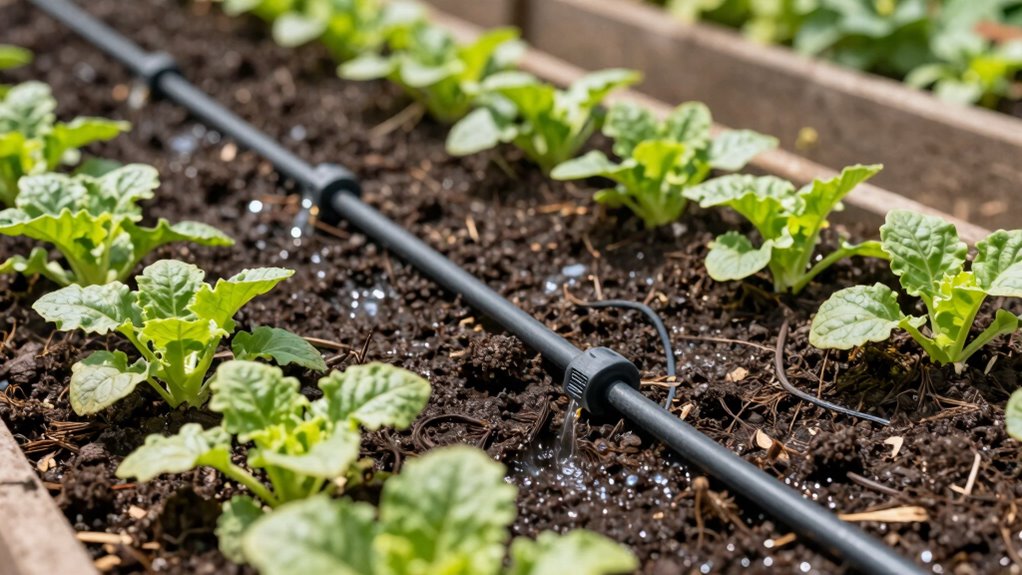
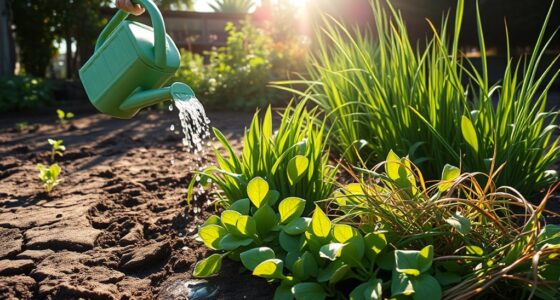
Dry spots in raised beds often occur when water doesn’t reach all areas evenly, leading to stressed plants and uneven growth. Proper drip irrigation ensures consistent soil moisture across your bed, preventing dry patches. By delivering water directly to the roots, it maintains steady moisture levels, which is vital for plant health. When soil moisture is uniform, plants can absorb nutrients effectively, grow stronger, and resist disease. You won’t have to worry about overwatering some spots or letting others dry out. A well-designed drip system provides even coverage, promoting healthy development throughout your raised bed. Incorporating water distribution considerations into your system can enhance visual monitoring of moisture levels and plant health. Understanding irrigation efficiency helps optimize water use and improve overall garden productivity. Additionally, monitoring soil moisture levels can help tailor watering schedules for maximum efficiency. This method saves water and reduces runoff, making it an efficient way to keep every part of your garden thriving and free from dry spots. Properly balancing water pressure within your system ensures consistent flow rates and prevents dry patches from forming.
Planning Your Raised Bed Layout for Even Water Coverage
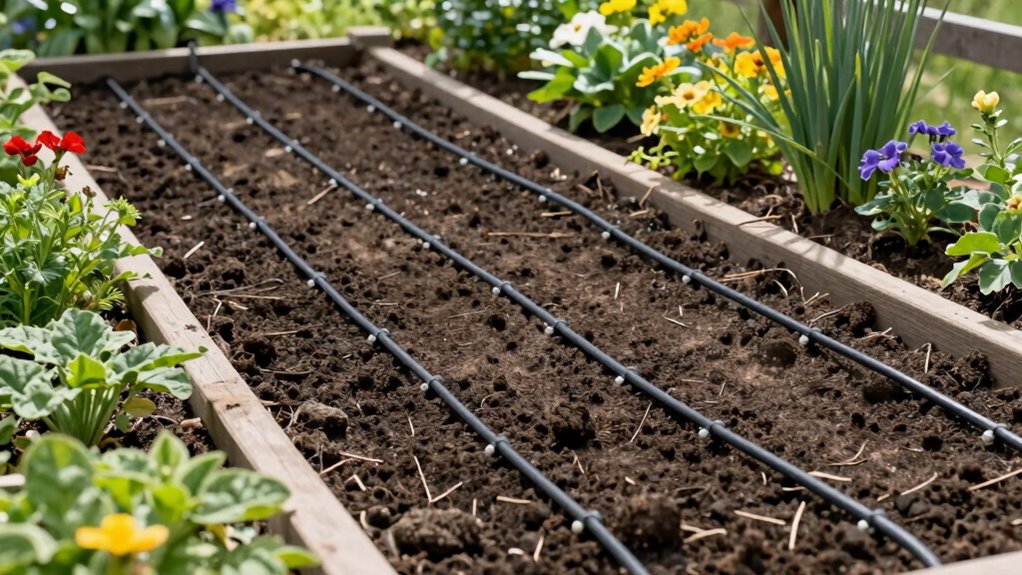
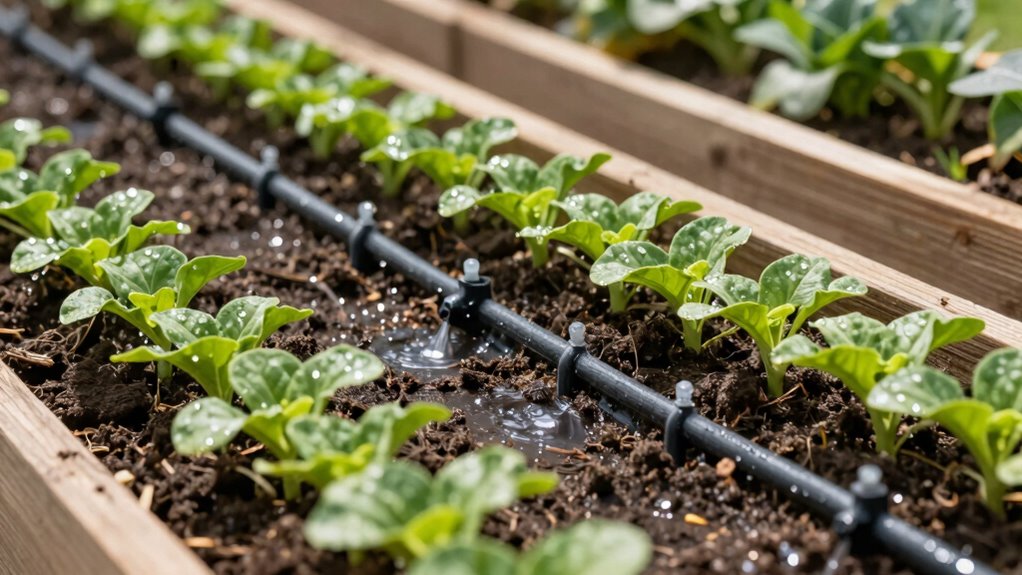
To guarantee your raised bed receives even water coverage, start by carefully planning the layout of your drip irrigation system. Map out the bed’s shape and size, ensuring the emitters are spaced evenly to maintain consistent soil moisture throughout. Consider the plant types and their water needs, arranging emitters closer for thirsty plants and farther apart for drought-tolerant ones. Use a grid pattern to prevent dry spots and ensure uniform distribution. Proper spacing minimizes water waste, promoting water conservation and healthier plants. Think about elevation changes or obstructions that could affect flow; adjusting emitter placement accordingly helps achieve even coverage. Additionally, understanding plant properties can guide optimal emitter placement based on specific water requirements. A well-planned layout prevents dry patches, saves water, and keeps your garden thriving.
Choosing the Right Drip Emitters and Components for Your Garden
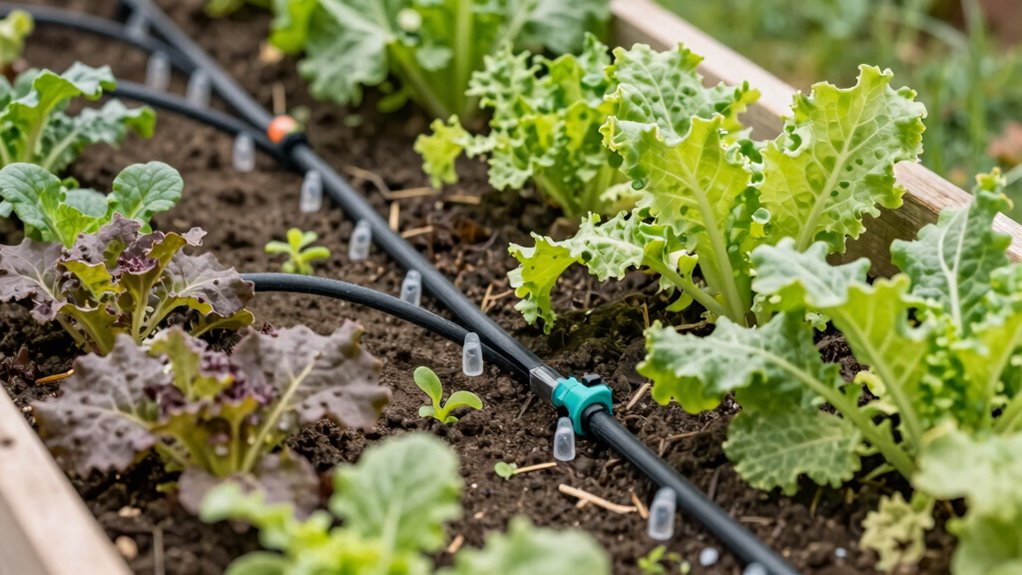
Choosing the right drip emitters and components is key to ensuring your garden gets consistent water. You need to pick emitters that match your plants’ needs and make sure all parts of your system work well together. Proper system compatibility is essential for troubleshooting and optimizing your setup. Let’s look at how to select compatible components that deliver reliable, efficient watering. Understanding drip system components is essential for troubleshooting and optimizing your setup.
Selecting Suitable Emitters
Selecting the right drip emitters is crucial for ensuring your garden receives consistent and efficient watering. You need to contemplate factors like flow rate, emitter type, and compatibility with fertilizer, especially if you plan to use liquid feeds. Choose emitters that blend seamlessly into your garden’s aesthetic, avoiding bulky or conspicuous components. To help you decide, consider this comparison:
| Feature | Consideration |
|---|---|
| Fertilizer compatibility | Use emitters designed for fertigation |
| Aesthetic integration | Select discreet, low-profile emitters |
| Flow rate options | Match with plant water needs |
Matching these factors ensures your raised beds stay hydrated without disrupting their visual harmony or causing clogging issues. Additionally, evaluating free-floating emitters can help optimize water distribution across uneven terrain. Understanding emitter types can further refine your irrigation setup to suit specific garden conditions.
Compatible System Components
When assembling your drip irrigation system for raised beds, selecting compatible components that work seamlessly together is essential. Your system’s success depends on choosing emitters, tubing, and connectors suited to your soil moisture needs and plant health. Use emitters with adjustable flow rates to customize watering for different plants and soil conditions, preventing dry spots. Confirm the tubing diameter matches your emitters for consistent flow and minimal pressure loss. Incorporate filters to keep debris out, which helps maintain optimal soil moisture levels and protects plant roots. Compatibility also means selecting components from the same brand or those labeled as compatible to avoid leaks or malfunctions. Properly matched parts promote even watering, support healthy plant growth, and reduce maintenance issues over time. Additionally, understanding the pump and pressure systems helps ensure your system operates efficiently and delivers water evenly across all beds.
Designing an Effective Drip Line Layout for Consistent Moisture
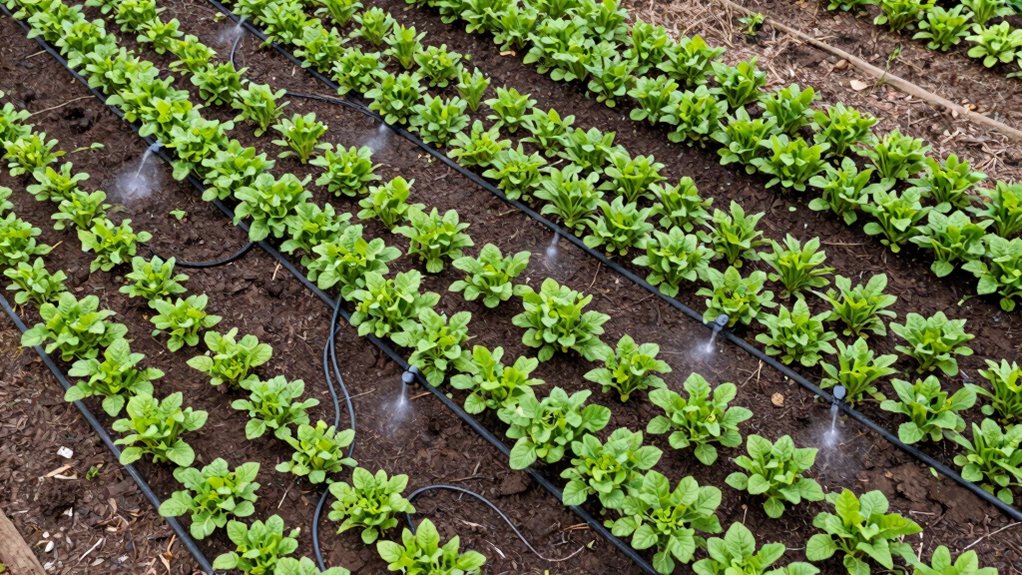
To guarantee your plants receive consistent moisture, you need to plan your drip line layout carefully. Focus on proper pipe spacing, use uniform emitters, and plan your layout strategically to avoid dry spots. These steps will help you achieve even watering across your raised beds. Incorporating knowledge of electric power generation with bike generators can inspire innovative solutions for maintaining consistent water flow, especially in remote or off-grid gardening setups. Understanding net worth and the financial independence of individuals involved in gardening-related projects can also motivate sustainable investment in efficient irrigation systems.
Proper Pipe Spacing
Ensuring proper pipe spacing is essential for delivering consistent moisture across your raised beds. When pipes are spaced too far apart, soil moisture becomes uneven, leading to dry spots that hinder plant health. Conversely, placing pipes too close can cause overwatering and waste water. To achieve optimal results, space your drip lines evenly, considering plant root zones and bed dimensions. Typically, spacing emitters or drip lines 12 to 18 inches apart ensures uniform water distribution. Proper spacing encourages even soil moisture, supporting healthy root development and preventing dry or overly saturated areas. Remember, consistent moisture delivery is key to healthy plants, so take the time to plan your pipe layout carefully. Additionally, understanding the water pressure in your system can help prevent issues like uneven flow or overwatering. Optimizing drip line layout enhances water efficiency and plant growth, ultimately maximizing your raised bed garden’s productivity. Paying attention to watering system design can further improve moisture uniformity and overall garden health.
Uniform Drip Emitters
How can you guarantee your drip system delivers water evenly across your raised beds? Using uniform drip emitters is key. Consistent emitters ensure each plant receives the right amount of water, promoting even fertilizer application and healthy growth. When choosing emitters, consider flow rates that match your bed’s size and plant needs. Proper placement prevents dry spots and keeps pests at bay by avoiding overly damp areas. Regularly check for clogging, which can disrupt flow and cause uneven watering. Additionally, implementing professional hosting discounts can help you save on equipment and supplies. Maintaining proper emitter spacing is essential for uniform moisture distribution and overall garden health. By maintaining uniform emitters, you create a reliable system that supports pest prevention and ideal plant health. Properly designed drip line layouts ensure consistent moisture and minimize dry spots. Incorporating system maintenance practices can further enhance the longevity and efficiency of your drip irrigation. Remember, precise water delivery fosters vigorous growth and simplifies your gardening routine. Your raised beds will flourish with consistent moisture and minimized dry spots.
Strategic Layout Planning
Designing an effective drip line layout is essential for providing your raised beds with consistent moisture. Proper placement ensures even water distribution, which supports uniform fertilizer application and healthy plant growth. Plan your layout to avoid dry spots and overlapping emitters that can cause overwatering. Consider the shape and size of your beds, spacing drip lines accordingly. Strategically positioning emitters helps with pest control, as you can target specific areas and reduce wet foliage that attracts pests. Incorporate zones for different plant needs, adjusting flow rates if necessary. Regularly check your layout to ensure emitters are functioning correctly. This careful planning streamlines maintenance, optimizes water use, and promotes a healthy, pest-resistant garden environment.
Installing Your Drip Irrigation System Step by Step
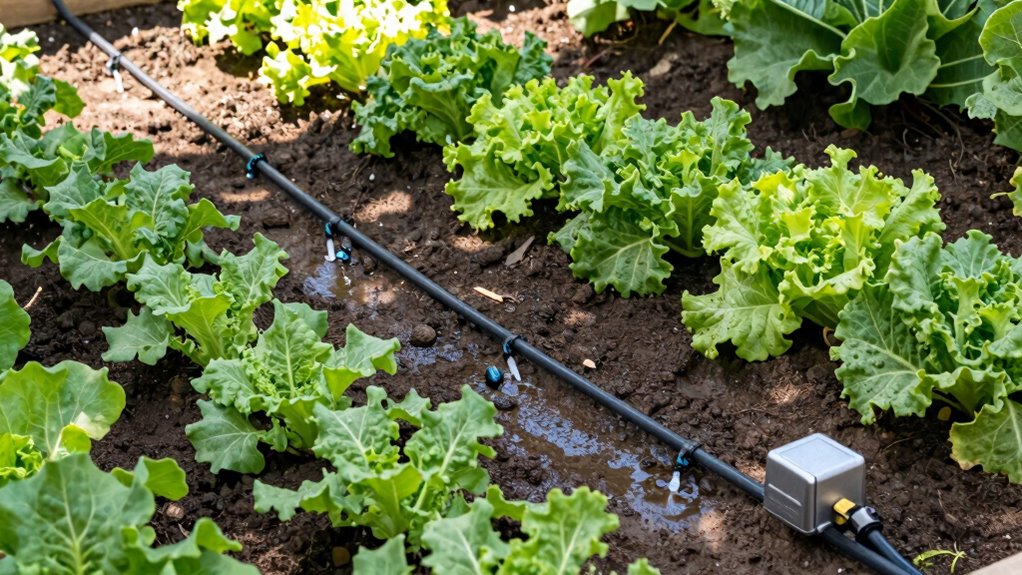
To install your drip irrigation system on raised beds, start by gathering all necessary components, including the mainline tubing, drip emitters, connectors, and tools. Carefully plan your layout to ensure even soil moisture distribution, preventing dry spots and promoting healthy plants. Follow these steps to bring your watering system to life:
Gather all components and plan your layout for efficient, even watering on raised beds.
- Lay out the mainline tubing along your beds, securing it with stakes.
- Connect drip emitters at appropriate intervals for consistent watering.
- Attach connectors to adapt tubing sections or add emitters.
- Turn on the water to check for leaks and ensure even coverage.
- Maintaining proper pressure and flow rate is essential for efficient watering and preventing dry spots.
- Regularly inspecting and cleaning emitters helps prevent clogs and maintains optimal performance, ensuring your irrigation system functions effectively over time.
Testing and Fine-Tuning Your Drip System for Reliable Watering
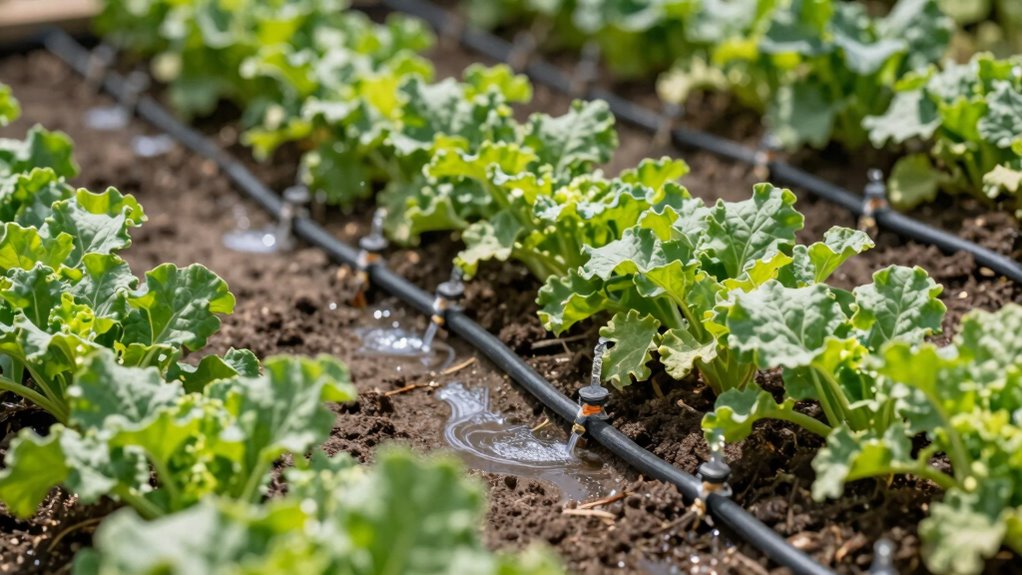
Before relying on your drip irrigation system, it’s essential to test and fine-tune it to make certain of reliable watering. Begin by checking soil moisture levels across your raised beds to ensure even distribution. Use a soil moisture meter or simply feel the soil at different points; you want consistent moisture without overwatering. Next, monitor water pressure to confirm it’s within the recommended range for your system. Too high pressure can cause runoff or uneven flow, while too low might mean dry spots. Adjust the pressure regulator if needed. Run the system for a set period, then inspect plants and soil; if some areas are dry or overly wet, tweak the emitter flow rates or reposition emitters. Proper testing and fine-tuning help prevent dry spots and promote healthy, consistent plant growth.
Troubleshooting Common Drip Irrigation Problems in Raised Beds
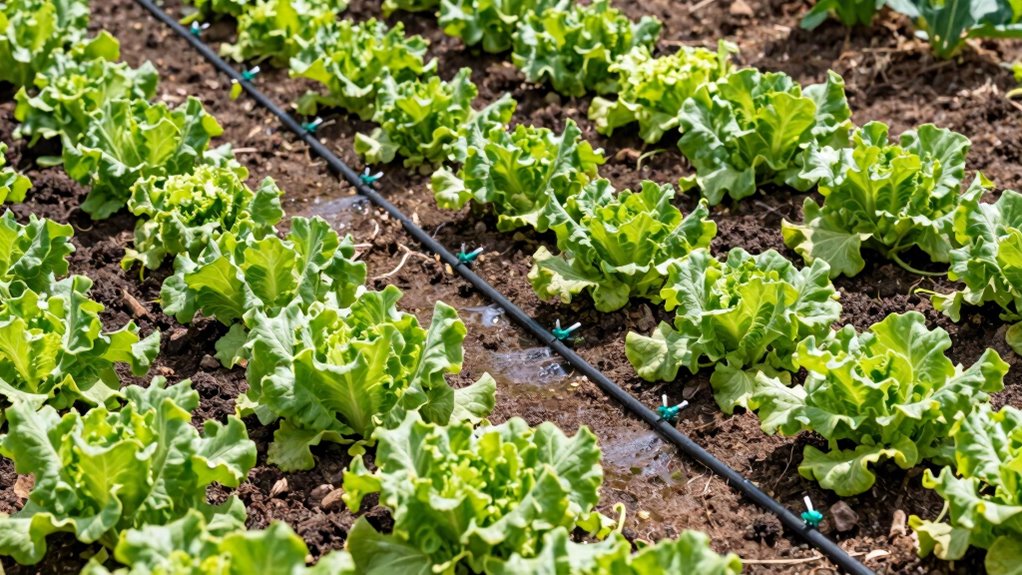
Even well-installed drip irrigation systems can encounter common problems that disrupt watering efficiency. These issues can lead to uneven moisture, impacting plant health and growth. To troubleshoot effectively, watch for:
- Clogged emitters — causing dry spots and inconsistent watering.
- Leaks or broken lines — wasting water and reducing pressure.
- Poor fertilizer application — resulting in nutrient deficiencies.
- Pest damage — damaging tubing or plants, complicating pest control strategies.
Addressing these problems quickly keeps your raised beds healthy. Regularly inspect emitters and lines, clear blockages, and repair leaks. Proper fertilizer application ensures plants get nutrients without overwatering. Implement pest control strategies to prevent damage that could impair your irrigation system’s function. Staying vigilant helps avoid dry spots and keeps your garden thriving.
Maintaining Your Drip System for Long-Term Performance
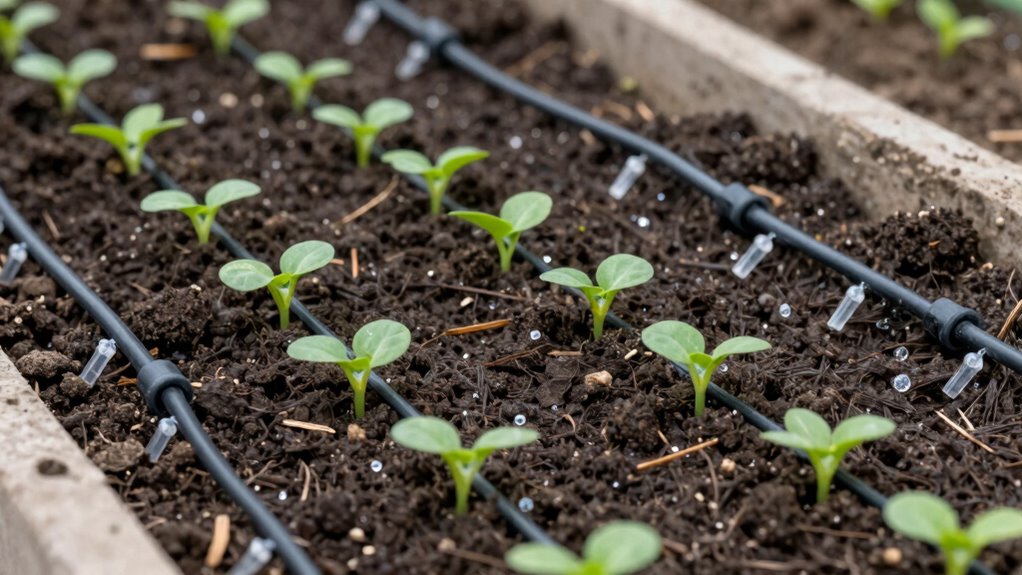
Regular maintenance is essential to guarantee your drip irrigation system continues to deliver efficient, consistent watering over time. Check for clogged emitters and leaks that can disrupt soil moisture levels and waste water. Regularly flush filters and replace damaged parts to maintain peak performance. Adjust your system seasonally to prevent dry spots and overwatering, promoting water conservation. Keep an eye on soil moisture to ensure plants receive the right amount of water. Properly maintained systems prevent runoff and promote healthy root growth. Use this guide to understand the importance of system upkeep:
| Inspection | Adjustment | Efficiency |
|---|---|---|
| Detect clogs | Regulate flow | Save water |
| Fix leaks | Optimize coverage | Promote growth |
| Clean filters | Balance watering | Conserve resources |
How a Well-Designed Drip Layout Can Boost Your Garden’s Yield
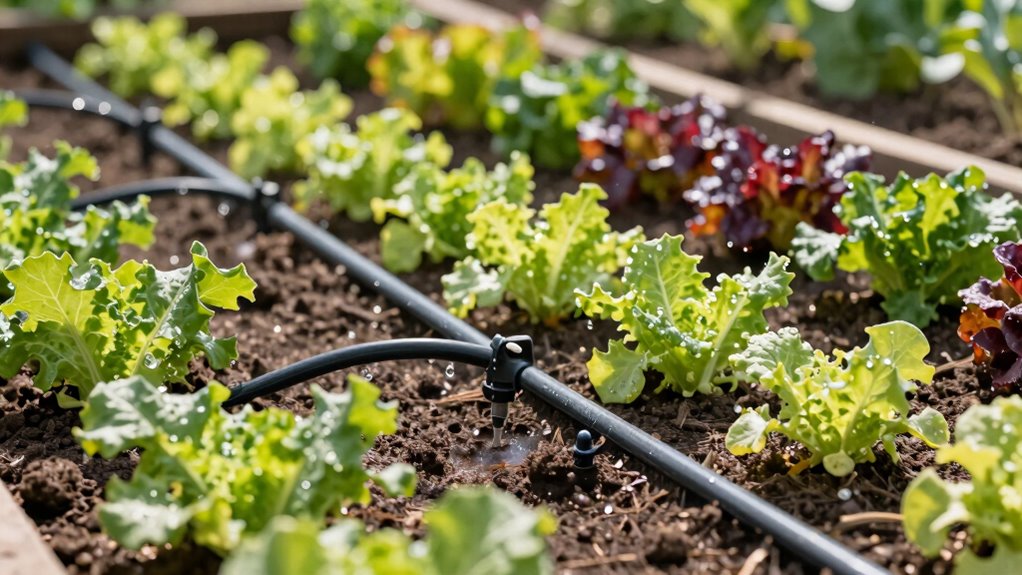
A well-designed drip irrigation layout guarantees that each plant receives the right amount of water directly at the root zone, which can considerably boost your garden’s yield. Proper placement ensures healthy growth, stronger plants, and increased productivity. With consistent watering, your plants will thrive, reducing stress and disease. Incorporate compost tea into your watering routine to boost soil nutrients naturally, promoting vigorous growth. A strategic layout also helps with pest control by limiting water splashes that attract pests and encouraging healthier plants resistant to infestations. To maximize results, consider these four tips:
A strategic drip irrigation layout boosts plant health, yields, and pest resistance through precise watering and compost tea integration.
- Position emitters close to the plant roots for ideal absorption
- Use timers for consistent watering schedules
- Integrate compost tea regularly for nutrients
- Design layout to prevent dry spots and improve pest control
Frequently Asked Questions
Can Drip Irrigation Be Used With Organic Fertilizers?
Yes, you can use drip irrigation with organic fertilizers. It’s highly drip-compatible because you can easily deliver liquid organic fertilizers directly to your plants’ roots through the system. Just guarantee you choose organic fertilizers that are water-soluble and avoid clogging filters. Regularly flush the system to prevent buildup, and always follow the fertilizer manufacturer’s guidelines for best results. This way, your plants stay healthy and well-nourished.
How Often Should I Replace Parts in My Drip System?
You should replace parts in your drip system every 1-3 years, depending on usage and water quality. Regular system maintenance is key to preventing clogs and leaks, ensuring consistent watering. Visualize worn-out emitters or damaged tubing as the first signs, prompting replacements. By monitoring component lifespan and performing timely upgrades, you maintain efficient irrigation, avoid dry spots, and extend your system’s overall longevity.
Is Drip Irrigation Suitable for Large Garden Areas?
Yes, drip irrigation is suitable for large garden areas. It allows you to create efficient garden designs by customizing zones and watering schedules, ensuring even moisture distribution. You can easily extend your system as your garden grows, maintaining consistent watering and preventing dry spots. Proper planning and regular maintenance will keep your large garden healthy, saving water and reducing manual effort.
What Are Eco-Friendly Options for Drip System Components?
Did you know that eco-friendly drip system components can cut waste by up to 30%? You should consider biodegradable emitters, which break down naturally and reduce plastic pollution. Solar-powered controllers are also a smart choice, using renewable energy to operate your irrigation system efficiently. These options help you conserve resources, lower environmental impact, and make your garden more sustainable without sacrificing performance.
How Does Weather Affect Drip Irrigation Efficiency?
Weather patterns markedly influence your drip irrigation efficiency by affecting soil moisture levels. If it rains frequently, you might need to reduce watering to prevent overwatering, while hot, dry weather demands more consistent irrigation. Extreme temperatures can cause water to evaporate quickly, so you should adjust your schedule accordingly. Monitoring soil moisture helps you optimize watering, ensuring your plants receive just the right amount, regardless of changing weather conditions.
Conclusion
With a well-planned drip irrigation layout, you’ll banish dry spots and enjoy lush, thriving raised beds—just like the gardener of old who knew the secret to bountiful harvests. By choosing the right components, designing thoughtfully, and fine-tuning your system, you’ll guarantee consistent moisture and healthy plants. So, roll up your sleeves, channel your inner gardener of yore, and watch your garden flourish like a well-tended castle’s moat, all while avoiding common pitfalls.