
TL;DR

Get garden gear delivered free with Prime
- Fast, free delivery on millions of items
- Prime Video, Amazon Music and more included
- Member-only deals all year
A Gardening Know How report recommends tailoring October lawn care to whether a lawn has cool-season or warm-season grass. Suggested tasks include aerating, repairing or overseeding cool-season lawns, applying fall fertilizer where appropriate, mulching leaves lightly and using a pre-emergent herbicide on warm-season turf according to its label.
Gardening Know How has published an October lawn-care checklist advising homeowners to match fall work to their turfgrass type, with tasks including aeration, seeding, fertilizing, leaf mulching and weed prevention. The recommendations matter because cool-season and warm-season grasses grow differently in fall, so the same timing and treatment may not suit every lawn.
The report identifies fescue, bluegrass and ryegrass as cool-season grasses that can keep growing during fall, using the period to develop roots before winter dormancy. For those lawns, it recommends aerating compacted ground and repairing bare patches or overseeding when conditions are suitable. It also suggests applying a fertilizer made for fall use, while following the product label and checking whether seed mixes already contain fertilizer.
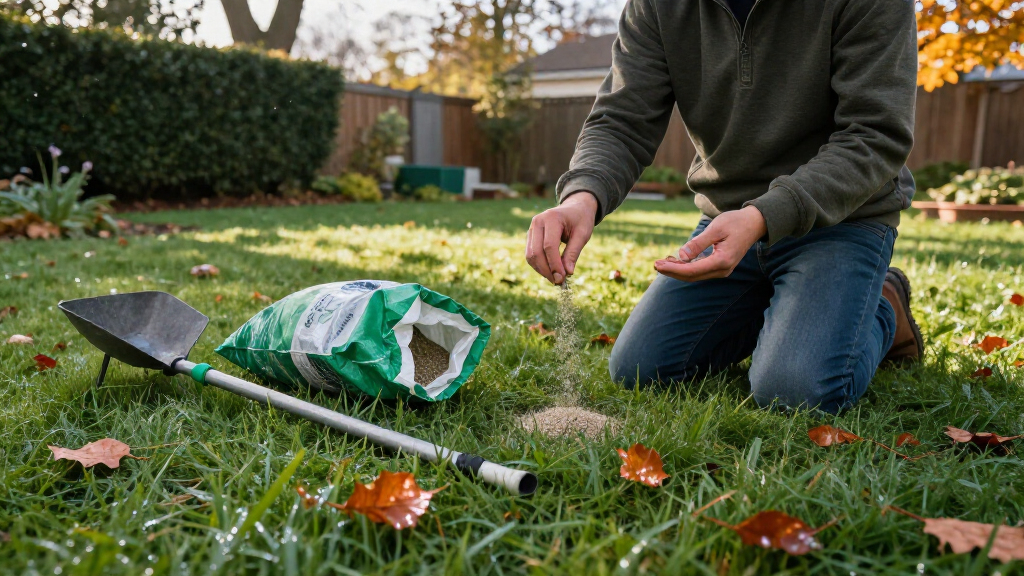
Aeration creates openings in the soil that can help air and moisture reach roots, according to the report. A garden fork can be used for small areas; a mechanical or rolling aerator is another option. To repair bare patches, the article advises loosening the soil, spreading an appropriate grass seed and keeping the area moist while the seed germinates and new grass establishes. It suggests checking whether grubs may be responsible for damaged patches before reseeding.
The guidance differs for warm-season grasses such as Bermuda, St. Augustine and zoysia, which begin slowing or entering dormancy around this time, according to Gardening Know How. The report recommends watching for winter weeds and says pre-emergent herbicide may be an option during a short early-October window. For lawns of any type, it also recommends mowing fallen leaves into small pieces and leaving only a light scattering; thick clumps should be removed so they do not smother the grass.
Fall Work Can Shape Spring Recovery
October tasks can affect how lawns enter winter and resume growth, but the report does not promise a particular result. Grass type, weather and lawn condition all affect whether a task is useful and when to do it. Cool-season lawns may still be actively growing, while warm-season lawns are slowing down, so applying the same seed or fertilizer schedule to both could be inappropriate.
The recommendations also offer a way to prioritize work rather than treating the checklist as an all-or-nothing plan. Aeration, patch repair or careful leaf management may address specific problems such as compacted soil, summer damage or heavy leaf cover. For weed control, using a product incorrectly can damage turf or other plants, so homeowners should rely on the label rather than a general calendar date.
As an affiliate, we earn on qualifying purchases.
Why October Tasks Vary by Turf
The Gardening Know How report frames early fall as a period when lawn needs diverge. Cool-season turf can remain active and may be able to germinate seed in warm soil and cooler air. The report presents October as a potential time to repair thin areas or overseed, provided the selected seed suits the lawn and the ground can be kept moist.
By contrast, warm-season turf slows toward dormancy, leaving a different focus: preventing winter weeds rather than encouraging new grass growth. The article also recommends leaf mulching across grass types, but stresses that leaf pieces must not form a thick layer. These are general seasonal recommendations, not a location-specific forecast; local temperatures, rainfall and the exact grass variety can change the right timing.
As an affiliate, we earn on qualifying purchases.
Local Timing and Lawn Conditions
The report does not provide a location-specific schedule or establish that every lawn should receive all five suggested treatments. Local weather, soil condition and grass variety are not specified, and the suggested early-October herbicide window may not align with conditions everywhere. The article also does not report independent testing or quantified results showing how much any task improves next summer’s lawn.
It is also not possible from the guidance alone to diagnose bare patches, which may have causes other than foot traffic or drought. The report advises checking for grubs, but homeowners may need local extension services or a qualified lawn professional if damage continues or the cause is unclear. Any herbicide or fertilizer use should follow the product label, including application limits and precautions for people, pets and nearby plants.
pre-emergent weed control for lawns
As an affiliate, we earn on qualifying purchases.
As an affiliate, we earn on qualifying purchases.
Choose Tasks for Your Grass
Homeowners should first identify whether their lawn is predominantly cool-season or warm-season grass, then check local conditions before scheduling work. For cool-season lawns, that may mean aerating, seeding bare areas or overseeding and applying fall fertilizer only when the product and lawn conditions are appropriate. Keep newly seeded soil moist as directed for the chosen seed.
For warm-season lawns, monitor seasonal slowdown and local weed-control timing before considering a pre-emergent product. Across lawns, mulch leaves only into a thin layer and clear clumps. The report’s next practical milestone is the lawn’s response through fall and winter; it provides no specific follow-up date or guarantee of results for next summer.
fall lawn fertilizer for cool season grass
As an affiliate, we earn on qualifying purchases.
As an affiliate, we earn on qualifying purchases.
Key Questions
Should every lawn be overseeded in October?
No. The report recommends repair or overseeding mainly for cool-season lawns with bare or thin areas, and says to choose seed suited to the turf. It does not recommend October overseeding for every lawn or for every grass type.
Why does the grass type matter?
Cool-season grasses such as fescue, bluegrass and ryegrass may keep growing in fall. Warm-season grasses such as Bermuda, St. Augustine and zoysia are more likely to slow toward dormancy, so fall tasks and timing differ.
Can I leave mulched leaves on the lawn?
The report says to leave a light scattering of finely chopped leaves, not thick layers or clumps. Heavy leaf cover can smother grass and restrict air and water movement.
Is October the right time to apply weed killer?
That depends on the grass, local timing and product. The report discusses a pre-emergent herbicide for warm-season lawns in early October, but homeowners should follow the product label and check local conditions before applying it.
Source: rss
Fall yard work Picks
leaf blowers
As an affiliate, we earn on qualifying purchases.