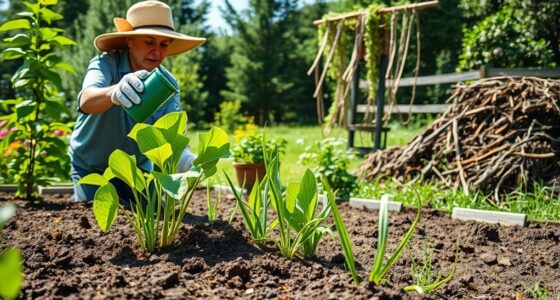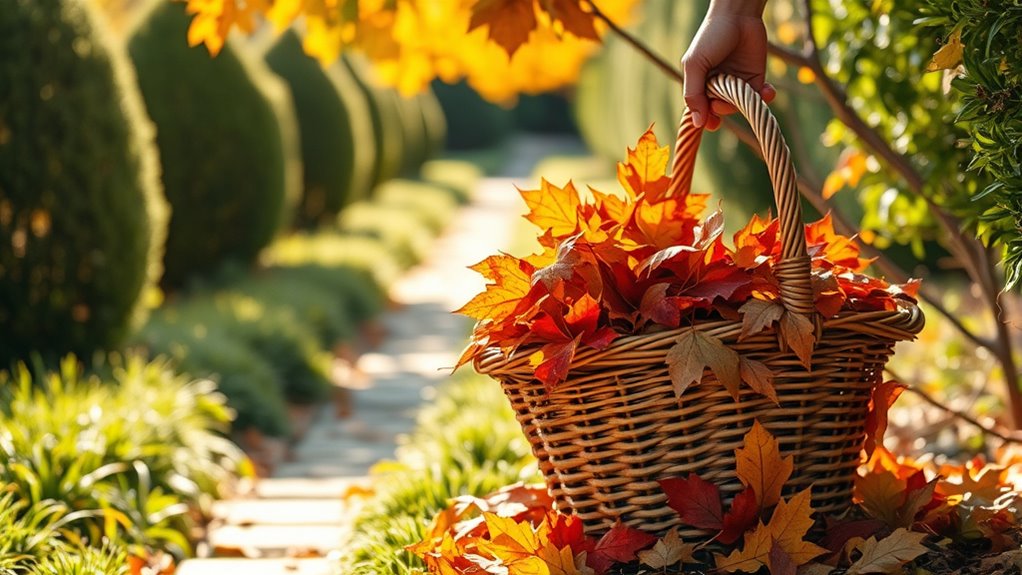

If you want a fall cleanup that helps, not harms, focus on removing leaves thoughtfully by shredding or mulching them into your lawn, which recycles nutrients and promotes health. Compost yard waste to reduce landfill impact and create natural fertilizer for next season. Avoid excessive raking and consider eco-friendly tools. By taking these steps, you support your yard’s vigor and the environment. Keep exploring to discover more tips on achieving a truly sustainable fall cleanup.
Key Takeaways
- Shred and mulch leaves to recycle nutrients and reduce yard waste.
- Use composting methods to turn yard debris into enriching humus.
- Avoid excessive raking; instead, gather leaves into compost bins or mulch into the lawn.
- Maintain a healthy balance of greens and browns in compost for efficient decomposition.
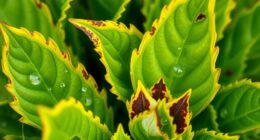
- Remove diseased or moldy leaves promptly to prevent lawn and plant health issues.
As the leaves begin to fall and temperatures drop, it’s the perfect time to start your fall cleanup. This is the season when you can take proactive steps to tidy up your yard while also supporting your garden’s health. One of the most important tasks is leaf removal, but it’s equally vital to approach this step thoughtfully. Instead of simply raking leaves to the curb, consider incorporating composting strategies that turn yard waste into a valuable resource. Composting your leaves not only keeps them out of landfills but also enriches your soil with nutrients, making your garden thrive in the coming seasons.
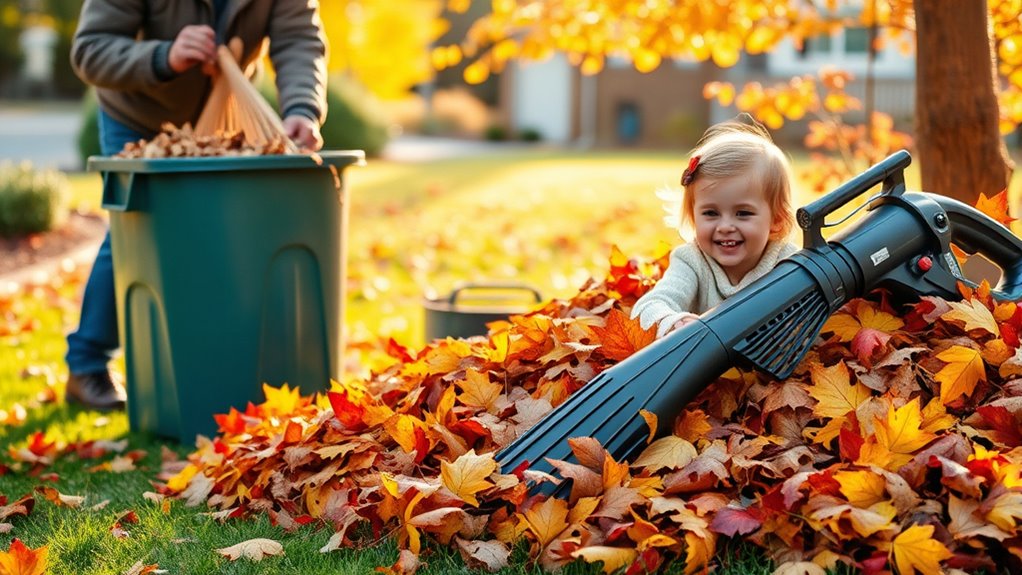
When you gather fallen leaves, don’t just toss them away. Instead, create a compost pile or bin dedicated to yard waste. Shredding the leaves before adding them to your compost accelerates decomposition because smaller pieces break down faster. You can use a leaf blower with a vacuum function or run over the pile with a lawnmower to shred them efficiently. Layer these shredded leaves with other compost materials like grass clippings, vegetable scraps, and soil. Maintaining a balance of greens and browns ensures your compost heats up properly and decomposes evenly. Turning the pile regularly aerates it, speeding up the process and preventing unpleasant odors, so your compost stays healthy and productive.
Leaf removal isn’t only about neatness; it’s about protecting your lawn and garden. Heavy layers of leaves can suffocate grass, leading to mold, disease, and bare patches come spring. By removing excess leaves, especially from lawns, you prevent these problems while still utilizing the leaves in your composting system. You might choose to mulch the leaves directly into your turf using a mower with a bagging attachment, which recycles nutrients back into your lawn. Alternatively, gather the leaves into compost bins, where they’ll break down into rich humus that can be used to nourish flower beds and vegetable gardens. Incorporating composting strategies into your fall cleanup creates a sustainable cycle that benefits both your yard and the environment.
Taking the time to implement effective composting strategies during your fall cleanup makes a difference. It reduces waste, improves soil fertility, and creates a sustainable cycle for your yard. Instead of seeing leaves as just debris, view them as an opportunity to boost your garden’s future health. Proper leaf removal, combined with smart composting, ensures your yard stays lush and healthy without harming the environment. As you wrap up your fall chores, remember: a thoughtful approach to cleanup benefits not only your landscape but also the planet.
Frequently Asked Questions
When Is the Best Time to Start Fall Cleanup?
You should start fall cleanup when most leaves have fallen, usually in late October or early November. As you rake, consider leaf mulching to enrich your soil and plant cover crops to protect the soil during winter. This approach helps your garden stay healthy and minimizes harm to beneficial insects. Starting at the right time guarantees you clean up effectively while promoting soil health for spring.
How Can I Compost Fallen Leaves Effectively?
Imagine transforming fallen leaves into rich compost—here’s how. You should start by shredding leaves into smaller pieces, then use leaf mulching to speed decomposition. Place your compost bin in a shaded, well-drained spot to keep it active. Mix shredded leaves with other compost materials, turning regularly to aerate. Soon, you’ll have nutrient-rich compost ready to nourish your garden, turning fall cleanup into a rewarding, eco-friendly process.
What Tools Are Essential for Eco-Friendly Yard Cleanup?
You need essential tools like a leaf rake, compost bin, and pruning shears for eco-friendly yard cleanup. Use your rake for gathering leaves efficiently and incorporate composting techniques to enrich your soil. Keep your tools in good condition through regular tool maintenance, ensuring they last longer and work better. These steps help you create a sustainable yard cleanup routine that benefits the environment and promotes healthy plant growth.
How Do I Protect Beneficial Insects During Cleanup?
An ounce of prevention is worth a pound of cure. To protect beneficial insects during cleanup, avoid disturbing their habitats and skip harsh chemicals. Focus on beneficial insect preservation by leaving some leaf litter and dead plant stems, which offer shelter and food. Use organic pest control methods if needed, and gently remove debris instead of raking everything away. This way, you nurture a healthy, balanced ecosystem in your yard.
Are There Safe Methods to Remove Mold From Yard Debris?
To safely remove mold from yard debris, wear gloves and a mask to protect yourself. Use a mixture of water and mild soap or vinegar to clean moldy surfaces. For heavily infested debris, consider composting only non-moldy parts or disposing of them properly. Avoid spreading spores by bagging debris securely before removal. This method guarantees mold removal is effective while keeping your yard safe and healthy.
Conclusion
By tackling your fall cleanup thoughtfully, you’re not just tidying up—you’re safeguarding your entire yard’s future. Every leaf you clear and branch you prune is a small act that saves your garden from becoming a jungle of chaos. When done right, your yard will thrive brighter than a summer sunrise next year. So, don’t just clean up; invest in your landscape’s health, and watch it flourish like never before—your hard work truly makes all the difference.