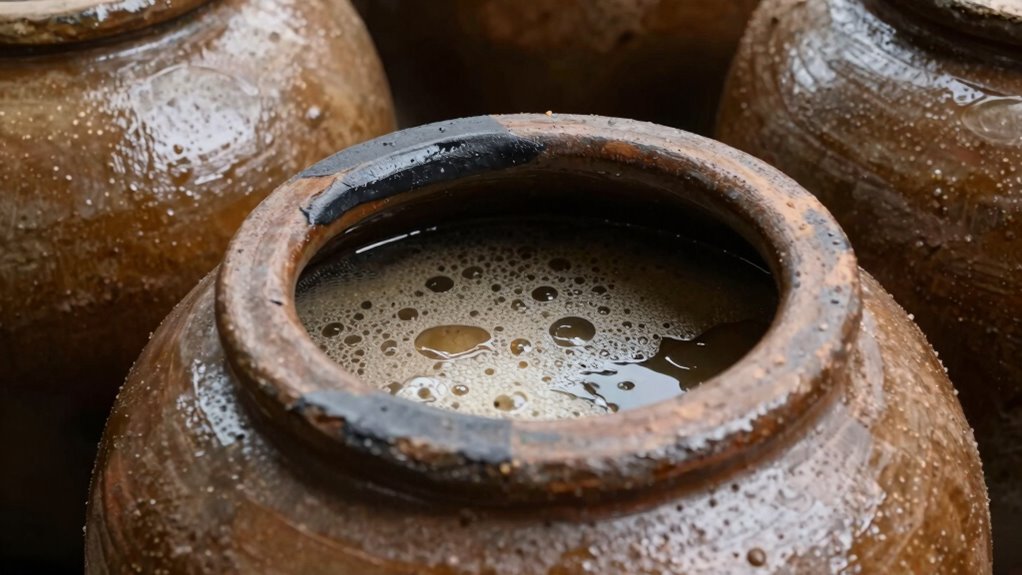

To guarantee successful fermentation, you need to focus on the weight, water seal, and headspace of your crock. The weight keeps your vegetables submerged and prevents spoilage, while a proper water seal, like a gasket or water moat, blocks oxygen and contaminants. The right headspace allows gases to escape safely, avoiding pressure buildup. Mastering these basics helps you get better results—keep exploring to learn how to optimize each aspect for perfect fermentation.
Key Takeaways
- Heavier crock materials, like ceramic or stoneware, provide stability and prevent movement during fermentation.
- Proper water seals, such as water moats or silicone gaskets, block oxygen and contaminants effectively.
- Maintaining adequate weight ensures vegetables stay submerged, reducing spoilage risks.
- Correct headspace allows gases to escape, preventing pressure buildup and contamination.
- Modern crocks often include markings or adjustable lids to help maintain optimal headspace and sealing.
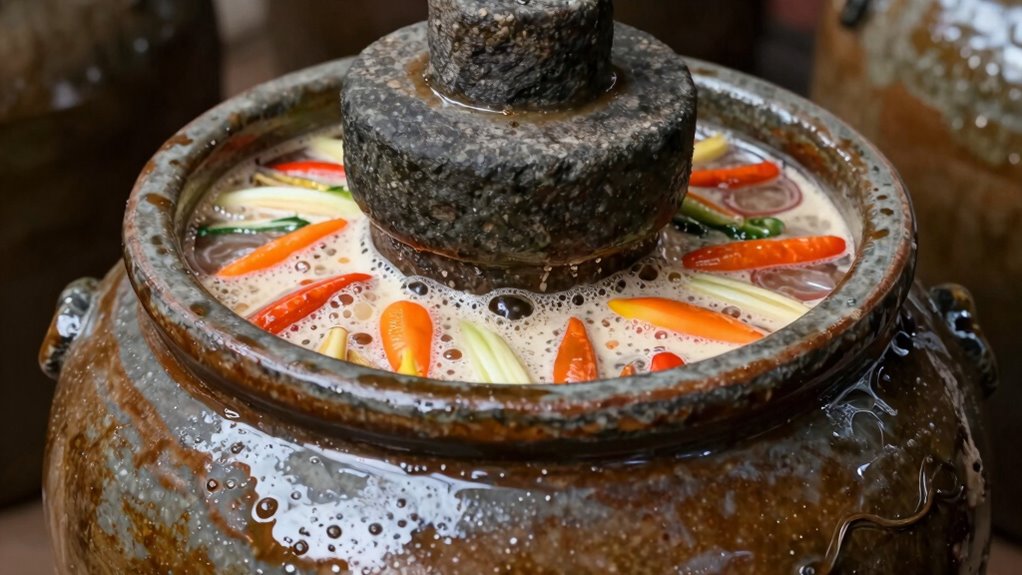
Have you ever wondered how to easily ferment vegetables or make your own probiotic-rich foods at home? If so, understanding the basics of fermentation crocks is essential. These crocks, often made with traditional designs, have been used for centuries to store and ferment foods. Today, modern materials have enhanced their durability and ease of use, but the core principles remain the same. Choosing the right crock involves understanding their weight, water seal, and headspace, all of which play vital roles in successful fermentation. Ensuring the crock is made from traditional materials can also influence the overall fermentation environment and success rate. The weight of the crock is more than just a physical attribute; it’s a crucial component in maintaining proper fermentation conditions. A sturdy, well-made crock ensures that the vegetables stay submerged beneath the brine, which is essential to preventing mold and spoilage. Traditional designs tend to be heavier, often crafted from thick ceramic or stoneware, providing stability during fermentation. Modern materials, like food-grade plastics or lightweight ceramics, make handling easier without compromising the weight needed to keep contents submerged. Whichever material you choose, ensure it’s robust enough to withstand the pressure created during fermentation, and that it stays stable on your countertop. Proper fermentation environment depends heavily on the materials and design of your crock, as well as the airflow around your setup. Incorporating proper temperature control can further enhance the fermentation process, especially for delicate foods. The water seal is another key element of fermentation crocks, acting as an invisible barrier that helps keep oxygen out while allowing gases like carbon dioxide to escape. Most traditional designs incorporate a water lock or a lid with a water moat, which functions as a natural seal. Modern materials often feature airtight silicone gaskets or specialized lids that create an effective water seal. This seal is crucial because it prevents contaminants from entering the crock and spoiling the food. When setting up your crock, fill the water moat or ensure your gasket is sealed properly to maintain an anaerobic environment. Proper setup can help prevent issues like mold or spoilage. This simple step can make a significant difference in the success of your fermentation process. Headspace—the space between the top of the food and the lid—is often overlooked but is vital for safe fermentation. You need enough room for gases to escape without overflowing, which can cause messes or contamination. Traditional designs usually have a specific fill line, ensuring you leave enough headspace. Modern crocks often include markings or adjustable lids to help you gauge the correct amount. Filling the crock too full can lead to pressure buildup, while too little space may lead to food contact with the lid, risking spoilage. Striking the right balance ensures your vegetables ferment safely and efficiently.

Mojoberry 7L Fermentation Crock with Weights — European-Designed A-Grade Porcelain | Water Seal | Sauerkraut, Kimchi, Pickles & More | 1.8 Gallon
- European-Designed High-Fired Porcelain: Durable, dense, and crack-resistant material
- Water Seal for Reliable Fermentation: Creates anaerobic environment, reduces evaporation
- 7L Capacity for Large Batches: Holds 5-7 cabbage heads, makes 12 jars
As an affiliate, we earn on qualifying purchases.
As an affiliate, we earn on qualifying purchases.
Frequently Asked Questions
How Long Can Fermented Foods Be Stored in Crocks?
You can store fermented foods in crocks for several months if you maintain proper fermentation longevity and storage conditions. Keep the crock in a cool, dark place with stable temperatures to prevent spoilage. Regularly check the water seal and guarantee the headspace remains consistent. Properly fermented foods can last 6 to 12 months, but always monitor for signs of mold or off-odors to ensure safety and quality over time.
Can Fermentation Crock Sizes Be Customized?
Yes, fermentation crock sizes can be tailored to fit your needs. You can choose custom sizes to accommodate larger or smaller batches, making the process more efficient. Material options vary, including traditional ceramic, stone, or food-grade plastic, so you can select what suits your preferences and space. Custom crocks allow you to optimize fermentation space and guarantee your ingredients are properly submerged and protected throughout the process.
Are There Specific Cleaning Methods for Fermentation Crocks?
Like a master chef tending to their tools, you should use gentle cleaning techniques for fermentation crocks. Wash with warm water and a mild soap, avoiding abrasive scrubbers that could damage the surface. Sanitation tips include rinsing thoroughly and occasionally using a mild vinegar solution to disinfect. Never submerge the entire crock in water—focus on the interior and rim to maintain the integrity of your fermentation vessel.
What Types of Foods Are Best Suited for Crock Fermentation?
You should use fermentation crocks for foods like sauerkraut, kimchi, pickles, and fermented vegetables. These traditional methods enhance fermentation flavors by creating an anaerobic environment, which prevents spoilage. Crocks allow for better control over the fermentation process, resulting in tangy, flavorful products. They’re ideal for fermenting large batches, and their design helps maintain consistent conditions, ensuring your fermented foods develop rich, authentic flavors over time.
How Do I Troubleshoot Mold or Spoilage Issues?
Remember, an ounce of prevention is worth a pound of cure. To troubleshoot mold or spoilage, first check for signs of mold avoidance failure—such as a fuzzy or colored growth—and detect spoilage by foul odors or slimy textures. Guarantee your fermentation crock has a proper water seal and adequate headspace. If issues arise, remove affected food immediately, clean the crock thoroughly, and adjust your fermentation process to prevent recurrence.
ceramic fermentation crock weight
As an affiliate, we earn on qualifying purchases.
As an affiliate, we earn on qualifying purchases.
Conclusion
Understanding the weight, water seal, and headspace in fermentation crocks is key to successful fermentation. Did you know that studies show proper sealing can boost fermentation speed by up to 30%? By mastering these basics, you’ll create a safe, tasty environment for your fermented foods. Keep experimenting with your crock’s settings, and you’ll enjoy vibrant, probiotic-rich results every time. Happy fermenting!
fermentation crock lid with headspace markings
As an affiliate, we earn on qualifying purchases.
As an affiliate, we earn on qualifying purchases.
water moat for fermentation crock
As an affiliate, we earn on qualifying purchases.
As an affiliate, we earn on qualifying purchases.