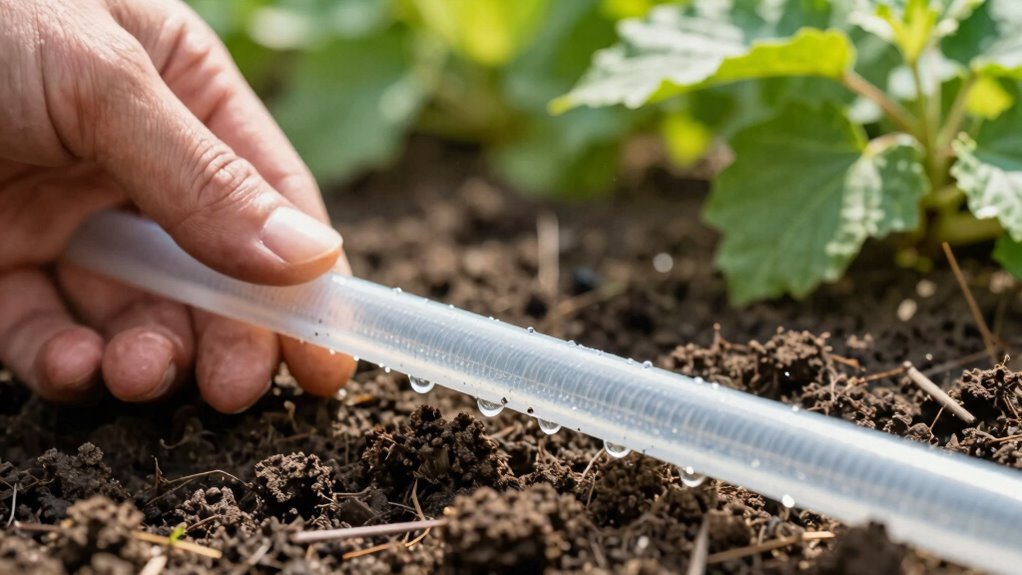
To flush your drip lines before emitters start failing, turn off the system and relieve pressure. Remove filters and disconnect mainlines or sections you want to clean. Attach a hose or flush kit and run water at moderate pressure through each line for several minutes until the water runs clear. Check for leaks or damage, and consider using a suitable cleaning solution if buildup persists. Keeping up with this routine can prevent clogs and extend your system’s lifespan—learn more about effective techniques below.

Get garden gear delivered free with Prime
- Fast, free delivery on millions of items
- Prime Video, Amazon Music and more included
- Member-only deals all year
Key Takeaways
- Turn off the irrigation system and relieve pressure before starting the flush process.
- Disconnect the mainline or sections and attach a hose or flush kit for water flow.
- Run water through each line at moderate pressure until the water runs clear, indicating debris removal.
- Clean filters or strainers thoroughly to prevent future clogs.
- Regularly inspect for leaks or damaged sections and incorporate flushing into routine maintenance.
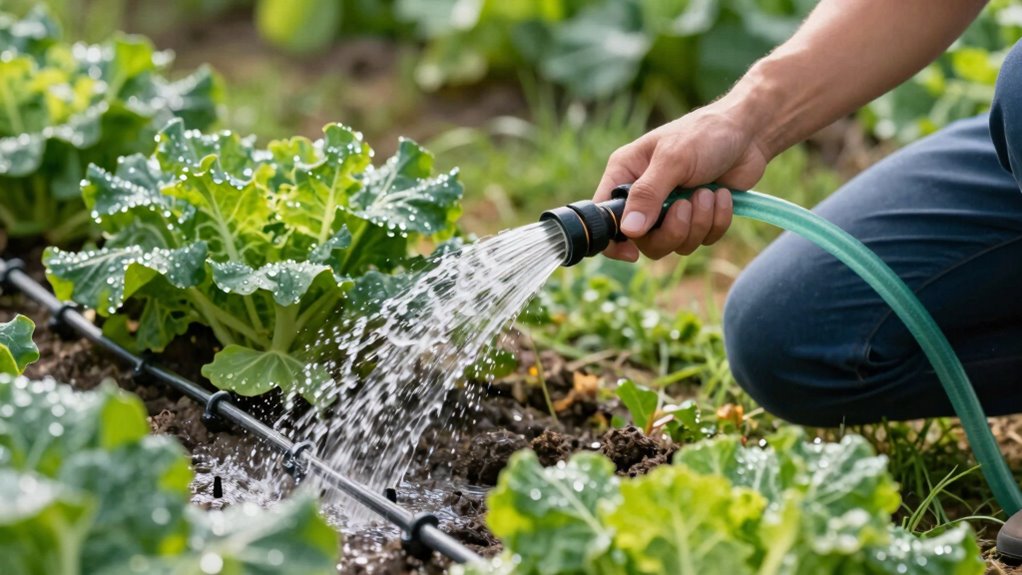
Over time, debris, algae, and mineral buildup can clog your drip lines, reducing their efficiency and risking plant health. When this happens, your plants won’t get the proper amount of water or nutrients, which can lead to wilting, uneven growth, or even death. To keep everything running smoothly, regular flushing is essential. Before you start, it’s helpful to consider fertilizer compatibility because some fertilizers can leave residues that clog your lines more quickly. Using compatible fertilizers, or flushing with plain water periodically, helps prevent buildup and keeps your system functioning efficiently.
Regular flushing and fertilizer compatibility prevent clogs, ensuring healthy, efficient drip system operation.
Begin by turning off your irrigation system and relieving pressure in the lines. Remove any filters or strainers so you can clean them thoroughly. Next, disconnect the mainline or any sections you plan to flush. You’ll need a hose or a flush kit—a tool designed specifically for cleaning drip systems. Attach the hose or flush kit securely, then turn on the water at a moderate pressure. Running water through the lines helps dislodge accumulated debris, algae, and mineral deposits. Be sure to flush each line for several minutes until the water runs clear. This process minimizes the risk of blockages and ensures your emitters will deliver water evenly. Regular maintenance also involves inspecting for leaks or damaged sections during flushing. Incorporating Proper cleaning agents** can help prevent stubborn buildup and extend the system’s lifespan**.
It’s a good idea to incorporate line maintenance tips into your routine, like inspecting for leaks or damaged sections during flushing. Also, consider periodically flushing with a cleaning solution designed for irrigation systems if algae or mineral buildup is persistent. Using the appropriate cleaning agents can help prevent stubborn buildup and extend the system’s lifespan. Regular flushing not only prevents clogs but also prolongs the lifespan of your drip system. Remember, maintaining proper fertilizer compatibility is crucial—using fertilizers that don’t clog lines or cause buildup reduces the frequency of flushing needed. Additionally, always follow the manufacturer’s instructions for cleaning agents or flushing procedures. Consistent line maintenance tips like these keep your system efficient, saving you time and money in the long run. By staying proactive with flushing and understanding how fertilizer compatibility affects your system, you can avoid costly repairs and ensure your plants receive the consistent watering they need to thrive.
As an affiliate, we earn on qualifying purchases.
Frequently Asked Questions
How Often Should I Flush My Drip Lines?
You should flush your drip lines every 4 to 6 weeks as part of regular drip line maintenance. This helps prevent clogs and guarantees efficient watering. Incorporate water quality testing periodically to identify issues like mineral buildup or algae, which can affect performance. Regular flushing keeps your system clean, prolongs emitter life, and maintains peak watering, especially in areas with hard water or organic matter.
Can Flushing Damage the Emitters?
Sure, using chemical cleaners or high water pressure might seem like the ultimate fix, but they can actually damage your emitters. Flushing with overly strong chemicals or blasting water at high pressure risks cracking or clogging delicate parts, making your system worse. Instead, gently flush with clean water, ensuring water pressure is moderate. Treat your emitters like royalty—carefully, and they’ll reward you with longer, trouble-free service.
What Tools Are Needed for Flushing?
You’ll need basic tools like a garden hose with a spray nozzle, a pressure regulator, and possibly a cleaning wand or brush for flushing. The tools overview includes a water source, connectors, and possibly a filter. For flushing techniques, connect your hose to the system, regulate pressure to avoid damage, and run water through the lines to clear debris. These tools make flushing efficient and help prevent emitter clogs.
Is It Necessary to Flush After Each Season?
Did you know that neglecting winterization techniques can lead to 80% of drip line failures? You should flush your lines after each season to prevent debris buildup and guarantee proper water flow. Regular water quality testing helps identify issues early. Flushing removes mineral deposits and algae, reducing clogging. So, yes, it’s essential to flush annually, especially after winter, to keep your system functioning smoothly and extend its lifespan.
How Do I Identify Clogged Emitters?
You can identify clogged emitters by observing uneven watering or dry spots in your garden. Soil buildup and mineral deposits often cause these clogs, leading to reduced water flow. Check each emitter by gently removing the emitter cap and inspecting for blockages. If water doesn’t flow freely or there’s a buildup of minerals, it’s time to flush the lines. Regular maintenance helps prevent clogging caused by soil buildup and mineral deposits.
As an affiliate, we earn on qualifying purchases.
Conclusion
Regularly flushing your drip lines is like giving your garden a gust of fresh air, ensuring every emitter works flawlessly. It’s a simple step that prevents clogs and keeps your plants thriving. Don’t wait until your system turns into a clogged nightmare—stay ahead of the game! By making flushing a routine, you’ll keep your drip lines flowing like a mighty river, delivering water where your plants need it most, day after day.
irrigation system cleaning solution
As an affiliate, we earn on qualifying purchases.
As an affiliate, we earn on qualifying purchases.
garden hose for irrigation flushing
As an affiliate, we earn on qualifying purchases.
As an affiliate, we earn on qualifying purchases.
Fall yard work Picks
leaf blowers
As an affiliate, we earn on qualifying purchases.