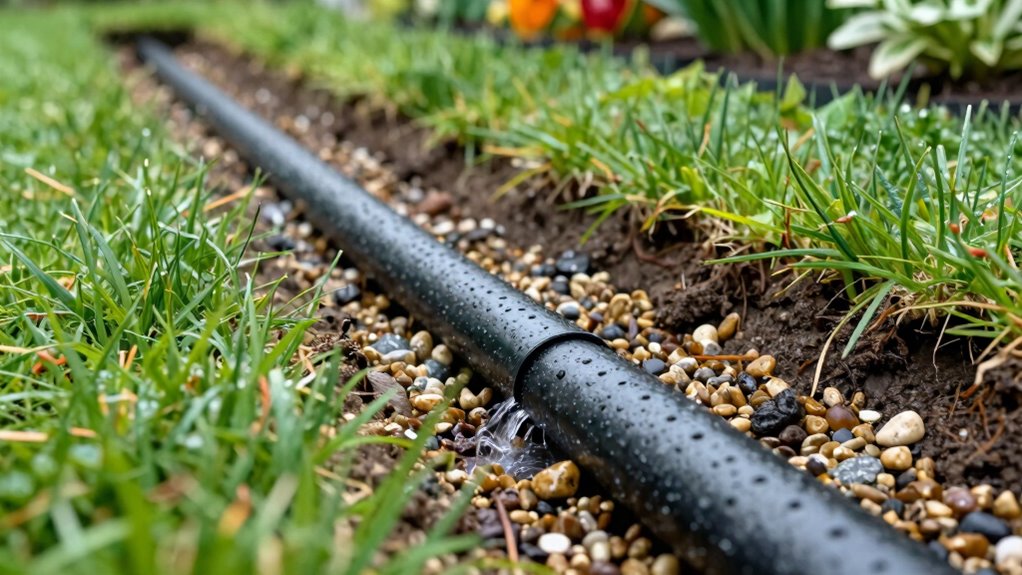

A French drain only works if water has a clear escape route. You need to make sure the drain is properly installed, with a slope that directs water toward an outlet like a storm drain or dry well. Soil type matters—high permeability soils drain quickly, but clay can cause water to pool. Obstacles or poor site planning can block water flow. If you want to understand how to set up your drain for maximum effectiveness, there’s more to take into account.

Get garden gear delivered free with Prime
- Fast, free delivery on millions of items
- Prime Video, Amazon Music and more included
- Member-only deals all year
Key Takeaways
- Proper outlet placement ensures water can escape, preventing pooling and drain failure.
- Soil permeability affects drainage efficiency; high-permeability soils facilitate faster water flow.
- Adequate slope directs water toward the outlet, essential for effective drainage.
- Obstructions like roots or debris can block water flow, reducing drain effectiveness.
- Correct installation and site assessment are vital for ensuring water has a clear escape route.
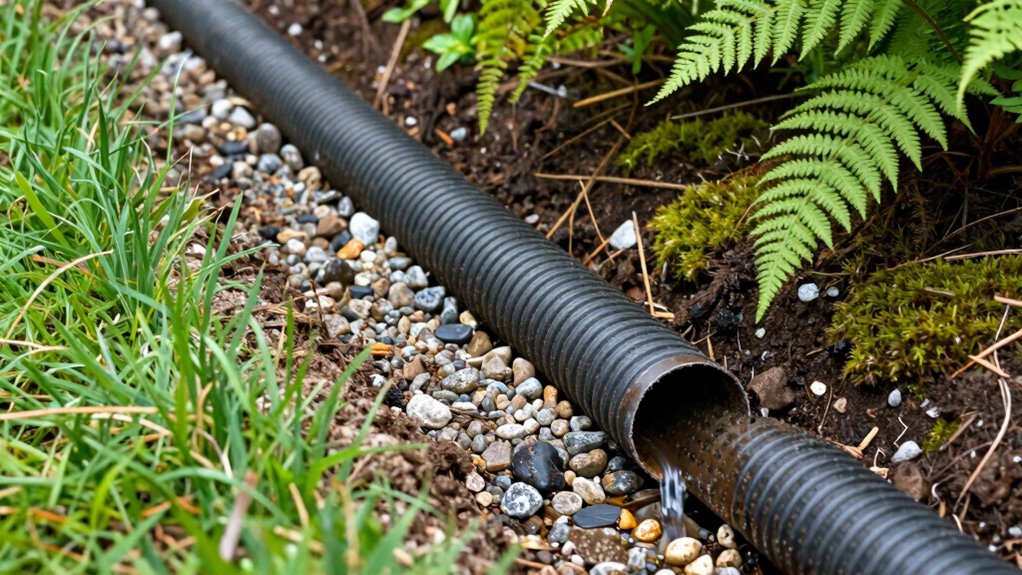
Have you ever wondered how French drains effectively manage excess water around your property? The key lies in understanding how water moves through soil and how the drainage system channels it away. French drains work by redirecting groundwater or surface water from areas that tend to flood or become waterlogged. But for them to be truly effective, water needs somewhere to go. If there’s no proper outlet, even the best drain will be useless. This is why soil permeability plays a critical role in their success. Permeability refers to how easily water can pass through the soil. If your soil is highly permeable—like sandy or gravelly soil—water seeps through quickly, making it easier for the drain to keep the area dry. Conversely, clay soils have low permeability, meaning water moves slowly or not at all through them. In such cases, water can accumulate around the drain, defeating its purpose.
Effective French drains depend on soil permeability and proper water outlet for optimal drainage.
Installing a French drain isn’t always straightforward, especially when considering soil permeability and other installation challenges. For example, if you have dense clay soil, you might need to modify the trench or add gravel to improve drainage. Sometimes, this means excavating deeper or wider than you’d initially planned, which can be labor-intensive and costly. Additionally, poor site assessment can lead to improper placement or inadequate slope, which are critical for drainage systems to function correctly. For instance, proper slope ensures water flows efficiently toward the outlet, preventing pooling or standing water. If the drain isn’t installed at the right angle, water won’t flow efficiently toward the outlet, causing pooling or standing water. Soil conditions also influence how well a French drain works, as some soils require additional modifications for optimal drainage. Moreover, understanding soil permeability helps determine whether additional drainage solutions are necessary to prevent water buildup. Proper drainage planning can significantly reduce installation issues and improve overall effectiveness. Recognizing the importance of site conditions can help you avoid costly mistakes and ensure your French drain functions as intended.
Another challenge relates to guaranteeing the drain’s outlet is clear and accessible, so water has a safe escape route. Without a proper outlet, water has nowhere to go, and your drainage system becomes ineffective, no matter how well it’s installed. Furthermore, soil stability and compaction can pose issues during installation. If the trench walls collapse or aren’t properly compacted, the pipe might shift or get clogged with debris, impairing drainage. In some cases, you might also face obstacles like tree roots or underground utilities, which complicate excavation and installation.
Understanding these challenges helps you recognize that a French drain is only as good as its design and placement. If water has somewhere to go—like a storm drain, dry well, or natural slope—the system can do its job efficiently. Without a proper outlet and suitable soil conditions, even the most expertly installed drain will fail to protect your property from excess water. So, before installing a French drain, assess your soil type, plan for the right installation techniques, and guarantee there’s a clear path for water to escape. Only then can you truly benefit from a well-functioning drainage system.
Products Worth Considering

Husqvarna Power Axe 350i 18-Inch Cordless Chainsaw Kit
Greenworks 48V (24V x 2) 21-inch Self-Propelled Lawn Mower, Battery Kit

EGO POWER+ 21 Cordless Electric Lawn Mower Kit, Self-Propelled
As an affiliate, we earn on qualifying purchases.
Frequently Asked Questions
How Deep Should a French Drain Be Installed?
You should install a French drain about 18 to 24 inches deep, depending on your drainage needs. This depth helps guarantee proper water flow away from your foundation or problem areas. Consider your soil types—clay soils may require deeper drains to prevent water pooling, while sandy soils drain faster. Proper depth is essential for effective drainage solutions, so assess your site specifics before installation to ensure water has somewhere to go.
What Materials Are Best for French Drain Pipes?
For drainage landscaping, the best pipe material options include perforated PVC and corrugated plastic, as they allow water to flow efficiently while resisting corrosion. PVC pipes are smooth, durable, and easy to install, making them a popular choice. Corrugated pipes are flexible and robust, ideal for trenches with uneven terrain. Choose a pipe material that suits your landscape’s drainage needs, ensuring water has a clear path away from your property.
How Long Does a French Drain Typically Last?
Did you know that a well-maintained French drain can last 30 to 50 years? You rely on it for rainwater management and soil drainage, so longevity matters. Proper installation and regular inspections help guarantee it functions effectively over time. If you notice persistent pooling or drainage issues, it might be time to check for clogs or damage. With good upkeep, your French drain can serve you for decades, protecting your property.
Can I Install a French Drain Myself?
Yes, you can install a French drain yourself if you’re comfortable with DIY projects. Start with drainage troubleshooting to identify problem areas and plan your layout. You’ll need to dig a trench, lay perforated pipe, and cover it with gravel. Follow step-by-step instructions and safety precautions. Keep in mind, proper installation is essential for effective water diversion, so take your time and consider consulting tutorials or experts if needed.
What Signs Indicate a French Drain Is Failing?
You’ll know your French drain is failing if drainage troubleshooting shows water isn’t flowing properly or pooling around your foundation. Signs include persistent soggy soil impact, standing water, or a damp basement. If the soil around the drain remains saturated despite rainfall, it indicates a blockage or collapse. Regular inspection and maintenance help prevent failure, ensuring water continues to flow away effectively and protecting your property from water damage.
Conclusion
Remember, a French drain is like a superhero for your yard—if water has a clear path, it vanishes faster than you can say “drainage disaster.” Without an exit, even the mightiest drain is just a fancy pipe collecting mud and frustration. So, make sure your drain has somewhere to go, or you’ll be battling soggy soil and waterlogged dreams forever. When water has an escape route, your yard stays dry, happy, and ready for anything.