TL;DR

Get garden gear delivered free with Prime
- Fast, free delivery on millions of items
- Prime Video, Amazon Music and more included
- Member-only deals all year
Long-standing advice that leaving leaves on the lawn will kill the grass overstates the evidence, according to university research. Michigan State University trials found up to six inches of mulched oak and maple leaves produced no adverse effects on established Kentucky bluegrass, though thick, wet mats of whole leaves can still cause damage and disease.
The widespread belief that leaves left on the lawn will inevitably smother and kill the grass is contradicted by decades of university turf research, according to a Gardening Know How report. Trials at Michigan State University found that up to six inches (15cm) of oak and maple leaves could be mulched directly into established Kentucky bluegrass with no adverse effects on turf health or density — far more leaf volume than most suburban lawns ever accumulate at once.
The report draws a sharp distinction between two very different situations. A thick, wet carpet of whole leaves sitting on dormant grass can block sunlight and trap moisture around plant crowns during cold months, and extension specialists such as the University of Maryland Extension advise clearing heavy leaf mats for this reason. Prolonged dark, wet conditions also favor cool-season fungal diseases, including gray snow mold (Typhula incarnata) and pink snow mold (Microdochium nivale), which can damage turf at temperatures just above freezing.
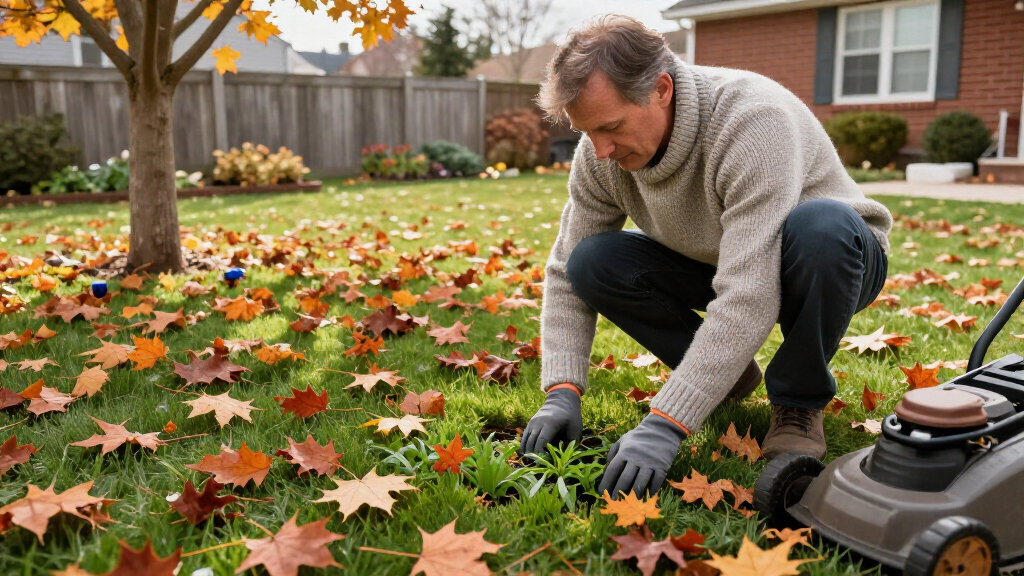
However, the report argues that the word “always” in the traditional clearing rule overreaches. When dry leaves are chopped with a mower — a practice known as mulch-mowing — the fragments drop between grass blades rather than forming an airtight mat. Earthworms and soil microbes then pull the organic material underground over winter, releasing the nitrogen and potassium stored in the leaves.
Research from the University of Connecticut Extension cited in the report quantifies the benefit: mulching a 2-inch (5cm) layer of fall leaves into a lawn returns approximately 3.4 pounds (1.5kg) of nitrogen per 1,000 square feet (93sqm) over a season, along with plant-available potassium. The report notes this should supplement, not replace, a full lawn fertility program.
What the Research Means for Fall Cleanup
The findings matter because they challenge a routine that consumes millions of gardeners’ weekends each autumn. Following the old rule to the letter, the report argues, means paying to haul natural fertility away in yard waste bags, then paying again for fertilizers to replace nutrients the leaves would have returned to the soil for free.
The report also identifies why the myth persists: visibility. Lawn damage from a neglected pile of wet leaves produces an obvious yellow patch in April, while a properly mulch-mowed lawn shows no visible trace by spring. One outcome is memorable; the other is invisible, which skews perception of the risk.
For homeowners, the practical takeaway is that particle size matters more than the presence of leaves. A whole oak leaf acts like a shingle, sealing out air and trapping water, while small fragments behave as a soil amendment that decomposes over winter.
The Michigan Landfill Ban Behind the Trials
The research at the center of the report originated in the 1990s, when Michigan banned yard waste from municipal landfills. Turf scientists at Michigan State University set out to determine how much leaf debris established grass could tolerate, and their findings surprised even experienced agronomists, according to the report.
Follow-up work addressed another common concern: the belief that mulching oak leaves will sour the soil. MSU soil testing in 1998 confirmed that decades of mulching oak leaves into turf caused no discernible shift in soil pH, though it did increase beneficial organic matter. The report suggests gardeners who remain uncertain can verify conditions with a home soil test kit.
“Claiming every fallen leaf must be raked or your lawn will die asks far more of the evidence than is strictly needed.”
— Gardening Know How report
Limits of the Mulch-Mowing Evidence
The findings apply specifically to established turf — the MSU trials tested Kentucky bluegrass, and the report does not claim the same tolerance for newly seeded lawns, thin turf, or other grass species. The six-inch tolerance figure also refers to leaves that are mulched with a mower, not left whole.
The report acknowledges that leaf residue contains lower nitrogen levels than grass clippings and that mulched leaves cannot substitute for a complete fertility program. It does not specify outcomes for lawns in consistently wet climates or under prolonged snow cover, where snow mold risk may be higher. Gardeners handling any cleanup are advised to use appropriate yard waste bags and, as with any mower operation, follow standard safety precautions including checking for debris before mowing.
Practical Steps for This Leaf Season
As fall progresses, homeowners can decide between removal and mulch-mowing based on leaf volume and lawn condition. For heavy accumulations, a couple of passes with a sharp mower blade over dry leaves chops them into fragments small enough to settle between grass blades; thick, wet mats should still be cleared with yard waste bags.
Gardeners concerned about long-term soil effects can monitor pH with a home soil test kit, as the report suggests. University extension services continue to update seasonal lawn care guidance, and readers can consult their local extension office for region-specific recommendations on leaf management and snow mold prevention heading into winter.
Key Questions
Will leaves left on my lawn kill the grass?
Not necessarily. According to Michigan State University research cited by Gardening Know How, up to six inches (15cm) of mulched oak and maple leaves caused no adverse effects on established Kentucky bluegrass. However, a thick, wet mat of whole leaves left over winter can block sunlight, trap moisture, and promote snow mold.
What is mulch-mowing?
Mulch-mowing means running a regular lawn mower over dry fallen leaves — typically a couple of passes with a sharp blade — to chop them into small fragments. These fragments drop between grass blades and are broken down by earthworms and soil microbes over winter.
Do mulched oak leaves make soil acidic?
No, according to MSU soil testing in 1998. Decades of mulching oak leaves into turf caused no discernible shift in soil pH, though it did increase beneficial organic matter. Home soil test kits can confirm conditions if you are unsure.
How many nutrients do mulched leaves return to the lawn?
University of Connecticut Extension research found that mulching a 2-inch (5cm) layer of fall leaves returns roughly 3.4 pounds (1.5kg) of nitrogen per 1,000 square feet (93sqm) over a season, plus plant-available potassium. This supplements but does not replace a full fertility program.
When should I still remove leaves from the lawn?
Clear heavy, wet leaf mats that block sunlight and trap moisture around grass crowns, as University of Maryland Extension specialists advise, since these conditions favor gray and pink snow mold. Newly seeded or thin lawns may also warrant more aggressive cleanup than the established turf used in the MSU trials.
Source: rss
Fall yard work Picks
leaf blowers
As an affiliate, we earn on qualifying purchases.