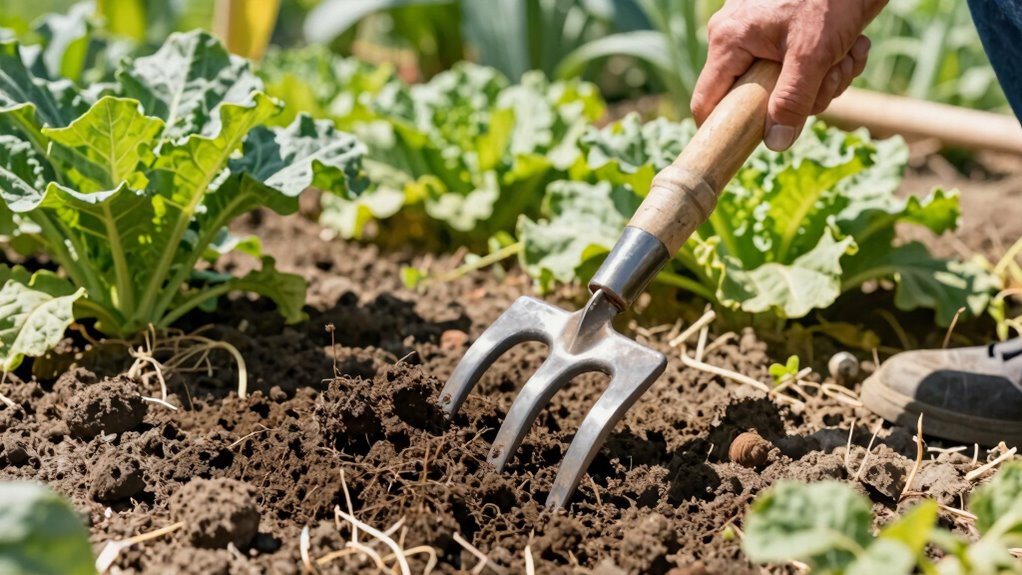

Using a broadfork is an excellent way to loosen soil in no-till gardens without flipping it over. It creates aeration, reduces compaction, and supports soil organisms, all while maintaining natural layers and organic matter. Proper technique involves working in rows with steady pressure, avoiding excessive force. Regular maintenance keeps it effective, and choosing the right size makes your task easier. Keep an eye on safety and efficiency to protect your soil’s health—stay tuned to learn more about it.
Key Takeaways
- Broadforking loosens soil deeply without flipping, preserving soil layers and beneficial microorganisms crucial for no-till gardening.
- Proper technique involves gentle insertion and pulling, avoiding soil disturbance and maintaining organic matter.
- Regular use improves aeration, moisture retention, and root growth, supporting healthy, resilient plants.
- Choosing the right broadfork size and maintaining it ensures effective soil loosening without damage.
- Avoiding excessive force and practicing proper safety helps sustain soil health and tool longevity in no-till systems.
What Is a Broadfork and Why Is It Great for No-Till Gardens?
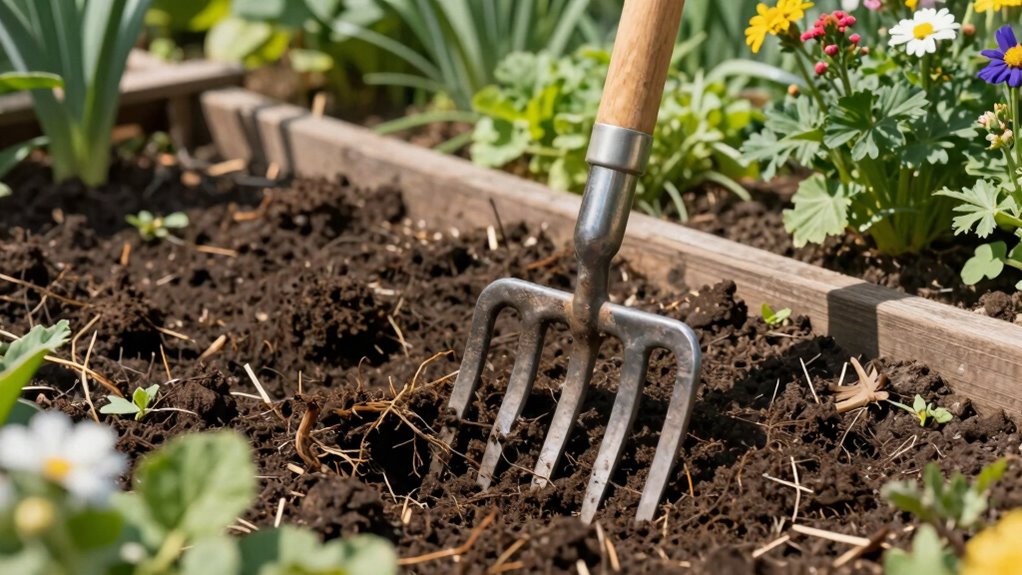
Ever wondered how to loosen soil effectively without disturbing its structure? That’s where a broadfork shines. It’s a sturdy, manual tool designed to aerate soil deeply without flipping or turning it over. By inserting the tines into the ground and pulling back, you loosen compacted soil, allowing air and water to penetrate better. This process improves soil aeration, which promotes healthy root growth and boosts plant vitality. Plus, because you avoid tilling, you help retain moisture in the soil, reducing watering needs and preventing erosion. A broadfork offers a gentle, sustainable way to prepare garden beds, especially in no-till gardening. It preserves soil structure, fosters microbial life, and makes your garden more resilient and productive over time. Soil health is a key benefit, supporting long-term garden vitality. Using a broadfork also minimizes soil compaction caused by heavy equipment, keeping your soil structure intact for better plant growth. Additionally, employing a broadfork encourages microbial activity, which is essential for maintaining rich, fertile soil. Maintaining the natural soil ecosystem is crucial for a thriving garden, and broadforking helps sustain this delicate balance.
How to Pick the Right Broadfork for Your Garden
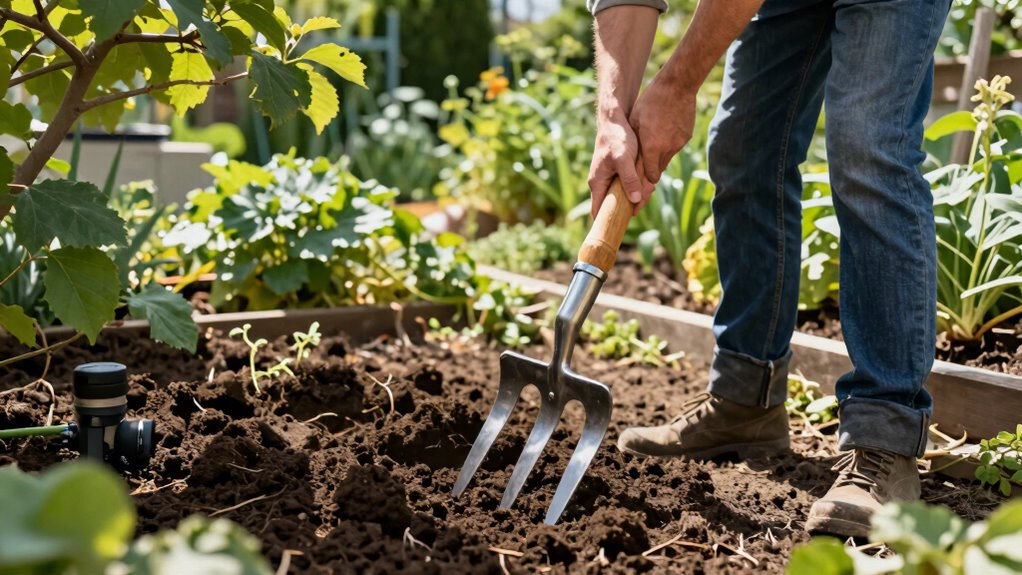
Selecting the right broadfork depends on your garden’s size, soil type, and your physical comfort. For large garden beds, opt for a wider tined broadfork to cover more ground efficiently. If your soil is heavy clay or compacted, look for a model with sturdy tines and a robust frame to penetrate tough soil without excessive effort. Consider your height and strength to select a tool that reduces strain during use. Your garden bed design also influences your choice—raised beds may need a smaller, lighter fork. Additionally, understanding your composting techniques can guide soil looseness requirements. If you incorporate compost regularly, a broadfork that aerates without disrupting organic layers is ideal. Natural pools can also benefit from gentle soil aeration methods that preserve beneficial microorganisms. Proper soil aeration can improve plant health and soil fertility, making your gardening more productive. Choosing a quality broadfork with ergonomic features can further reduce physical strain and increase efficiency during use, especially if you have heavy or compacted soil. Picking the right tool ensures effective soil management and a more enjoyable gardening experience.
Learn How to Use a Broadfork Step by Step
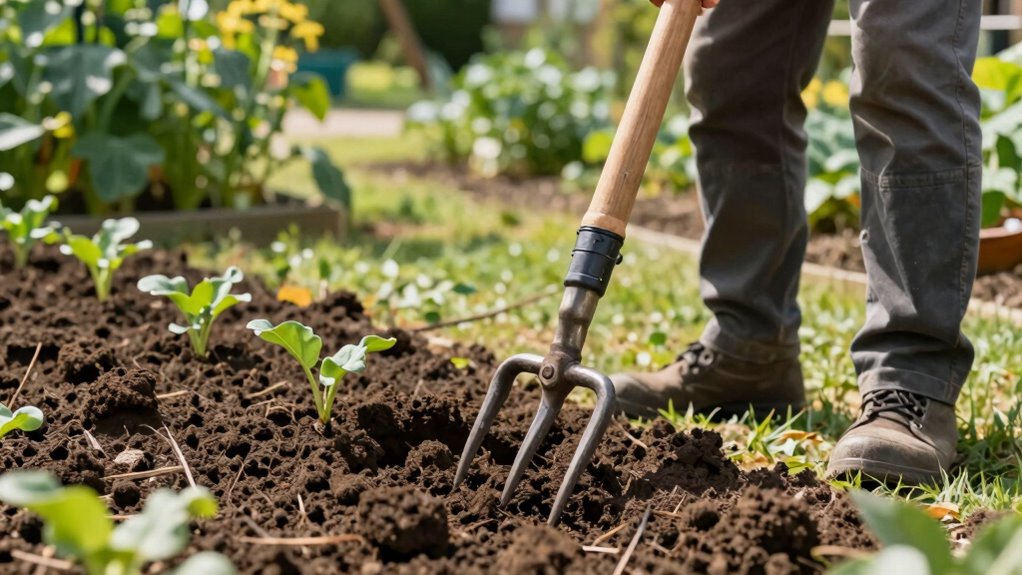
Using a broadfork correctly begins with proper positioning and grip. Stand with your feet shoulder-width apart, place the handles firmly, and keep your back straight. To loosen soil compaction and improve organic matter, follow these steps:
- Push the tines down into the soil, about 8-12 inches deep.
- Use your body weight to pull back, lifting the soil without flipping it.
- Move side to side to cover the area evenly.
- Repeat in rows, working across your garden bed to aerate and loosen soil gently.
- Regular use of the broadfork helps maintain the soil’s structure and health, promoting better plant growth. Incorporating soil organic matter can further enhance soil vitality and fertility. Additionally, avoiding soil disturbance preserves beneficial microbial activity that supports healthy plant roots. Proper tool maintenance ensures the longevity and effectiveness of your broadfork. Consistent use also helps prevent soil compaction, keeping your garden soil loose and healthy.
This method maintains soil structure, boosts organic matter, and avoids unnecessary disturbance.
Common Mistakes to Avoid When Broadforking
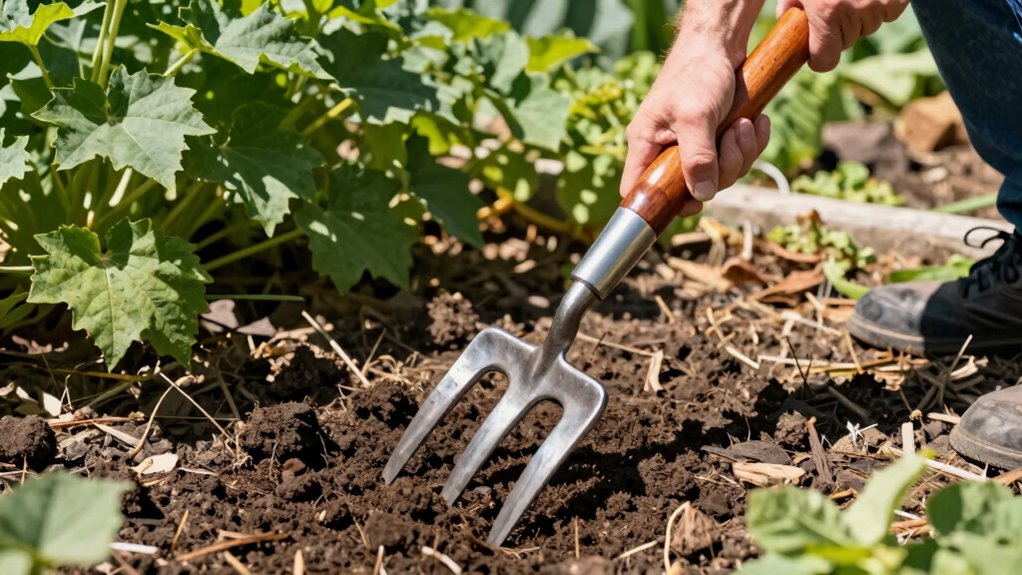
One common mistake when broadforking is applying too much force or digging too deeply, which can disturb the soil structure and damage beneficial microorganisms. Overusing force can also lead to fatigue or injury if you’re neglecting safety. Instead, use steady, controlled pressure, focusing on loosening the soil without breaking it apart. To emphasize safe practices, consider this:
| Do’s | Don’ts |
|---|---|
| Use gentle, steady pressure | Overexert yourself or rush |
| Maintain proper posture | Neglect safety precautions |
| Work in small sections | Force the fork too deeply |
| Take breaks when needed | Ignore your body’s signals |
Avoid these mistakes to keep your soil healthy and ensure safe, effective broadforking. Additionally, understanding soil health can help guide your technique and improve garden outcomes, which highlights the importance of soil microbial activity in maintaining a vibrant garden ecosystem. Developing an awareness of soil structure can further enhance your broadforking technique and promote sustainable gardening practices. Incorporating soil aeration techniques can also support healthy root development and overall soil vitality. Recognizing the role of soil compaction can help prevent issues that hinder plant growth.
How Broadforking Benefits Soil and Plant Growth
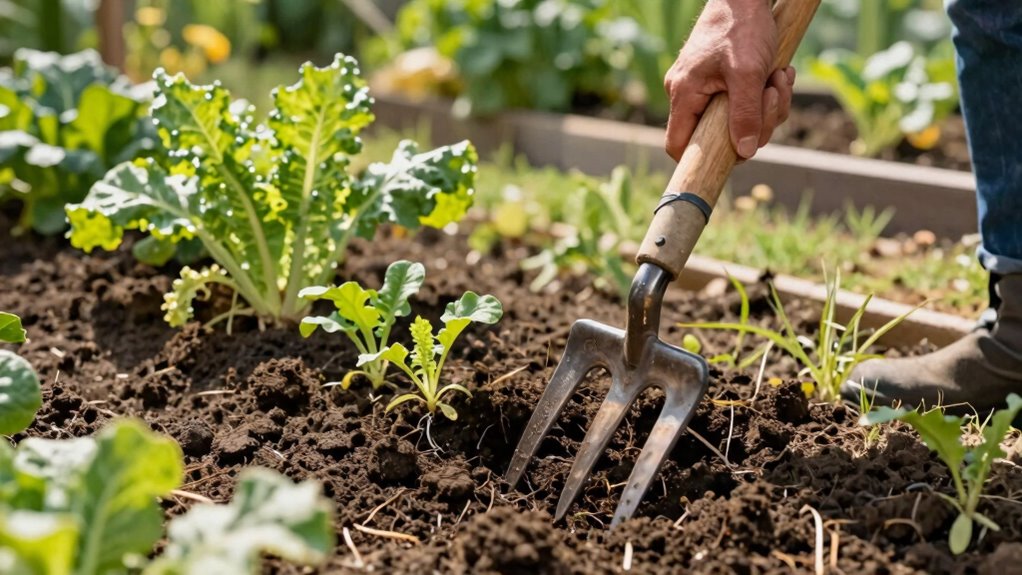
Broadforking fundamentally enhances soil health by aerating and loosening compacted layers, which allows roots to penetrate more easily and access essential nutrients. This process promotes vigorous plant growth and improves overall garden vitality. Additionally, broadforking creates better conditions for compost application, helping organic matter integrate seamlessly into the soil. It also aids in pest management by disturbing pest habitats and reducing soil-borne issues. By loosening soil without flipping it, you preserve beneficial microorganisms and soil structure. Here’s how broadforking benefits your garden:
- Improves root penetration and nutrient uptake
- Facilitates efficient compost application
- Enhances soil aeration and moisture retention
- Supports natural pest management strategies
This method boosts plant health naturally, ensuring a thriving, resilient garden.
Broadforking vs. Tilling: Which Soil Loosening Method Is Better?
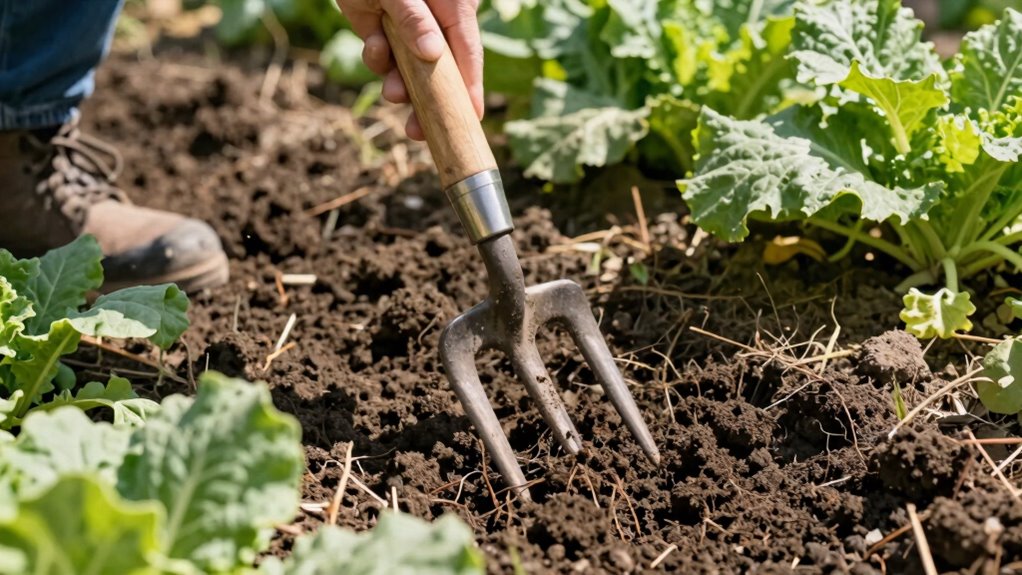
When choosing between broadforking and tilling, you need to contemplate how each method affects your soil’s structure. Broadforking preserves soil integrity better but may require more effort upfront, while tilling is quicker but can damage soil health over time. Which approach aligns best with your garden’s needs and your available time?
Soil Structure Preservation
Choosing the right soil loosening method can considerably impact the long-term health of your garden soil. Broadforking preserves soil structure better than traditional tilling, which disrupts delicate layers. When you broadfork, you improve soil aeration without turning over organic matter, maintaining its essential functions. Tilling can break down soil aggregates, leading to compaction and erosion over time. In contrast, broadforking gently loosens soil while keeping the structure intact. This helps roots penetrate more easily and encourages beneficial organisms.
Consider these points:
- Broadforking sustains natural soil layering.
- It minimizes organic matter disruption.
- It promotes healthy soil aeration.
- It reduces compaction and preserves long-term soil health.
Effort and Time Investment
While broadforking may require more initial effort than traditional tilling, it often saves time in the long run by creating a healthier, more stable soil structure that needs less frequent disturbance. Although it takes some muscle to loosen soil manually, your garden’s aesthetics benefit as the soil remains undisturbed, promoting better plant growth and appearance. Plus, broadforking enhances pest management by disrupting pest habitats less than tilling, reducing pest populations naturally. Over time, the reduced need for frequent cultivation means you spend less time maintaining soil health and more time enjoying your garden. Additionally, adopting no-till gardening practices encourages soil microorganisms, which improve soil fertility and plant health over time. Embracing soil health principles ensures a resilient garden ecosystem that thrives with minimal intervention, supporting a thriving soil ecosystem that sustains healthy plant growth. Incorporating microbial activity into your soil management further boosts the benefits of no-till methods.
Maintaining Your Broadfork for Long-Term Use
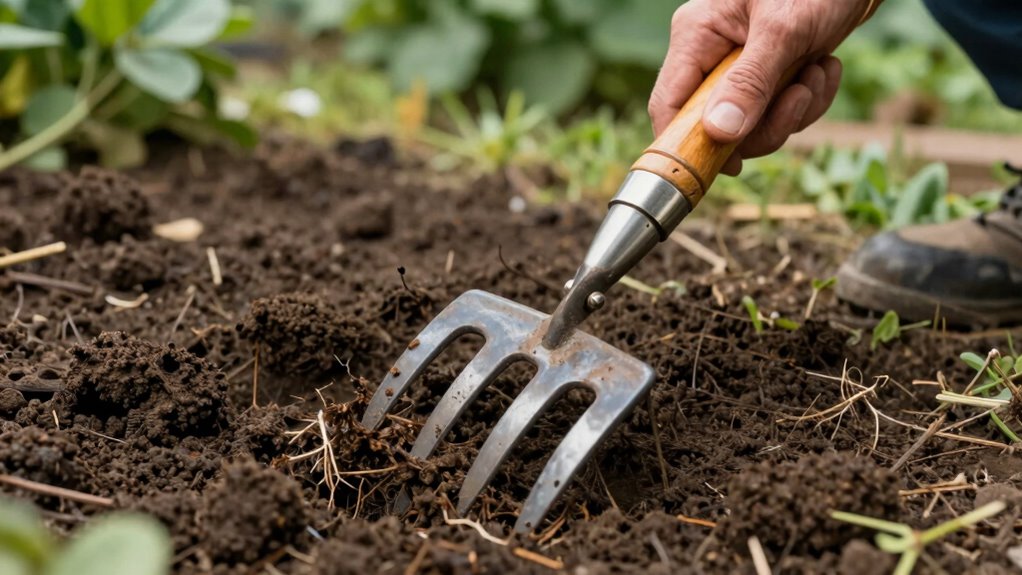
To keep your broadfork in top shape, you’ll want to clean it regularly to prevent dirt buildup. Sharpen the blades as needed to maintain effective soil loosening and reduce strain during use. Proper maintenance guarantees your tool lasts for many seasons of healthy, no-till gardening. Additionally, following recommended safety procedures, such as using transfer switches when connecting to power sources, can help prevent accidents during maintenance. Incorporating smart maintenance reminders through connected tools or apps can help you stay on top of necessary upkeep for long-term use.
Proper Cleaning Techniques
Regularly cleaning your broadfork is essential to keep it in top shape for long-term use. Dirt and debris can cause rust and reduce effectiveness, so a quick cleanup after each use helps. Here are four key tips:
- Remove soil and garden mulch residue with a stiff brush or cloth.
- Wipe down the tines and handle to prevent rust, especially if exposed to moisture.
- Apply a light coat of oil to metal parts to protect against corrosion.
- Store your broadfork in a dry place, avoiding damp areas where rust can develop, and consider applying compost application to the handle for added protection. Proper cleaning not only prolongs your tool’s lifespan but also keeps it ready for effortless soil loosening without flipping. Regular maintenance ensures your broadfork stays in excellent condition for many gardening seasons.
Regular Blade Sharpening
Keeping your broadfork sharp is key to maintaining its effectiveness over time. Regular blade maintenance ensures your tools perform smoothly and reduces strain during use. To keep the blades in top condition, incorporate sharpening techniques like using a sharpening stone or file suited for metal blades. Start by cleaning off dirt and debris, then carefully file or hone the edges, maintaining the original angle. Check for dull spots or chips, and address them promptly. Consistent sharpening prevents rust buildup and sharpens the blades for easier soil penetration. Remember, dull blades require more effort and can damage your soil structure. Regular blade maintenance not only extends your broadfork’s lifespan but also keeps your gardening experience efficient and enjoyable.
Frequently Asked Questions
Can Broadforking Be Used in Clay or Rocky Soils?
Yes, you can use a broadfork in clay or rocky soils. It helps improve soil aeration and promotes structural improvement, making it easier for roots to grow. However, in rocky soils, you might face some resistance, so work slowly and be gentle. Regular broadforking can break up compacted clay, enhance drainage, and create a healthier environment for your plants without flipping the soil.
How Often Should I Broadfork My Garden?
They say “a stitch in time saves nine,” so you should broadfork your garden about once a year or as needed. Regular soil aeration promotes healthy root penetration and keeps your soil loose without disturbing its natural structure. If your soil feels compacted or after heavy rain, consider broadforking sooner. Keep an eye on your garden’s condition, and don’t wait too long to give your plants the breath they need.
Is Broadforking Suitable for Raised Bed Gardens?
Yes, broadforking is suitable for raised bed gardens. It’s an excellent technique for garden bed preparation because it helps loosen compacted soil without disturbing the structure too much. When using broadforking techniques, position yourself properly and apply steady pressure to break up the soil gently. This method improves aeration, promotes healthy root growth, and maintains soil integrity, making it ideal for creating a thriving raised bed garden.
What Safety Precautions Should I Take When Broadforking?
To keep your gardening adventure safe, start by wearing proper hand protection and eye safety gear—think sturdy gloves and goggles. When broadforking, maintain good posture to prevent strain and ensure a firm grip to avoid slips. Clear your work area of obstacles, and take breaks when needed. These precautions safeguard your hands, eyes, and body, letting you enjoy the satisfying task of loosening soil without worry.
Can Broadforking Help With Soil Erosion Control?
Yes, broadforking can help with soil erosion control by improving soil aeration and promoting microbial activity. When you use a broadfork, you loosen compacted soil, which enhances water infiltration and reduces runoff. This process stabilizes the soil structure, making it less prone to erosion over time. Plus, increased microbial activity helps build healthy organic matter, further strengthening your garden’s resilience against erosion.
Conclusion
Now that you know how to use a broadfork, you’re well on your way to a healthier, more productive garden. Embracing this no-till method is like hitting two birds with one stone—you loosen your soil without turning it upside down, preserving essential life. Keep practicing, avoid common pitfalls, and your garden will flourish. Remember, patience is a virtue—success doesn’t happen overnight, but with consistent care, you’ll reap what you sow.