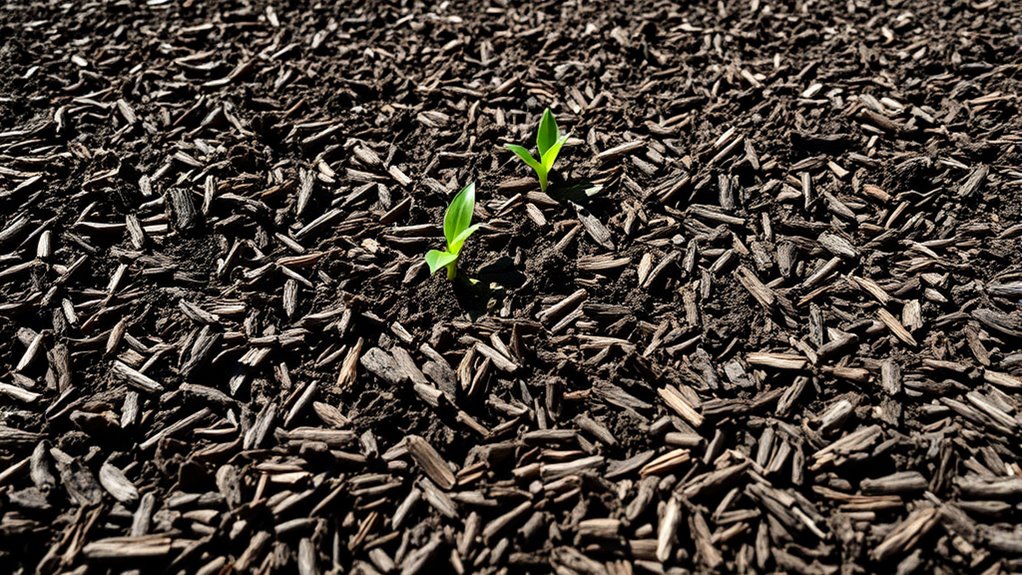

Applying mulch too thick can lead to poor aeration, increased moisture buildup, and even mold or root rot, harming your plants. Generally, 2 to 4 inches is ideal for most garden beds, providing enough coverage for weed suppression and moisture retention without causing problems. Too little mulch won’t prevent weeds or retain soil moisture effectively. To get the perfect balance and learn helpful tips, keep exploring how to optimize your mulch layer.
Key Takeaways
- Mulch should generally be 2 to 4 inches deep for effective weed suppression and moisture retention.
- Excessive mulch over 4 inches can suffocate roots, restrict airflow, and promote mold growth.
- Too thin mulch layers under 2 inches may fail to prevent weeds or retain sufficient soil moisture.
- Over-mulching can cause poor drainage, leading to root rot and plant health issues.
- Proper mulch depth balances weed control, soil moisture, and aeration, avoiding the risks of too much or too little mulch.
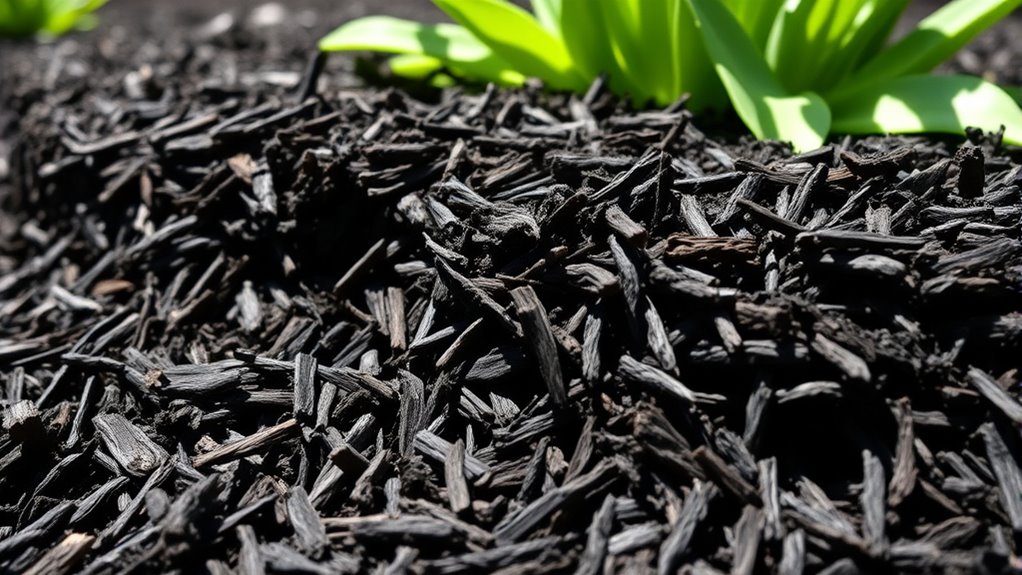
Have you ever wondered how deep your mulch should be to maximize its benefits? Finding the right mulch depth is essential for maintaining healthy soil moisture and effectively suppressing weeds. When you layer mulch too thin, it might not serve its purpose well, allowing weeds to poke through and soil to dry out quickly. Conversely, piling on too much mulch can create problems like poor aeration and rot, which can harm your plants rather than help them. Striking the right balance is key.
Typically, a mulch layer of about 2 to 4 inches works best for most garden beds. This depth is enough to cover the soil adequately, helping retain moisture and keep weeds at bay. When you spread mulch within this range, you create a protective barrier that reduces evaporation, ensuring your plants stay hydrated longer. It also makes it more difficult for weed seeds to germinate and reach the surface, giving your plants a better chance to thrive without constant weeding. But be cautious—if you apply mulch much thicker than 4 inches, you risk creating a dense, compacted layer that can restrict water penetration and air flow to the soil surface.
A 2 to 4-inch mulch layer helps retain moisture, suppress weeds, and prevent soil compaction.
Too much mulch can lead to soil becoming overly saturated, which may cause root rot and other issues associated with poor drainage. Additionally, a thick mulch layer can create a moist environment that encourages mold and fungal growth, potentially harming your plants. This is especially true if you’re using organic mulches like wood chips or straw, which decompose over time. When you pile mulch too high, it can also smother young seedlings or delicate roots, preventing them from getting enough oxygen to grow properly. Proper mulch depth is crucial for optimal plant health and soil conditions.

JERIA 2 Inch Tall 33 FT Garden Edging Kit with 45pcs Spikes, Plastic Edging for Landscaping
What You Get: The garden edging border kit includes a 33 ft long, 2 inch high roll of…
As an affiliate, we earn on qualifying purchases.
As an affiliate, we earn on qualifying purchases.
Frequently Asked Questions
Can Mulch Depth Affect Soil Temperature?
Yes, mulch depth can affect soil temperature. When you apply too much mulch, it acts as soil insulation, keeping the ground cooler in summer and warmer in winter. However, excessive mulch decomposes slowly, which can hinder soil aeration and moisture exchange. Maintaining an ideal mulch layer ensures proper temperature regulation, promotes healthy decomposition, and prevents issues like overheating or excessive cooling that can harm plant roots.
How Does Mulch Depth Impact Weed Growth?
Did you know that proper mulch thickness can reduce weed growth by up to 90%? When you apply mulch, keeping the mulch thickness between 2 to 4 inches effectively suppresses weeds by blocking sunlight and preventing seed germination. Too little mulch won’t provide adequate weed suppression, while too much can suffocate plants and promote pests. Focus on maintaining an ideal mulch depth for healthy, weed-free gardens.
Is Deeper Mulch Better for Moisture Retention?
Deeper mulch generally helps with moisture retention, but too much can hinder soil aeration, making it harder for roots to breathe. You should consider the mulch color too; darker mulch absorbs more heat, which can affect moisture levels. You want to find a balance—about 2-4 inches deep—so your soil stays moist without sacrificing aeration or risking overheating.
Can Excessive Mulch Cause Plant Root Rot?
Think of excessive mulch as a suffocating blanket for your plants’ roots. Yes, it can cause root rot if it becomes too thick, trapping moisture and promoting mulch compaction. Over time, mulch decomposition can turn the layer into a soggy mess, depriving roots of oxygen. Keep mulch at a moderate depth and regularly fluff it up to prevent these issues, allowing roots to breathe and thrive.
How Often Should Mulch Be Replenished at Different Depths?
You should replenish mulch every 1-2 years, depending on its color and material. Organic mulch, like bark or compost, breaks down faster, so you’ll need to add a fresh layer annually or biannually. Inorganic mulch, such as rubber or gravel, lasts longer but may need occasional topping for appearance. Check the depth regularly; avoid piling mulch too deep, as excess can cause root issues and hinder water absorption.

6 Large Bags of Premium Wood Much (1.5 Cubic Ft Each – 9 Cubic Ft Total) Organic Premium Mulch for All Your Landscaping Projects – Choose Your Color – Black – RED – Brown (Black)
Aesthetic and Low-Maintenance Benefits Instant Landscape Transformation: Achieve a clean, professionally finished look for garden beds and pathways…
As an affiliate, we earn on qualifying purchases.
As an affiliate, we earn on qualifying purchases.
Conclusion
Think of mulch depth like a cozy blanket—too little leaves your plants exposed, while too much smothers them. Striking the right balance is like tucking in a friend: you want just enough to keep them warm without suffocating. When you find that perfect depth, your garden thrives as if it’s basking in a gentle, supportive hug. Keep it just right, and your garden will thank you with vibrant, healthy growth.

Brut Organic Aspen Mulch 10 QT – Natural Moisture Retainer & Root Protector – Odor-Free, Nutrient-Rich Bark Mulch for Landscaping, Garden Beds & Potted Plants
NATURAL GARDEN COVER: Creates a clean, polished garden surface while helping minimize weed growth naturally. This organic mulch…
As an affiliate, we earn on qualifying purchases.
As an affiliate, we earn on qualifying purchases.

oyhqes Biodegradable Paper Weed Barrier, 3 x 50 Ft Heavy Duty Landscape Fabric Paper Garden Mulch Rolls for Weed Grass Blocker, Paper Biodegradable Landscape Weed Barrier for Outdoor Garden Lawn
Heavy-Duty Thickness: Package contains 1 roll of 3 x 50 ft biodegradable weed barrier paper with higher gram…
As an affiliate, we earn on qualifying purchases.
As an affiliate, we earn on qualifying purchases.