
To prevent green water, you need to size your pond pump correctly and set the proper turnover rate, typically 1-2 times per hour for most ponds. Measure your pond’s volume accurately to choose a pump that can circulate all the water efficiently, avoiding stagnation and algae growth. Proper turnover helps oxygenate the water and keeps debris moving. Keep exploring how to get it just right for healthy, clear pond conditions.
Key Takeaways
- Calculate pond volume accurately to determine the appropriate pump size for effective water turnover.
- Maintain a turnover rate of 1-2 times per hour to prevent stagnation and green water.
- Consider pond size and aquatic life needs when setting the circulation speed.
- Regularly monitor and adjust flow rates seasonally to ensure consistent water quality.
- Properly sized pumps with correct head height prevent insufficient circulation and algae buildup.
Why Proper Turnover Rate Is Key to a Healthy Pond Ecosystem

A proper turnover rate is essential for maintaining a healthy pond ecosystem because it guarantees that water is continuously refreshed and oxygenated. When water circulates effectively, aquatic plants receive the nutrients and oxygen they need to thrive, supporting a balanced environment. Proper turnover also stabilizes water chemistry by preventing harmful buildup of toxins and excess nutrients, which can lead to algae blooms and green water. If the water isn’t moving enough, stagnant areas form, harming aquatic plants and disrupting the overall health of your pond. Water circulation plays a critical role in maintaining these conditions. Consistent water movement ensures that oxygen levels stay high and water quality remains stable, promoting a vibrant ecosystem. Additionally, understanding the role of contrast ratio in water clarity can help you evaluate your pond’s visual health. Maintaining the right turnover rate is key to keeping your pond clear, healthy, and balanced. Regular monitoring of water flow rates helps prevent issues and supports a thriving pond environment. Proper pump sizing is vital to achieve optimal water circulation and prevent problems like green water. Ensuring appropriate water flow management can further enhance overall pond health and clarity.
How to Calculate the Correct Pond Pump Size Based on Volume
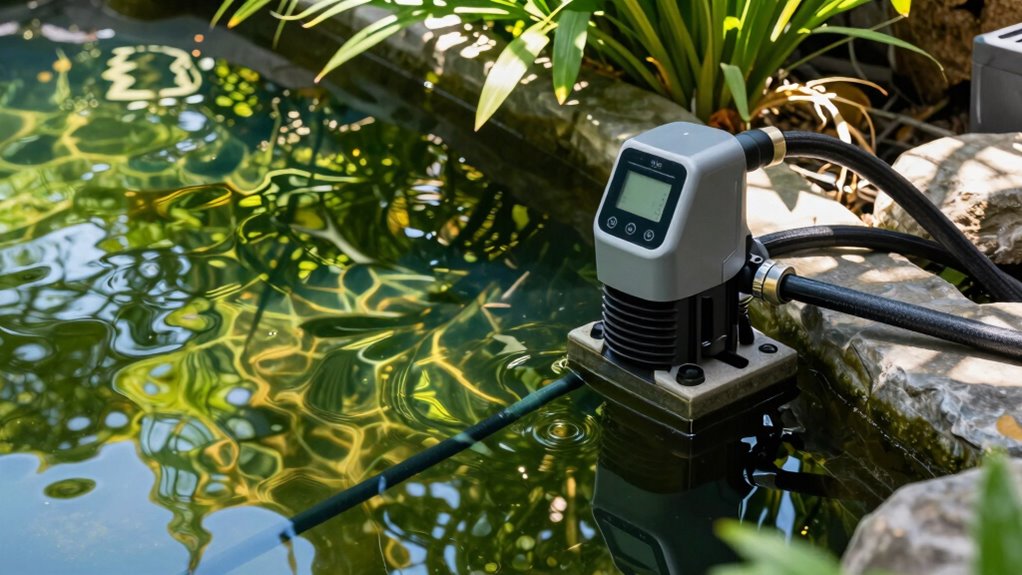
To determine the right pond pump size, you first need to accurately measure your pond’s volume. Once you have that number, you can calculate the necessary turnover rate to keep the water healthy. This guarantees your pump is capable of circulating all the water efficiently, similar to how deep-sky imaging requires proper equipment setup to ensure clear results. Proper air circulation can also help prevent issues like green water, which is often caused by excess nutrients and algae growth. Ensuring correct pump sizing is essential because it directly influences your pond’s water quality and overall ecosystem health, and selecting the right pump can also improve your pond’s filtration efficiency. Additionally, understanding your pond’s specific water flow requirements ensures optimal circulation and minimizes maintenance challenges.
Proper Volume Measurement
Wondering how to determine the right pond pump size? Accurate volume measurement is essential for effective aquarium filtration and maintaining healthy water chemistry. To do this, start by measuring your pond’s length, width, and average depth. Multiply these dimensions to find the total volume in cubic feet, then convert to gallons (1 cubic foot equals approximately 7.48 gallons). Be precise in your measurements to ensure proper pump sizing. Avoid underestimating, as inadequate flow can lead to poor filtration and water quality issues. Proper volume measurement helps you select a pump that provides the right turnover rate, preventing green water and algae buildup. Additionally, understanding the turnover rate ensures your pond receives adequate circulation for a balanced ecosystem. Remember, knowing your pond’s exact size is the foundation for maintaining a healthy environment. Accurate volume measurement is key to preventing problems like green water and ensuring your pond stays clear and healthy. Properly sizing your pump based on this measurement will optimize pond health and reduce the risk of algae overgrowth. Incorporating the correct pump capacity based on your measurements ensures consistent water quality and ecosystem stability.
Calculating Turnover Rate
Once you’ve accurately measured your pond’s volume, calculating the appropriate turnover rate guarantees your pump provides sufficient water circulation. The turnover rate determines how many times the total pond volume circulates each hour, ensuring clear water and healthy aquatic life. To find the right pump size, consider your pond’s size and desired circulation speed. For example:
| Pond Volume (gallons) | Recommended Turnover Rate (times/hour) |
|---|---|
| 1,000 | 1-2 |
| 5,000 | 1-2 |
| 10,000 | 1-1.5 |
| 20,000 | 1-1 |
Adjust pump efficiency and water circulation needs accordingly. Proper calculation keeps water healthy and prevents green water buildup.
Setting the Right Turnover Rate for Different Pond Types
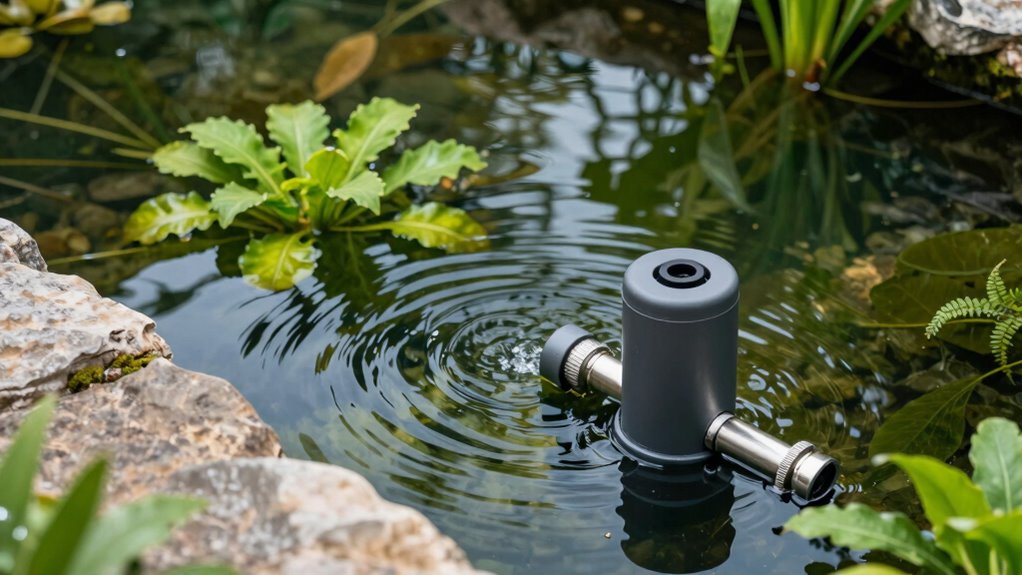
Choosing the right turnover rate depends on your pond’s size, fish, and plant needs. Larger ponds or those with sensitive aquatic life may require slower circulation, while smaller ponds can handle higher rates. Understanding these factors helps you set an effective pump flow for a healthy pond environment. Additionally, considering the oxygen levels in your pond is crucial, as proper circulation enhances oxygen distribution vital for aquatic health. Maintaining optimal oxygen levels can also prevent issues like green water and algae overgrowth, ensuring a balanced ecosystem. Selecting a proper pump size based on your pond’s volume and specific requirements is essential to achieve these goals effectively. Proper flow rate regulation ensures that water quality remains high and supports the overall health of your pond. Regularly monitoring your pond’s biological balance helps you adjust the flow rate as needed to prevent problems before they arise.
Pond Size Considerations
Setting the right turnover rate for your pond depends heavily on its size and the type of pond you’re maintaining. Larger ponds require a slower turnover to avoid disturbing aquatic plants and disrupting water chemistry, which can lead to imbalances or algae growth. Smaller ponds need a faster rate to guarantee proper filtration and oxygenation, reducing the risk of green water. Consider how aquatic plants grow and absorb nutrients; too much circulation can hinder their development. Balancing turnover rates helps maintain water chemistry, keeping pH levels stable and preventing stagnation. Proper sizing promotes healthy ecosystems and clear water. Additionally, understanding water chemistry fundamentals helps in selecting the appropriate pump flow rate to maintain optimal conditions. Recognizing the importance of aquatic ecosystems ensures that your pond remains a balanced and thriving environment.
Fish and Plant Needs
To guarantee your pond supports healthy fish and plant life, it’s crucial to adjust the turnover rate based on their specific needs. Fish require well-oxygenated water, which is achieved through proper circulation, while aquatic plants need stable conditions to thrive. Consider these factors:
- Use aquarium filters or pond filters to maintain water clarity and oxygen levels.
- Increase turnover rate if you have high fish densities or sensitive species.
- Adjust flow to minimize stress on fish and avoid uprooting pond plants.
- Enhance pond lighting to support plant growth, which also influences the necessary circulation rate.
Balancing these needs ensures your pond remains healthy, clear, and vibrant, preventing issues like algae blooms and green water. Tailoring pump size to your pond’s fish and plant requirements keeps everything thriving.
Common Pump Sizing Mistakes and How to Avoid Them
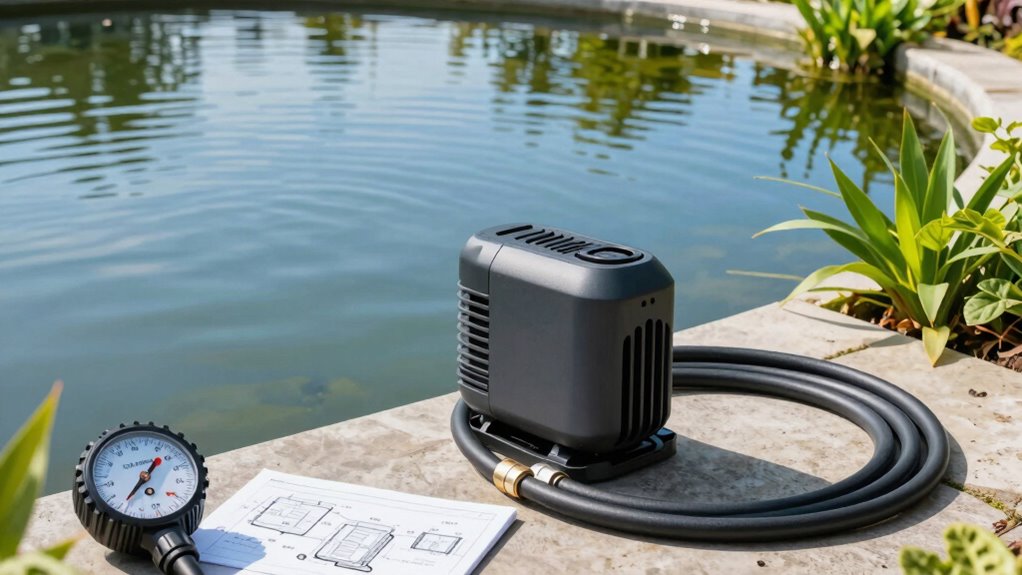
One of the most common mistakes in pond pump sizing is selecting a pump based solely on flow rate without considering head height or friction losses. This oversight can lead to inadequate circulation, causing green water or stagnant areas. For example, choosing a pump just for its high flow rate might seem ideal, but if it can’t overcome the resistance from pond liners or aquarium filters, it won’t perform well. Remember that friction increases with pipe length and fittings, reducing actual flow. Avoid this mistake by calculating the total head height needed, including friction loss, and selecting a pump that matches those requirements. Proper sizing ensures your pond’s filtration system works efficiently, preventing algae buildup and promoting healthy fish and plant life. Additionally, understanding the turnover rate is crucial for maintaining a healthy pond environment. Knowing the pump’s capacity helps you achieve the recommended circulation times, ensuring your pond remains clear and balanced. To optimize your setup, consider system design principles to ensure your pump installation promotes effective water movement throughout the pond.
How to Adjust Your Pump for Seasonal Changes and Maintenance
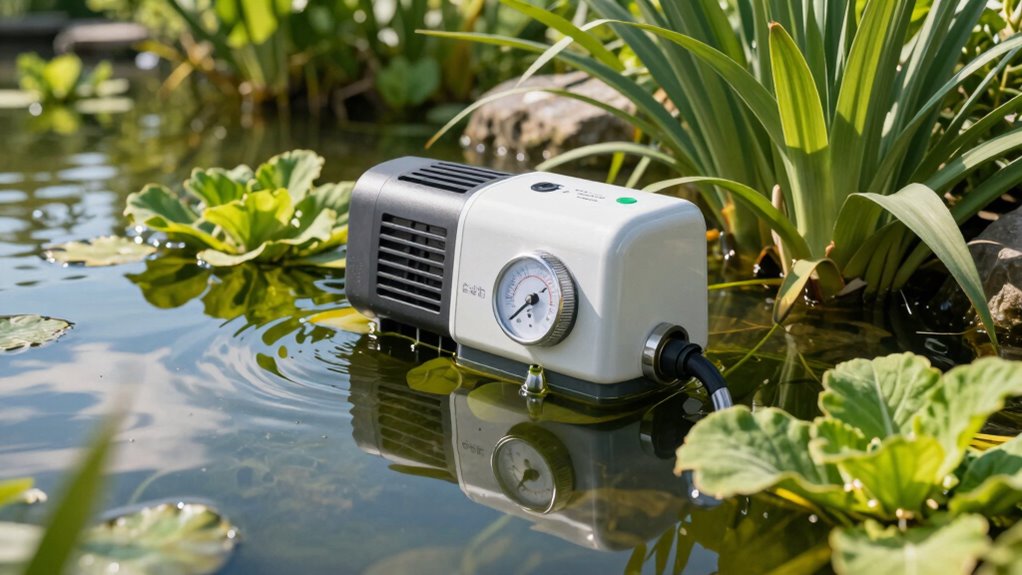
Adjusting your pond pump for seasonal changes and maintenance is essential to keep your pond healthy and functioning efficiently year-round. Proper seasonal adjustments help prevent issues like algae growth and pump strain, while regular pump maintenance guarantees longevity. To optimize performance:
- Reduce pump flow in winter to prevent freezing damage.
- Increase flow during warmer months for better filtration and aeration.
- Clean or replace filter media and impeller during scheduled pump maintenance.
- Check and adjust the pump’s placement as water levels fluctuate.
These steps help maintain consistent water turnover, preventing green water and debris buildup. Adjusting for seasonal changes and performing pump maintenance keeps your pond balanced, ensuring it stays clear and healthy throughout the year.
How Filtration and Aeration Help Keep Your Pond Clear
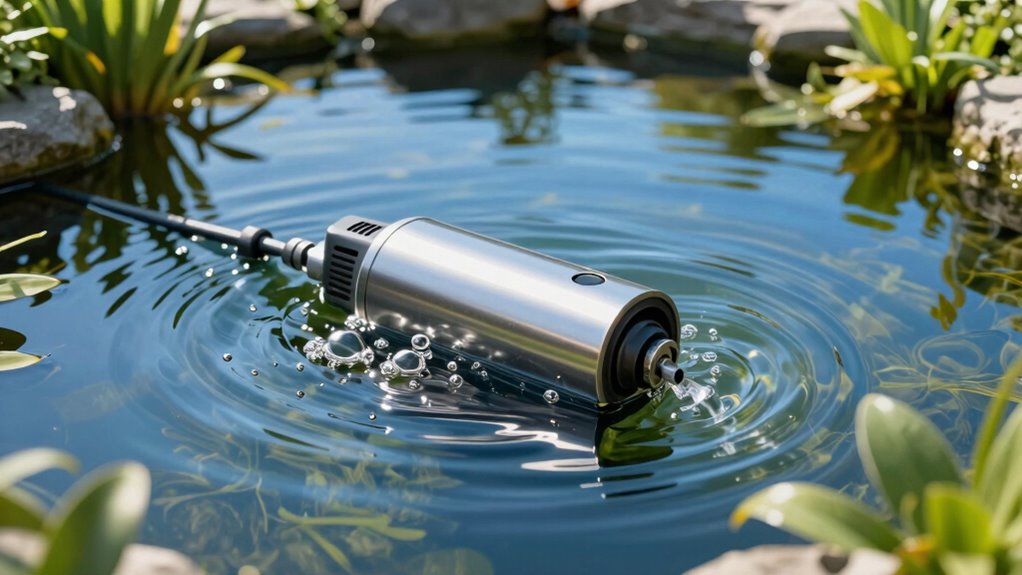
Effective filtration and aeration are essential for maintaining a clear, healthy pond. They help control algae, prevent green water, and support thriving wildlife. Proper filtration removes debris and excess nutrients that fuel algae growth, while aeration increases oxygen levels, promoting beneficial bacteria that break down waste. Both processes work together to keep your pond balanced and inviting. Consider how these features attract wildlife like birds and frogs, creating a natural ecosystem. Use the table below to understand their roles:
| Filtration | Aeration | Benefits |
|---|---|---|
| Removes debris | Boosts oxygen levels | Prevents algae blooms |
| Controls nutrients | Enhances beneficial bacteria | Attracts wildlife |
| Supports healthy plants | Improves water circulation | Keeps water clear |
| Reduces sludge buildup | Maintains consistent flow | Promotes pond vitality |
Top Tools and Tips for Choosing the Best Pond Pump
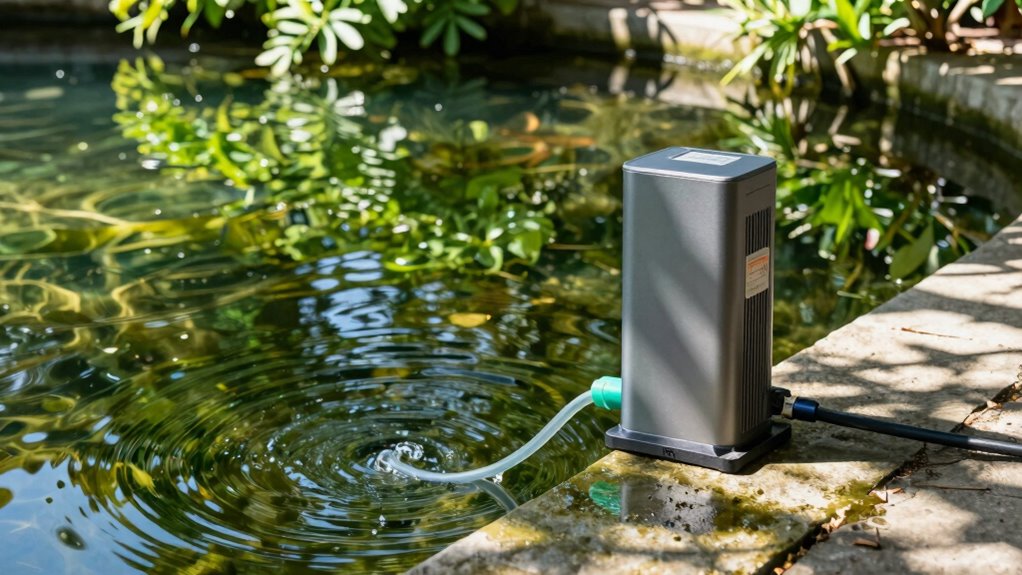
Choosing the right pond pump is essential for maintaining a healthy and attractive pond. To select the best pump, consider these tools and tips:
- Pump technology – Opt for energy-efficient models with adjustable flow rates to match your pond’s needs. Modern technology guarantees quieter operation and better durability.
- Water chemistry compatibility – Choose pumps that won’t disrupt your pond’s water chemistry, especially if you have sensitive aquatic plants or fish.
- Flow rate calculators – Use online calculators to determine the ideal pump size based on pond volume, ensuring proper circulation and filtration.
- User reviews and expert advice – Read reviews to gauge reliability and performance, and seek advice from pond supply professionals for personalized recommendations.
Is Your Turnover Rate Properly Set? Troubleshooting Green Water
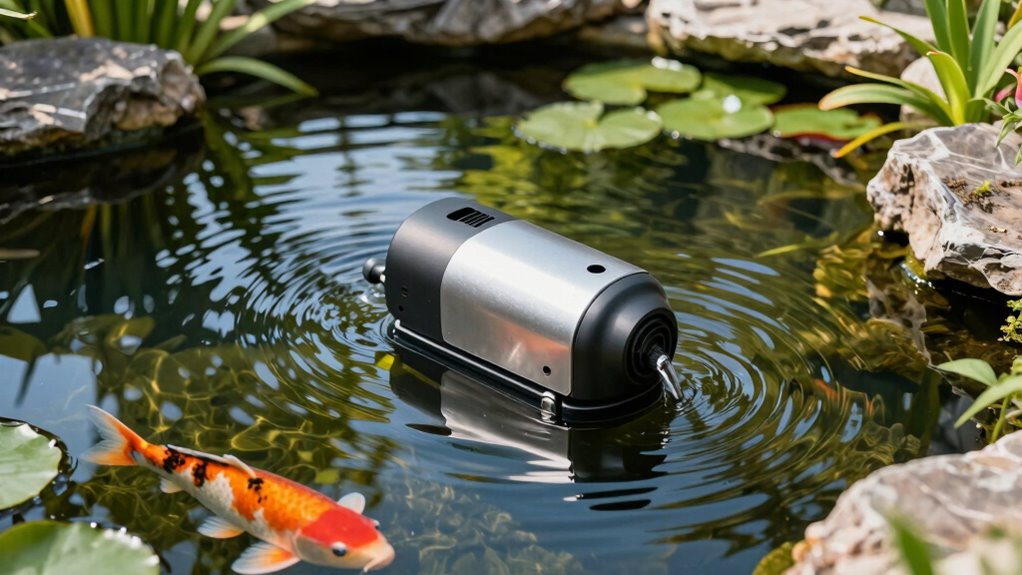
If your pond is turning green with algae, the problem often stems from an improper turnover rate. When the water isn’t circulating enough, nutrients build up, reducing water clarity and creating an ideal environment for algae growth. Conversely, too much circulation can disturb beneficial bacteria that help control algae. To troubleshoot, check if your pump is moving the recommended turnover rate for your pond size. If water clarity seems poor or algae persists, adjust your pump’s flow rate accordingly. Ensuring the proper turnover rate promotes better water quality and algae control. Regularly monitor your pond’s water clarity and make incremental changes to your pump setup. Properly setting your turnover rate is key to preventing green water and maintaining a healthy, clear pond.
Frequently Asked Questions
How Often Should I Check My Pond Pump’s Performance?
You should check your pond pump’s performance weekly to guarantee optimal filter maintenance and maintain fish health. Regular inspections help you spot any issues early, like clogs or reduced flow, which can harm your aquatic life. Cleaning the pump and filters as needed prevents green water and keeps the pond environment healthy. Consistent monitoring also extends your pump’s lifespan and keeps your pond looking clear and vibrant.
What Signs Indicate My Pond Pump Is Undersized?
If your pond pump is undersized, you’ll notice increased pump noise and poor water clarity. The pump may struggle to circulate water effectively, leading to stagnation and algae buildup. You might also see debris settling or floating, and the water may look murky. These signs indicate your pump isn’t providing enough turnover, so consider upgrading to a pump with a higher capacity to maintain a healthy, clear pond.
Can a Pump Be Too Powerful for My Pond?
Yes, your pump can be too powerful for your pond. An oversized pump may cause excessive water movement, disrupting pond clarity and potentially stressing aquatic life. It can lead to increased energy costs and unnecessary wear on equipment. To maintain ideal pond health, choose a pump size that matches your pond’s volume and flow requirements, ensuring proper circulation without overdoing it. Proper sizing helps keep your pond clean and clear.
How Do Seasonal Changes Affect Pump Efficiency?
You might notice your pump works differently during seasonal temperature shifts, especially as algae growth ramps up in warmer months. Cooler temperatures can slow the pump’s efficiency, while warmer weather often boosts algae, increasing strain on the system. To keep your pond healthy year-round, adjust your pump settings accordingly, and consider seasonal maintenance to optimize flow and prevent issues like green water caused by algae proliferation.
What Are the Energy Costs of Different Pump Sizes?
Different pump sizes impact your electricity consumption and overall costs. Larger pumps tend to use more energy, increasing your monthly electricity bill, while smaller pumps consume less but might not circulate water effectively. Conducting a cost comparison helps you find a balance between energy efficiency and performance. Choosing the right size guarantees you minimize energy costs while keeping your pond healthy, saving you money over time.
Conclusion
Getting your pond pump size just right isn’t just a small detail—it’s the secret weapon against green water chaos! When you nail the perfect turnover rate, you’ll transform your pond into a crystal-clear paradise so stunning, even fish will do a double take. Don’t let improper sizing turn your pond into a murky mess. Master the pump game, and watch your pond become the sparkling oasis you’ve always dreamed of—no green water, only pure perfection!