
Many gardeners skip checking their pot drainage regularly, which can lead to waterlogging and root rot. You might not notice blocked drainage holes or soil compaction that hampers water flow. Over time, this causes roots to suffocate and plants to decline. Ensuring your pots drain properly is essential for healthy growth. If you want to prevent these issues, you’ll find useful tips below that can help you maintain ideal drainage and keep your plants thriving.

Get garden gear delivered free with Prime
- Fast, free delivery on millions of items
- Prime Video, Amazon Music and more included
- Member-only deals all year
Key Takeaways
- Many gardeners overlook inspecting drainage holes for blockages or debris that hinder water flow.
- They often skip conducting drainage tests to ensure proper water exit after watering.
- Gardeners may neglect adding a gravel layer at the pot’s bottom to improve drainage.
- Soil compaction and buildup of salts are frequently ignored, which impair drainage efficiency.
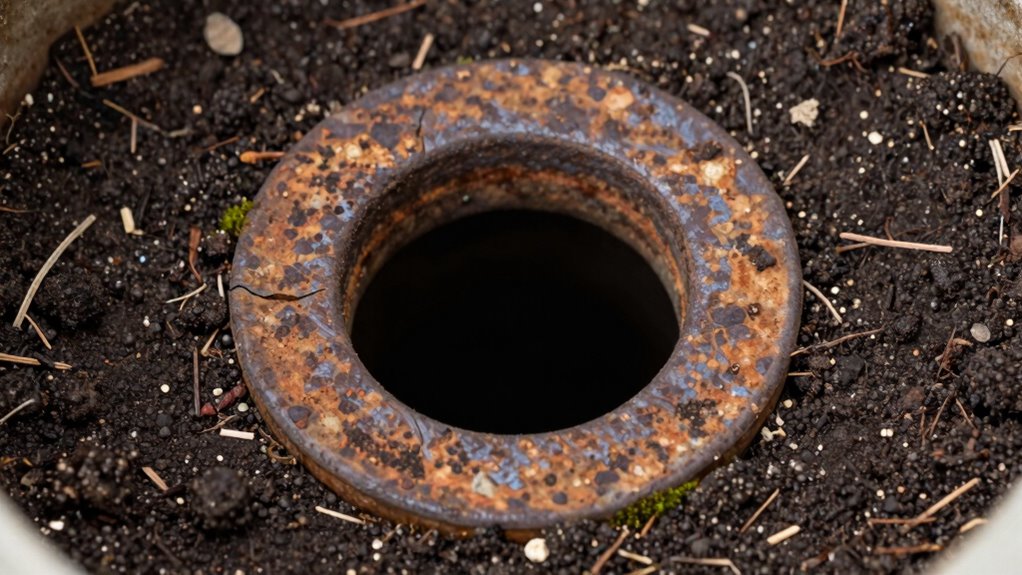
- Regular cleaning of drainage openings is often overlooked, risking clogging and waterlogging.
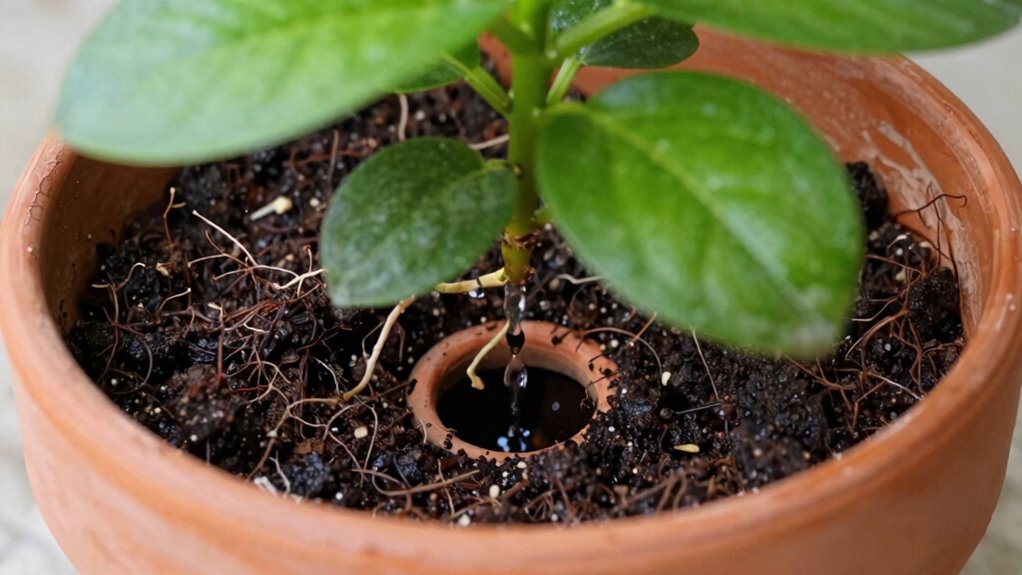
Ever wondered why your potted plants seem to struggle or wilt unexpectedly? The answer often lies beneath the surface, in the health of their roots and how well the pot’s drainage system is functioning. Many gardeners overlook the importance of a proper drain, but neglecting this step can lead to serious problems like poor plant root health and water retention issues. Without proper drainage, excess water can linger in the soil, creating a soggy environment that suffocates roots and invites root rot. This not only weakens your plant but can ultimately kill it if left unchecked.
When you skip the pot drainage check, you might notice your plants wilting or showing signs of stress even when you’ve watered them just right. That’s because standing water in the pot prevents oxygen from reaching the roots, which are essential for nutrient absorption and overall plant vitality. Over time, this water retention issue causes roots to become brown and mushy, a clear sign of root rot. Healthy roots need well-drained soil to breathe and grow, so neglecting drainage can silently sabotage your plant’s health. You might also notice a buildup of salts or minerals in the soil, which can further hinder water absorption and lead to nutrient deficiencies. Regularly inspecting your pots for proper drainage helps prevent these issues before they become serious problems. Additionally, understanding how to improve drainage can make a significant difference in your plant’s growth and longevity. Proper soil composition can also enhance water flow and prevent compaction, further supporting healthy drainage. A quick drainage test can help you determine if your pots are functioning optimally, and knowing the right materials to use can further improve water flow.
Checking your pot’s drainage isn’t just about making sure water flows freely out of the bottom; it’s about creating an environment that promotes healthy root development. If your pot doesn’t have enough drainage holes, or if these holes are blocked by debris or compacted soil, water will stagnate. You should regularly inspect the bottom of your pots, clear any obstructions, and consider adding extra drainage holes if necessary. Additionally, using a layer of gravel or small stones at the bottom of the pot can help improve water flow and prevent soil from clogging drainage openings. Proper drainage management is essential for preventing waterlogging and maintaining plant health. Understanding the importance of good drainage is critical for maintaining plant root health and avoiding water retention issues. A simple check-up can save you from the frustration of dead or struggling plants. When you guarantee proper drainage, you’re giving your plants the best chance to thrive, with healthy roots that can absorb water and nutrients efficiently. Remember, healthy roots are the foundation of a healthy plant, and good drainage is the key to keeping them happy and functioning properly. Don’t overlook this simple step—your plants will thank you for it.
As an affiliate, we earn on qualifying purchases.
Frequently Asked Questions
How Often Should I Check Pot Drainage?
You should check your pot drainage weekly to prevent waterlogging. Keep an eye on soil composition, ensuring it drains well and isn’t too compacted. Adjust your watering frequency based on how quickly the soil dries out—overwatering can clog drainage, while underwatering may dry out roots. Regular checks help you catch drainage issues early, promoting healthy plant growth and preventing root rot or other moisture-related problems.
What Signs Indicate Poor Drainage in Pots?
You can tell if your pots have poor drainage by looking for signs like soil compaction, where the soil feels hard and doesn’t drain well. If you notice yellowing leaves, wilting, or a foul smell, it could be root rot caused by excess water. Regularly check the drainage holes and soil moisture to prevent these issues, ensuring your plants stay healthy and avoid water-related problems.
Can Overwatering Affect Pot Drainage?
Imagine you’re a knight battling soil compaction—overwatering definitely worsens the fight. When you overwater, excess water fills the pores, suffocating roots and leading to poor drainage. This creates a soggy environment, increasing the risk of root rot. Over time, the soil becomes compacted, making it harder for water to escape. So, yes, overwatering directly impacts pot drainage, risking unhealthy plants and the dreaded root rot.
What Materials Improve Drainage in Garden Pots?
To improve drainage in garden pots, you should add soil amendments like coarse sand, perlite, or gravel, which help create air pockets and prevent waterlogging. Also, incorporate drainage layers at the bottom of your pots using gravel or broken pottery to facilitate excess water flow away from roots. These materials prevent overwatering issues by ensuring proper drainage, keeping your plants healthy and reducing root rot risks.
How Do I Fix Drainage Issues in Existing Pots?
To fix drainage issues in your existing pots, first loosen the soil to improve soil aeration. Then, add drainage amendments like coarse sand, gravel, or perlite to enhance water flow. Remove any compacted or clogged material from the drainage holes, and consider repotting with fresh, well-draining soil. These steps will help prevent waterlogging, promote healthy roots, and guarantee your plants thrive.
As an affiliate, we earn on qualifying purchases.
Conclusion
Don’t skip the pot drainage check—it’s like giving your plants a fresh breath of air. When you guarantee proper drainage, you’re preventing water from sitting and causing root rot, which is a silent killer for your plants. Take a moment to inspect those drainage holes before watering again. Think of it as giving your garden the foundation it needs to flourish. A simple check now keeps your plants thriving, just like a well-tuned engine keeps a car running smoothly.
As an affiliate, we earn on qualifying purchases.
drainage testing for potted plants
As an affiliate, we earn on qualifying purchases.
As an affiliate, we earn on qualifying purchases.
Halloween Picks
halloween
As an affiliate, we earn on qualifying purchases.