If you notice your sprayer losing pressure, long hoses might be the culprit. Resistance increases with hose length, smaller diameters, and viscous fluids, causing significant pressure drops. Narrow hoses restrict flow and elevate resistance, while high-viscosity fluids make pushing through even harder. Properly matching hose size to your fluid’s viscosity and understanding how length impacts pressure can improve performance. Keep going to discover simple ways to prevent this hidden yet common sprayer issue.

Get garden gear delivered free with Prime
- Fast, free delivery on millions of items
- Prime Video, Amazon Music and more included
- Member-only deals all year
Key Takeaways
- Longer hoses increase resistance, causing significant pressure drops in sprayers.
- Narrower hose diameters elevate resistance and reduce pressure at the nozzle.
- High-viscosity fluids resist flow, amplifying pressure loss in long hoses.
- Combining small hose diameter with viscous fluids worsens pressure drops.
- Using larger hoses and less viscous fluids helps maintain consistent pressure and spray performance.
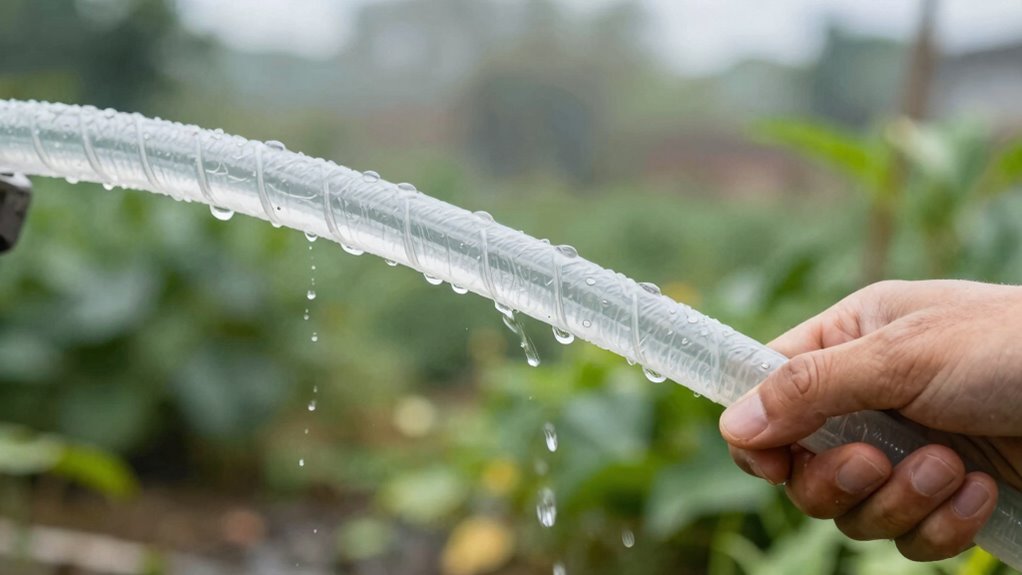
Ever wondered why the pressure drops when fluid travels through a long hose? It’s a common question, especially if you’re trying to optimize a sprayer or any fluid delivery system. The answer lies in the physics of fluid flow, primarily influenced by hose diameter and fluid viscosity. When fluid moves through a hose, it encounters resistance, which results in pressure loss. The longer the hose, the greater this resistance becomes. But beyond length, the hose’s diameter plays a vital role. A smaller hose diameter increases resistance because there’s less space for the fluid to pass through. Think of it like squeezing a garden hose; the narrower the opening, the harder it is for water to flow freely, leading to a significant drop in pressure at the outlet. Conversely, a wider hose diameter reduces resistance, helping maintain higher pressure throughout the length of the hose. Additionally, understanding fluid dynamics can help you better predict and manage pressure loss in your system. Recognizing how hose material impacts friction can also influence pressure retention, especially with flexible hoses.
Narrow hoses increase resistance, causing significant pressure drops; wider hoses help maintain consistent pressure during fluid flow.
Fluid viscosity also dramatically impacts pressure loss. Viscosity measures how thick or sticky a fluid is—think honey versus water. Thicker fluids resist flow more than thinner ones, which means they generate more friction against the hose walls. When you’re dealing with high-viscosity fluids, you’ll notice a more pronounced pressure drop, especially over long distances. This is because the thicker the fluid, the more energy it takes to push it through the hose. So, if your sprayer is struggling to deliver enough pressure, it might be due to using a fluid with high viscosity or an overly narrow hose.
It’s important to recognize that both hose diameter and fluid viscosity are interconnected factors that determine how much pressure you lose along a long hose. A narrow hose combined with a viscous fluid can cause a significant drop in pressure, making your sprayer less effective. To combat this, you might opt for a wider hose or reduce the viscosity of your fluid if possible. Additionally, understanding the flow rate needed for your application helps in choosing the right hose size. If you’re working with a viscous fluid, selecting a hose with a larger diameter reduces resistance and maintains pressure, ensuring your sprayer performs efficiently.
In essence, the physics of pressure loss isn’t just about the length of your hose but also about how the hose’s diameter and the fluid’s viscosity work together. Recognizing these factors helps you troubleshoot issues and improve your system’s performance, preventing those unexpected pressure drops that can ruin your workflow.
As an affiliate, we earn on qualifying purchases.
Frequently Asked Questions
How Can I Prevent Pressure Loss in Long Hoses?
To prevent pressure loss in long hoses, you should choose durable hoses designed for high pressure, ensuring they can handle the flow without weakening. Regularly monitor pressure levels to catch drops early and avoid over-tightening fittings that can cause leaks. Properly maintaining hose integrity and using high-quality connectors help sustain consistent pressure, allowing your sprayer to perform efficiently and reducing the chance of unexpected pressure drops.
Does Hose Material Affect Pressure Loss?
Yes, hose material affects pressure loss. Durable hoses made from sturdy materials resist wear and maintain consistent internal diameter, reducing pressure drops. Flexible materials make handling easier, but overly flexible hoses may kink or swell, causing pressure loss. When choosing a hose, balance durability and flexibility. Opt for high-quality materials designed for pressure retention, ensuring your hose performs well over time without losing pressure, especially in long-distance setups.
What Is the Ideal Hose Length for Optimal Pressure?
A stitch in time saves nine, so keep your hose length ideal to prevent pressure loss. Generally, aim for a hose length of around 25-50 feet, depending on your setup. A wider hose diameter reduces water velocity, maintaining pressure over longer distances. Shorter hoses minimize pressure loss, ensuring your sprayer works efficiently. Balancing length with diameter helps you avoid sluggish spray patterns and keeps your watering effective.
How Does Temperature Influence Pressure Loss?
Temperature impacts pressure loss by causing thermal expansion, which can slightly increase hose diameter, reducing pressure. It also affects viscosity; warmer fluids become less viscous, flowing more easily and decreasing pressure loss. Conversely, colder temperatures increase viscosity, making flow more resistant and raising pressure loss. You should consider these factors when using hoses in varying temperatures, as they directly influence flow efficiency and overall spray performance.
Are There Any Accessories to Reduce Pressure Loss?
You can cut down pressure loss with accessories like specialized hose connectors and pressure gauges. These tools help maintain consistent pressure and detect issues early. Using high-quality connectors reduces leaks and friction, while pressure gauges let you monitor flow in real-time. Think of them as your secret weapons—keeping everything running smoothly and preventing surprises that can throw off your spraying job. Don’t overlook these simple upgrades!
As an affiliate, we earn on qualifying purchases.
Conclusion
Think of your hose like your own energy pathway—if it’s too long, pressure drops, and your spray weakens. But here’s the twist: sometimes, what seems like a simple issue masks a bigger problem, like neglecting maintenance or choosing the wrong hose. The truth? Small, overlooked factors can cause big setbacks. So, next time your sprayer underperforms, remember that addressing root causes leads to better results—sometimes, the solution is simpler than you think.
As an affiliate, we earn on qualifying purchases.
flexible garden hose for pressure retention
As an affiliate, we earn on qualifying purchases.
As an affiliate, we earn on qualifying purchases.
Fall Picks
fall essentials
As an affiliate, we earn on qualifying purchases.