To refresh container soil without replacing everything, start by testing the current soil’s pH and nutrient levels to identify deficiencies. Mix in high-quality compost to restore nutrients, improve soil structure, and boost microbial activity. Loosen compacted soil with a fork or tool, then topdress with compost or fresh potting mix. Confirm proper watering and drainage to maintain healthy soil. For detailed tips on ongoing care, exploring further will give you more effective strategies.

Get garden gear delivered free — and shop member deals
- Fast, free delivery on millions of items
- Access to Prime Big Deal Days deals on October 6–7
- Prime Video, Amazon Music and more included
Key Takeaways
- Conduct a soil test to identify deficiencies and pH imbalance before adding amendments.
- Incorporate high-quality compost to boost nutrients and improve soil structure.
- Loosen compacted soil with gentle aeration to enhance drainage and root access.
- Adjust watering practices to prevent overwatering and promote healthy soil moisture levels.
- Periodically topdress with compost or organic matter to maintain soil vitality over time.
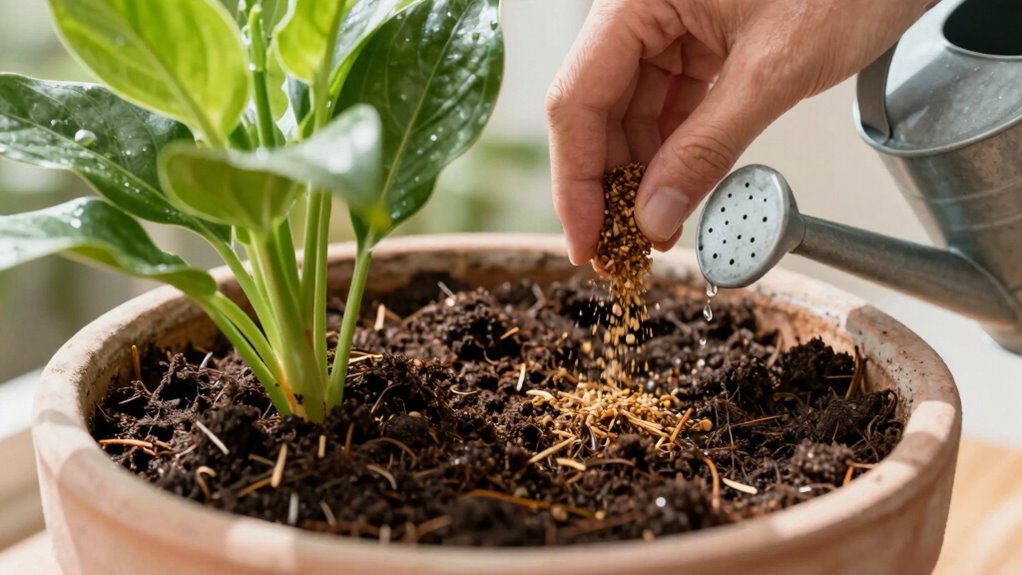
Over time, container soil can become compacted, depleted of nutrients, and less supportive of healthy plant growth. This is a common challenge when caring for potted plants, but it doesn’t mean you need to replace all the soil. Instead, you can rejuvenate it effectively by understanding what’s happening beneath the surface. The first step is soil testing, which helps you determine the current nutrient levels and pH balance. You can use a simple home testing kit or send a sample to a local lab for more detailed results. Knowing the soil’s condition guides your next steps, ensuring you add the right amendments to promote healthy growth.
Rejuvenate container soil with testing, compost, and aeration—no need for full replacement for healthier plants.
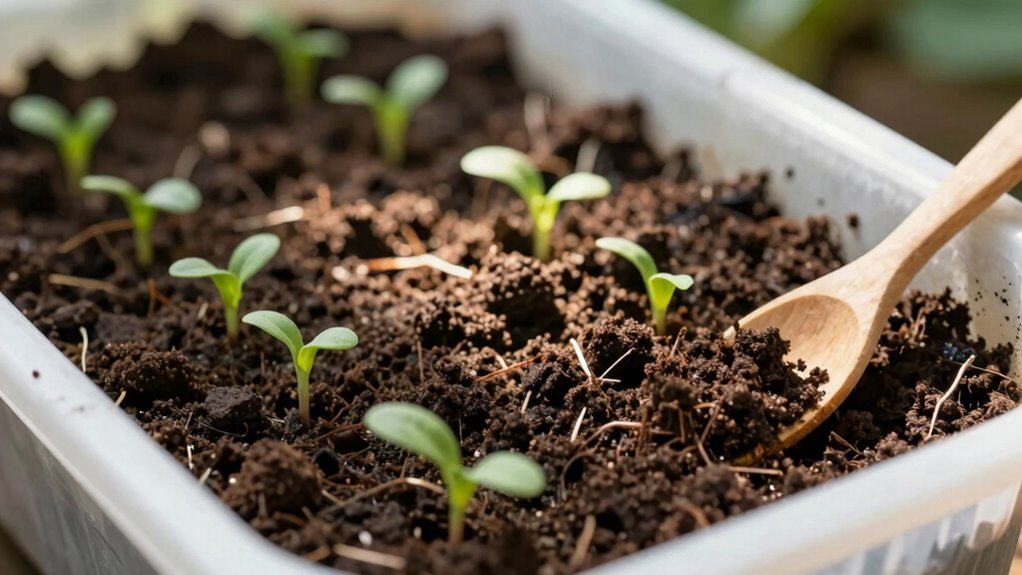
Once you have your soil test results, you’ll see whether your soil is lacking essential nutrients like nitrogen, phosphorus, or potassium. If deficiencies are present, a compost amendment is an excellent way to restore vitality. Compost not only adds nutrients but also improves soil structure, increases aeration, and enhances moisture retention. When applying compost, gently mix it into the top layer of existing soil. This process allows roots to access nutrients more easily and stimulates microbial activity, which is crucial for healthy plant growth. Use high-quality compost or organic matter to ensure you’re providing your plants with the best nutrition.
In addition to compost, consider aerating the soil by gently loosening it with a fork or a planting tool. This reduces compaction, allowing roots to breathe and absorb water more efficiently. If your soil is overly compacted or depleted, you might also want to topdress with a fresh layer of compost or potting mix. This creates a nutrient-rich barrier that gradually integrates into the existing soil, enhancing its overall quality. Keep in mind that watering practices can influence soil health; avoid overwatering, which can lead to drainage issues and root rot, and ensure your containers have proper drainage holes. Regular soil testing can help you maintain optimal soil conditions, which is essential for healthy plant growth.
Furthermore, understanding soil health and its relationship to plant vitality can help you make more informed decisions about amendments and care routines. Regularly monitoring your soil’s condition through periodic testing helps you catch deficiencies early and adjust your amendments accordingly. This proactive approach prevents your plants from suffering due to poor soil quality and extends the life of your container garden. Rejuvenating your container soil doesn’t require a full replacement—just targeted testing, compost amendments, and some gentle aeration. A comprehensive soil analysis can provide insights into specific nutrient imbalances and pH issues, enabling more precise corrections. Being aware of nutrient deficiencies and how to address them can significantly improve your gardening results. With these simple steps, you’ll give your plants the best foundation for vigorous growth, vibrant blooms, and continued health.
As an affiliate, we earn on qualifying purchases.
Frequently Asked Questions
How Often Should I Refresh Container Soil?
You should refresh your container soil every 1 to 2 years. Regular soil aeration helps prevent compaction, allowing roots to breathe and absorb nutrients effectively. During refreshes, balance nutrients by mixing in compost or organic amendments. This process revitalizes the soil, encourages healthy plant growth, and reduces the risk of disease. Consistently monitoring plant health and soil quality will guide you on when to refresh, keeping your container garden thriving.
Can I Use Compost Instead of Fresh Soil?
Yes, you can use compost instead of fresh soil. Compost benefits your plants by improving soil structure, adding nutrients, and increasing moisture retention. Mixing compost into your existing soil refreshes it without full soil replacement, providing a nutrient boost and revitalizing your container garden. Just make certain you blend compost well and avoid over-application to prevent water retention issues or nutrient imbalance. This approach helps maintain healthy plants with minimal effort.
What Are Signs My Soil Needs Refreshing?
Think of your soil as a balanced orchestra—when one instrument falters, the harmony suffers. Signs your soil needs revitalizing include poor plant growth, yellowing leaves, and a foul smell. You may also notice pests or diseases, indicating nutrient imbalances or decay. To restore harmony, improve soil nutrient balance and prevent pests by adding compost or organic amendments, ensuring your container garden stays vibrant and healthy.
Does Refreshing Soil Affect Plant Health?
Revitalizing your container soil typically benefits plant health by restoring soil nutrient levels and maintaining proper pH balance. When you refresh soil correctly, you help plants absorb essential nutrients more efficiently, promoting growth and robustness. However, if you overdo it or disrupt the pH balance, it can stress your plants. So, carefully adjusting soil conditions during refreshment supports healthy, thriving plants without negative impacts.
Are There Natural Remedies for Soil Rejuvenation?
Imagine giving your soil a gentle, natural hug—yes, it’s possible! You can rejuvenate your container soil with organic amendments like compost or aged manure, which nourish plants naturally. Beneficial microbes act as tiny helpers, breaking down organic matter and releasing nutrients. These natural remedies boost soil robustness, support healthy root growth, and make your plants thrive without harsh chemicals. It’s a simple, eco-friendly way to refresh your container garden!
organic compost for container plants
As an affiliate, we earn on qualifying purchases.
As an affiliate, we earn on qualifying purchases.
Conclusion
Revitalizing your container soil is like giving your plants a gust of fresh air, rejuvenating their roots without the fuss of a full replacement. With simple steps like top-dressing, mixing in compost, and proper watering, you can keep your container garden thriving. Think of it as tending to a delicate dance—each small move helps your plants flourish. So, don’t let tired soil be the end of your green thumb; instead, give it a gentle boost and watch it bloom anew.
plant aeration tools for potted plants
As an affiliate, we earn on qualifying purchases.
As an affiliate, we earn on qualifying purchases.
potting mix for container gardening
As an affiliate, we earn on qualifying purchases.
As an affiliate, we earn on qualifying purchases.
Fall yard work Picks
leaf blowers
As an affiliate, we earn on qualifying purchases.