Choosing the wrong shade cloth percentage can stunt your plants’ growth by either blocking too much light or exposing them to too much sun. Too little shade causes sunburn and heat stress, while too much reduces photosynthesis and slows development. Both extremes stress your plants and may lead to poor yields. To avoid this, it’s vital to select the right percentage for your specific plants and climate. Keep going to learn how to make the best choice.
Key Takeaways
- Too much shade (above 70%) reduces photosynthesis, slowing plant growth and fruiting.
- Insufficient shade (below 30%) causes heat stress, sunburn, and weakens plant resilience.
- Incorrect shading levels can lead to poor light diffusion, causing legginess or uneven development.
- Over-shading increases humidity, promoting mold and mildew, which stunts healthy growth.
- Proper shade percentage balances light and heat, ensuring optimal growth without stress or damage.
Why Choosing the Right Shade Cloth Percentage Matters for Your Garden
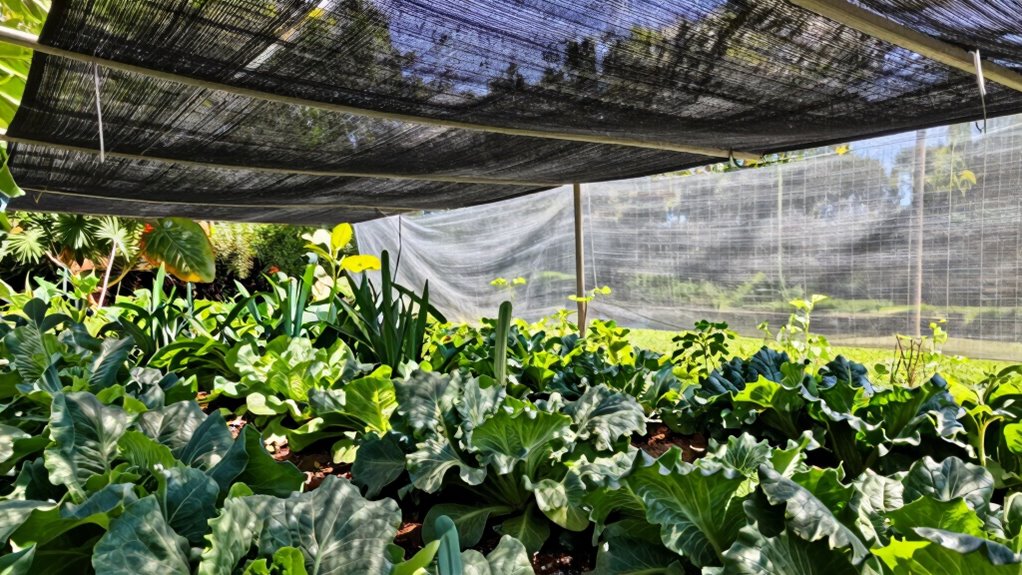
Choosing the right shade cloth percentage is essential because it directly affects how much sunlight your garden receives. If the shade is too dense, plants may become leggy and require frequent pruning to manage growth, which can stress the plants and reduce overall health. Conversely, too little shading can expose plants to excessive heat and light, depleting soil nutrients faster and risking damage. Proper shading helps maintain ideal conditions, encouraging balanced plant pruning and fostering healthy soil nutrients. Additionally, understanding how light levels influence plant growth can help you choose the most effective shade cloth for your specific garden needs. Using the right shade percentage also supports sustainable growth by reducing the need for extra interventions and promoting a thriving, resilient garden environment. Recognizing how plant responses to light vary can further optimize your shading strategy for better crop yield and plant vitality, especially when considering optimal light conditions for different plant species. Being aware of light management techniques can enhance your ability to create the best environment for your plants.
How Shade Percentages Affect Light, Heat, and Plant Growth
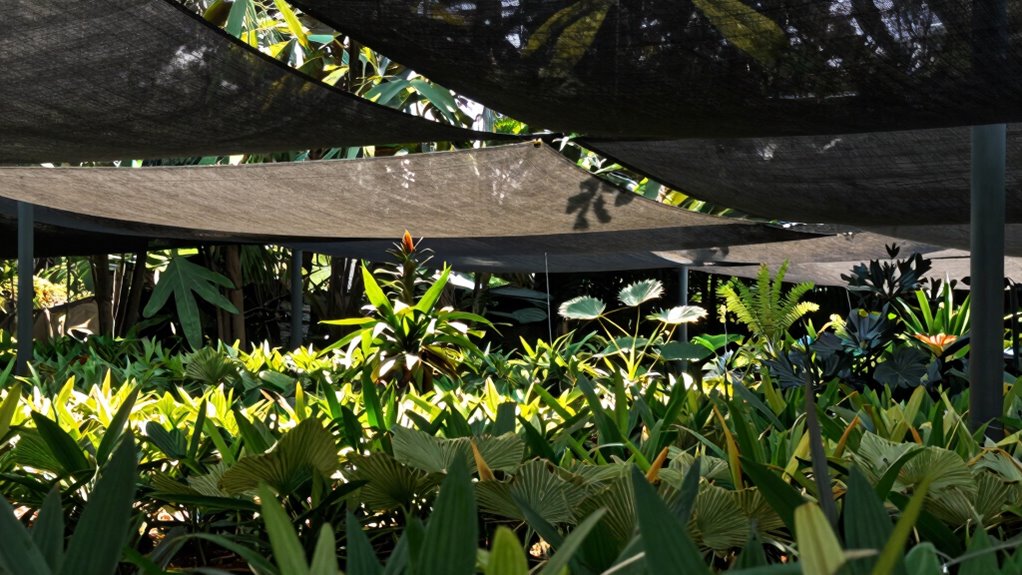
Shade percentages directly influence how much sunlight and heat reach your plants, affecting their growth and health. Too much shade reduces photosynthesis efficiency, slowing growth and fruit production. Conversely, too little shade can cause heat stress, wilting, and increased pest attraction. Choosing the right shade percentage helps maintain ideal conditions:
- Enhances photosynthesis efficiency, boosting plant vigor
- Regulates heat, preventing overheating and dehydration
- Offers pest protection by reducing plant stress and vulnerability
- Balances light diffusion, promoting uniform growth and fruiting
Higher shade percentages provide more pest protection by lowering plant stress. However, they decrease light exposure, which can stunt growth if too high. Understanding how shade impacts light and heat allows you to fine-tune your shade cloth for healthier, more productive plants. Proper shade management ensures optimal light diffusion and temperature regulation for thriving plants. Additionally, understanding the economic principles behind resource allocation can help optimize shade cloth usage for cost-effective gardening.
Moreover, considering climate conditions can help you select the most suitable shade percentage for your specific environment.
What Factors Should You Consider When Picking Shade Cloth?

When choosing shade cloth, you need to think about its sunlight transmission rate to guarantee your plants get the right amount of light. Climate compatibility is also essential so the material can withstand local weather conditions. Additionally, selecting a shade cloth with appropriate water resistance can prevent damage during rainy seasons. Properly assessing the material’s odor can help ensure it doesn’t emit unpleasant smells that might affect your environment. For added durability, consider the UV resistance of the fabric to prolong its effectiveness over time. Understanding the manufacturing quality of the shade cloth can also influence its longevity and performance. Using proven study techniques can further help you make informed decisions when selecting the right shade cloth. By considering these factors, you’ll select a shade cloth that meets both your needs and your environment.
Sunlight Transmission Rate
Have you ever wondered how much sunlight passes through different types of shade cloth? The sunlight transmission rate determines how much light reaches your plants, affecting growth and health. When choosing shade cloth, consider:
- The percentage of light blocked, which influences plant exposure
- UV protection to prevent damage from harmful rays
- Fabric durability to withstand weather over time
- Your specific light requirements for plants or outdoor comfort
A higher shading percentage reduces sunlight but may limit essential UV protection; lower percentages let in more light but could expose plants to harsh rays. Balancing sunlight transmission ensures your plants get enough light without risking damage. Always check the fabric’s UV protection and durability ratings to match your needs for idealgrowth.
Climate Compatibility
Choosing the right shade cloth involves considering your local climate conditions to guarantee ideal plant protection and longevity. Seasonal variations, such as intense summer heat or unexpected cold snaps, influence the type of shade material you need. For example, in areas with high summer temperatures, a higher shade percentage helps prevent heat stress and dehydration. If your region experiences significant seasonal changes, opt for a versatile cloth that provides adequate coverage year-round. Additionally, climate impacts pest prevention strategies; certain fabrics can block pests while still allowing airflow. Understanding your climate helps you select a shade cloth that balances sunlight reduction, temperature control, and pest deterrence. Incorporating climate-responsive materials into your decision-making can also optimize your shading strategy for better plant health. Proper compatibility ensures your plants thrive, avoiding stress caused by unsuitable shading, and extends the lifespan of your shade installation. Considering local environmental factors can further enhance your shading effectiveness and durability. Being aware of extreme weather conditions in your area can guide you toward more resilient shading options that withstand storms or heavy winds. Additionally, selecting materials that are UV resistant can help prolong the lifespan of your shade cloth under constant sun exposure.
What Are the Risks of Using Too Little or Too Much Shade?
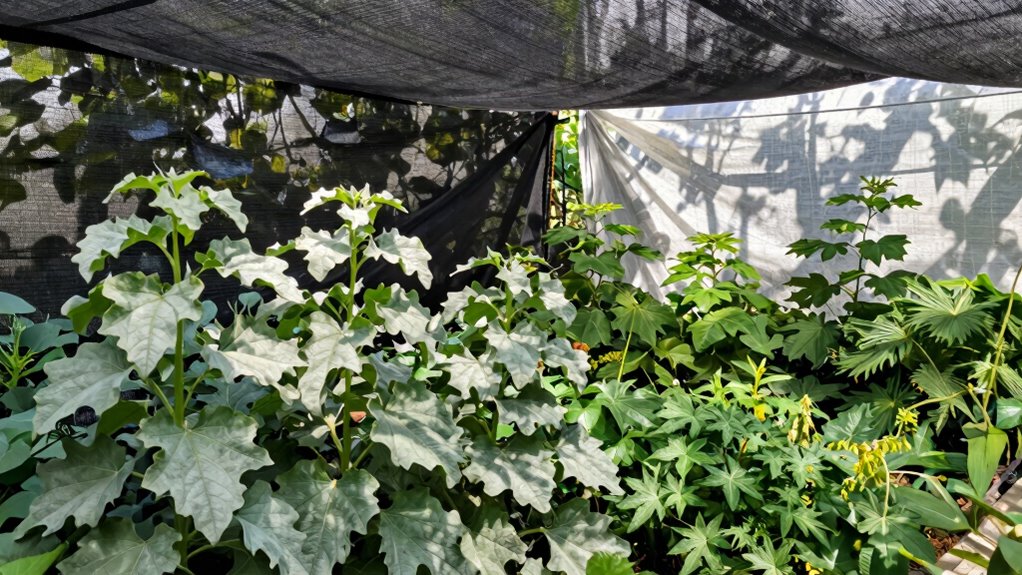
Using too little shade exposes your plants and animals to harsh sunlight, which can lead to sunburn, heat stress, and reduced growth. An improper sunlight balance can weaken plants, making them more susceptible to pests and diseases. Overexposure also discourages pest control, as pests thrive in unshaded areas. Conversely, too much shade limits sunlight, slowing photosynthesis and stunting growth. It can cause plants to become leggy, weak, and less productive. Excess shade may also increase humidity, fostering mold and mildew. Keep in mind that poor shade management can harm your entire setup. To maintain ideal health, carefully balance shade to ensure sufficient sunlight while protecting against excess heat and pests. Proper shading promotes vigorous growth and a healthier environment for all.
How to Test and Adjust Your Shade Cloth for Better Plant Health
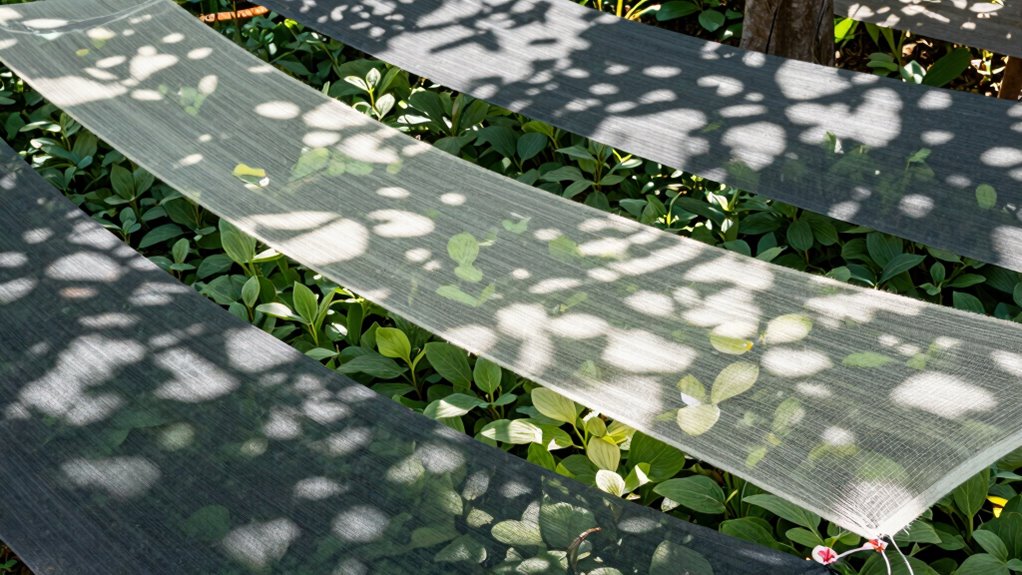
To make certain your plants stay healthy, start by measuring the light intensity beneath your shade cloth. If the light levels aren’t ideal, adjust the shade placement to provide better coverage. Keep an eye on your plants’ response, and tweak the setup until they thrive. Additionally, consider the Free Floating concept by ensuring your shade cloth does not restrict water flow or root growth, promoting a more natural environment. To further optimize plant health, evaluate the microclimate created beneath the shade cloth, as it can significantly influence plant growth and resilience. Understanding the environmental conditions can help you make better adjustments for optimal growth. Monitoring the shade material quality can also improve your setup’s effectiveness and longevity. For optimal performance, you might also evaluate the electric power of any connected devices or accessories that support your gardening efforts.
Measure Light Intensity
Measuring light intensity is essential to guarantee your shade cloth provides the right amount of protection for your plants. Proper light measurement informs you whether your plants receive the ideal light levels for healthy growth without stress. Use a light meter to record sunlight intensity at different times of the day and across various locations in your garden. This helps you understand how much shade your cloth provides and if adjustments are necessary. Keep in mind that plant physiology relies heavily on consistent light conditions. To get accurate readings, consider factors like weather and time. When testing, look for these key points:
- Consistent light levels during peak hours
- Variations due to cloud cover
- Shadows cast by nearby objects
- Changes in light intensity throughout the season
Monitoring light fluctuations can help you optimize your shade cloth for healthier plants and better growth outcomes.
Adjust Shade Placement
Once you’ve assessed the light levels in your garden, you can start adjusting your shade cloth to optimize plant health. Proper shade placement depends on understanding the sun angle throughout the day. Move your shade cloth to block or filter sunlight where it’s most intense, especially during peak hours. If the sun is high in the sky, positioning the shade higher or angling it can reduce direct exposure. For lower sun angles, you may need to extend the shade coverage or tilt it to ensure plants aren’t overwhelmed by harsh light. Regularly observe how sunlight shifts and adjust accordingly. Keep in mind, the goal is to create a consistent, moderate shade that prevents heat stress and encourages healthy growth. Fine-tuning shade placement helps your plants thrive in their specific environment.
Monitor Plant Response
How can you tell if your shade cloth is effectively protecting your plants? Watch for signs of plant stress, such as wilting, leaf scorch, or slowed growth rate. Monitoring how your plants respond helps you determine if the shade is too dense or too sparse. To assess this:
- Check leaf color and texture for signs of sunburn or bleaching
- Observe overall growth rate and new leaf development
- Measure soil moisture and temperature levels
- Look for changes in flowering or fruiting patterns
Adjust your shade cloth accordingly—adding more coverage if plants show stress or reducing it if growth appears stunted. Regular monitoring ensures your plants stay healthy, preventing damage caused by inappropriate shading. This proactive approach optimizes plant health and growth efficiency.
Common Mistakes When Selecting Shade Cloth Percentages (and How to Avoid Them)
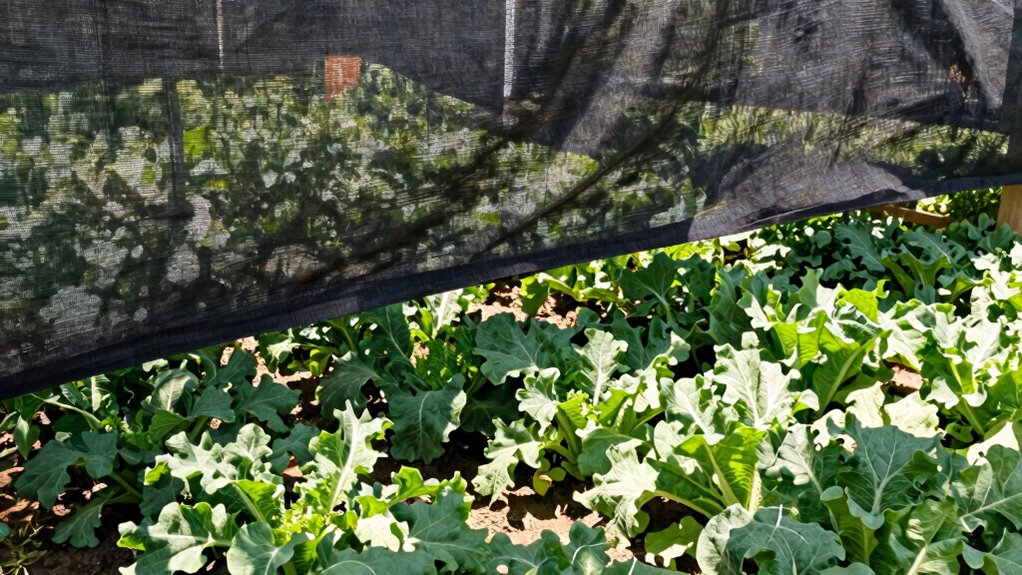
Choosing the wrong shade cloth percentage can lead to inadequate protection or unnecessary expense. One common mistake is ignoring shade cloth durability, which affects how well it withstands weather over time. Selecting a fabric with too little UV protection may degrade quickly, forcing you to replace it often. Additionally, poor installation techniques can compromise shade effectiveness and lifespan. Improper tension or insecure mounting can cause sagging or tearing, reducing shade coverage and risking damage to your plants. To avoid these pitfalls, assess your climate and choose a percentage that balances sun protection with airflow. Invest in quality installation methods, ensuring the cloth is taut and securely fastened. This approach maximizes durability, protects your plants, and saves you money in the long run.
A Quick Guide to Matching Shade Cloth Percentages to Your Gardening Needs
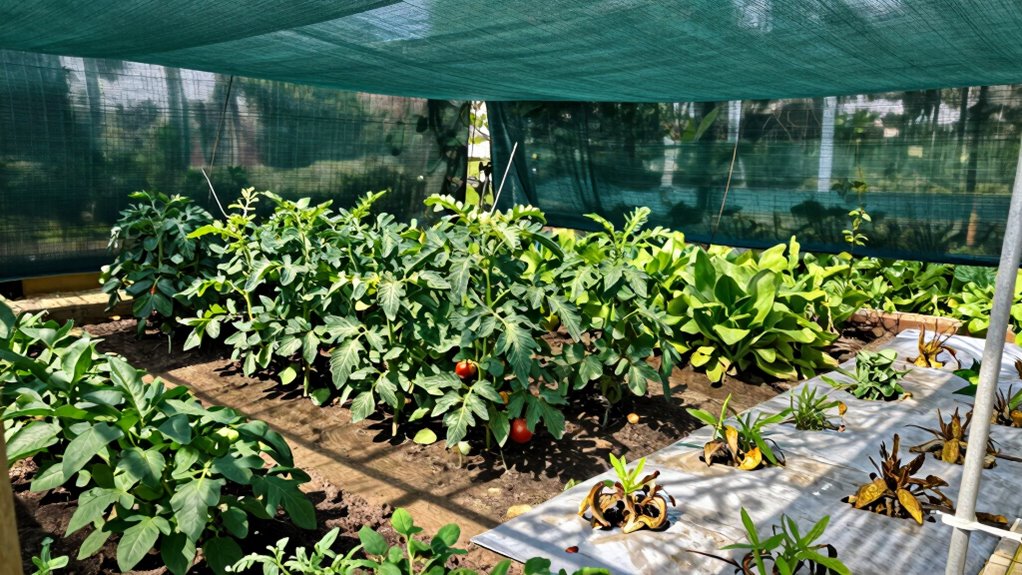
Selecting the right shade cloth percentage depends on your gardening goals and local conditions. Consider how much sunlight your plants need and how dense your plant spacing is. For example, if your plants require full sun, a lower percentage like 30-40% may suffice, while shade-loving plants need higher percentages like 50-70%. Soil testing can reveal if your soil is already nutrient-rich or prone to heat stress, guiding your shading choices.
To match shade cloth to your needs, think about:
- Plant spacing: tighter spacing may require more shade to prevent heat buildup
- Soil testing results: nutrient levels influence plant resilience
- Local climate: hotter regions need higher shading percentages
- Growth stage: seedlings often need more protection than mature plants
FAQs: Finding the Best Shade Cloth Percentage for Vegetables and Outdoor Spaces
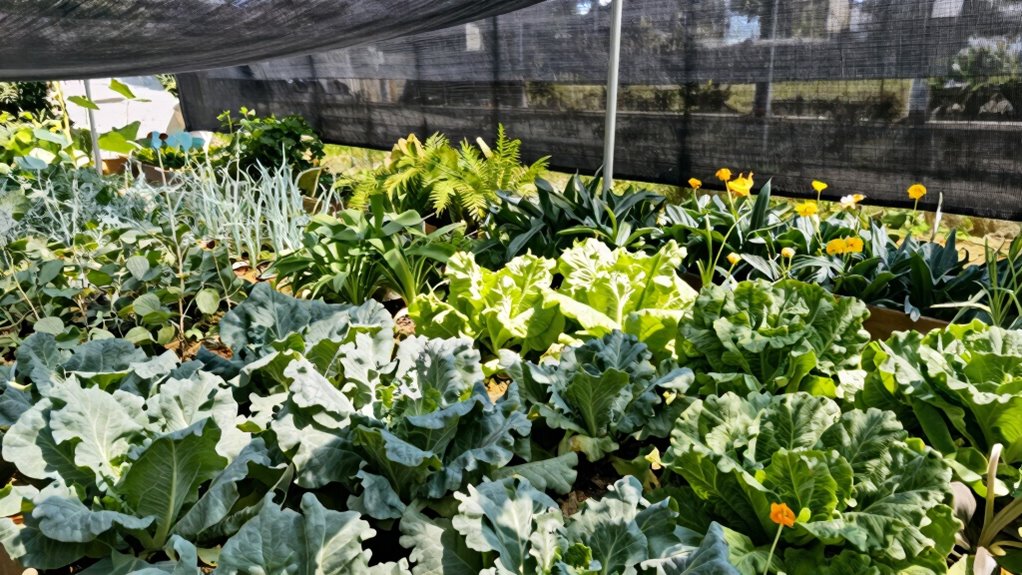
Finding the right shade cloth percentage for your vegetables and outdoor spaces often depends on balancing sunlight, heat, and plant needs. A higher percentage offers more shade, reducing heat and sunburn, but can limit growth if too dense. Consider shade cloth durability to guarantee it withstands weather over time, especially if exposed to wind or rain. Installation techniques are vital; secure the cloth tightly to avoid sagging and damage. Proper tension prevents wear and prolongs lifespan. For most vegetables, 30-50% shade is ideal, providing enough protection without overly limiting sunlight. If you’re in a hot, sunny climate, opting for a higher percentage helps prevent heat stress. Always match the shade cloth percentage to your specific plants’ needs and local conditions for maximum growth.
Frequently Asked Questions
Can Shade Cloth Percentages Vary Throughout the Year?
Yes, shade cloth percentages can vary throughout the year. You should make seasonal adjustments based on your crop’s specific needs and changing weather conditions. For example, during hotter months, increasing the shading percentage helps prevent sunburn and heat stress, while lowering it in cooler seasons allows more light for growth. Tailoring shade cloth to seasonal requirements ensures ideal plant health and productivity year-round.
How Does Wind Affect Different Shade Cloth Percentages?
Wind impact on shade cloth is like a gusty storm testing a kite’s strength, and higher percentages offer better durability. Lower percentages are more vulnerable, risking tears and damage in strong winds. You need to choose a shade cloth with the right percentage to withstand wind stress, ensuring it stays in place and protects your plants. Proper selection prevents damage, prolongs cloth life, and keeps your garden thriving.
Are There Specific Shade Percentages for Flowering vs. Leafy Plants?
Yes, there are specific shade cloth densities for flowering versus leafy plants. For flowering plants, opt for a higher shade cloth density, around 40-60%, to reduce light transmission and protect delicate blooms. Leafy plants thrive with lower densities, about 30-50%, allowing more light transmission for healthy growth. Adjust the shade cloth density based on the plant’s needs, ensuring ideal light levels without risking stunted growth.
What Is the Lifespan of Various Shade Cloth Materials?
You’ll find that the lifespan of shade cloth materials varies based on durability and UV resistance. High-quality polyethylene shade cloth typically lasts 10 to 15 years, maintaining its UV resistance and shade effectiveness. Polypropylene options may last around 5 to 10 years but often have lower durability. Regular exposure to sunlight, weather, and environmental factors can affect longevity, so selecting UV-resistant options guarantees your shade cloth remains effective longer.
How Do Local Climate Conditions Influence Shade Cloth Selection?
Imagine sunlight filtering through clouds on a chilly morning—you notice the changing light. Your local climate conditions directly influence your shade cloth choice, requiring seasonal adjustments to optimize growth. You must consider crop-specific needs, like humidity and temperature, to prevent heat stress or sun damage. By tailoring your shade cloth to these conditions, you give your plants the best environment, ensuring healthy growth year-round.
Conclusion
Choosing the right shade cloth percentage is key to healthy plant growth. Don’t be tempted to cut corners or guess blindly—your garden’s success depends on it. When you match the shade level to your plants’ needs, you’ll avoid stunting growth or wasting resources. Remember, a stitch in time saves nine, so take the time to select and adjust your shade cloth properly. Your garden will thank you with lush, thriving plants!