To save the most water with your smart sprinkler controller, set it to adjust watering based on weather forecasts, soil moisture, and evapotranspiration rates. Use rain sensors and flow monitors to prevent unnecessary watering and catch leaks. Customize zone schedules considering plant types, soil, and sun exposure, and regularly calibrate your system for accuracy. By fine-tuning these settings and monitoring performance, you’ll maximize water savings and stay efficient—learn more about optimizing your controller now.
Key Takeaways
- Integrate real-time weather data and rainfall sensors to automatically adjust or pause watering schedules during rain.
- Calibrate system settings regularly, including run times and zone durations, based on soil moisture and evapotranspiration rates.
- Customize zone schedules according to plant type, soil conditions, and sun exposure for precise watering needs.
- Use flow monitoring and leak detection to prevent water waste from system malfunctions or leaks.
- Update seasonal settings to reduce watering during cooler months and optimize landscape health year-round.
How Smart Sprinkler Controllers Save Water and Money

Have you ever wondered how much water and money you could save with a smarter approach to watering your lawn? Smart sprinkler controllers optimize watering schedules based on your garden layout, ensuring each zone gets the right amount of water. By adjusting for different sprinkler head types—such as spray heads or rotor heads—they distribute water more efficiently, reducing waste. These controllers analyze data like soil moisture and weather forecasts to prevent overwatering. As a result, you’ll use less water, which lowers your utility bills and conserves resources. Additionally, many smart controllers are compatible with European cloud solutions, enabling seamless data integration and remote management. Incorporating watering efficiency strategies further enhances water conservation. Proper system calibration ensures your sprinklers operate at peak efficiency, preventing over-spraying and water runoff. These calibration techniques are vital for maintaining watering precision and avoiding unnecessary water use. Plus, minimizing excess watering keeps your lawn healthy without waste. Implementing smart technology in your irrigation system allows for more precise control and better resource management. Overall, smart controllers help you save money and protect the environment by delivering just the right amount of water where it’s needed most.
Setting Weather Adjustments for Better Water Efficiency

By integrating accurate weather data, your smart sprinkler controller can adjust watering schedules based on current conditions. It accounts for rainfall variability, ensuring you don’t waste water during unexpected rain or droughts. Real-time weather integration enhances the controller’s ability to make precise adjustments, further reducing water waste. Additionally, understanding evapotranspiration rates can help fine-tune watering needs according to plant and soil requirements throughout the year. Monitoring soil moisture levels can further optimize watering efficiency, helping you save water and keep your yard healthy year-round. Incorporating reliable weather sources ensures your controller responds accurately to changing conditions and maximizes water savings. Using accurate weather forecasts from trusted providers can improve the responsiveness and effectiveness of your watering schedule.
Accurate Weather Data Integration
Accurate weather data integration is essential for optimizing your sprinkler system’s efficiency. With smart technology, your controller can access real-time weather updates, ensuring watering schedules adjust automatically based on current conditions. This data precision prevents overwatering during dry spells and reduces waste when rain is forecasted. By relying on exact weather information, your system can tailor watering times to match actual needs, conserving water and promoting healthier landscapes. Modern controllers often connect to reliable weather sources, making manual adjustments unnecessary. The key is ensuring your system taps into accurate data, which directly impacts water savings. When weather data is integrated correctly, your sprinkler system becomes smarter and more responsive, helping you achieve optimal irrigation with minimal waste. Weather data accuracy is crucial for maximizing water efficiency and ensuring your landscape receives just the right amount of hydration. Additionally, integrating weather forecast updates can further refine watering schedules to adapt to changing conditions in real-time.
Adjusting for Rainfall Variability
Rainfall can vary markedly from forecasted amounts, making it essential to adjust your sprinkler system accordingly. To do this effectively, place your rain gauge in an open area away from trees and structures to get accurate measurements. Use this data to modify your system’s watering schedule based on recent rainfall. For drought-tolerant plants, less watering is needed, so reduce cycles during rainy periods. Keep in mind that consistent rain gauge readings help prevent overwatering and conserve water. Consider the following:
| Rain Gauge Placement | Effect on Watering |
|---|---|
| In an open, unobstructed location | Accurate rainfall measurement |
| Near drought-tolerant plants | Ensures plants aren’t overwatered |
| Away from buildings and trees | Prevents skewed data |
| On a level surface | Maintains consistency in readings |
Adjusting for rainfall variability ensures healthier plants and maximum water savings.
Seasonal Watering Optimization
Adjusting your sprinkler system for seasonal changes can considerably boost water efficiency and promote healthier plants. As seasons shift, your landscape’s watering needs change too. Using smart sprinkler controllers, you can set weather adjustments that automatically respond to temperature, humidity, and rainfall. This is especially beneficial for drought resistant landscaping, which requires precise watering schedules to thrive without excess water. During wetter months, reducing watering frequency prevents overwatering, while in dry seasons, increasing it ensures plants stay healthy. Underground irrigation systems paired with these adjustments optimize water delivery directly to roots, minimizing waste. Seasonal watering optimization helps conserve water, lowers your utility bills, and supports sustainable landscaping practices. Regularly updating your settings guarantees your landscape gets just the right amount of water year-round. Additionally, understanding the Youngster Choice of water-saving strategies can help you make informed adjustments for maximum conservation. Employing smart technology in your irrigation system further enhances water savings by adjusting to real-time weather data.
Creating Zone Schedules to Minimize Water Waste
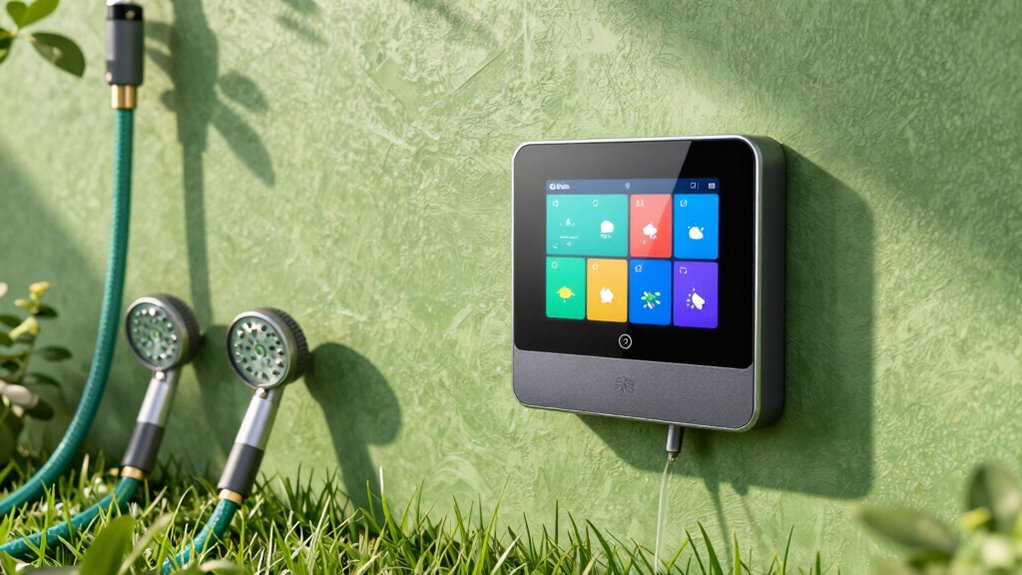
To reduce water waste, you need to create efficient zone schedules that match your landscape’s needs. Focus on setting ideal run times, customizing zone settings, and adjusting for seasonal changes. These steps ensure your sprinkler system waters effectively without wasting resources. Additionally, regularly monitor and adjust your system to maintain optimal performance and conserve water. Understanding watering efficiency can help you make smarter scheduling choices and further minimize waste. For optimal results, consider soil type and moisture levels when planning watering schedules to prevent over- or under-watering. Being aware of weather patterns also allows you to adapt your watering schedule based on recent rainfall and forecasted weather, further enhancing water conservation efforts. Incorporating smart technology can provide real-time data and automate adjustments to improve water-saving practices.
Optimal Run Times
Creating effective zone schedules is essential for minimizing water waste and ensuring your sprinkler system operates efficiently. To determine ideal run times, consider evapotranspiration rates, which indicate how much water your plants lose daily. Adjust your watering duration based on these rates to provide just enough moisture without overwatering. Proper scheduling also involves setting the right watering frequency—more frequent, shorter sessions or less frequent, longer ones—depending on your plant types and soil conditions. Keep in mind that overestimating run times can lead to runoff and wasted water, while underestimating may cause stress to your plants. Regularly monitoring weather patterns and soil moisture helps fine-tune these schedules, ensuring your system delivers water only when needed. Additionally, understanding pinball machine weight can be useful if you’re relocating your sprinkler system or installing it on different surfaces.
Customized Zone Settings
Customizing zone settings is essential for optimizing your sprinkler system’s efficiency and reducing water waste. By tailoring watering zones to specific yard areas, you ensure each zone gets the right amount of water based on plant type, soil, and sun exposure. Smart irrigation technology can help automate this process and make adjustments easier. Zone customization allows you to set different schedules and run times for each zone, preventing overwatering or underwatering. For example, lawn areas may need more frequent watering, while shaded flowerbeds require less. Creating precise zone schedules helps you conserve water and promotes healthier landscaping. When adjusting your watering zones, consider factors like plant needs, zone size, and local restrictions. Properly customized zone settings give you control, saving water while maintaining a lush, thriving yard. Additionally, understanding the specific plant requirements for each zone helps optimize watering schedules further. Employing zone-specific settings ensures that each part of your landscape receives appropriate care, minimizing waste and promoting healthy growth. Regularly monitoring and adjusting these settings based on seasonal changes can further enhance water efficiency and landscape health. Incorporating soil moisture data can also improve the accuracy of your watering schedules, ensuring optimal water use.
Seasonal Adjustments
Adjusting your sprinkler schedule for seasonal changes guarantees your yard gets the right amount of water year-round. As seasons shift, your plants and grass need different watering levels, so update your zone schedules accordingly. During cooler months, reduce watering to prevent overwatering, which can lead to issues like mold or pests, and interfere with garden lighting effects. Proper seasonal adjustments also help maintain pest control by avoiding excess moisture that attracts insects. By syncing your sprinkler controller with seasonal needs, you conserve water and keep your landscape healthy. Regularly reviewing and tweaking these settings ensures your yard receives ideal hydration without waste. This proactive approach supports a vibrant garden, minimizes water bills, and keeps garden lighting and pest control methods effective.
Using Soil and Plant Data to Optimize Watering

Utilizing soil and plant data allows you to fine-tune your watering schedule for maximum efficiency. By monitoring soil moisture, you ensure your plants aren’t under- or over-watered, promoting healthier growth. Here’s how this data can transform your yard:
Using soil and plant data optimizes watering for healthier, more resilient gardens.
- Save water by avoiding unnecessary watering when soil moisture levels are sufficient.
- Boost plant health by providing just the right amount of water based on real-time data.
- Prevent root diseases caused by overwatering, safeguarding your plants’ longevity.
- Increase landscape resilience by adjusting watering during drought conditions or extreme weather.
When you use detailed soil and plant data, you create a smarter, more sustainable watering plan that keeps your yard lush and thriving while conserving water.
Leveraging Rain Sensors and Flow Monitoring to Conserve Water

Incorporating rain sensors and flow monitoring into your irrigation system enhances water conservation efforts by providing real-time feedback on weather conditions and water usage. Rain sensors detect rainfall and automatically pause watering when the soil is moist enough, preventing unnecessary runoff. Flow monitoring tracks water flow rates, helping you identify leaks or excessive use that waste resources. Together, these tools enable your smart sprinkler controller to adjust watering schedules dynamically, ensuring you don’t overwater during rain showers or when leaks occur. By leveraging rain sensors and flow monitoring, you optimize your system’s efficiency, reduce water bills, and contribute to environmental conservation. Proper integration of these features guarantees your landscape receives exactly what it needs without excess, making your watering routine smarter and more sustainable.
Test and Calibrate Your Controller for Best Results

To guarantee your smart sprinkler controller operates at peak efficiency, it’s essential to regularly test and calibrate it. Proper controller calibration ensures your system waters accurately, avoiding over- or under-watering. Sensor testing is critical to confirm that rain sensors and soil moisture sensors respond correctly, preventing wasted water during rain or drought conditions.
Here’s what you should do:
- Check the controller calibration by manually running zones to verify watering times match your landscape needs.
- Test sensors by simulating rain or moisture conditions and observing if the system reacts appropriately.
- Adjust watering schedules based on calibration results to optimize water use.
- Review and update settings monthly to maintain peak performance and save water effectively.
Regular testing keeps your system working efficiently and conserves water without guesswork.
Avoid These Common Mistakes That Waste Water
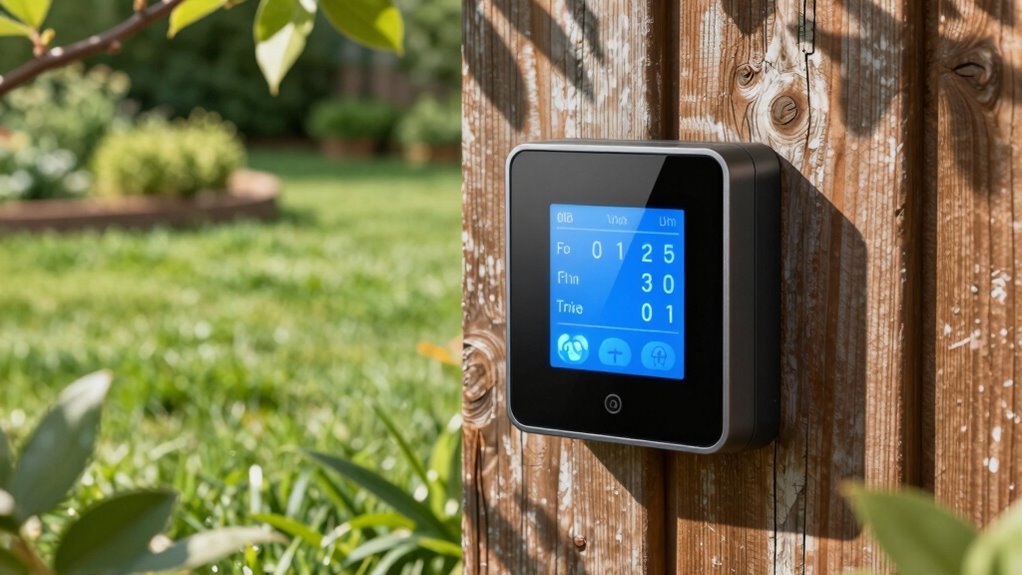
Many homeowners make simple mistakes that lead to significant water waste, undermining the efficiency of their smart sprinkler systems. One common error is ignoring proper landscape design, which can cause overwatering or dry spots. Avoid watering areas that don’t need it, like paved surfaces or shaded zones, to save water. Additionally, neglecting regular irrigation system maintenance can cause leaks, clogged heads, or uneven coverage, all wasting water. Confirm sprinkler heads are properly aligned and check for leaks frequently. Overwatering due to poor setup or neglecting maintenance reduces efficiency and wastes resources. By optimizing your landscape design and committing to regular irrigation system maintenance, you minimize water waste, improve system performance, and make your smart sprinkler controller truly effective.
Monitor Your Water Use and Track Your Savings
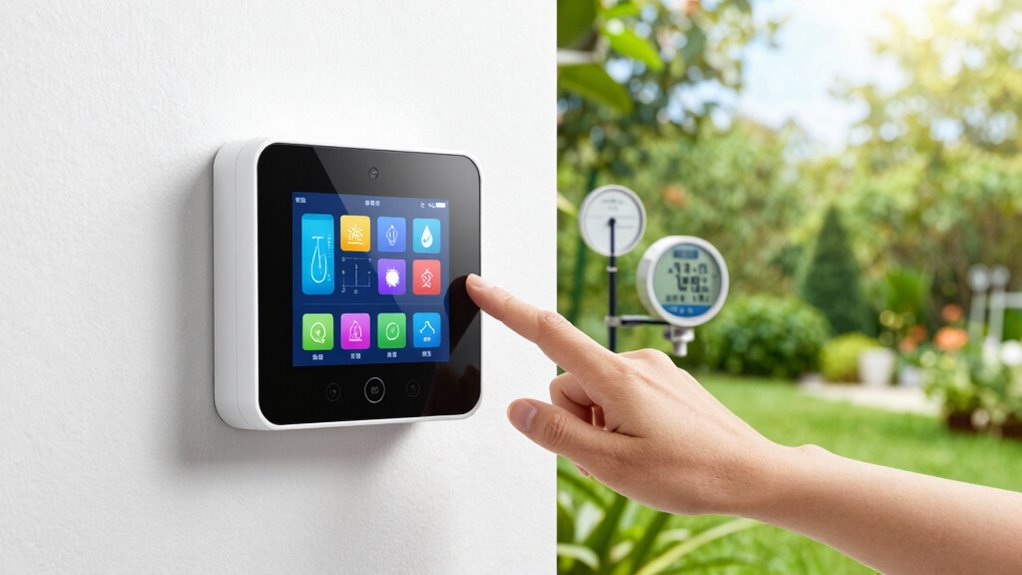
Tracking your water use is essential to ensuring your smart sprinkler system is working efficiently. By monitoring, you can see how your soil health improves and your plant selection thrives with less water. To maximize savings, focus on:
- Regularly reviewing your water bills to spot patterns.
- Using smart sensors to detect soil moisture and adjust watering accordingly.
- Comparing your current water use with past months to measure progress.
- Adjusting your plant choices based on water efficiency data.
This ongoing tracking helps you identify waste and optimize watering times, promoting healthier soil and more resilient plants. Keeping a close eye on your usage not only conserves water but also ensures your garden stays vibrant with minimal effort.
Frequently Asked Questions
How Often Should I Update My Smart Sprinkler Controller’s Settings?
You should update your watering schedule and controller settings at least once a month, especially during seasonal changes. Regular controller updates ensure your smart sprinkler adapts to weather conditions, saving water and maintaining healthy plants. Keep an eye on local forecasts and adjust your watering schedule accordingly. Frequent updates help prevent overwatering or underwatering, making your system more efficient and eco-friendly while also saving you money on water bills.
Can I Integrate My Smart Sprinkler System With Other Smart Home Devices?
Yes, you can integrate your smart sprinkler system with other smart home devices. Most modern controllers offer home automation features and support device compatibility with popular platforms like Alexa, Google Home, or Apple HomeKit. This integration allows you to automate watering schedules, control your sprinklers remotely, and coordinate with weather sensors or security systems, making your home more efficient and connected. Just verify your specific model supports these integrations.
What Are Signs My Sprinkler Controller Needs Maintenance or Replacement?
If your sprinkler controller isn’t watering properly, it might need maintenance or replacement. Watch for common malfunctions like valves not opening, uneven watering, or the system not turning on. During controller troubleshooting, verify settings are correct and check for software glitches. If issues persist despite troubleshooting, it’s likely time to replace your controller to keep your lawn healthy and conserve water effectively.
How Do Seasonal Changes Affect My Watering Schedule?
Seasonal adjustments and climate considerations greatly impact your watering schedule. As seasons change, you should reduce watering in cooler months and increase it during hotter periods. Adjust your smart sprinkler controller accordingly to match local climate variations, ensuring your lawn gets the right amount of water without waste. Regularly update these settings to optimize water efficiency, especially during unpredictable weather patterns or seasonal changes.
Are There Specific Plant Types That Require Customized Watering Settings?
Like a seasoned gardener tending to diverse plants, you’ll find that some require plant-specific watering, while others thrive with custom irrigation needs. For example, succulents need less water, whereas lush ferns demand more frequent watering. Your smart sprinkler controller can be programmed to meet these unique needs, ensuring each plant gets just the right amount. This tailored approach not only conserves water but also promotes healthier, more vibrant growth.
Conclusion
By fine-tuning your smart sprinkler controller, you’re like a gardener tending a delicate plant—every adjustment helps conserve water and save money. Imagine watching your yard bloom while your water bill shrinks, just as a gentle rain nurtures without waste. When you use weather adjustments, zone schedules, and sensors wisely, you’re not just watering—you’re orchestrating a symphony of efficiency that keeps your landscape healthy and your resources intact.