
If you’re choosing between fan, cone, and flood nozzles, it’s important to match the pattern to your task. Fan nozzles cover large areas with a wide, flat spray, perfect for broad surface watering. Cone nozzles create targeted, precise sprays ideal for delicate or specific jobs. Flood nozzles deliver heavy, broad flows for quick coverage, suitable for industrial or irrigation needs. Keep reading to discover how to pick the best nozzle for your project and optimize its performance.

Get garden gear delivered free with Prime
- Fast, free delivery on millions of items
- Prime Video, Amazon Music and more included
- Member-only deals all year
Key Takeaways
- Fan nozzles produce a wide, flat spray ideal for large surface coverage, while cone nozzles create targeted, circular sprays for precision.
- Flood nozzles deliver high-volume, broad streams suitable for heavy-duty tasks like irrigation and industrial cleaning.
- Cone nozzles maintain consistent spray patterns despite pressure fluctuations, offering fine-tuning and precise control.
- Proper selection depends on coverage area, material compatibility, and pressure requirements to optimize performance and prevent clogging.
- Regular maintenance, cleaning, and correct system pressure ensure optimal spray quality and nozzle longevity.
As an affiliate, we earn on qualifying purchases.
What Are Fan, Cone, and Flood Nozzles? An Overview
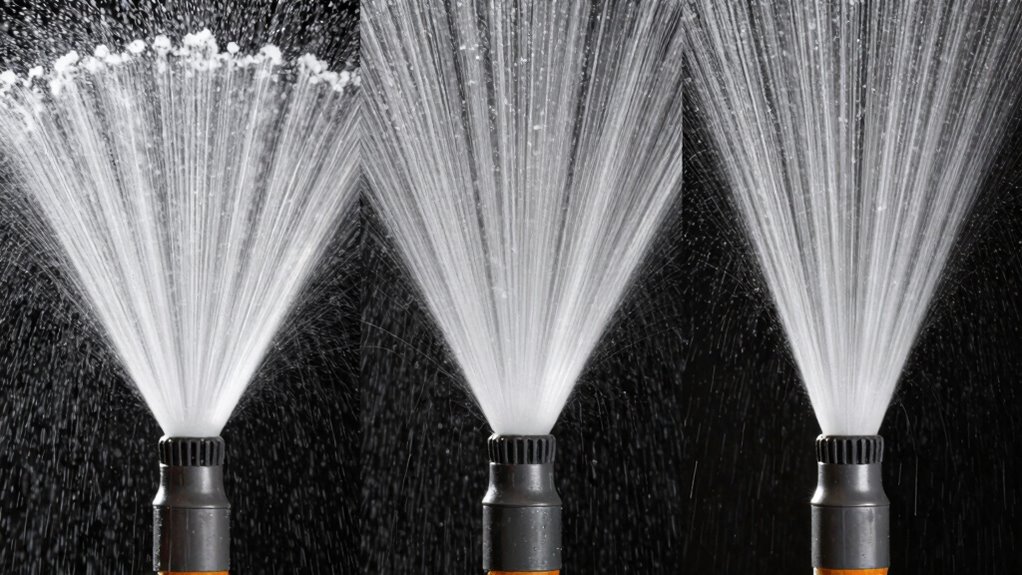
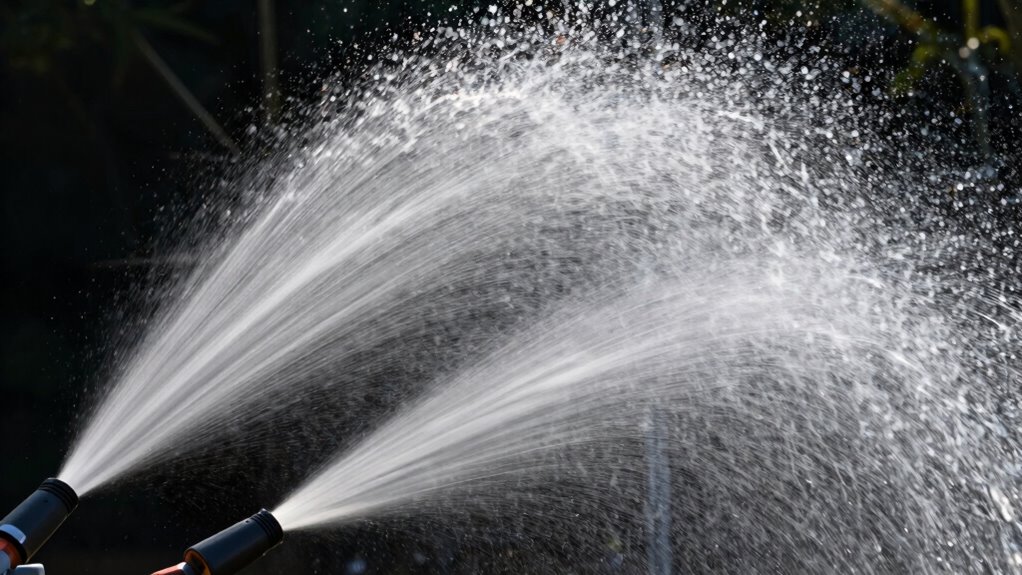
Have you ever wondered how different nozzles shape and control water streams? Understanding spray dynamics helps you see how fan, cone, and flood nozzles produce distinct spray patterns. Fan nozzles create a thin, wide sheet ideal for covering large areas, while cone nozzles produce a rounded, spray for more targeted watering. Flood nozzles deliver a heavy, broad flow perfect for quick coverage. Proper nozzle maintenance guarantees consistent spray patterns and prevents clogging, which can distort spray dynamics. Regular cleaning and inspection keep your nozzles functioning at their best, maintaining their designed spray profiles. Knowing the differences among these nozzles allows you to choose the right one for your specific needs, ensuring efficient watering and effective coverage. Understanding spray patterns is essential for optimizing watering efficiency and preventing water waste. Additionally, selecting nozzles with precise flow control can help conserve water and improve overall system performance. To maximize lifespan and performance, it’s important to understand the material composition of your nozzles as well. Recognizing how pressure impacts spray can further refine your watering strategy and prevent uneven coverage.
As an affiliate, we earn on qualifying purchases.
How Do Fan Nozzles Work? Uses and Performance Tips
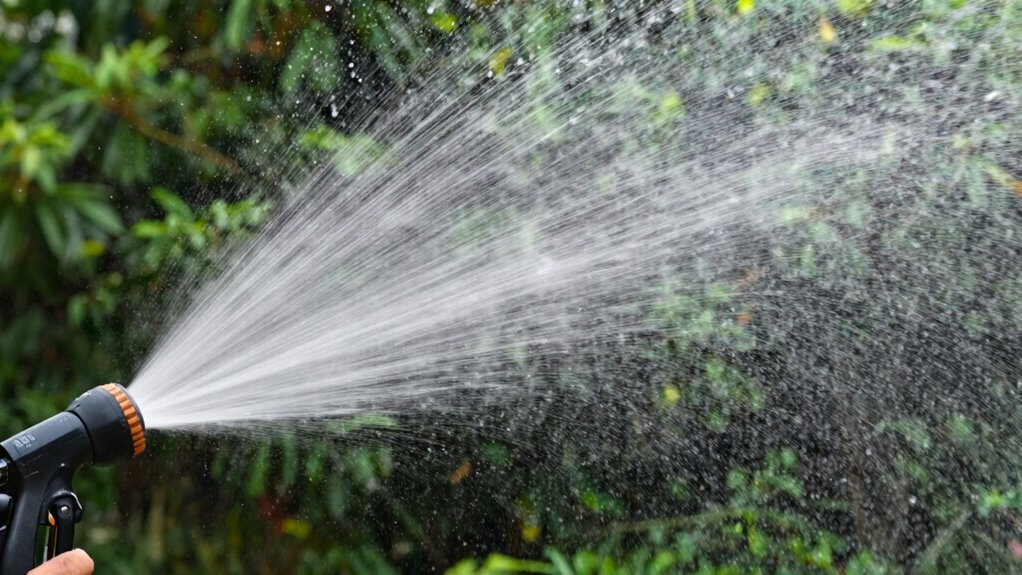
Fan nozzles work by forcing water through a series of internal vanes or blades that split the flow into a wide, flat spray. This creates a spray angle ideal for covering large surface areas efficiently. To maximize performance, consider these tips:
Fan nozzles split water flow into a wide, flat spray for efficient coverage over large areas.
- Adjust the spray angle to match your task, ensuring even coverage.
- Regularly inspect for clogs or damage to maintain consistent spray patterns.
- Clean nozzles periodically to prevent buildup that can affect spray quality.
- Replace worn parts promptly to preserve ideal nozzle performance.
- Choosing the right nozzle type, such as fan, cone, or flood, depends on your specific watering or cleaning needs. Understanding how wave and wind can influence spray patterns helps optimize coverage in outdoor environments. Proper nozzle maintenance helps sustain proper spray angles and prolongs the nozzle’s lifespan. Being aware of pressure and flow rates is essential to ensure efficient operation and avoid nozzle damage. Understanding how fan nozzles work ensures you get the right coverage, whether for cooling, watering, or cleaning applications. Additionally, knowledge of nanotechnology advancements can lead to innovative nozzle designs that improve spray precision and durability. Recognizing the importance of spray pattern consistency allows for better control and efficiency during application.
As an affiliate, we earn on qualifying purchases.
When Are Cone Nozzles the Best Choice? Benefits and Applications
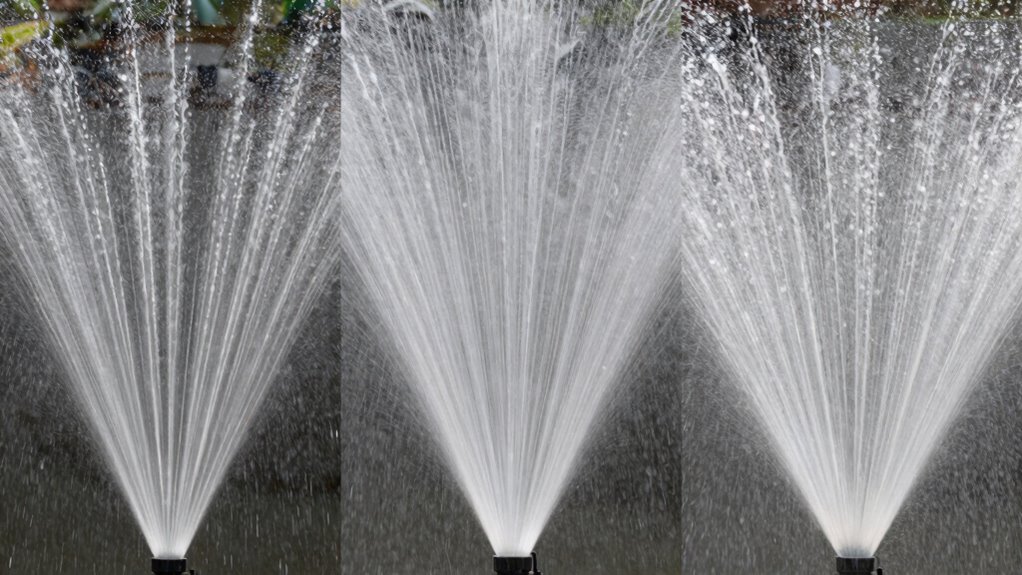
Cone nozzles are ideal when you need precise spray patterns for targeted tasks. They excel in applications where accuracy and specific coverage are vital. Understanding their benefits helps you choose the right nozzle for your needs. Additionally, net worth estimates can provide insights into the financial success and market value associated with various individuals or entities using these nozzles. Proper art care and maintenance are essential to preserve the effectiveness of cone nozzles over time, especially in delicate or valuable environments. Recognizing the importance of water chemistry can also improve nozzle performance and longevity in different conditions. Moreover, considering ventilation considerations can optimize airflow around nozzles, ensuring consistent spray quality and reducing wear. Being aware of essential oil properties can also inform the selection of nozzles for applications involving aromatic or medicinal substances, ensuring optimal dispersion and effectiveness.
Precise Spray Patterns
When precise spray patterns are essential, selecting the right nozzle can make all the difference. Cone nozzles excel in applications requiring accurate spray precision, ensuring even coverage and minimal waste. They’re especially useful when uniform distribution matters most. Here are four benefits of using cone nozzles for precise spray patterns:
- Enhanced spray accuracy, reducing overspray
- Consistent pattern control, regardless of pressure fluctuations
- Improved nozzle ergonomics, simplifying adjustments
- Precise application for targeted tasks
Additionally, understanding the role of pressure regulation can help maintain optimal spray performance and consistency. Proper diluting paint is also crucial to achieve the best results with cone nozzles, as paint viscosity directly influences spray quality. Using the correct spray pressure helps optimize spray consistency and efficiency. Your ability to fine-tune spray patterns guarantees better results, especially in delicate or detailed work. When pressure stability is maintained, cone nozzles provide the control and reliability needed to achieve professional-quality outcomes. Incorporating connected equipment and monitoring tools can further enhance your control over spray parameters, ensuring optimal results in various conditions.
Suitable for Specific Tasks
Are you wondering if cone nozzles are the right choice for a specific task? Cone nozzles excel when you need a wide spray angle to cover large surfaces evenly. They’re ideal for applications like cooling, cleaning, or coating, where broad coverage is essential. Their spray pattern creates a gentle, uniform spray that minimizes waste and overspray. Additionally, cone nozzles are easy to maintain, with simple nozzle maintenance routines ensuring consistent performance over time. Keep an eye on nozzle clogging and wear, as these can affect spray angle and efficiency. If your task requires a broad, uniform spray with minimal maintenance, cone nozzles are your best option. They’re perfect for operations demanding wide coverage and reliable, straightforward use.
wide spray fan nozzle for watering
As an affiliate, we earn on qualifying purchases.
As an affiliate, we earn on qualifying purchases.
Flood Nozzles: When and Why to Use Them
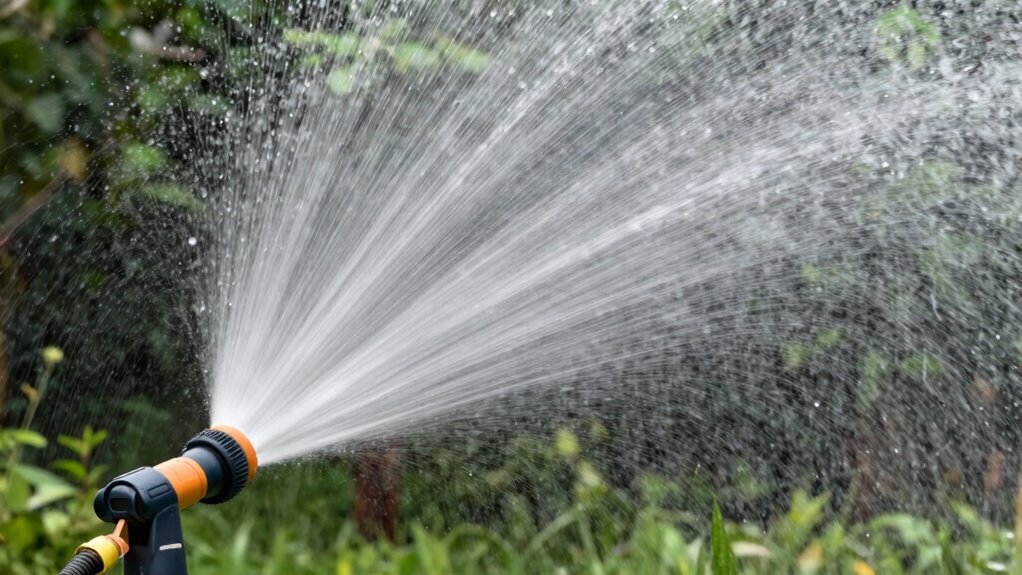
Flood nozzles are ideal for situations that require broad, even coverage over large areas, making them essential in applications like irrigation, fire suppression, and industrial cleaning. They excel when you need consistent flow despite pressure variations, guaranteeing reliable performance. Additionally, their design promotes nozzle longevity, reducing maintenance costs over time. Consider these key points:
- Use flood nozzles where wide coverage is critical.
- Opt for them when pressure fluctuations are common, as they maintain even spray patterns.
- Choose flood nozzles for tasks needing high-volume water delivery.
- Ensure your system accounts for pressure variations to maximize lifespan and efficiency.
Flood nozzles are your go-to choice when broad, uniform coverage and durability are priorities, especially in demanding environments.
Comparing Nozzle Patterns: Which Is Right for Your Project?
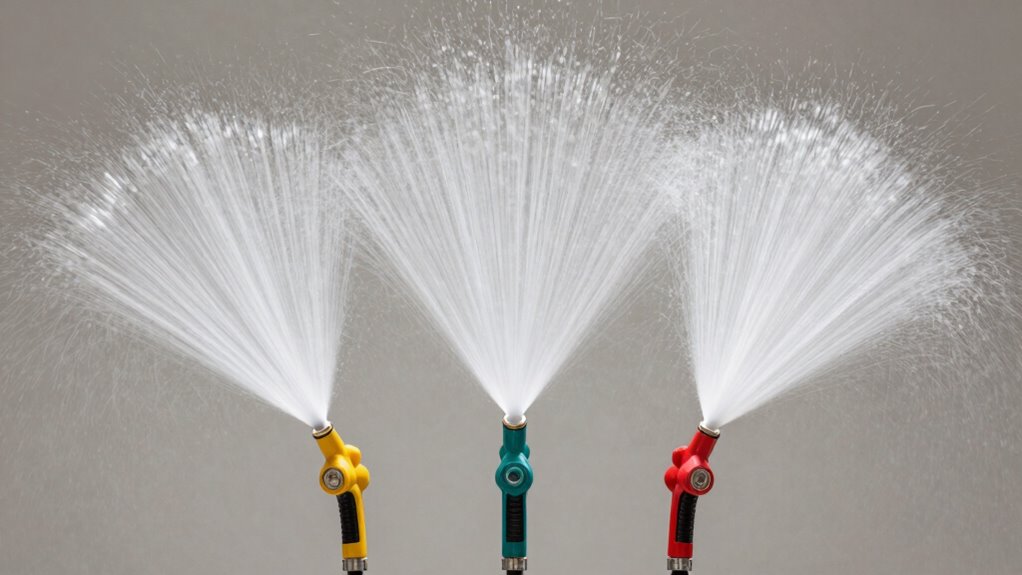
Choosing the right nozzle pattern depends on your desired spray coverage and focus. You also need to take into account material compatibility to ensure efficiency and avoid clogs or damage. By understanding these points, you can select a nozzle that meets your project’s specific needs effectively. Additionally, considering the benefits of curiosity can help you explore different nozzle types and their applications more thoroughly. Understanding safe installation practices can further ensure your setup operates smoothly and lasts longer. Being aware of material compatibility is crucial in preventing issues like clogging and ensuring optimal performance over time. Moreover, exploring proper maintenance routines can extend the lifespan of your nozzles and maintain consistent spray quality. Developing a comprehensive understanding of nozzle types can also assist in making informed decisions tailored to your unique project requirements.
Spray Coverage and Focus
Selecting the right nozzle pattern is essential to achieving even spray coverage and targeted focus for your project. Different patterns influence spray uniformity and how well you concentrate the flow. Consider these factors:
- Fan nozzles provide broad coverage, ideal for uniform application over large areas.
- Cone nozzles create a focused, circular spray, perfect for targeted spots.
- Flood nozzles deliver intense, concentrated streams, suited for heavy-duty tasks.
- Proper nozzle calibration guarantees consistent spray patterns, maintaining coverage and focus.
- Understanding spray pattern dynamics can help optimize application efficiency and results.
Material Compatibility and Efficiency
Different nozzle patterns vary in how well they handle different materials, making compatibility a key factor in your choice. For example, some nozzles excel with corrosive chemicals, thanks to high chemical resistance, while others tolerate extreme temperatures better. Your project’s material dictates which pattern is most efficient.
| Nozzle Pattern | Chemical Resistance | Temperature Tolerance | Best Use Case |
|---|---|---|---|
| Fan | Moderate | Low to Moderate | Thin liquids, gentle sprays |
| Cone | High | High | Corrosive chemicals, high heat |
| Flood | Varies | Varies | Heavy-duty applications |
Choosing the right pattern ensures maximum efficiency and longevity, aligning with your material’s demands.
How to Choose the Best Nozzle Pattern for Your Needs
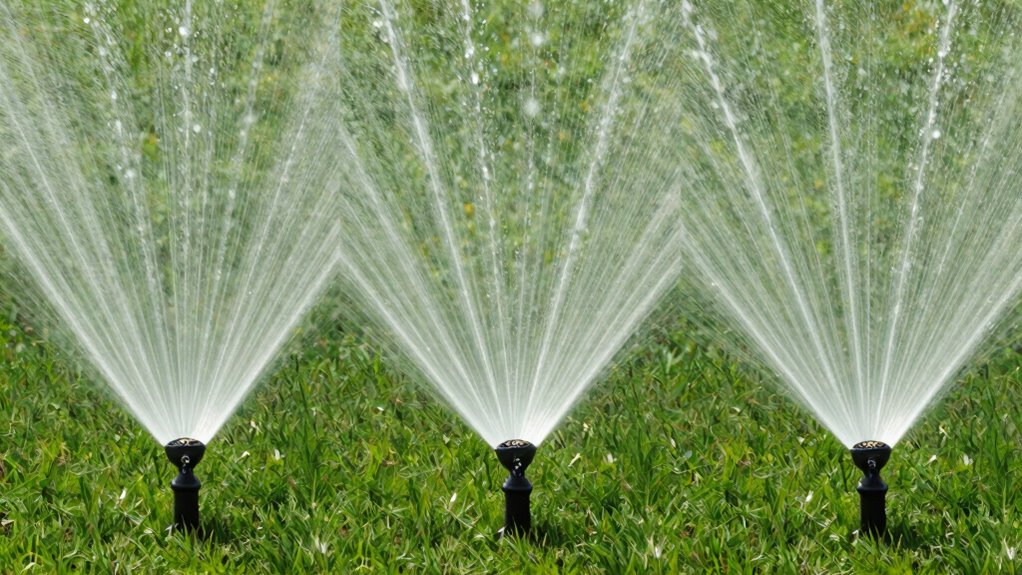
Understanding your specific watering needs is key to picking the right nozzle pattern. Consider these factors:
- Coverage area: Determine if you need broad coverage or targeted watering.
- Water pressure: Match the pattern to your system’s pressure to avoid uneven distribution.
- Chemical compatibility: Ensure the nozzle material resists chemicals in your water to prevent damage.
- Nozzle maintenance: Choose a pattern that’s easy to clean and maintain for long-term reliability.
Selecting the right pattern—fan, cone, or flood—depends on your landscape and watering goals. Properly matching nozzle types minimizes clogging, ensures effective coverage, and prolongs nozzle lifespan. By considering these factors, you’ll optimize watering efficiency and maintain chemical compatibility.
Tips to Maximize Nozzle Coverage and Performance

Maximizing nozzle coverage and performance starts with proper installation and regular adjustments. Begin by inspecting your nozzle for dirt or wear, as nozzle maintenance ensures consistent spray quality. Properly aligning the nozzle prevents uneven coverage and maintains efficiency. Adjust the spray angle as needed; a wider angle can increase coverage, while a narrower angle offers more targeted application. Regularly check and fine-tune the spray angle to match your specific needs. Clean nozzles thoroughly to prevent clogging that can reduce spray uniformity. Use a calibration tool to verify that your nozzle delivers the correct flow rate. Consistent maintenance and precise spray angle adjustments help you achieve even coverage, optimize performance, and extend the lifespan of your equipment.
Common Mistakes to Avoid With Fan, Cone, and Flood Nozzles
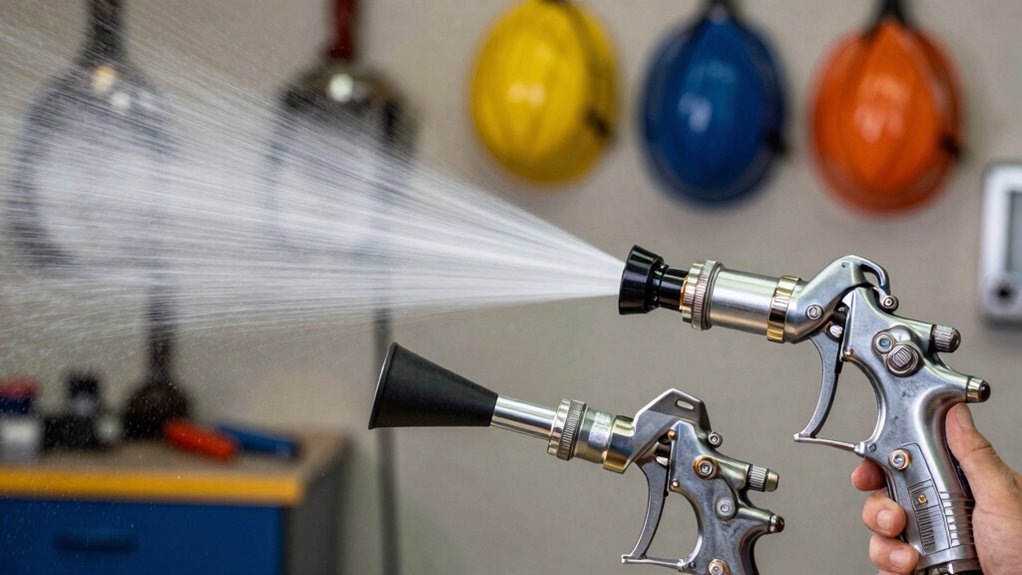
One common mistake is neglecting to choose the right nozzle type for your specific application, which can lead to uneven coverage or wasted resources. To avoid this, consider these points:
- Ignoring maintenance tips: Regularly clean and inspect nozzles to prevent clogs and guarantee ideal spray patterns.
- Overlooking safety precautions: Always wear protective gear and handle nozzles carefully to prevent accidents during setup or cleaning.
- Using the wrong nozzle for the task: Fan nozzles aren’t suitable for large-area coverage, while flood nozzles may waste material on small spots.
- Neglecting proper calibration: Incorrect pressure settings can distort spray patterns, reducing efficiency and safety.
Final Tips: Picking the Perfect Nozzle Pattern for Your Task
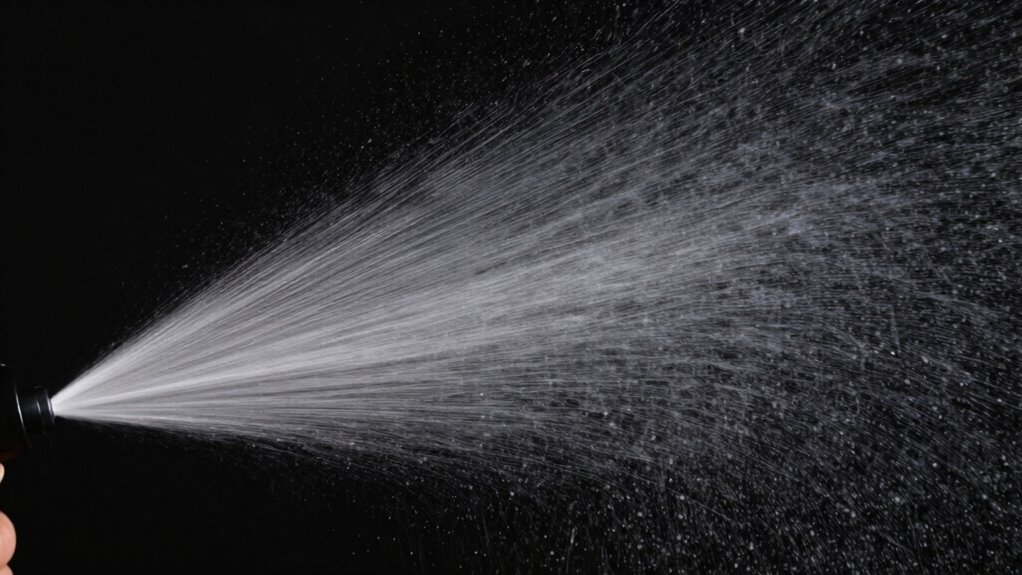
Choosing the right nozzle pattern is key to achieving efficient and effective results for your project. Consider pressure considerations carefully, as different patterns respond uniquely to varying pressures. For example, flood nozzles require higher pressure for proper coverage, while fan nozzles operate well at moderate levels. Additionally, think about nozzle maintenance—regular cleaning guarantees consistent spray patterns and prevents clogging, which can compromise performance. Inspect your nozzles frequently, especially if you’re using abrasive materials or running for long periods. Selecting the correct pattern depends on your task’s specifics, so match the nozzle type to your pressure setup and maintenance routine. This approach guarantees ideal spray quality, reduces downtime, and helps you achieve precise, reliable results every time.
Frequently Asked Questions
Can Nozzle Type Affect Water Pressure and Flow Rate?
Yes, nozzle type can affect water pressure and flow rate. Different nozzles create varying pressure effects, which in turn influence flow rate. For example, a fan nozzle disperses water over a wide area, reducing pressure and flow, while a flood nozzle concentrates pressure for a higher flow rate. Choosing the right nozzle depends on your specific watering needs, as it directly impacts pressure effects and how much water flows out.
Are Certain Nozzles More Energy-Efficient Than Others?
Some nozzles are more energy-efficient than others, especially when considering spray angle and nozzle size. Nozzles with a narrower spray angle and smaller size typically use less water and energy, making them more efficient for targeted applications. Conversely, wider spray angles and larger nozzles may waste energy by overspraying. Choose the right nozzle based on your needs to optimize energy use and reduce waste.
How Does Nozzle Material Impact Durability and Performance?
Did you know that choosing the right nozzle material can double its lifespan? Material impacts durability and performance by influencing material compatibility and corrosion resistance. If you pick a nozzle made from corrosion-resistant materials like stainless steel or brass, it’ll withstand harsh conditions better. This means fewer replacements, consistent spray quality, and better energy efficiency. Always consider your environment to select a nozzle material that maximizes durability and performance.
Can Nozzle Choice Influence Cleaning or Coating Quality?
Your nozzle choice directly impacts cleaning or coating quality by affecting precision spray and nozzle compatibility. A well-suited nozzle ensures a consistent, even application, reducing overspray or missed spots. For best results, select a nozzle designed for your material and task, which enhances precision spray and maintains compatibility with your equipment. This combination helps achieve a smooth, professional finish and improves overall efficiency in your cleaning or coating process.
Are There Safety Considerations When Selecting Nozzle Types?
Safety is your first priority when selecting nozzle types; neglecting this is like walking a tightrope without a safety net. You must follow safety protocols and hazard prevention measures to avoid accidents. Always wear proper protective gear, verify equipment is properly maintained, and understand the spray pattern’s reach and pressure. By doing so, you minimize risks, protect yourself and others, and ensure a safe, efficient operation.
Conclusion
Choosing the right nozzle pattern can make your project feel like a breeze. By understanding fan, cone, and flood nozzles, you’ll naturally find the best fit for your needs. Remember, a little guidance goes a long way—like a gentle nudge in the right direction. With the right choice, you’ll enjoy smoother operation and better results, making your work feel less like a chore and more like a rewarding experience.
Fall Picks
fall essentials
As an affiliate, we earn on qualifying purchases.