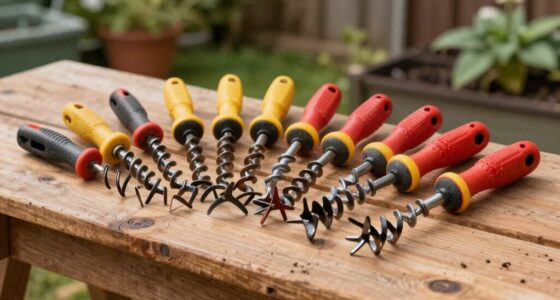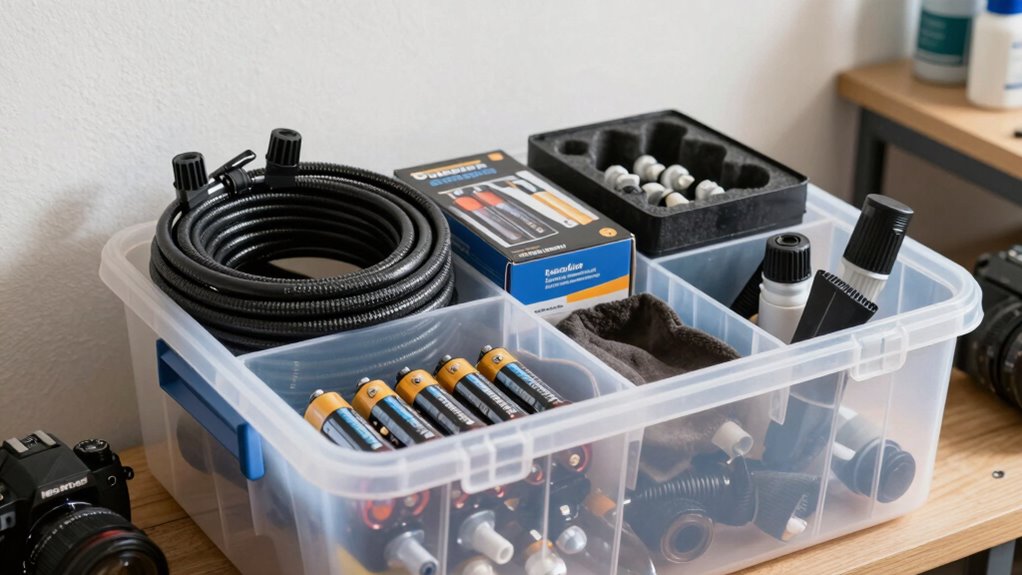

To store your spray gear so seals, hoses, and batteries last longer, thoroughly clean and dry all parts after each use, and inspect them regularly for damage. Store equipment in a cool, dry environment away from extreme temperatures and humidity, and keep batteries separately in a dry spot, recharging them periodically. Use protective covers on nozzles and connections to prevent damage. Following these tips helps prolong your gear’s lifespan—continue for more expert advice.
Get ready for Prime Big Deal Days — try Prime free
Exclusive member deals on October 6–7, plus fast free delivery. Cancel anytime.
As an affiliate, we earn on qualifying purchases.
Key Takeaways
- Remove batteries before storage and keep them in a cool, dry place to prevent leakage and capacity loss.
- Clean and dry all seals and hoses thoroughly to prevent deterioration and blockages.
- Store equipment upright in a stable, protected environment to avoid damage and leaks.
- Inspect and replace worn seals, hoses, and damaged components regularly to maintain functionality.
- Use protective covers over nozzles, connections, and batteries to prevent contamination and physical damage.
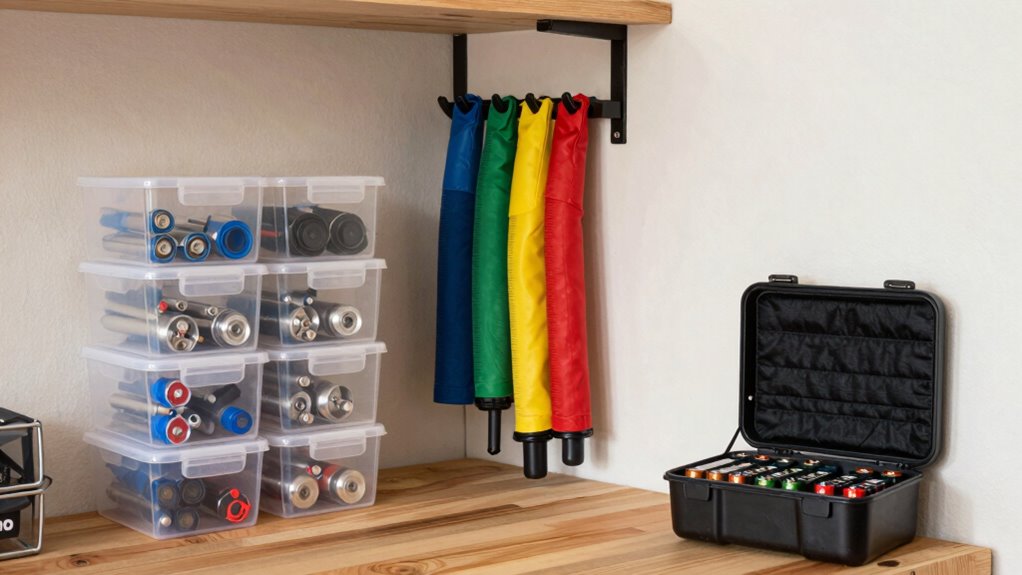
Proper storage of spray gear is vital to keep it in good condition and guarantee safety during future use. If you want your equipment to perform reliably every time, paying attention to maintenance tips and storage safety is fundamental. Neglecting these details can lead to damaged seals, clogged hoses, or dead batteries, which can be costly and dangerous. To prevent this, always start by cleaning your spray gear thoroughly after each use. Remove any residual paint, chemicals, or debris that might corrode parts or cause blockages. Use appropriate cleaning agents and verify all components are dry before storing. This simple step preserves the integrity of seals and prevents buildup that can compromise functionality.
Proper cleaning after each use ensures spray gear stays functional and safe for future projects.
When it comes to storage safety, avoid leaving spray gear in places with extreme temperatures or high humidity. Excessive heat can degrade rubber seals and hoses, while moisture encourages mold or corrosion. Store your equipment in a cool, dry location where temperature fluctuations are minimal. Keep your spray gear upright or on a stable surface to prevent accidental damage or leaks. If your spray equipment includes batteries, remove them before storage if long-term storage is planned. Batteries, especially rechargeable types, can leak or lose charge over time, reducing their lifespan. Store batteries separately in a cool, dry place, and check their charge periodically to verify they remain functional. Additionally, inspecting spray gear components regularly helps identify potential issues before they become costly repairs. Incorporating preventative maintenance routines can further extend the lifespan of your equipment. Regularly checking for wear and tear can help catch problems early and avoid more serious damage later. Paying attention to storage conditions is equally important to prevent environmental damage that could shorten your equipment’s life.
Pay attention to the condition of hoses and seals, inspecting them regularly for cracks, tears, or signs of wear. Replace damaged parts immediately to maintain safety and efficiency. Properly sealing all components before storage prevents dirt and dust from contaminating the system and avoids potential leaks or clogs. If your spray gear includes a canister or tank, verify it’s emptied and cleaned thoroughly to prevent residue buildup that could cause corrosion or blockages. Using protective caps or covers over nozzles and connections adds an extra layer of protection against dust and physical damage. Additionally, storing your spray gear in a dedicated storage area can help keep it organized and protected from accidental damage or environmental hazards.
Taking these steps extends the lifespan of your spray gear’s seals, hoses, and batteries, saving you money in repairs and replacements. Maintenance tips like lubricating moving parts or applying protective coatings can further enhance longevity. Remember, safety is paramount—never store your equipment in a way that risks accidental spills, leaks, or exposure to hazardous materials. By following these storage safety guidelines and maintenance tips, you guarantee your spray gear remains reliable and ready whenever you need it, maintaining peak performance for many uses to come.
As an affiliate, we earn on qualifying purchases.
Frequently Asked Questions
How Often Should Spray Gear Be Cleaned Before Storage?
You should clean your spray gear after each use before storage to guarantee ideal seal maintenance and hose inspection. Regular cleaning prevents paint buildup, which can cause seals to crack or hoses to clog. Make sure to wipe down seals and inspect hoses for any wear or damage. This routine keeps your gear in good condition, prolonging its lifespan and ensuring reliable performance when you need it next.
What’s the Best Temperature for Storing Spray Equipment?
Proper temperature control is vital for storing spray equipment effectively. Experts suggest keeping your storage environment between 50-70°F (10-21°C), as extreme temperatures can damage seals, hoses, and batteries. Consistent temperatures prevent material expansion or contraction that could cause leaks or failures. So, make certain your storage area is cool, dry, and stable. This way, you prolong the life of your spray gear, maintaining its performance and safety over time.
Can Improper Storage Cause Spray Gear to Clog?
Improper storage can definitely cause your spray gear to clog. When you neglect seal maintenance, seals can dry out or crack, leading to leaks and blockages. Additionally, if hoses aren’t inspected regularly or stored properly, debris and residues can build up inside, causing clogs. Proper storage guarantees seals stay flexible, and hoses remain clean, reducing the chance of clogs and maintaining ideal spray performance.
How Do I Prevent Battery Corrosion During Long-Term Storage?
Think of your battery as a precious gemstone, needing careful care to shine bright. To prevent corrosion during long-term storage, you must practice diligent battery maintenance—clean terminals, disconnect batteries, and store in a cool, dry place. Applying corrosion prevention measures like terminal protectors or a light coating of petroleum jelly shields against the corrosive elements. These simple steps preserve your battery’s life, ensuring it stays powerful and ready when you need it most.
Should I Remove Seals and Hoses Before Storing Spray Gear?
Yes, you should remove seals and hoses before storing spray gear. Doing so helps with seal maintenance and hose preservation, preventing them from drying out, cracking, or sticking. Carefully clean and dry all parts to avoid mold or corrosion. Store seals separately in a cool, dry place, and keep hoses coiled to prevent kinks. This routine guarantees your spray gear stays in good condition and ready for use when needed.
rechargeable battery for spray equipment
As an affiliate, we earn on qualifying purchases.
As an affiliate, we earn on qualifying purchases.
Conclusion
Storing your spray gear properly can greatly extend the life of seals, hoses, and batteries. Did you know that improper storage can lead to a 30% decrease in equipment lifespan? By following simple tips like cleaning, draining, and protecting your gear, you guarantee it stays in top shape longer. Taking these small steps now can save you money and hassle down the road, keeping your equipment ready whenever you need it.
As an affiliate, we earn on qualifying purchases.
nozzle protective covers for spray guns
As an affiliate, we earn on qualifying purchases.
As an affiliate, we earn on qualifying purchases.
Fall yard work Picks
leaf blowers
As an affiliate, we earn on qualifying purchases.