
When topdressing your lawn with compost, keep a layer no more than ¼ to ½ inch thick to prevent smothering the grass. Spread it evenly after loosening the soil, and gently rake or work it into the grass surface. Light, frequent watering helps the compost settle without creating a heavy barrier. To avoid common mistakes and protect your lawn’s health, check out proven tips for successful compost application.

Get garden gear delivered free — and shop member deals
- Fast, free delivery on millions of items
- Access to Prime Big Deal Days deals on October 6–7
- Prime Video, Amazon Music and more included
Key Takeaways
- Apply a thin, even layer of compost no more than ¼ to ½ inch deep to avoid suffocating grass.
- Loosen the soil surface before topdressing to promote proper compost integration and root access.
- Water lightly before and after application to help compost settle and prevent drying out or clumping.
- Rake or gently incorporate the compost into the grass for even coverage and better soil contact.
- Regularly monitor and adjust compost thickness to prevent smothering and maintain healthy turf growth.
As an affiliate, we earn on qualifying purchases.
Why Proper Topdressing Is Essential for a Healthy Lawn
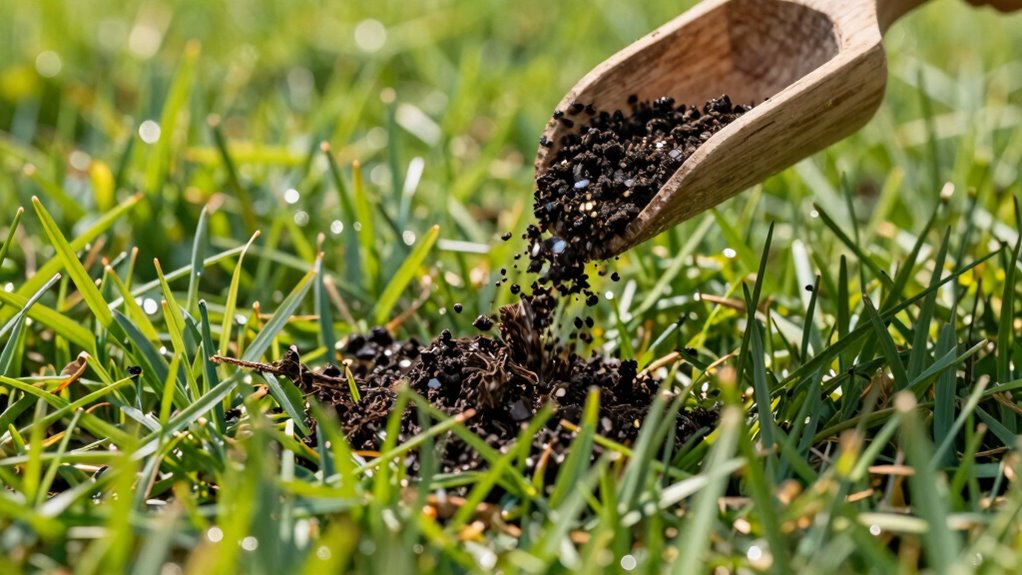
Proper topdressing with compost is essential because it directly improves your lawn’s health and vitality. One key benefit is alleviating soil compaction, which restricts root growth and water absorption. When soil becomes compacted, grass struggles to access nutrients and moisture, leading to thinning and weaker patches. Topdressing helps loosen the soil, allowing roots to penetrate deeper and promoting healthier, denser grass. Additionally, it introduces organic matter that enhances soil structure and microbial activity. This process also helps fill in bare spots, combating grass thinning. By regularly topdressing with compost, you support a resilient lawn capable of withstanding drought, pests, and disease. Overall, proper topdressing is a crucial step in maintaining lush, vigorous grass and a thriving landscape.
As an affiliate, we earn on qualifying purchases.
How to Choose the Best Compost for Your Lawn
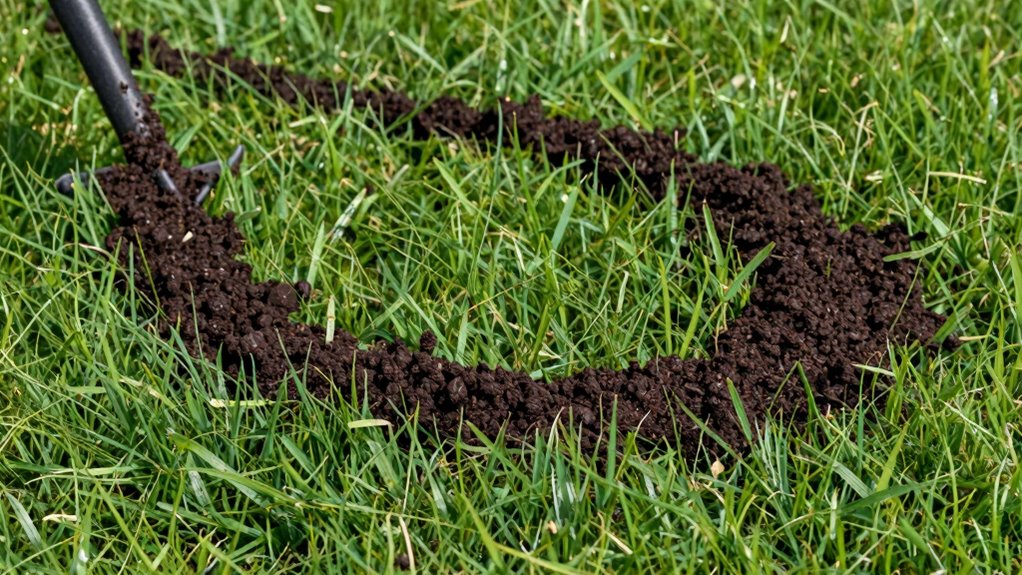
To select the best compost for your lawn, you need to take into account its nutrient content and balance to support healthy growth. Check that the compost is mature and well-decomposed to avoid issues with weed seeds or pathogens. Also, guarantee the source is pure and free from contaminants to give your lawn the safest and most effective boost. Incorporating proper composting techniques can help create a more comfortable and welcoming outdoor space that enhances your overall well-being. Understanding the quality assessment of compost can ensure you choose a product that truly benefits your lawn’s health and longevity. Additionally, understanding the cost‑of‑ownership associated with quality compost can help you make more informed purchasing decisions. Properly evaluating trustworthy information about compost sources can further ensure you select a safe and effective product.
Nutrient Content and Balance
When selecting compost for your lawn, understanding its nutrient content and balance is essential for healthy growth. Start by conducting a soil testing to determine existing nutrient levels and deficiencies. This helps you choose compost with the right nutrient profile to complement your soil. Look for compost that offers a balanced mix of nitrogen (N), phosphorus (P), and potassium (K), aligning with ideal fertilizer ratios for lawns—typically around 3:1:2 or similar. High-quality compost should also provide trace minerals and organic matter that promote microbial activity. Avoid compost that is overly rich in certain nutrients, which can disrupt soil balance. By evaluating nutrient content carefully, you ensure your lawn receives the right nutrients without overdoing it, leading to healthier, more resilient grass. Regular monitoring and adjusting your compost application based on nutrient balance can further optimize lawn health. Incorporating compost with proper nutrient ratios supports sustainable lawn care practices and long-term soil vitality, emphasizing the importance of understanding soil testing results to achieve optimal results. Additionally, choosing compost made from organic materials ensures that it is free from synthetic chemicals that could harm your lawn ecosystem.
Compost Maturity Level
Choosing the right compost for your lawn starts with evaluating its maturity level. Mature compost results from thorough organic decomposition, ensuring nutrients are stabilized and safe for your grass. To determine compost maturity, look for these signs:
- A rich, earthy smell indicates complete organic decomposition.
- Uniform dark color suggests consistent breakdown of materials.
- No visible recognizable plant or food scraps shows advanced compost maturity.
- Cooler temperatures during handling signal that microbial activity has slowed, confirming maturity.
- Properly matured compost also has consistent texture, making it easier to spread evenly across your lawn.
- The presence of beneficial microorganisms is another indicator of compost stability and quality.
- Additionally, compost maturity indicators such as temperature and smell help confirm readiness for use.
- Testing compost with simple maturity tests can further ensure it is suitable for lawn application.
- Using compost that is not fully mature can introduce pathogens or excess nutrients that may harm your grass.
Properly matured compost provides balanced nutrients and enhances soil health without risking damage. Always choose compost that exhibits these indicators to ensure you’re adding a safe, effective organic amendment to your lawn.
Source and Purity
Selecting high-quality compost begins with examining its source and purity. You need to verify the source to guarantee it comes from reputable suppliers who follow proper composting standards. Source verification helps confirm that the compost isn’t contaminated with weeds, pests, or chemicals that could harm your lawn. Pay attention to compost purity, which means the material should be free of non-composted debris, plastics, or toxic substances. Well-processed compost with high purity provides essential nutrients without introducing unwanted contaminants. Always ask for certification or lab analysis results if available. Choosing compost from a trusted source ensures your lawn receives safe, nutrient-rich material that promotes healthy growth without risking soil or plant health. Proper cultural content can also enhance your understanding of soil health and compost benefits. Additionally, understanding compost processing methods can help you identify high-quality products. Being aware of compost maturity levels can further assist in selecting the best product for your lawn. Recognizing soil testing results can also guide you in choosing the most appropriate compost amendments for your specific soil conditions. Moreover, understanding the influence of compost source can help prevent issues related to contamination and nutrient imbalance.
As an affiliate, we earn on qualifying purchases.
Preparing Your Lawn for Compost Topdressing
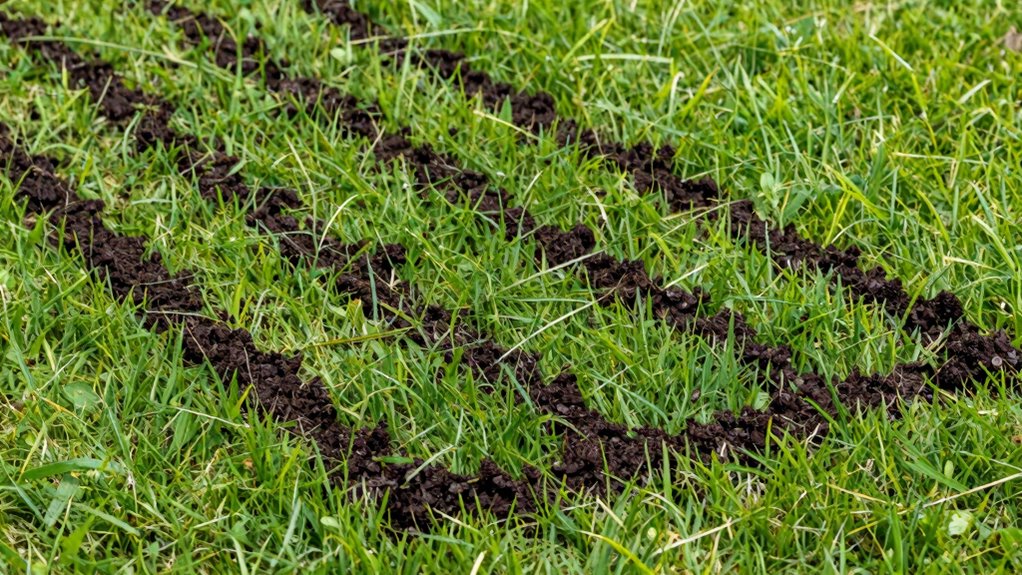
Before applying compost as a topdressing, you’ll want to prepare your lawn to guarantee the best results. Proper preparation promotes soil aeration, which encourages healthy root growth and faster grass recovery. Start by mowing your lawn to a shorter height, removing clippings to expose the soil. Aerate the soil to relieve compaction and improve nutrient absorption. Reseed any patchy areas to ensure even grass coverage. Finally, water thoroughly a day before topdressing to soften the soil, making it easier for compost to integrate without smothering the grass. These steps help create an ideal environment for compost to boost your lawn’s health while minimizing risks. Proper preparation ensures your grass benefits fully from the compost application. Additionally, fostering joy and connection through your outdoor space can make yard work more enjoyable and rewarding. To further enhance your lawn’s health, consider understanding the soil health and its role in supporting robust grass growth. Being aware of soil composition can help you choose the right compost and amendments for your specific lawn needs. Recognizing the importance of electric dirt bikes and their capabilities can inspire innovative ways to maintain your yard, such as using eco-friendly tools. Moreover, exploring soil testing can provide valuable insights into nutrient deficiencies and enhance your fertilization strategy.
As an affiliate, we earn on qualifying purchases.
Step-by-Step: How to Apply Compost Without Smothering Your Grass
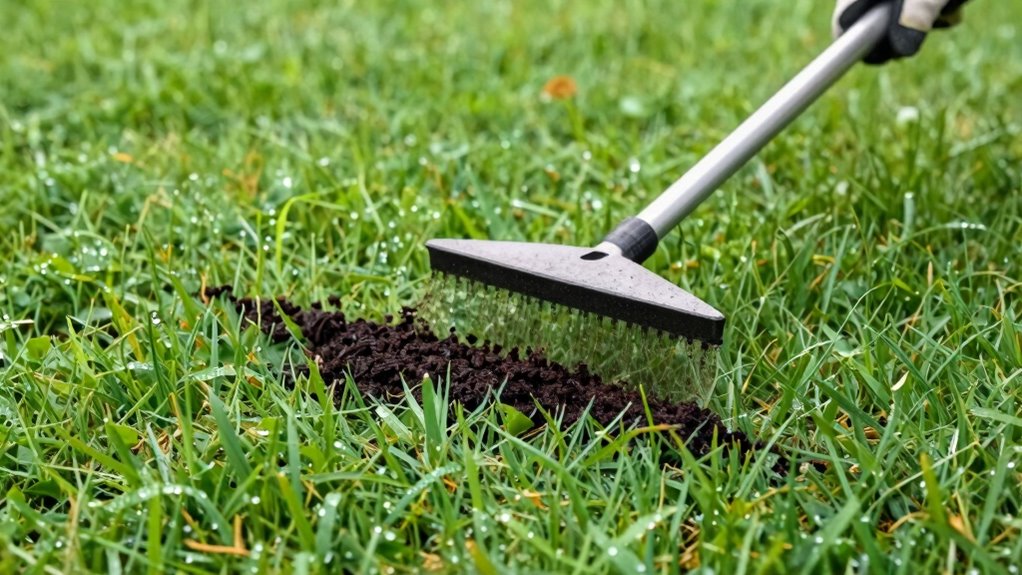
Applying compost properly is essential to avoid smothering your grass and ensuring your lawn benefits fully from the nutrients. Start by spreading a thin, even layer of compost, no more than a quarter-inch deep. Before spreading, loosen the soil with light aeration to improve airflow and prevent compaction. Use appropriate watering techniques—light, frequent waterings—to help the compost settle and encourage soil contact. Avoid heavy watering that could wash away the compost or create a barrier. After applying, gently rake the compost into the grass’s surface to ensure even coverage and to prevent clumps. Consistent soil aeration combined with careful watering helps the compost integrate smoothly, promoting healthy growth without suffocation. Proper soil preparation is also crucial for optimal results. Follow these steps to nourish your lawn safely and effectively.
How Much Compost Do You Need and How to Spread It Effectively
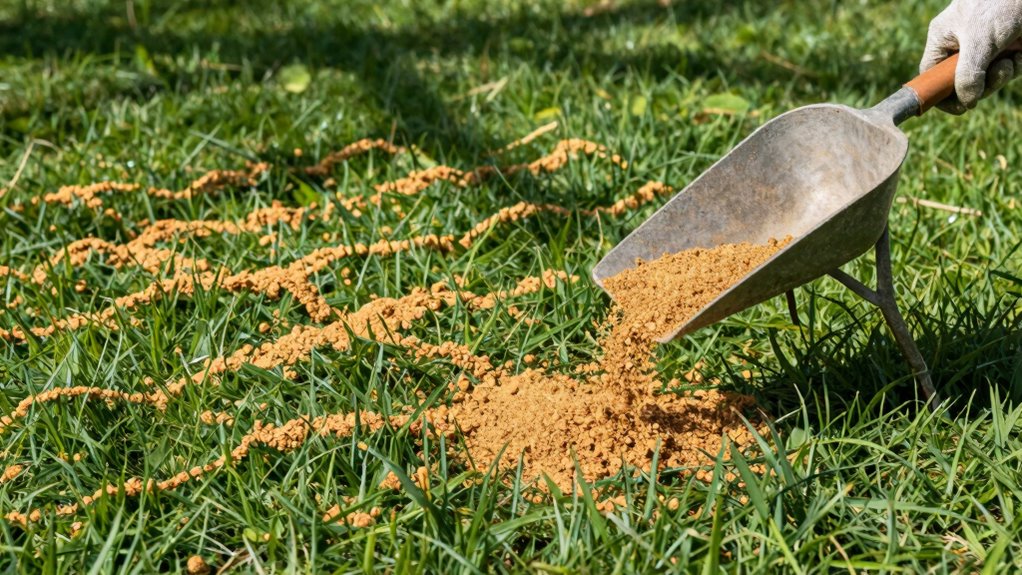
Knowing how much compost to spread and the best way to do it can make a big difference in your lawn’s health. Proper compost application guarantees your grass benefits without smothering it. To achieve this, consider these spreading techniques:
- Measure your lawn area to determine the total compost needed.
- Aim for a thin layer, about ¼ to ½ inch deep, to avoid smothering grass.
- Use a rake or drop spreader for even distribution.
- Apply compost when soil is moist but not wet for better integration.
Common Mistakes When Topdressing With Compost and How to Avoid Them
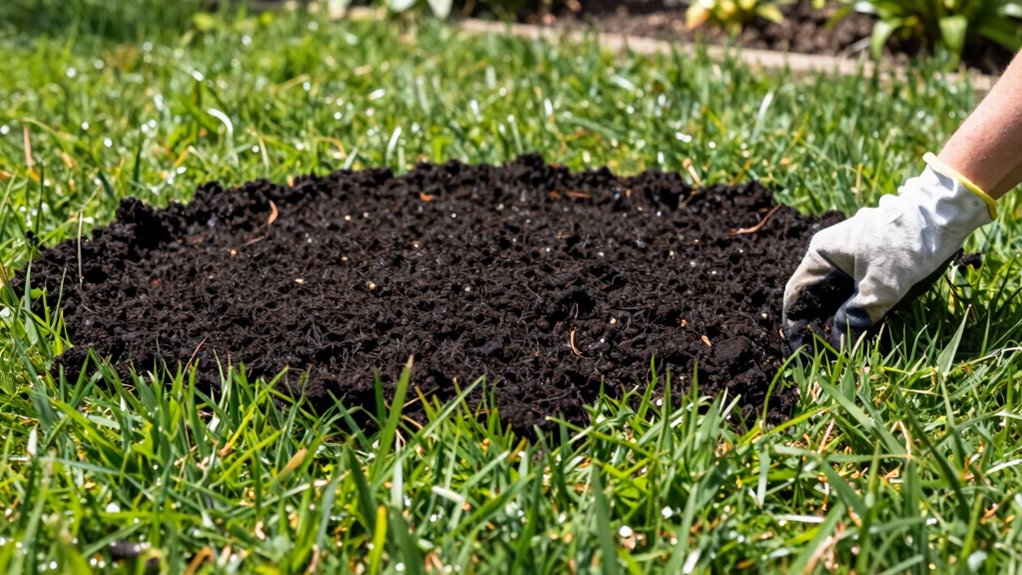
One common mistake homeowners make when topdressing with compost is applying too much, which can suffocate the grass and create a layer that’s difficult for roots to penetrate. When you layer compost too thickly, it hampers compost absorption, preventing nutrients from reaching the soil effectively. This excess compost can lead to grass suffocation, depriving roots of oxygen and water. To avoid this, spread a thin, even layer—around ¼ to ½ inch—ensuring the compost integrates smoothly with the existing turf. Proper application promotes better compost absorption and prevents the grass from becoming smothered. Regularly monitor your layer’s thickness and adjust accordingly. Remember, less is often more when it comes to compost topdressing for a healthy, thriving lawn.
Troubleshooting Lawn Issues After Compost Topdressing and How to Prevent Future Problems
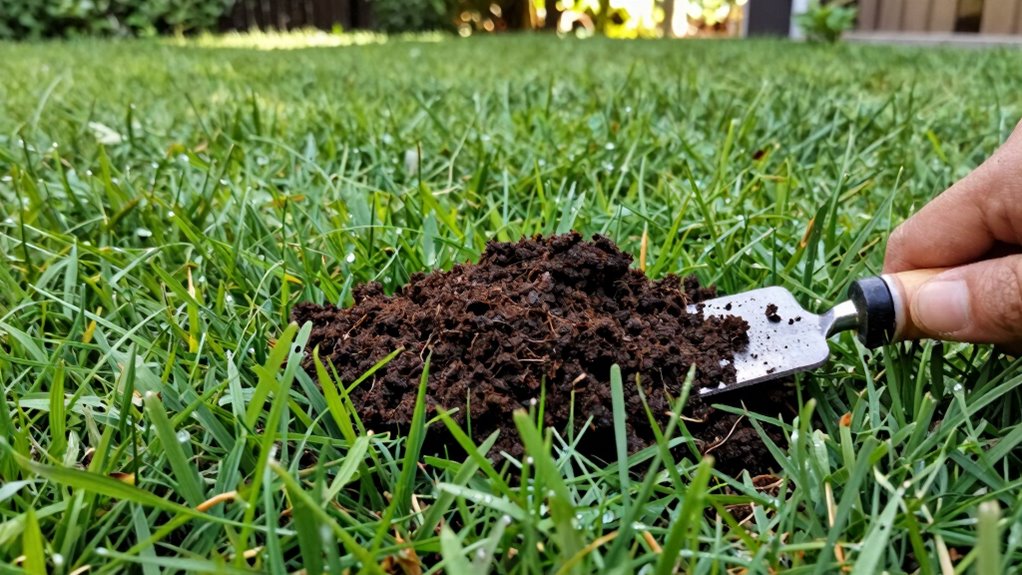
After compost topdressing, you might notice issues like patchy growth, yellowing, or a sudden decline in lawn health. To troubleshoot, consider these steps:
- Check your watering schedule—overwatering can suffocate roots, while under-watering stresses grass.
- Inspect for pests that may have moved in due to changes in soil conditions.
- Ensure compost isn’t smothering grass by applying it too thickly.
- Improve pest management strategies to prevent further damage and promote healthy growth.
Prevention involves adjusting watering routines, using appropriate compost layers, and monitoring for pests. Proper watering keeps roots hydrated without drowning them, and effective pest management reduces vulnerabilities. Correct application techniques help your lawn recover faster and stay healthy long-term.
Frequently Asked Questions
Can Compost Topdressing Be Done During the Winter?
Yes, you can do winter application of compost topdressing, but it’s best when soil temperature remains above freezing. Applying compost during colder months might not benefit your lawn if soil is too cold, as microbial activity slows down. Wait until soil temperatures are consistently above 50°F to guarantee the compost integrates well, promotes healthy growth, and doesn’t smother your grass. Always check local weather and soil conditions first.
How Often Should I Topdress My Lawn With Compost?
You should topdress your lawn with compost about once or twice a year, following general frequency guidelines. Seasonal considerations matter too; do it in early spring or early fall for best results. Avoid overdoing it, as too much compost can smother your grass. Keep the layer thin—around a quarter to half an inch—to improve soil health without harming your lawn’s growth.
Are There Specific Grass Types That Respond Better to Compost Topdressing?
Certain grass types, like cool-season varieties such as Kentucky bluegrass and fescues, respond well to compost topdressing because of their turf response and compatibility. These grasses benefit from improved soil health and nutrient availability. Warm-season grasses like Bermuda or Zoysia may also respond positively if you apply compost carefully, but their turf response varies. Always consider your specific grass type and local conditions for best results.
What Signs Indicate I Applied Too Much Compost?
You might notice signs of excess compost, like grass turning yellow or thinning, which indicates suffocation. Excess compost can block sunlight, restrict airflow, and smother grass roots, leading to poor growth. If your lawn feels spongy or develops patchy areas, these are clear signs you’re overdoing it. To avoid grass suffocation, apply compost in thin layers and monitor your lawn’s health closely after topdressing.
Does Compost Topdressing Attract Pests or Wildlife?
Compost topdressing can attract pests or wildlife interference if you apply too much or leave it exposed. Pests like insects or rodents may find it appealing, and wildlife such as raccoons or birds might dig through it. To prevent this, keep the compost layer thin, cover it with straw or mulch, and avoid leaving it uncovered for long periods. Proper application minimizes pest attraction and discourages wildlife interference.
Conclusion
Properly topdressing your lawn with compost boosts soil health and grass growth. Just remember, over-application can smother your grass, leading to problems. Did you know that lawns with balanced compost applications are 30% more resilient against diseases? By following the right steps and avoiding common mistakes, you’ll create a lush, vibrant yard that stays healthy year-round. Keep learning, and your lawn will thank you for it!
Fall yard work Picks
leaf blowers
As an affiliate, we earn on qualifying purchases.