TL;DR

Get garden gear delivered free with Prime
- Fast, free delivery on millions of items
- Prime Video, Amazon Music and more included
- Member-only deals all year
A Homes & Gardens report urges homeowners to inspect trees in fall, when dropping leaves can make structural problems easier to see. Arborists cited in the report say dead or damaged limbs, cracks, fungal growth and weak trunk unions can become hazards in winter weather; serious concerns should be assessed by a professional.
Homeowners are being urged to inspect trees before winter storms for dead branches, cracks and other signs of weakness that could lead to falling limbs. In a report published by Homes & Gardens, arborists say a visual check after leaves begin to fall can help identify visible problems before strong winds, snow and ice put additional stress on trees near homes, vehicles and walkways.
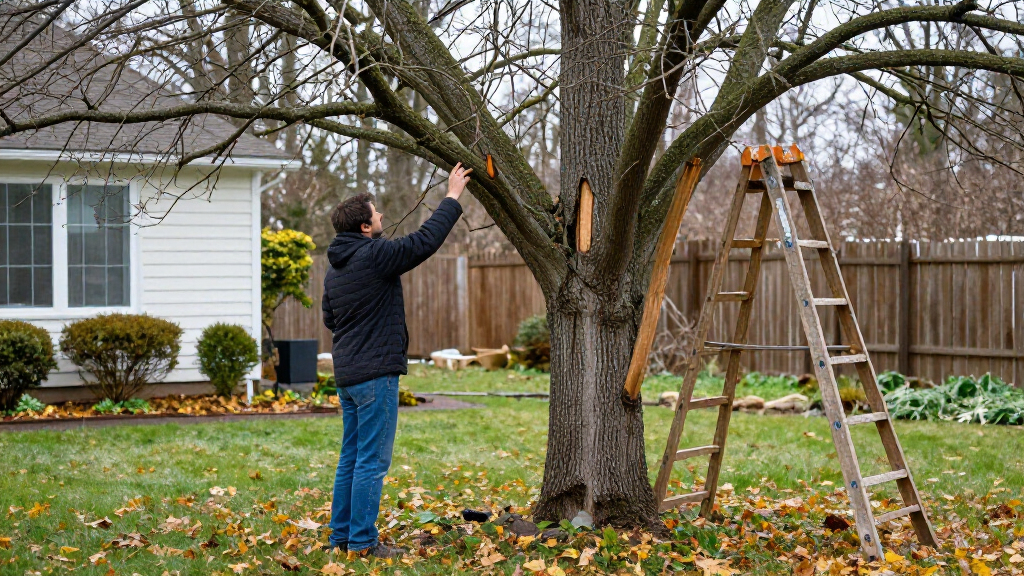
The report recommends looking over trees from multiple angles, paying particular attention to canopy sections above places where people gather or property is located. Suggested warning signs include dead, damaged or hanging branches; cracks in the trunk or major limbs; fungal growth; and weak connections between large stems. Falling leaves can make parts of a deciduous tree’s structure easier to see, though a visual inspection cannot establish every problem inside a tree.
Levi Williams, a Tree Risk Assessment Qualified and ISA Certified Arborist with Tree Scouts Tree Service, recommends basic checks before incoming winter storms. Williams told the publication that high winds and freezing temperatures can contribute to destructive tree failures. He advised homeowners to examine branches over homes, streets, vehicles and pedestrian walkways, and to look for large dead, diseased or dying limbs.
The report also cites Basil Camu, co-founder of Leaf & Limb, on signs of possible structural trouble. He says two trunks of similar size may be prone to splitting, especially where they form a V-shaped junction. At the base, the report advises looking for cracks, a cavity extending around more than a third of the trunk, mushrooms, or a new lean accompanied by roots lifting on the opposite side. These observations are warning signs to seek qualified advice, not a definitive diagnosis.
Winter Weather Raises Branch Risks
Checking trees before severe weather gives homeowners time to respond to visible hazards before wind shakes limbs or snow and ice add weight. A branch that is already dead, damaged or poorly attached may be more likely to break under those conditions, potentially landing on people, buildings, cars or paths. The concern is greatest when trees or branches overhang areas that are regularly used.
Early attention may also give an arborist more time to assess a problem and recommend a suitable response. The report says dealing with smaller issues in advance can reduce the chance of storm cleanup or property repairs later, but it does not provide data quantifying that risk or the savings. Its practical point is limited: inspect trees before winter weather arrives, and do not treat a homeowner’s visual check as a substitute for professional assessment when a major defect is present.
As an affiliate, we earn on qualifying purchases.
Why Fall Checks Can Help
Winter conditions can put trees under several kinds of stress. Wind can move branches, while accumulated snow or ice can increase their load. The report says ice is difficult to remove quickly, so finding a weak limb before freezing weather may leave more time to decide whether professional pruning is needed.
The advice is aimed at the period after deciduous trees begin losing their leaves, when their canopy and branch structure may be more visible. The report distinguishes a basic visual survey from work that needs an expert: homeowners can look for obvious warning signs, but large limbs, significant leaning and other serious structural concerns should be reviewed by an arborist. It also notes that pruning timing depends on the issue; some safety work may be done in October or November, while other work may be better left until late winter or early spring.
“I would always advise homeowners to do basic inspections of their trees before incoming winter weather storms.”
— Levi Williams, Tree Risk Assessment Qualified and ISA Certified Arborist with Tree Scouts Tree Service
As an affiliate, we earn on qualifying purchases.
A Visual Check Has Limits
The report does not identify a specific storm, location, or newly issued government warning; it presents seasonal tree-care advice. It also does not give a numerical estimate of how much inspections lower the chance of property damage, or set a single inspection schedule for every climate and tree species.
A homeowner may spot visible damage but cannot necessarily judge how extensive a defect is or whether a tree is likely to fail. The report does not establish that every crack, mushroom or leaning tree requires removal. The appropriate response depends on the tree, the defect and what lies within reach if a limb or trunk falls. Major concerns should be assessed by a qualified arborist rather than addressed through risky do-it-yourself cutting.
As an affiliate, we earn on qualifying purchases.
Inspect, Then Seek Expert Advice
Homeowners can begin with a ground-level visual survey, checking the full canopy and trunk from more than one viewpoint and noting branches over people or property. Binoculars may help with distant canopy sections. The report mentions viewing trees from different vantage points, but homeowners should not climb ladders or put themselves beneath suspect limbs to get a closer look.
Where the inspection finds large dead branches, substantial cracks, fungal growth, a new lean or another serious concern, the next step is to contact a qualified arborist for an assessment. Smaller pruning may be possible with appropriate tools, but the report advises professional help for high or large limbs and major structural problems. Any pruning should be carried out safely and within the homeowner’s skill level; the source does not provide a complete cutting or equipment-safety guide.
As an affiliate, we earn on qualifying purchases.
Key Questions
When should homeowners inspect trees for winter risks?
The report recommends checking after leaves begin to fall and before winter storms arrive, when some structural features of deciduous trees may be easier to see.
What warning signs should I look for?
Look from a safe position for dead or hanging branches, cracks, fungal growth, weak unions between stems, and a new lean with roots lifting. These signs do not by themselves confirm that a tree will fail.
Should I remove a tree that has a defect?
Not necessarily. The report says the response depends on the defect and what could be struck if the tree or branch fell. A qualified arborist can assess whether pruning, other support or removal is appropriate.
Can I prune a tree myself?
The report says smaller dead, damaged or diseased branches may be pruned with suitable tools, while large or high limbs and major problems should go to a professional. Do not attempt work that puts you near unstable limbs or beyond your experience.
Source: rss
Fall Picks
fall essentials
As an affiliate, we earn on qualifying purchases.