TL;DR
December clematis care is mainly about protection, not a major pruning or cleanup. In colder areas, gardeners can insulate roots, secure loose stems, remove only dead or damaged growth and shield potted plants from freezing and waterlogging.
A December clematis care guide recommends four protective tasks to reduce winter damage and help plants flower in the next season: mulch roots in cold climates, secure loose vines, avoid hard pruning and give container-grown plants extra frost and drainage protection. The advice is seasonal guidance, not a report of a new study or a change in gardening rules.

Get garden gear delivered free with Prime
- Fast, free delivery on millions of items
- Prime Video, Amazon Music and more included
- Member-only deals all year
For clematis growing in areas with freezing winters, the guide recommends spreading a 3- to 4-inch layer of organic mulch over the root area before the first deep freeze. Compost, leaf mold and shredded bark are listed as options. Keep the mulch from touching the stems: material piled against them can trap moisture and contribute to rot, while the covered area may also shelter slugs, snails or rodents.
Gardeners are also advised to check for loose vines and fasten them to their supports with soft ties, such as twine, fabric strips or reusable plant ties. Wire, metal ties and zip ties are discouraged because they can scrape stems or contribute to breakage when wind moves the plant. The aim is to keep stems from being buffeted or pulled away from a trellis, fence or arbor.
The December pruning advice is restrained: remove only dead, damaged or diseased growth, using clean, sharp pruners, and leave healthy stems alone. The guide says hard pruning now can remove buds on plants that flower on old wood, while cuts or new growth may be vulnerable to frost. It recommends timing more substantial pruning according to clematis group rather than treating every variety alike.
December care for clematis protect now, flower next season
A few seasonal checks can reduce winter stress while preserving healthy stems and buds. Care depends on the clematis variety and local conditions.
Four protective checks
Address the risks your garden faces before deep frost.
Insulate in-ground plants
Spread organic mulch over roots in cold climates, keeping it clear of stems.
Secure loose stems
Use soft ties to limit wind damage; avoid wire, metal ties and zip ties.
Leave healthy growth
Remove only dead, damaged or diseased growth with clean, sharp pruners.
Protect pots and drainage
Wrap pots, shelter them near a wall, raise them on feet and clear drainage holes.
Pruning follows the flowering group
Identifying the plant helps avoid removing buds at the wrong time.
- Includes winter-flowering cirrhosa and types such as armandii and montana.
- Prune after flowering.
- Prune in late winter.
- In December, leave healthy stems intact.
Check through winter
After strong winds or severe weather, inspect for avoidable damage.
- Look for broken stems and displaced mulch.
- Check containers for standing water and clear drainage.
- Use plant labels or variety-specific guidance before pruning healthy growth.
Protecting Next Season’s Clematis Growth
Winter damage can affect both the plant’s survival and its display in the following growing season. Roots exposed to repeated freezing, stems torn by wind and buds removed by untimely pruning can all undermine the growth gardeners hope to see when warmer weather returns. The recommended work is modest, but it addresses different risks without requiring a full winter cutback.
The advice also points to a practical difference between plants in the ground and those in pots. Soil in a container is more exposed to cold than ground around an established planting, so potted clematis need extra root protection. Keeping containers from sitting in frozen or stagnant water matters too, because poor drainage can leave roots waterlogged and increase the risk of rot.
These steps do not guarantee flowering: clematis hardiness and pruning needs vary by type and local conditions. They offer a way to reduce avoidable winter stress while preserving healthy growth and buds that may contribute to next season’s flowers.
Products Worth Considering

Backyard Discovery Willow 9×6 Cedar Wood and Polycarbonate Walk-in Greenhouse Kit

Greenworks 60V 21-Inch Cordless Push Lawn Mower Kit

Husqvarna 460 Rancher 24-Inch Gas Chainsaw
As an affiliate, we earn on qualifying purchases.
Care Depends on Variety and Setting
Clematis includes more than 300 species as well as many hybrids, and their cold tolerance differs. The source guide says some of the hardiest can grow in USDA hardiness zone 3, but it does not suggest that every clematis can withstand those conditions. A plant’s variety and local climate therefore shape how much winter protection it needs.
Pruning timing also depends on when the plant flowers. According to the guide, Group 1 varieties, including winter-flowering cirrhosa and types such as armandii and montana, are pruned after flowering. Groups 2 and 3 are pruned in late winter. Because December pruning can remove healthy stems and their buds, identifying the group is more useful than applying a single schedule to all clematis.
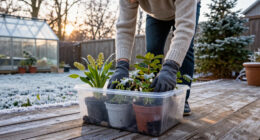
Container plants call for a separate check. The guide suggests wrapping pots with frost cloth or burlap, grouping containers near a wall for some shelter, and raising pots on feet to improve drainage. Before winter, gardeners should check that drainage holes are clear. These are general recommendations; the source does not provide variety-specific instructions for every climate or site.
Local Frost and Pruning Needs
The source material is a gardening guide, not a report documenting measured results. It does not establish how much these measures change survival or flowering rates, and it gives no trial data or comparison between treated and untreated plants. The recommendations should be read as practical advice rather than a guarantee of blooms.
It is also not clear which specific varieties or local weather conditions apply to an individual garden. Hardiness varies across clematis, and exposure, container size and drainage can affect winter risk. The guide does not give a single temperature threshold for adding protection or a detailed pruning schedule for every cultivar. Gardeners may need to check a plant label or reliable variety-specific guidance before cutting healthy stems.
December Checks Before Deep Frost
Before the first deep freeze, gardeners can assess their clematis and act on the risks present: add mulch around in-ground roots where winters freeze, secure loose stems and inspect pots for insulation and drainage. Any pruning should be limited to clearly dead, damaged or diseased growth, with healthy stems left intact until the appropriate pruning time for that plant’s group.
During winter, plants and ties can be checked after strong winds or severe weather for broken stems, displaced mulch or containers holding water. In the next season, pruning can follow the clematis group’s flowering cycle. The source provides no specific forecast or later update; local conditions and the plant’s variety will determine what care is needed.
Key Questions
Should clematis be cut back in December?
Not heavily, according to the guide. Remove only dead, damaged or diseased growth; cutting healthy stems may remove buds or expose the plant to frost damage.
How much mulch should go around clematis?
For plants in cold climates, the guide recommends a 3- to 4-inch layer of organic mulch before the first deep freeze. Keep it away from the stems to reduce moisture buildup and rot risk.
How can I protect clematis growing in a pot?
Wrap the pot with frost cloth or burlap, or group containers in a sheltered spot near a wall. Raise pots to improve drainage and check that drainage holes are clear so roots do not sit in water.
When should different clematis groups be pruned?
The guide says Group 1 clematis are pruned after flowering, while Groups 2 and 3 are pruned in late winter. Check the plant’s identity before pruning because schedules differ.
Source: homesandgardens.com